A STEAM VOYAGE DOWN THE DANUBE.
Reading edition
WITH SKETCHES OF HUNGARY, WALLACHIA, SERVIA, AND TURKEY, &c.
By MICHAEL J. QUIN,
AUTHOR OF “A VISIT TO SPAIN.”
SECOND EDITION.
REVISED AND CORRECTED.
IN TWO VOLUMES. VOL. I.
LONDON:
RICHARD BENTLEY, NEW BURLINGTON STREET.
1835.
Printed by C. Hullmandel. PEST.
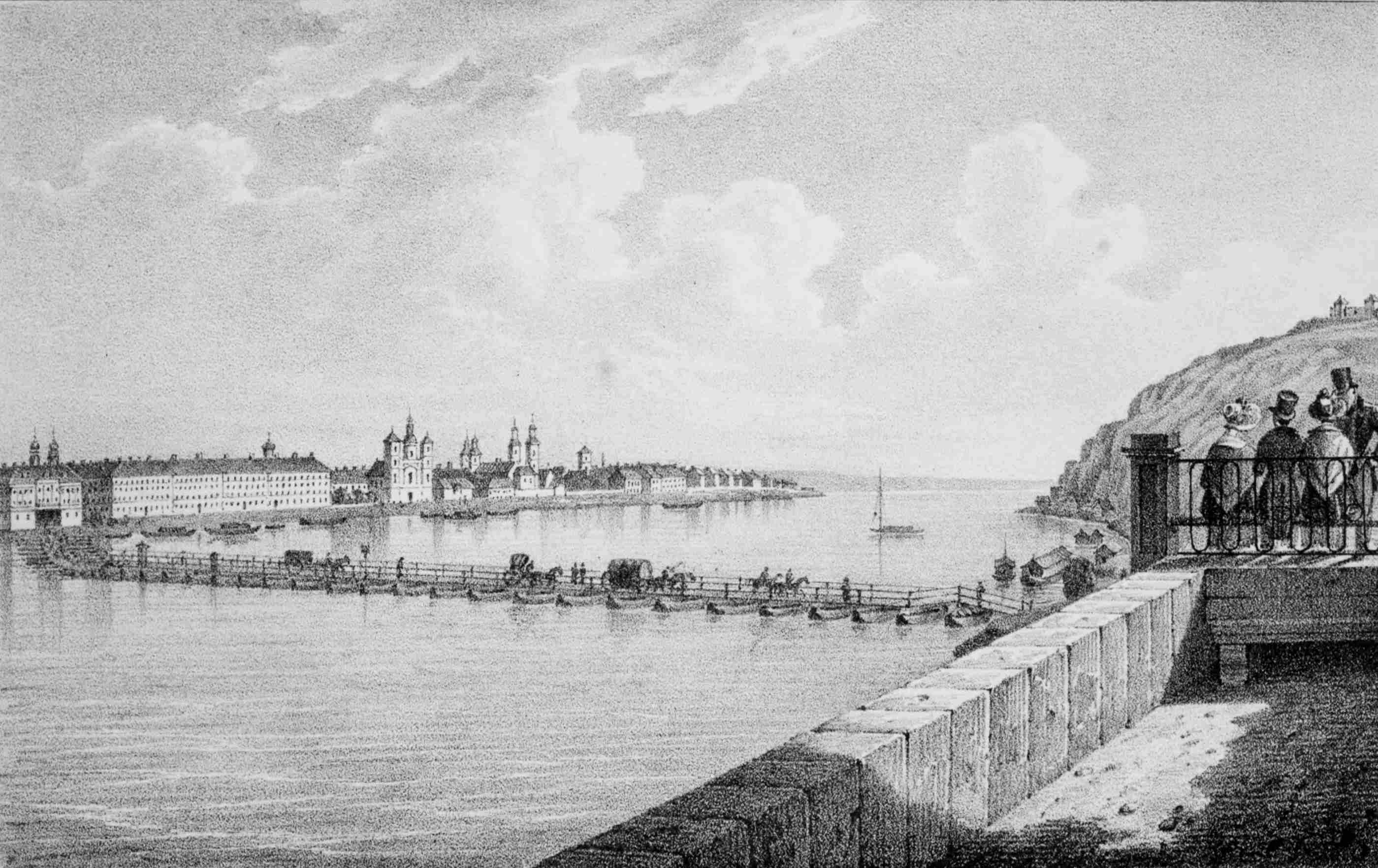
C. WHITING, BEAUFORT HOUSE, STRAND.
TO MRS. MICHAEL J. QUIN.
To you I dedicate these volumes, trusting that you may find in them some compensation for my late absence from a Home, where, as you well know, all my happiness resides. When our dear children shall be able to read this work, you will tell them that their interests only could have detained me from that home, during the five months necessarily occupied in my journey.
Always most affectionately yours,
MICHAEL J. QUIN.
Haverstock Hill, Hampstead, 20th July, 1835.
PREFACE
TO THE
SECOND EDITION.
Since the first edition of this work was published several gentlemen have called upon me, to inquire whether the navigation by steam has been yet completed from Presburg to Constantinople. It may be useful, therefore, here to state that the steam-boats do not yet regularly proceed further down the Danube than Galacz. The vessel intended to carry on the intercourse from that place to the Bosphorus, had been fitted out, and despatched from Trieste last autumn. But in the mean time, the object which the Danube company had in view, was frustrated by some means that have not yet been explained; and the vessel in question is now employed as a packet between Constantinople and Smyrna.
My own opinion is, that the Russian government has refused permission for the steam-boats of the Danube company to pass through any of the embouchures of that river into the Black Sea. The whole delta of the river became exclusively Russian, under the treaty of Adrianople; and I am informed that military pontons have been recently established across the navigable mouths of the Danube, with a view to prevent vessels of any description from entering the Black Sea in that quarter, without a passport from the Russian authorities.
The traveller, however, who wishes to become acquainted with the most interesting parts of the Danube, navigable by the steam-boats, will have no cause to regret this strange proceeding on the part of the Russian government. The banks of that magnificent river are wholly devoid of interest below Vidin. Its beauties commence at Belgrade; and from Moldava to Gladova, those wild and sublime scenes occur, which I have attempted to describe in the following pages.
I trust, at the same time, that before many months elapse, the Austrian and Russian sovereigns will come to an understanding in favour of the free navigation of the Danube and the Black Sea, as originally contemplated by the company.
M. J. Q.
September 10, 1835.