LXVII THE POLITICAL AND SOCIAL RECONSTRUCTION OF THE WORLD
Reading edition
The scheme and scale upon which this History is planned do not permit us to enter into the complicated and acrimonious disputes that centre about the treaties, and particularly of the treaty of Versailles, which concluded the Great War. We are beginning to realize that that conflict, terrible and enormous as it was, ended nothing, began nothing and settled nothing. It killed millions of people; it wasted and impoverished the world. It smashed Russia altogether. It was at best an acute and frightful reminder that we were living foolishly and confusedly without much plan or foresight in a dangerous and unsympathetic universe. The crudely organized egotisms and passions of national and imperial greed that carried mankind into that tragedy, emerged from it sufficiently unimpaired to make some other similar disaster highly probable so soon as the world has a little recovered from its war exhaustion and fatigue. Wars and revolutions make nothing; their utmost service to mankind is that, in a very rough and painful way, they destroy superannuated and obstructive things. The great war lifted the threat of German imperialism from Europe, and shattered the imperialism of Russia. It cleared away a number of monarchies. But a multitude of flags still waves in Europe, the frontiers still exasperate, great armies accumulate fresh stores of equipment.
The Peace Conference at Versailles was a gathering very ill adapted to do more than carry out the conflicts and defeats of the war to their logical conclusions. The Germans, Austrians, Turks and Bulgarians were permitted no share in its deliberations; they were only to accept the decisions it dictated to them. From the point of view of human welfare the choice of the place of meeting was particularly unfortunate. It was at Versailles in 1871 that, with every circumstance of triumphant vulgarity, the new German Empire had been proclaimed. The suggestion of a melodramatic reversal of that scene, in the same Hall of Mirrors, was overpowering.
Whatever generosities had appeared in the opening phases of the Great War had long been exhausted. The populations of the victorious countries were acutely aware of their own losses and sufferings, and entirely regardless of the fact that the defeated had paid in the like manner. The war had arisen as a natural and inevitable consequence of the competitive nationalisms of Europe and the absence of any Federal adjustment of these competitive forces; war is the necessary logical consummation of independent sovereign nationalities living in too small an area with too powerful an armament; and if the great war had not come in the form it did it would have come in some similar form—just as it will certainly return upon a still more disastrous scale in twenty or thirty years’ time if no political unification anticipates and prevents it. States organized for war will make wars as surely as hens will lay eggs, but the feeling of these distressed and war-worn countries disregarded this fact, and the whole of the defeated peoples were treated as morally and materially responsible for all the damage, as they would no doubt have treated the victor peoples had the issue of war been different. The French and English thought the Germans were to blame, the Germans thought the Russians, French and English were to blame, and only an intelligent minority thought that there was anything to blame in the fragmentary political constitution of Europe. The treaty of Versailles was intended to be exemplary and vindictive; it provided tremendous penalties for the vanquished; it sought to provide compensations for the wounded and suffering victors by imposing enormous debts upon nations already bankrupt, and its attempts to reconstitute international relations by the establishment of a League of Nations against war were manifestly insincere and inadequate.
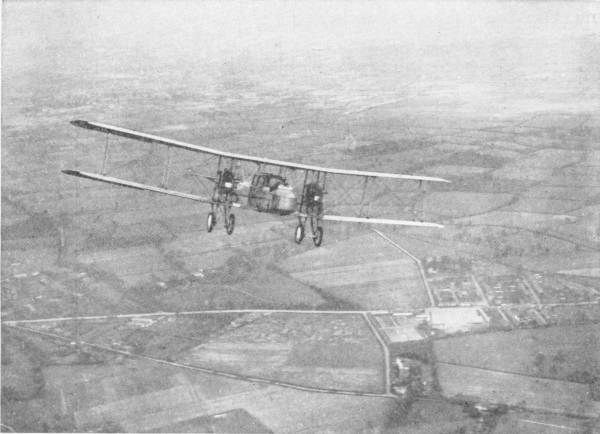
PASSENGER AEROPLANE FLYING OVER NORTHOLT (Photo taken by another ’plane by the Central Aerophoto Co.)
So far as Europe was concerned it is doubtful if there would have been any attempt whatever to organize international relations for a permanent peace. The proposal of the League of Nations was brought into practical politics by the President of the United States of America, President Wilson. Its chief support was in America. So far the United States, this new modern state, had developed no distinctive ideas of international relationship beyond the Monroe Doctrine, which protected the new world from European interference. Now suddenly it was called upon for its mental contribution to the vast problem of the time. It had none. The natural disposition of the American people was towards a permanent world peace. With this however was linked a strong traditional distrust of old-world polities and a habit of isolation from old-world entanglements. The Americans had hardly begun to think out an American solution of world problems when the submarine campaign of the Germans dragged them into the war on the side of the anti-German allies. President Wilson’s scheme of a League of Nations was an attempt at short notice to create a distinctively American world project. It was a sketchy, inadequate and dangerous scheme. In Europe however it was taken as a matured American point of view. The generality of mankind in 1918-19 was intensely weary of war and anxious at almost any sacrifice to erect barriers against its recurrence, but there was not a single government in the old world willing to waive one iota of its sovereign independence to attain any such end. The public utterances of President Wilson leading up to the project of a World League of Nations seemed for a time to appeal right over the heads of the governments to the peoples of the world; they were taken as expressing the ripe intentions of America, and the response was enormous. Unhappily President Wilson had to deal with governments and not with peoples; he was a man capable of tremendous flashes of vision and yet when put to the test egotistical and limited, and the great wave of enthusiasm he evoked passed and was wasted.
Says Dr. Dillon in his book, The Peace Conference: “Europe, when the President touched its shores, was as clay ready for the creative potter. Never before were the nations so eager to follow a Moses who would take them to the long-promised land where wars are prohibited and blockades unknown. And to their thinking he was just that great leader. In France men bowed down before him with awe and affection. Labour leaders in Paris told me that they shed tears of joy in his presence, and that their comrades would go through fire and water to help him to realize his noble schemes. To the working classes in Italy his name was a heavenly clarion at the sound of which the earth would be renewed. The Germans regarded him and his doctrine as their sheet-anchor of safety. The fearless Herr Muehlon said: ‘If President Wilson were to address the Germans and pronounce a severe sentence upon them, they would accept it with resignation and without a murmur and set to work at once.’ In German-Austria his fame was that of a saviour, and the mere mention of his name brought balm to the suffering and surcease of sorrow to the afflicted ... .”
Such were the overpowering expectations that President Wilson raised. How completely he disappointed them and how weak and futile was the League of Nations he made is too long and too distressful a story to tell here. He exaggerated in his person our common human tragedy, he was so very great in his dreams and so incapable in his performance. America dissented from the acts of its President and would not join the League Europe accepted from him. There was a slow realization on the part of the American people that it had been rushed into something for which it was totally unprepared. There was a corresponding realization on the part of Europe that America had nothing ready to give to the old world in its extremity. Born prematurely and crippled at its birth, that League has become indeed, with its elaborate and unpractical constitution and its manifest limitations of power, a serious obstacle in the way of any effective reorganization of international relationships. The problem would be a clearer one if the League did not yet exist. Yet that world-wide blaze of enthusiasm that first welcomed the project, that readiness of men everywhere round and about the earth, of men, that is, as distinguished from governments, for a world control of war, is a thing to be recorded with emphasis in any history. Behind the short-sighted governments that divide and mismanage human affairs, a real force for world unity and world order exists and grows.
From 1918 onward the world entered upon an age of conferences. Of these the Conference at Washington called by President Harding (1921) has been the most successful and suggestive. Notable, too, is the Genoa Conference (1922) for the appearance of German and Russian delegates at its deliberations. We will not discuss this long procession of conferences and tentatives in any detail. It becomes more and more clearly manifest that a huge work of reconstruction has to be done by mankind if a crescendo of such convulsions and world massacres as that of the great war is to be averted. No such hasty improvisation as the League of Nations, no patched-up system of Conferences between this group of states and that, which change nothing with an air of settling everything, will meet the complex political needs of the new age that lies before us. A systematic development and a systematic application of the sciences of human relationship, of personal and group psychology, of financial and economic science and of education, sciences still only in their infancy, is required. Narrow and obsolete, dead and dying moral and political ideas have to be replaced by a clearer and a simpler conception of the common origins and destinies of our kind.
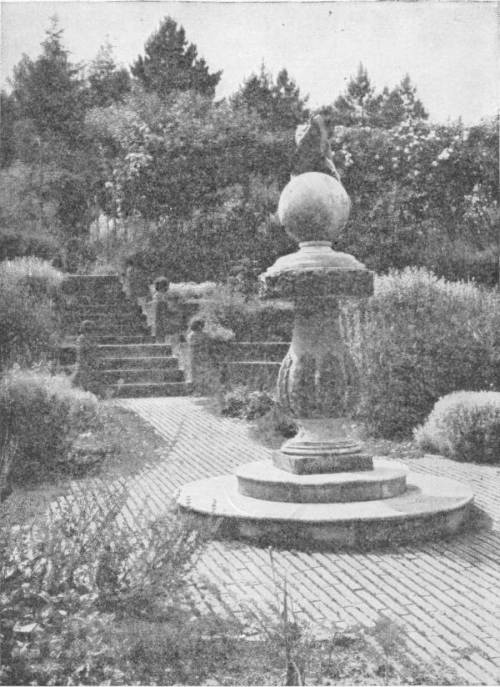
A PEACEFUL GARDEN IN ENGLAND Given wisdom, all mankind might live in such gardens
But if the dangers, confusions and disasters that crowd upon man in these days are enormous beyond any experience of the past, it is because science has brought him such powers as he never had before. And the scientific method of fearless thought, exhaustively lucid statement, and exhaustively criticized planning, which has given him these as yet uncontrollable powers, gives him also the hope of controlling these powers. Man is still only adolescent. His troubles are not the troubles of senility and exhaustion but of increasing and still undisciplined strength. When we look at all history as one process, as we have been doing in this book, when we see the steadfast upward struggle of life towards vision and control, then we see in their true proportions the hopes and dangers of the present time. As yet we are hardly in the earliest dawn of human greatness. But in the beauty of flower and sunset, in the happy and perfect movement of young animals and in the delight of ten thousand various landscapes, we have some intimations of what life can do for us, and in some few works of plastic and pictorial art, in some great music, in a few noble buildings and happy gardens, we have an intimation of what the human will can do with material possibilities. We have dreams; we have at present undisciplined but ever increasing power. Can we doubt that presently our race will more than realize our boldest imaginations, that it will achieve unity and peace, that it will live, the children of our blood and lives will live, in a world made more splendid and lovely than any palace or garden that we know, going on from strength to strength in an ever widening circle of adventure and achievement? What man has done, the little triumphs of his present state, and all this history we have told, form but the prelude to the things that man has got to do.
CHRONOLOGICAL TABLE
About the year 1000 B.C. the Aryan peoples were establishing themselves in the peninsulas of Spain, Italy and the Balkans, and they were established in North India; Cnossos was already destroyed and the spacious times of Egypt, of Thothmes III, Amenophis III and Rameses II were three or four centuries away. Weak monarchs of the XXIst Dynasty were ruling in the Nile Valley. Israel was united under her early kings; Saul or David or possibly even Solomon may have been reigning. Sargon I (2750 B.C.) of the Akkadian Sumerian Empire was a remote memory in Babylonian history, more remote than is Constantine the Great from the world of the present day. Hammurabi had been dead a thousand years. The Assyrians were already dominating the less military Babylonians. In 1100 B.C. Tiglath Pileser I had taken Babylon. But there was no permanent conquest; Assyria and Babylonia were still separate empires. In China the new Chow dynasty was flourishing. Stonehenge in England was already some hundreds of years old.
The next two centuries saw a renascence of Egypt under the XXIInd Dynasty, the splitting up of the brief little Hebrew kingdom of Solomon, the spreading of the Greeks in the Balkans, South Italy and Asia Minor, and the days of Etruscan predominance in Central Italy. We begin our list of ascertainable dates with
B.C.
800. The building of Carthage.
790. The Ethiopian conquest of Egypt (founding the XXVth Dynasty).
776. First Olympiad.
753. Rome built.
745. Tiglath Pileser III conquered Babylonia and founded the New Assyrian Empire.
722. Sargon II armed the Assyrians with iron weapons.
721. He deported the Israelites.
680. Esarhaddon took Thebes in Egypt (overthrowing the Ethiopian XXVth Dynasty).
664. Psammetichus I restored the freedom of Egypt and founded the XXVIth Dynasty (to 610).
608. Necho of Egypt defeated Josiah, king of Judah, at the battle of Megiddo.
606. Capture of Nineveh by the Chaldeans and Medes.
Foundation of the Chaldean Empire.
604. Necho pushed to the Euphrates and was overthrown by Nebuchadnezzar II.
(Nebuchadnezzar carried off the Jews to Babylon.)
550. Cyrus the Persian succeeded Cyaxares the Mede.
Cyrus conquered Crœsus.
Buddha lived about this time.
So also did Confucius and Lao Tse.
539. Cyrus took Babylon and founded the Persian Empire.
521. Darius I, the son of Hystaspes, ruled from the Hellespont to the Indus.
His expedition to Scythia.
490. Battle of Marathon.
480. Battles of Thermopylï and Salamis.
479. The battles of Platea and Mycale completed the repulse of Persia.
474. Etruscan fleet destroyed by the Sicilian Greeks.
431. Peloponnesian War began (to 404)
401. Retreat of the Ten Thousand.
359. Philip became king of Macedonia.
338. Battle of Chïronia.
336. Macedonian troops crossed into Asia. Philip murdered.
334. Battle of the Granicus.
333. Battle of Issus.
331. Battle of Arbela.
330. Darius III killed.
323. Death of Alexander the Great.
321. Rise of Chandragupta in the Punjab.
The Romans completely beaten by the Samnites at the battle of the Caudine Forks.
281. Pyrrhus invaded Italy.
280. Battle of Heraclea.
279. Battle of Ausculum.
278. Gauls raided into Asia Minor and settled in Galatia.
275. Pyrrhus left Italy.
264. First Punic War. (Asoka began to reign in Behar—to 227.)
260. Battle of Mylï.
256. Battle of Ecnomus.
246. Shi-Hwang-ti became King of Ts’in.
220. Shi-Hwang-ti became Emperor of China.
214. Great Wall of China begun.
210. Death of Shi-Hwang-ti.
202. Battle of Zama.
146. Carthage destroyed.
133. Attalus bequeathed Pergamum to Rome.
102. Marius drove back Germans.
100. Triumph of Marius. (Chinese conquering the Tarim valley.)
89. All Italians became Roman citizens.
73. The revolt of the slaves under Spartacus.
71. Defeat and end of Spartacus.
66. Pompey led Roman troops to the Caspian and Euphrates. He encountered the Alani.
48. Julius Cïsar defeated Pompey at Pharsalos.
44. Julius Cïsar assassinated.
27. Augustus Cïsar princeps (until 14 A.D.).
4. True date of birth of Jesus of Nazareth.
A.D. Christian Era began.
14. Augustus died. Tiberius emperor.
30. Jesus of Nazareth crucified.
41. Claudius (the first emperor of the legions) made emperor by pretorian guard after murder of Caligula.
68. Suicide of Nero. (Galba, Otho, Vitellus, emperors in succession.)
69. Vespasian.
102. Pan Chau on the Caspian Sea.
117. Hadrian succeeded Trajan. Roman Empire at its greatest extent.
138. (The Indo-Scythians at this time were destroying the last traces of Hellenic rule in India.)
161. Marcus Aurelius succeeded Antoninus Pius.
164. Great plague began, and lasted to the death of M. Aurelius (180). This also devastated all Asia.
(Nearly a century of war and disorder began in the Roman Empire.)
220. End of the Han dynasty. Beginning of four hundred years of division in China.
227. Ardashir I (first Sassanid shah) put an end to Arsacid line in Persia.
242. Mani began his teaching.
247. Goths crossed Danube in a great raid.
251. Great victory of Goths. Emperor Decius killed.
260. Sapor I, the second Sassanid shah, took Antioch, captured the Emperor Valerian, and was cut up on his return from Asia Minor by Odenathus of Palmyra.
277. Mani crucified in Persia.
284. Diocletian became emperor.
303. Diocletian persecuted the Christians.
311. Galerius abandoned the persecution of the Christians.
312. Constantine the Great became emperor.
323. Constantine presided over the Council of Nicïa.
337. Constantine baptized on his deathbed.
361-3. Julian the Apostate attempted to substitute Mithraism for Christianity.
392. Theodosius the Great emperor of east and west.
395. Theodosius the Great died. Honorius and Arcadius redivided the empire with Stilicho and Alaric as their masters and protectors.
410. The Visigoths under Alaric captured Rome.
425. Vandals settling in south of Spain. Huns in Pannonia, Goths in Dalmatia. Visigoths and Suevi in Portugal and North Spain. English invading Britain.
439. Vandals took Carthage.
451. Attila raided Gaul and was defeated by Franks, Alemanni and Romans at Troyes.
453. Death of Attila.
455. Vandals sacked Rome.
470. Odoacer, king of a medley of Teutonic tribes, informed Constantinople that there was no emperor in the West. End of the Western Empire.
493. Theodoric, the Ostrogoth, conquered Italy and became King of Italy, but was nominally subject to Constantinople. (Gothic kings in Italy. Goths settled on special confiscated lands as a garrison.)
527. Justinian emperor.
529. Justinian closed the schools at Athens, which had flourished nearly a thousand years. Belisarius (Justinian’s general) took Naples.
531. Chosroes I began to reign.
543. Great plague in Constantinople.
553. Goths expelled from Italy by Justinian. Justinian died. The Lombards conquered most of North Italy (leaving Ravenna and Rome Byzantine).
570. Muhammad born.
579. Chosroes I died.
(The Lombards dominant in Italy.)
590. Plague raged in Rome. Chosroes II began to reign.
610. Heraclius began to reign.
619. Chosroes II held Egypt, Jerusalem, Damascus, and armies on Hellespont. Tang dynasty began in China.
622. The Hegira.
627. Great Persian defeat at Nineveh by Heraclius. Tai-tsung became Emperor of China.
628. Kavadh II murdered and succeeded his father, Chosroes II.
Muhammad wrote letters to all the rulers of the earth.
629. Muhammad returned to Mecca.
632. Muhammad died. Abu Bekr Caliph.
634. Battle of the Yarmuk. Moslems took Syria. Omar second Caliph.
635. Tai-tsung received Nestorian missionaries.
637. Battle of Kadessia.
638. Jerusalem surrendered to the Caliph Omar.
642. Heraclius died.
643. Othman third Caliph.
655. Defeat of the Byzantine fleet by the Moslems.
668. The Caliph Moawija attacked Constantinople by sea.
687. Pepin of Hersthal, mayor of the palace, reunited Austrasia and Neustria.
711. Moslem army invaded Spain from Africa.
715. The domains of the Caliph Walid I extended from the Pyrenees to China.
717-18. Suleiman, son and successor of Walid, failed to take Constantinople.
732. Charles Martel defeated the Moslems near Poitiers.
751. Pepin crowned King of the French.
768. Pepin died.
771. Charlemagne sole king.
774. Charlemagne conquered Lombardy.
786. Haroun-al-Raschid Abbasid Caliph in Bagdad (to 809).
795. Leo III became Pope (to 816).
800. Leo crowned Charlemagne Emperor of the West.
802. Egbert, formerly an English refugee at the court of Charlemagne, established himself as King of Wessex.
810. Krum of Bulgaria defeated and killed the Emperor Nicephorus.
814. Charlemagne died.
828. Egbert became first King of England.
843. Louis the Pious died, and the Carlovingian Empire went to pieces. Until 962 there was no regular succession of Holy Roman Emperors, though the title appeared intermittently.
850. About this time Rurik (a Northman) became ruler of Novgorod and Kieff.
852. Boris first Christian King of Bulgaria (to 884).
865. The fleet of the Russians (Northmen) threatened Constantinople.
904. Russian (Northmen) fleet off Constantinople.
912. Rolf the Ganger established himself in Normandy.
919. Henry the Fowler elected King of Germany.
936. Otto I became King of Germany in succession to his father, Henry the Fowler.
941. Russian fleet again threatened Constantinople.
962. Otto I, King of Germany, crowned Emperor (first Saxon Emperor) by John XII.
987. Hugh Capet became King of France. End of the Carlovingian line of French kings.
1016. Canute became King of England, Denmark and Norway.
1043. Russian fleet threatened Constantinople.
1066. Conquest of England by William, Duke of Normandy.
1071. Revival of Islam under the Seljuk Turks. Battle of Melasgird.
1073. Hildebrand became Pope (Gregory VII) to 1085.
1084. Robert Guiscard, the Norman, sacked Rome.
1087-99. Urban II Pope.
1095. Urban II at Clermont summoned the First Crusade.
1096. Massacre of the People’s Crusade.
1099. Godfrey of Bouillon captured Jerusalem.
1147. The Second Crusade.
1169. Saladin Sultan of Egypt.
1176. Frederick Barbarossa acknowledged supremacy of the Pope (Alexander III) at Venice.
1187. Saladin captured Jerusalem.
1189. The Third Crusade.
1198. Innocent III Pope (to 1216). Frederick II (aged four), King of Sicily, became his ward.
1202. The Fourth Crusade attacked the Eastern Empire.
1204. Capture of Constantinople by the Latins.
1214. Jengis Khan took Pekin.
1226. St. Francis of Assisi died. (The Franciscans.)
1227. Jengis Khan died. Khan from the Caspian to the Pacific, and was succeeded by Ogdai Khan.
1228. Frederick II embarked upon the Sixth Crusade, and acquired Jerusalem.
1240. Mongols destroyed Kieff. Russia tributary to the Mongols.
1241. Mongol victory in Liegnitz in Silesia.
1250. Frederick II, the last Hohenstaufen Emperor, died. German interregnum until 1273.
1251. Mangu Khan became Great Khan. Kublai Khan governor of China.
1258. Hulagu Khan took and destroyed Bagdad.
1260. Kublai Khan became Great Khan.
1261. The Greeks recaptured Constantinople from the Latins.
1273. Rudolf of Habsburg elected Emperor. The Swiss formed their Everlasting League.
1280. Kublai Khan founded the Yuan dynasty in China.
1292. Death of Kublai Khan.
1293. Roger Bacon, the prophet of experimental science, died.
1348. The Great Plague, the Black Death.
1360. In China the Mongol (Yuan) dynasty fell, and was succeeded by the Ming dynasty (to 1644).
1377. Pope Gregory XI returned to Rome.
1378. The Great Schism. Urban VI in Rome, Clement VII at Avignon.
1398. Huss preached Wycliffism at Prague.
1414-18. The Council of Constance.
Huss burnt (1415).
1417. The Great Schism ended.
1453. Ottoman Turks under Muhammad II took Constantinople.
1480. Ivan III, Grand Duke of Moscow, threw off the Mongol allegiance.
1481. Death of the Sultan Muhammad II while preparing for the conquest of Italy.
1486. Diaz rounded the Cape of Good Hope.
1492. Columbus crossed the Atlantic to America.
1498. Maximilian I became Emperor.
1498. Vasco da Gama sailed round the Cape to India.
1499. Switzerland became an independent republic.
1500. Charles V born.
1509. Henry VIII King of England.
1513. Leo X Pope.
1515. Francis I King of France.
1520. Suleiman the Magnificent, Sultan (to 1566), who ruled from Bagdad to Hungary. Charles V Emperor.
1525. Baber won the battle of Panipat, captured Delhi, and founded the Mogul Empire.
1527. The German troops in Italy, under the Constable of Bourbon, took and pillaged Rome.
1529. Suleiman besieged Vienna.
1530. Charles V crowned by the Pope.
Henry VIII began his quarrel with the Papacy.
1539. The Society of Jesus founded.
1546. Martin Luther died.
1547. Ivan IV (the Terrible) took the Title of Tsar of Russia.
1556. Charles V abdicated. Akbar, Great Mogul (to 1605). Ignatius of Loyola died.
1558. Death of Charles V.
1566. Suleiman the Magnificent died.
1603. James I King of England and Scotland.
1620. Mayflower expedition founded New Plymouth. First negro slaves landed at Jamestown (Va.).
1625. Charles I of England.
1626. Sir Francis Bacon (Lord Verulam) died.
1643. Louis XIV began his reign of seventy-two year’s.
1644. The Manchus ended the Ming dynasty.
1648. Treaty of Westphalia. There-by Holland and Switzerland were recognized as free republics and Prussia became important. The treaty gave a complete victory neither to the Imperial Crown nor to the Princes.
War of the Fronde; it ended in the complete victory of the French crown.
1649. Execution of Charles I of England.
1658. Aurungzeb Great Mogul. Cromwell died.
1660. Charles II of England.
1674. Nieuw Amsterdam finally became British by treaty and was renamed New York.
1683. The last Turkish attack on Vienna defeated by John III of Poland.
1689. Peter the Great of Russia. (To 1725.)
1701. Frederick I first King of Prussia.
1707. Death of Aurungzeb. The empire of the Great Mogul disintegrated.
1713. Frederick the Great of Prussia born.
1715. Louis XV of France.
1755-63. Britain and France struggled for America and India. France in alliance with Austria and Russia against Prussia and Britain (1756-63); the Seven Years’ War.
1759. The British general, Wolfe, took Quebec.
1760. George III of Britain.
1763. Peace of Paris; Canada ceded to Britain. British dominant in India.
1769. Napoleon Bonaparte born.
1774. Louis XVI began his reign.
1776. Declaration of Independence by the United States of America.
1783. Treaty of Peace between Britain and the new United States of America.
1787. The Constitutional Convention of Philadelphia set up the Federal Government of the United States. France discovered to be bankrupt.
1788. First Federal Congress of the United States at New York.
1789. The French States-General assembled. Storming of the Bastille.
1791. Flight to Varennes.
1792. France declared war on Austria. Prussia declared war on France. Battle of Valmy. France became a republic.
1793. Louis XVI beheaded.
1794. Execution of Robespierre and end of the Jacobin republic.
1795. The Directory. Bonaparte suppressed a revolt and went to Italy as commander-in-chief.
1798. Bonaparte went to Egypt. Battle of the Nile.
1799. Bonaparte returned to France. He became First Consul with enormous powers.
1804. Bonaparte became Emperor. Francis II took the title of Emperor of Austria in 1805, and in 1806 he dropped the title of Holy Roman Emperor. So the “Holy Roman Empire” came to an end.
1806. Prussia overthrown at Jena.
1808. Napoleon made his brother Joseph King of Spain.
1810. Spanish America became republican.
1812. Napoleon’s retreat from Moscow.
1814. Abdication of Napoleon. Louis XVIII.
1824. Charles X of France.
1825. Nicholas I of Russia. First railway, Stockton to Darlington.
1827. Battle of Navarino.
1829. Greece independent.
1830. A year of disturbance. Louis Philippe ousted Charles X. Belgium broke away from Holland. Leopold of Saxe-Coburg-Gotha became king of this new country, Belgium. Russian Poland revolted ineffectually.
1835. The word “socialism” first used.
1837. Queen Victoria.
1840. Queen Victoria married Prince Albert of Saxe-Coburg-Gotha.
1852. Napoleon III Emperor of the French.
1854-56. Crimean War.
1856. Alexander II of Russia.
1861. Victor Emmanuel First King of Italy. Abraham Lincoln became President, U. S. A. The American Civil War began.
1865. Surrender of Appomattox Court House. Japan opened to the world.
1870. Napoleon III declared war against Prussia.
1871. Paris surrendered (January). The King of Prussia became “German Emperor.” The Peace of Frankfort.
1878. The Treaty of Berlin. The Armed Peace of forty-six years began in western Europe.
1888. Frederick II (March), William II (June), German Emperors.
1912. China became a republic.
1914. The Great War in Europe began.
1917. The two Russian revolutions. Establishment of the Bolshevik regime in Russia.
1918. The Armistice.
1920. First meeting of the League of Nations, from which Germany, Austria, Russia and Turkey were excluded and at which the United States was not represented.
1921. The Greeks, in complete disregard of the League of Nations, make war upon the Turks.
1922. Great defeat of the Greeks in Asia Minor by the Turks.
INDEX
A
Abolitionist movement,384
Abraham the Patriarch, 116
Abu Bekr", 249, 252, 431
Abyssinia, 398
Actium, battle of, 195
Adam and Eve, 116
Adams, William, 400
Aden, 405
Adowa, battle of, 398
Adrianople, 229
Adrianople, Treaty of, 353
Adriatic Sea, 178, 228
Ægatian Isles, 182
Ægean peoples, 92, 94, 100, 108, 117, 174
Æolic Greeks, 108, 130
Aeroplanes, 4, 363, 413
Æschylus, 139
Afghanistan, 163
Africa, 72, 92, 122, 123, 182, 253, 258, 302
Africa, Central, 397
Africa, North, 65, 94, 180, 192, 232, 292, 394, 397, 431
Africa, South, 72, 335, 398, 405
Africa, West, 393
“Age of Confusion,” the, 168, 173
Agriculturalists, primitive, 66, 68
Agriculture, 203; slaves in, 203
Ahab, 119
Air-breathing vertebrata, 23, 24
Air-raids, 413
Aix-la-Chapelle, 265
Akbar, 292, 332, 433
Akkadian and Akkadians, 90, 122, 429
Alabama, 385
Alabama, the, 388
Alani, 227, 430
Alaric, 230, 232, 431
Albania, 179
Albert of Saxe-Coburg-Gotha (Prince Consort), 434
Alchemists, 257, 294
Aldebaran, 257
Alemanni, 200, 431
Alexander I. Tsar, 348
Alexander II of Russia, 435
Alexander III, Pope, 274, 432
Alexander the Great, 142, 146 et seq., 163, 186, 240, 299, 430
Alexandretta, 147
Alexandria, 147, 151, 209, 222, 239
Alexandria, library at, 151
Alexandria, museum of, 150, 180
Alexius Comnenus, 268
Alfred the Great, 26
Algæ, 13
Algebra, 257, 282
Algiers, 185
Algol, 257
Allah, 252
Alligators, 28
Alphabets, 79, 127
Alps, the, 37, 197
Alsace, 200, 309, 391
Aluminium, 360
Amenophis III, 96, 429
Amenophis IV, 96
America, 263, 302, 309, 314, 324, 335, 336, 442-23, 434
America, North, 12, 330, 336, 382
American Civil War, 386, 435
American civilizations, primitive, 73 et seq.
American warships in Japanese waters, 402
Ammonites, 30, 36
Amorites, 90
Amos, the prophet, 124
Amphibia, 24
Amphitheatres, 208
Amur, 334
Anagni, 284
Anatomy, 24, 355
Anaxagoras, 138
Anaximander of Miletus, 132
Andes, 37
Angles, 230
Anglo-Egyptian Sudan, 405
Animals, (See Mammalia)
Annam, 402
Anti-aircraft guns, 413
Antigonus, 149
Antioch, 243, 271, 431
Antiochus III, 183
Anti-Slavery Society, 384
Antoninus Pius, 195, 430
Antony, Mark, 194
Antwerp, 294
Anubis, 210
Apes, 43, 44; anthropoid, 45
Apis, 209, 211
Apollonius, 151
Appian Way, 191
Appomattox Court House, 338, 435
Aquileia, 235
Arabia, 77, 88, 91, 122, 123, 248
Arabic figures, 257
Arabic language, 243
Arabs, 253 et seq., 294; culture of, 267
Arbela, battle of, 147, 431
Arcadius, 230, 431
Archangel, 419
Archimedes, 151
Ardashir I, 241, 430
Argentine Republic, 396
Arians, 224
Aristocracy, 130
Aristotle, 142, 144, 146, 256, 282, 294, 295, 356, 370
Armadillo, 74
Armenia, 192, 268, 287, 299
Armenians, 100, 108
Armistice, the, 435
Arno, the, 178
Arsacid dynasty, 199, 431
Artizans, 152
Aryan language, 95, 100, 106
Aryans, 95, 104 et seq., 122, 128, 151, 174, 176, 185, 197, 198, 233, 303, 429
Ascalon, 117
Asceticism, 158-60, 213
Ashdod, 117
Asia, 72, 197, 227, 287, 298, 329 et seq., 333, 399 et seq., 403 et seq., 430
Asia, Central, 108, 122, 134, 148, 185, 245-47, 255, 334
Asia Minor, 92, 94, 108, 127, 134, 148, 180, 192-93, 238, 243, 258, 271, 292, 429, 430, 431
Asia, Western, 65
Asoka, King, 163 et seq., 180, 430
Assam, 394
Asses, 77, 83, 102, 112
Assurbanipal (Sardanapalus), 97, 98, 109, 110
Assyria, 109, 115, 119, 121, 122, 429
Assyrians, 84, 96, 97, 98, 108, 429
Astronomy, early, 70, 74
Athanasian Creed, 224
Athenians, 135
Athens, 129, 135-36, 139, 150, 185, 204, 431
Athens, schools of philosophy in, 238
Atkinson, C. F., 345
Atkinson, J. J., 61, 373
Atlantic, 122, 302
Attalus, 430
Attila, 234, 235, 238, 431
Augsburg, Interim of, 313
Augustus Cæsar, Roman Emperor, 195, 214
Aurelian, Emperor, 200
Aurochs, 197
Aurungzeb, 434
Ausculum, battle of, 178, 430
Australia, 72, 322, 336, 395, 405
Austrasia, 431
Austria, 309, 327, 347-48, 349-52, 390, 411, 434
Austrian Empire, 409
Austrians, 344, 351
Automobiles, 362
Avars, 289
Avebury, 106
Averroes, 282
Avignon, 285, 433
Axis of earth, 1, 2
Azilian age, 57, 65
Azilian rock pictures, 57, 78
Azoic rocks, 11
Azores, 302
B
Baber, 290, 310, 332, 433
Baboons, 43
Babylon, 90, 94, 96, 97, 101, 102, 111, 112, 114, 115- 16, 119, 121, 122, 134, 147, 148, 373, 429
Babylonian calendar, 68
Babylonian Empire, 90, 91, 109, 110
Babylonians, 108
Bacon, Roger, 293-97, 433
Bacon, Sir Francis, 321, 355, 433
Bagdad, 256, 267, 290, 292, 432, 433
Bahamas, 407
Baldwin of Flanders, 272
Balkan peninsula, 108, 200, 230, 392, 429
Balkh, 299
Balloons, altitude attained by, 4
Baltic, 415
Baltic Fleet, Russian, 404
Baluchistan, 405
Barbarians, 227 et seq., 230, 320
Barbarossa. Frederick, (See Frederick I)
Bards, 106, 234
Barrows, 104
Barter, 83, 102
Basketwork, 65
Basle, Council of, 305
Basque race, 92, 107
Bastille, 342, 434
Basutoland, 407
Beaconsfield, Lord, 394
Bedouins, 122, 248
Beetles, 26
Behar, 180, 430
Behring Straits, 52, 71, 73
Bel Marduk, 109, 111, 112, 114
Belgium, 185, 344, 347, 352, 411, 434
Belisarius, 421
Belshazzar, 112
Beluchistan, 149
Benares, 156, 160
Beneventum, 179
Berbers, 71, 92
Bergen, 294
Berlin, Treaty of, 435
Bermuda, 407
Bessemer process, 359
Beth-shan, 118
Bible, 1, 68, 100, 112, 115, 116, 119, 121, 122, 184, 286, 298, 306-07 (Cf. Hebrew Bible)
Birds, flight of, 4; the earliest , 31; development of , 32
Bison, 56
Black Death, the, 433
Black Sea, 71, 94-95, 108, 129, 200
Blood sacrifice, 167, 186, 212 (See also Sacrifice)
Boats, 91, 136
Boer republic, 187
Boers, 398
Bohemia, 236, 306
Bohemians, 304-05, 326
Bokhara, 256
Boleyn, Anne, 313
Bolivar, General, 349
Bologna, 295, 312
Bolsheviks (and Bolshevism), 417-19, 435
Bone carvings, 53
Bone implements, 45, 46
Boniface VIII, Pope, 283-84
“Book religions,” 226
Books, 153, 298, 302
Boötes, 257
Boris, King of Bulgaria, 432
Bosnia, 228
Bosphorus, 135
Boston, 337-38
Bostra, 243
Botany Bay, 393
Bourbon, Constable of, 312, 433
Bowmen, 145, 155, 300
Brahmins and Brahminism, 165, 166
Brain, 42
Brazil, 329, 336, 340
Breathing, 24
Brest-Litovsk, 417
Britain, 106, 122, 174, 185, 203, 236, 349, 353, 402, 431, 434, (See also England, Great Britain)
British, 329, 331
British Civil Air Transport Commission, 363
British East Indian Company, (See East India Company)
British Empire, 407; (in 1815) 393; (in 1914) 405
British Guianu. 393
British Navy, 408
“British schools,” the, 369
Brittany, 309
Broken Hill, South Africa, 52
Bronze, 80, 87, 102, 104
Bruges, 294
Brussels, 344
Brythonic Celts, 107
Buda-Pesth, 312
Buddha, 133, 156, 172, 213 429; life of 158; his teaching 161-62
Buddhism (and Buddhists), 166, 172, 222, 255, 290, 319, 334, 400, (See also Buddha)
Bulgaria, 135, 229, 245, 292, 411, 432
Bull fights, Cretan, 93
Burgoyne, General, 338
Burgundy, 309, 342
Burial, early, 102, 104
Burleigh. Lord, 324
Burma, 166, 300, 405
Burning the dead, 104
Bury, J. B., 288
Bushmen, 54
Byzantine Army, 253
Byzantine Empire, 238, 271-72
Byzantine fleet, 431
Byzantium, 228, 243, 267, 268, (See also Constantinople)
C
Cabul, 148
Cæsar, Augustus, 430
Cæsar, Julius, 187, 192, 193, 194, 195, 430
Cæsar, title, etc., 212, 223, 240, 327
Cainozoic period, 37 et seq.
Cairo, 256
Calendar, 68
Calicut, 329
California, 336, 383
Caligula, 195, 430
Caliphs, 252
“Cambulac,” 300
Cambyses, 112, 134
Camels, 42, 102, 112, 196, 319
Campanella, 371
Canaan, 116
Canada, 332, 396, 405, 434
Canary Islands, 302
Cannæ, 182
Canossa, 274
Canton, 247
Canute, 263, 432
Cape Colony, 398
Cape of Good Hope, 336, 393, 433
Capet, Hugh, 266, 432
Carboniferous age. (See Coal swamps)
Cardinals, 277 et seq.
Caria, 98
Carians, 94
Caribou, 73
Carlovingian Empire, 432
Carnac, 106
Carolinas, 388
Carrhæ, 194
Carthage, 92, 122, 123, 134, 176, 179, 182, 183, 185, 232, 429- 30, 431
Carthaginians, 179, 182
Caspian Sea, 71, 88, 108, 148, 193, 197, 430
Caste, 157, 165
Catalonians, 302
“Cathay,” 300
Catholicism, 237, 337, 351. (See also Papacy, Roman Catholic)
Cato, 187
Cattle, 77, 83
Caudine Forks, 430
Cavalry, 145, 148, 178
Cave drawings, 53, 56, 57
Caxton, William, 306
Celibacy, 275
Celts, 106, 107, 193
Centipedes, 23
Ceylon, 165, 407
Chæronia, battle of, 145, 146, 430
Chalcedon, 243
Chaldean Empire, 109
Chaldeans, 109, 110-11, 115, 429
Chandragupta, 163, 430
Chariots, 96, 100, 101-02, 112, 119, 145, 148
Charlemagne, 259, 261, 264-65, 272, 309, 432
Charles I, King of England, 308, 314, 433
Charles II, King of England, 324, 434
Charles V, Emperor, 309, 310, 314, 316, 433
Charles X, King of France, 350, 434
Charles the Great, (See Charlemagne)
Charlotte Dundas, steamboat, 357
Chelonia, 27
Chemists, Arab, 257. (Cf. Alchemists)
Cheops, 83
Chephren, 83
China, 76, 84, 103, 166, 167 et seq., 173, 174, 233, 245 et seq., 248, 287, 290, 297, 333, 399- 400, 402-03, 411, 429-31, 432, 433, 435. (See also Chow, Han, Kin, Ming, Shang, Sung, Suy, Ts’in, and Yuan dynasties)
China, culture and civilization in, 247
China, Empire of, 196 et seq.
China, Great Wall of, 173, 430
China, North, 173
Chinese picture writing, 79, 167
Chosroes I, 243, 431
Chosroes II, 243, 431
Chow dynasty, 168, 173, 429
Christ. (See Jesus)
Christian conception of Jesus, 214
Christianity (and Christians), 224, 255, 272, 295, 319, 400, 431
Christianity, doctrinal, development of, 222 et seq.
Christianity, spirit of, 224
Chronicles, book of, 116, 119
Chronology, primitive, 68
Ch’u, 173
Church, the, 68
Cicero, 193
Cilicia, 299
Cimmerians, 100
Circumcision, 70
Circumnavigation, 302
Cities, Sumerian, 78
Citizenship, 187 et seq., 236, 237
City states, Greek, 129 et seq., Chinese, 168
Civilization, 100
Civilization, Hellenic, 139, 150 et seq.
Civilization, Japanese, 400
Civilization, pre-historic, 71
Civilization, primitive, 76, 167
Civilization, Roman, 185
Claudius, Emperor, 195, 430
Clay documents, 77, 80, 111
Clement V, Pope, 285
Clement VII, Pope, 285, 433
Cleopatra, 194
Clermont, 432
Clermont, steamboat, 358
Climate, changes of, 21, 37
Clive, 333
Clothing, 77
Clothing of Cretan women, 93
Clouds, 8
Clovis, 259
Clyde, Firth of, 357
Cnossos (Crete), 92, 94, 95, 101, 108, 127, 429
Coal, 26
Coal swamps, the age of, 21 et seq.
Coinage, 114, 176, 201, 319
Coke, 322
Collectivists, 375
Colonies, 394 et seq., 407
Columbus, Christopher, 300-01 et seq., 335, 433
Communism (and Communists), 374-75, 417
Comnenus, Alexius. (See Alexius)
Comparative anatomy, science of, 25, (Cf. Anatomy)
Concord, Mass., 338
Confederated States of America, 385
Confucius, 133, 168 et seq., 173, 429
Congo, 397
Conifers, 26, 36
Constance, Council of, 286, 304, 433
Constantine the Great, 187, 226, 228, 229, 241, 429, 431
Constantinople, 229, 238, 239, 243, 253, 258, 263- 64, 270 et seq., 272, 283, 292, 301, 321, 327, 431, 432, 433. (See also Byzantium)
Consuls, Roman, 193
Copper, 74, 80, 102, 360, 395
Cordoba, 256
Corinth, 129
Cornwallis, General, 338
Corsets, 93
Corsica, 182, 185, 232
Cortez, 314
Cossacks, 334
Cotton fabrics, 102
Couvade, the, 70
Crabs, 23
Crassus, 192, 194, 199
Creation of the world, story of, 1, 116
Creed religions, 240
Cretan script, 94
Crete, 92, 108
Crimea, 419
Crimean War, 390, 434
Crocodiles, 28
Crœsus, 111, 429
Cro-Magnon race, 51, 54, 65
Cromwell, Oliver, 434
Cronstadt, 419
Crucifixion, 204
Crusades, 267 et seq., 281, 304-05, 432
Crustacea, 13
Ctesiphon, 244
Cuba, 393
Cultivation, the beginnings of, 65 et seq.
Culture, Heliolithic, 69
Culture, Japanese, 402
Cuneiform, 78
Currents, 18
Cyaxares, 109-10, 429
Cycads, 26, 36
Cyrus the Persian, 111, 116, 121, 123, 134, 429
Czech language, 236
Czecho-Slovaks, 351
Czechs, 304
D
Dacia, 195, 200, 203, 227, 236
Dædalus, 94
Dalmatia, 431
Damascus, 243, 253, 431
Danes, 329, 330
Danube, 135, 200, 227, 430
Dardanelles, 136, 147, 292
Darius I, 112, 134, 135, 136, 429
Darius III, 147, 148, 430
Darlington, 356, 434
David, King, 118-19, 429
Da Vinci, Leonardo, 356
Davis, Jefferson, 385, 388
Dawn Man. (See Eoanthropus)
Dead, burning the, 104; burial of (See Burial)
Debtors’ prisons, 336
Deciduous trees, 36
Decius, Emperor, 200, 432
Declaration of Independence, 334, 434
Decline and Fall of the Roman Empire (Gibbon’s), 288-89
Deer, 42, 56
Defender of the Faith, title of, 313
Defoe, Daniel, 365
Delhi, 292, 433
Democracy, 131, 132, 270
Deniken, General, 419
Denmark, 306, 313, 394, 432
Deshima, 401
Devonian system, 19
Diaz, 433
Dictator, Roman, 194
Dillon, Dr., 424
Dinosaurs, 28, 31, 36
Diocletian, Emperor, 224, 226, 227
Dionysius, 170
Diplodocus Carnegii, measurement of, 28
Diseases, infectious, 379
Ditchwater, animal and plant life in, 13
Dogs, 42
Domazlice, battle of, 305
Dominic, St., 276
Dominician Order, 276, 285, 400
Dorian Greeks, 108, 130
Douglas, Senator, 386
Dover, Straits of, 193
Dragon flies, 23
Drama, Greek, 139
Dravidian civilization, 108
Dravidians, 71
Duck-billed platypus, 34
Duma, the, 416
Durazzo, 268
Dutch, 329, 331, 332, 399
Dutch Guiana, 394
Dutch Republic, 350
Dyeing, 75
E
Earth, the, shape of, 1; rotation of, 1; distance from the sun, 2; age and origin of, 5; surface of, 21
Earthquakes, 95
East India Company, 332, 337, 393, 394
East Indies, 394, 399
Ebro, 182
Ecbatana, 109, 114
Echidna, the, 34
Eclipses, 8
Ecnomus, battle of, 181, 430
Economists, French, 371
Edessa, 271
Education, 294, 361, 368, 369
Egbert, King of Wessex, 263, 432
Egg-laying mammals, 34
Eggs, 24, 26, 31, 102
Egypt (and Egyptians), 71, 78, 90, 91, 62, 96, 98, 100- 101, 115, 119, 121, 122, 123, 124, 134, 138, 147, 174, 208, 209, 210, 238, 253, 267, 290, 292, 396, 398, 405, 429, 431, 434
Egyptian script, 78, 79
Elamites, 88, 90, 174
Elba, 348
Electric light, 360
Electric traction, 360
Electricity, 322, 358, 360
Elephants, 42, 127, 149, 178, 181, 253, 300
Elixir of life, 257
Elizabeth, Queen, 324, 332
Emigration, 336
Emperor, title of, 327
Employer and employed, 375
“Encyclopædists,” the, 371
England (and English), 306, 390, 431
England, Norman Conquest of, 266
England, overseas possessions, 330
English Channel, 331
English language, 95
Entelodonts, 42
Eoanthropus, 47
Eoliths, 45
Ephesus, 149
Ephthalites, 199
Epics, 106, 127, 129, 131
Epirus, 131, 178, 179
Epistles, the, 222
Eratosthenes, 151
Erech, Sumerian city of, 78
Esarhaddon, 429
Essenes, 213
Esthonia, 245
Esthonians, 419
Ethiopian dynasty, 429
Ethiopians, 96, 233
Etruscans, 94, 100, 176, 430
Euclid, 151
Euphrates, 77, 110, 127, 129, 174, 196, 429, 430
Euripides, 139
Europe, 200
Europe, Central, 329
Europe, Concert of, 350
Europe, Western, 53, 298
European overseas populations, 336
Europeans, intellectual revival of, 294 et seq.
Europeans, North Atlantic, 329
Europeans, Western, 329
Everlasting League, 433
Evolution, 16, 42
Excommunication, 275, 281, 285
Execution. Greek method of, 140
Ezekiel, 124
F
Factory system, 365
Family groups, 61
Famine, 420
Faraday, 358
Fashoda, 398
Fatherhood of God, the, 215, 224, 251
Fear, 61
Feathers, 32
Ferdinand of Aragon, King, 293, 302, 309
Ferns, 23, 26
Fertilizers, 363
Fetishism, 63, 64
Feudal system, 258, 400, 401, 402
Fielding, Henry, 365
Fiji, 407
Finance, 134
Finland, 245
Finns, 351
Fish, the age of, 16 et seq.; the first known vertebrata, 19; evolution of, 30
Fisher, Lord, 416
Fishing, 57
Fleming, Bishop, 286
Flint implements, 44, 47
Flood, story of the, 91, 116
Florence, 294
Florentine Society, 322
Florida, 336, 385
Flying machines, 94, 363
Fontainebleau, 348
Food, rationing of, 414
Food riots, 417
Forests, 56, 197
Fossils, 13, 43. (Cf. Rocks)
Fowl, the domestic, 88, 102
France, 106, 185, 230, 259, 263, 312, 336, 342, 353, 390, 391, 394, 396, 402, 409, 411, 434
Francis I, King of France, 310, 312, 313, 433
Francis II, Emperor of Austria, 434
Francis of Assisi, St., 276, 432
Franciscan Order, 276, 285, 432
Frankfort, Peace of, 391, 435
Franks, 200, 227, 235, 259, 265, 431
Frazer, Sir J. G., 66
Frederick I (Barbarossa), 274, 432
Frederick I, King of Prussia, 434
Frederick II, German Emperor, 279, 280, 288 et seq., 289, 294, 304, 435
Frederick II, King of Sicily, 432
Frederick the Great of Prussia, 437, 434
Freeman’s Farm, 338
French, 329, 331, 332, 419
French Guiana, 394
French language, 203, 327, 328, 419
French Revolution, 342 et seq., 374
Frogs, 24
Fronde, war of the, 434
Fulton, Robert, 358
Furnace, blast, 359; electric, 359
Furs, 335
G
Galatia, 430
Galatians, 193
Galba, 430
Galerius, Emperor, 226, 431
Galleys, 91, 92, 181, 263
Galvani, 258
Gamma, Vasco da, 329, 335, 433
Ganges, 156
Gath, 117
Gaul, 203, 235, 236, 357, 431
Gauls, 154, 178, 179, 180, 182, 193, 430
Gautama. (See Buddha)
Gaza, 117, 147
Gaztelu, 314
Genoa (and Genoese), 294, 300, 301, 302
Genoa Conference, 425
Genseric, 232
Geology, 11 et seq., 356
George III, King of England, 324, 337, 434
Georgia, 336, 339, 385, 387
German Empire, 409
German language, 95, 236, 260
Germans, 268, 288, 310, 351, 360- 61, 362
Germany, 197, 326, 347, 348, 362, 390, 396, 402, 409, 410, 411
Germany, North, 306
Gibbon, E., 234, 288
Gibraltar, 71, 92, 94, 253, 393, 407
Gigantosaurus, measurement of, 28
Gilbert, Dr., 322
Gilboa, Mount, 118
Gills, 24
Giraffes, 42
Gizeh, pyramids at, 83
Glacial Ages, 22, 37, 44
Gladiators, 205
Glass, 102
Glyptodon, 74
Goa, 329
Goats, 77
God, idea of one true, 249
God of Judaism, 123, 209, 213, 214, 215
Godfrey of Bouillon, 432
Gods, 111, 123, 129, 165, 184, 186, 201 et seq., 208 et seq., 240
Goidelic Celts, 106
Gold, 74, 80, 83, 102, 300, 395
Golden Bough, Frazer’s, 66
Good Hope, Cape of. (See Cape)
Gospels, the, 214 et seq., 222
Gothic kingdom, 259
Gothland, 197, 200
Goths, 181, 200, 227, 228, 430, 431
Granada, 293, 301
Granicus, battle of the, 146, 430
Grant, General, 387, 388
Graphite, 15
Grass, 37, 51
Great Britain, 396, 410
Great Mogul, Empire of, 394, 434
Great Powers, 399 et seq.
Great Schism. (See Papal schism)
Great War, the, 411 et seq. , 421, 435
Greece, 92, 94, 108, 127, 139 et seq., 145 et seq., 434
Greece, war with Persia, 134 et seq.
Greek language, 95, 202, 203
Greeks, 92, 100, 101, 108, 122 et seq., 135, 150, 174, 186, 271, 272, 301, 353, 419, 429, 430, 433
Greenland, 263
Gregory I, Pope, 263
Gregory VII, Pope (Hildebrand), 268, 272, 274, 275, 278, 432
Gregory IX, Pope, 281
Gregory XI, Pope, 285, 433
Gregory the Great, 272
Grimaldi race, 51, 54, 65
Guillotine, the, 346
Guiscard, Robert, 432
Gunpowder, 287, 321
Guns, 321, 413
Gustavus Adolphus, 331
Gymnastic displays, Cretan, 93
H
Habsburgs, 283, 309, 310
Hadrian, 174, 430
Halicarnassus, 138
Hamburg, 294
Hamitic people, 71
Hammurabi, 90, 92, 104, 429
Han dynasty, 196, 200, 245, 430
Hannibal, 182
Hanover, Elector of, 327
Harding, President, 425
Harold Hardrada, 266
Harold, King of England, 266
Haroun-al-Raschid, 267, 432
Hastings, battle of, 266
Hastings, Warren, 333
Hatasu, Queen of Egypt, 96
Hathor, 209
Heaven, Kingdom of, 216, 217
Hebrew Bible, 1, 115, 116. (Cf. Bible)
Hebrew literature, 100
Hebrews, 100, 115. (See also Jews)
Hegira, 431
Heidelberg man, 45
Heliolithic culture, 69, 71, 167, 174
Heliolithic peoples, 107
Hellenic tribes, 100. (See also Greeks)
Hellespont, 430, 431
Helots, 130, 203
Hen. (See Fowl)
Henry IV, King, 274
Henry VI, Emperor, 279
Henry VIII, King of England, 310, 312, 313, 324, 433
Henry the Fowler, 265, 432
Heraclea, battle of, 178, 430
Heraclitus of Ephesus, 132, 156, 161
Heraclius, Emperor, 243, 247, 253, 431
Herat, 148
Herbivorous reptiles, 28
Hercules, Pillars of, (See Gibraltar)
Hero, 151, 152
Herodotus, 138, 139
Herophilus, 151
Hiero, 182
Hieroglyphics, 79, 124
Hildebrand. (See Gregory VII)
Himalayas, the, 37
Hipparchus, 151
Hippopotamus, 43
Hiram, King of Sidon, 118, 119, 122
History of Charles V, 316
Hittites, 96, 97, 98, 108
Hohenstaufens, 283
Holland, 306, 344, 347, 394, 396, 402, 433, 434
Holstein, 351
Holy Alliance, 349
Holy Roman Empire, 264, 309, 317, 323, 347, 377, 409, 432, 434
Homer, 129
Honorius, 230, 431
Honorius III, Pope, 281
Horse, 51, 56, 94, 96, 97, 112, 167, 319, 336; evolution of the, 42
Horsetails, 23
Horus, 209, 210, 211
Hottentots, 54
Hsia, 287
Hudson Bay Company, 393
Hudson River, 358
Hulagu Khan, 290, 433
Human sacrifice, 182, 186. (Cf. Blood Sacrifice, Sacrifice)
Hungarians, 263, 289, 351
Hungary, 185, 203, 227, 245, 258, 263, 289, 290, 292, 310, 312, 351
Hungary, plain of, 234
Huns, 88, 167, 168, 174, 197, 198, 227, 232, 233, 245, 263, 289, 431
Hunting, 56
Huss, John, 304, 433
Hussites, 305
Hwang-ho river, 173
Hwang-ho valley, 300
Hyksos, 90, 96
Hyracodons, 42
Hystaspes, 430
I
Iberians, 71, 92
Ice age, 43. (Cf. Glacial ages)
Iceland, 263
Ichthyosaurs, 29, 36
Ignatius of Loyola, St., 308, 434
Iliad, 127
Illinois, 386
Illyria, 179, 182
Immolation of human beings, 102
Immortality, idea of, 210, 211, 224
Imperialism, 399
Implements, 46, 48, 56, 57, 65, 87
Implements, use of, by animals, 44, 45
India, 71, 84, 104, 108, 122, 149, 156, 163, 164, 196, 199, 287, 302, 335, 394- 95, 399, 409, 433, 434
Indian Empire, 405
Indian Ocean, 329
Indiana, 383, 386
Individualists, 375 et seq.
Individuality in reproduction, 16 et seq.
Indo-Scythians, 199, 430
Indus, 149, 429
Industrial revolution, 365 et seq.
Infantry, 178
Influenza, 414
Innocent III, Pope, 276, 279, 280, 432
Innocent IV, Pope, 281
Innsbruck, 313
Inquisition, the, 276, 349
Insects, 26, 31
Interdicts, papal, 275
Interglacial period, 44
Internationalism, 380
Invertebrata, 13
Investitures, 275
Ionic Greeks, 108, 130
Iowa, 385
Ireland, 106, 405
Iron, 80, 87, 94, 97, 102, 104, 168, 319, 321, 358, 359
Irrigation, 290
Isabella of Castile, Queen, 293, 302, 309
Isaiah, 125, 133, 156
Isis, 209, 210, 211, 212
Islam, 251, 252, 432
Islamism, 267, 319. (See also Moslem, Muhammedanism)
Isocrates, 145
Israel, judges of, 118
Israel, kings of, 118, 119, 121
Issus, battle of, 147, 430
Italian language, 203
Italians, 107, 351
Italica, 202
Italy, 94, 108, 129, 134, 176, 180, 230, 236, 312, 327, 347, 390, 396, 409, 411, 429, 431, 434
Italy, Central, 429
Italy, North, 263, 312, 351, 390, 429, 431
Italy, South, 429
Ivan III (the Great), 327, 433
Ivan IV (the Terrible), 327, 433
J
Jacobin republic, 434
Jamaica, 393, 407
James I, King of England and Scotland, 324, 433
Jamestown (Va.), 433
Japan, 166, 300, 399, 400-01 et seq., 409, 410, 435
Japanese, 419
Jarandilla, 315
Java, 302, 329
Jaw-bone, Heidelberg, 45-46; Piltdown, 46
Jehovah, 125
Jena, 434
Jengis Khan, 287, 298, 334, 432
Jerusalem, 115, 116, 119, 121, 123, 124, 184, 215, 243, 267, 271, 272, 299, 431, 432
Jerusalem, Temple of, 119, 184
Jesuits, 308, 400, 433
Jesus, life and teaching of, 214 et seq., 224, 270, 306, 374, 430
Jews, 123, 124, 147, 184, 213, 215, 255, 256, 270, 294
Jews, early history of, 115 et seq.
Jews, literature of, 115
Jewish religion and sacred books, 116
John III of Poland, 434
John XI, Pope, 272
John XII, Pope, 272, 432
Joppa, 117
Joseph, King of Spain, 349, 434
Josiah, King of Judah, 110, 115, 116, 429
Judah, 115, 119
Judah, kings of, 119
Judea, 115, 183, 214
Judea, priests and prophets in, 122 et seq.
Judges, book of, 117
Judges of Israel, 118
Jugo-Slavia, 354
Jugo-Slavs, 351
Jugurtha, 192
Julian the Apostate, 431
Julius III, 316
Junks, Chinese, 400
Jupiter (god), 211, 212
Jupiter (planet), 2, 3
Jupiter Capitolinus, 184
Jupiter Serapis, 226
Justinian I, 232, 238, 243, 431
Jutes, 230
K
Kaaba, the, 249
Kadessia, battle of, 253, 431
Kalinga, 163
Kansas, 383
Karakorum, 287, 298
Karnak, 101
Kashgar, 300
Kashmir, Buddhists in, 165
Kavadh, 243, 244, 431
Kentucky, 383, 386
Kerensky, 416, 417
Khans, 287 et seq.
Khyber Pass, 148, 199
Kiau Chau, 400
Kieff, 287, 432
Kin dynasty, 287
Kings, book of, 119
Kioto, 402
Ki-wi, the, 32
Koltchak, Admiral, 419
Koran, the, 251, 255
Korea, 400, 402
Kotan, 300
Krum of Bulgaria, 432
Kublai Khan, 290, 298, 300, 433
Kushan dynasty, 199
L
Labyrinth, Cretan, 127
Lahore, 287
Lake Ontario, 336
Land scorpions, 23
Langley, Professor, 363
Languages of mankind, 94, 95, 100, 106, 107, 108, 134, 145, 156, 176, 201, 202, 203, 230, 236, 243, 245, 259, 325, 328
Lao Tse, 133, 170 et seq., 222, 429
Lapland, 233
Latin Emperor, 259
Latin language, 201, 202, 203, 236, 259. (Cf. also Languages)
Latins, the, 271, 272, 432
Law, 238
Laws, Plato’s, 142
League of Nations, 422, 423, 424, 425, 435
Learning, 255
Lee, General, 387, 389
Legionaries, 229
Lemurs, 43
Lenin, 417, 419
Leo III, Pope, 265, 272, 432
Leo X, Pope, 310, 312, 433
Leonidas, 136
Leopold I, 353
Leopold of Saxe-Coburg-Gotha, 434
Lepanto, battle of, 293
Lepidus, 194
Lexington, 338
Liberia, 398
Libraries, 151, 164, 170
Liegnitz, battle of, 288, 289, 433
Life, beginnings of, the Record of the Rocks, 11 et seq.; progressive nature of, 16; of what it consists, 16; theory of Natural Selection, 18; a teachable type: advent of, 39
Lincoln, Abraham, 385, 386, 388, 389, 435; assassination of, 389
Linen, 102
Lions, 42, 127
Lisbon, 294, 315, 329
Literary criticism, evolution of, 205
Literature, European, 298
Literature, pre-historic, 115
Lizards, 27, 28
Llamas, 42
Lob Nor, 300
Lochau, battle of, 313
Locke, John, 371
Logic, science of, 144
Lombard kingdom, 259
Lombards, 431
Lombardy, 431
London, 294, 413
Lopez de Recalde, Inigo, 308, (See also Ignatius of Loyola)
Lorraine, 391
Louis XIV, 324, 433
Louis XV, 434
Louis XVI, 342, 343, 434
Louis XVIII, 350, 434
Louis Philippe, 350, 434
Louis the Pious, 265, 432
Louisiana, 336, 385
Lu, state of, 170
Lucretius, 294
Lucullus, 192
Lunar month, 68
Lung, the, 24
Luther, Martin, 306, 310, 433
Luxembourg, 351
Luxor, 101
Lvoff, Prince, 416
Lyceum, Athens, 142, 144
Lydia, 98, 134
Lydians, 94
Lyons, 345
M
Macao, 329
Macaulay, Lord, 187
Maccabeans, 184
Macedonia and Macedonians, 131, 135, 139, 145, 179, 292, 350
Machinery, 322, 356
Madeira, 122, 302
Madras, 163
Magellan, Ferdinand, 302
Magic, 172
Magna Græcia, 129, 178
Magnesia, battle of, 183
Magyars, 263, 264, 270, 289
Mahaffy, Professor, 151
Maine, 336, 339
Majuba Hill, battle of, 398
Malta, 393, 407
Mammals, the earliest, 33; viviparous, 33; egg-laying, 34; the Age of, 37 et seq.
Mammoth, 43, 49
Man, brotherhood of, 216, 224, 380
Man, 43; Heidelberg, 45; Eoanthropus, 47; Neanderthal, 47, 48 et seq.; earliest known, 53 et seq.
Manchu, 333, 433
Manchuria, 197, 400, 402, 403, 404
Mangu Khan, 290, 433
Mani, 241, 270, 430, 431
Manichæans, 243, 255
Mankind, racial divisions of, 54, 71
Mantua, 345
Maoris, 71
Marathon, 136
Marathon, battle of, 430
Marchand, Colonel, 398
Marcus Aurelius, 174, 430
Marie Antoinette, 343, 346
Mariner’s compass, 302, 320
Marius, 191, 192, 237, 430
“Marriage of East and West,” 149
Mars (planet), 2, 3
Marseillaise, the, 343, 345
Marseilles, 129, 182, 312, 345
Martel, Charles, 259, 432
Marlin V, Pope, 286, 304
Marx, 376
Maryland, 337
Mas d’Azil cave, 57
Maximilian, Emperor of Mexico, 390, 391
Maximilian I, Emperor, 309, 433
Maya writing, 74, 75
Mayence, 265, 344
Mayflower expedition, 433
Mazarin, Cardinal, 324
Mecca, 248, 249, 251, 431
Mechanical revolution, 256 et seq., 366, 369
Medes, 100, 108, 109, 115, 122, 134, 155, 174, 429
Media, rebellion in, 136
Median Empire, 109, 110, 112
Medicine man, the, 64
Medina, 249
Mediterranean, 71, 91, 176, 292, 293; valley, 71
“Mediterranean” people, pre-Greek, 130
Megatherium, 74
Megiddo, battle of, 110, 115, 429
Melasgird, battle of, 268, 432
Mentality, primitive, 60, et seq.
Mercury (planet), 2, 3
Mesopotamia, 77, 80, 96, 100, 109, 127, 174, 267, 290, 299
Mesozoic period, 27; land life of, 28; sea life of, 30; scarcity of bird and mammal life in, 32, 34; its difference from Cainozoic period, 38
Messina, 179, 180
Messina, Straits of, 179
Metallurgy, 356, 359, 360
Metals, transmutation of, 257
Meteoric iron, 80, 94
Metz, 391
Mexico, 74, 76, 324, 321, 384, 385, 389, 399
Michael VII, Emperor, 268
Michael VIII. (See Palæologus)
Microscope, 355
Midianites, 117
Milan, 227, 235, 309, 312, 351
Miletus, 129
Millipedes, 23
Milton, 129
Ming dynasty, 290, 333, 433
Mining, 335
Minnesota, 385
Minos, 92, 95, 127, 131
Missionaries, 236, 247, 380, 400, 431
Mississippi (state), 385
Mississippi River, 386
Missouri, 382
Mithraism, 211, 212, 213, 222, 431
Mithras, 211, 213
Mnemonics, Chinese and Peruvian method of, 76
Moabites, 117
Moawija, Caliph, 431
Mogul dynasty, 292, 433
Moluccas, 329
Monarchy, 323, 341, 347
Monasticism, 213, 236
Money, 114, 176, 201, 319
Mongol conquests, influence of, 298
Mongol Court, the, 299
Mongol Empire, 332
Mongolia, 197
Mongolian language, 108
Mongolian peoples, 72, 73, 88, 167, 197, 227, 232, 233 et seq., 245, 258, 287 et seq., 298, 320, 333, 400, 433
Mongoloid tribes, 69
Monkeys, 43, 45
Monotheism, 251. (See also Muhammad)
Monroe doctrine, 349, 389, 396, 423
Monroe, President, 349
Montesquieu, 371
Montgomery, 385
Month, the lunar, 68
Moon, the, 2, 3, 6, 8, 10, 68
Moorish paper-mills, 297
More, Sir Thomas, 365, 371
Morelly, 371
Morocco, 185, 398
Mortillet, 57
Moscow, 293, 434
Moscow, Grand Duke of, 290
Moses, 116
Moslem Empire, 253
Moslems, 297, 431, 432
Moslim, the, 253, 269, 271, 290
Mososaurs, 29
Moses, 23
Mounds, Neolithic, 70
Mountains, 197
Mozambique, 329
Muehlon, Herr, 424
Muhammad, prophet, 243, 247, 248 et seq., 270, 431
Muhammad II, Sultan, 292, 433
Mules, 102
Mummies, 70
Munitions, 412
Musk ox, 43
Mycalæ, battle of, 136, 430
Mycenæ, 92, 108
Mycerinus, 83
Mylæ, battle of, 181, 430
N
Nabonidus, 111, 112
Nankin, 173
Naples, 178, 350, 431
Napoleon Bonaparte, 345, 347, 348, 356, 434
Napoleon III, 390, 434, 435
Nasmyth, 359
Natal, 398
“National schools,” 369
Natural history, father of, 144
Natural Selection, theory of, 17
Nautilus, the pearly, 39
Navarino, battle of, 353, 434
Neanderthaler Man, 47, 48 et seq.
Nebraska, 383
Nebuchadnezzar II (the Great), 102, 110, 115, 429
Nebulæ, 4, 5
Necho II, 109, 110, 115, 122, 147, 429
Needles, bone, 57
Negroid tribes, 72, 88
Nelson, Horatio, 348
Neolithic age, 59, 65
Neolithic civilizations, primitive, 71 et seq.
Neptune (planet), 2, 3
Nero, 195, 430
Nestorian missionaries, 431. (Cf. Missionaries)
Netherlands, 259, 309, 351
Neustria, 431
Neva, 327
New Assyrian Empire, 97
New Atlantis, The, 322, 355
New England, 335, 337
New Mexico, 433
New Plymouth, 433
Newts, 24
New York, 358, 434
New Zealand, 322, 396, 405
Newfoundland, 405
Nicæa, 268, 270
Nicæa, Council of, 431
Nicephorus, Emperor, 432
Nicholas I, Tsar, 351, 390, 434
Nicholas II, Tsar, 416
Nickel, 360
Nicomedia, 227
Nieuw Amsterdam, 434. (Cf. New York)
Nile, 83, 100, 129, 398; valley 90, 429
Nile, battle of the, 434
Nineveh, 94, 97, 101, 109, 114, 243, 429, 431
Nippur, 78
Nirvana, 161
Nish, 227
Noah’s Ark, 91
Nogaret, Guillaume de, 284
Nomadic peoples, primitive, 84 et seq., (Cf. Nomads)
Nomads, 122, 155, 167, 168, 174, 198-200, 233-34, 245, 287, 334
Nonconformity, 307, 308
Nordic race, 72, 88, 104, 108, 134, 154, 155, 174, 178, 185, 197, 200, 233, 258, 261
Normandy, 263, 342, 432
Normandy, Duke of, 266
Normans, 263, 266, 279, 302
Northmen, 263, 264, 266, 268, 432
Norway, 306, 313, 432
Norwegians, 351
Novgorod, 294, 432
Nubians, 238
Numerals, Arabic, 282
Numidia, 191
Numidians, 182
Nuremberg, 294
Nuremberg, Peace of, 313
O
Ocean dredgings, deepest, 4
Ocean liners, 322, 336
Octavian. (See Augustus)
Odenathus of Palmyra, 431
Odoacer, 236, 431
Odyssey, 127
Ogdai Khan, 287, 289, 432
Oglethorpe, 336
Okapi, 397
“Old Man,” 372, 373
Old Testament, 115, 116
Olympiad, first, 176, 429
Olympian games, 131
Olympias, Queen, 146
Omar, Caliph, 431
Open-hearth process, 359
Orange River, 398
“Ordinance of secession,” 385
Oregon, 385
Organic Evolution, 16
Ormuz, 299
Orsini family, 284
Orthodoxy, 240
Osiris, 200, 210, 211
Ostrogoths, 227, 431
Othman, 432
Otho, 430
Otto I, King of Germany, 265, 432
Otto of Bavaria, Prince, 354
Ottoman Empire, 202. (See also Turkey, Turks)
Oudh, 394
Ownership, 373, 374, 375
Oxen, 49, 104, 112
Oxford, 295
P
Padua, 235
Pæstum, 176
Palæologus, Michael (Michael VIII), 283
Palæolithic age, 13, 59, 66 (note)
Palermo, 181
Palestine, 290, 299
Pamirs, 196, 300
Panama, 385
Panama, Isthmus of, 314
Pan Chau, 197, 430
Panipat, battle of, 433
Pannonia, 203, 229, 232, 234, 431
Papacy (including Popes), 237, 261, 265, 277 et seq., 329 et seq., 343
Papal schism (the Great Schism), 285, 394, 433
Paper, 153, 236, 255, 297, 320, 322
Papyrus, 78, 153
Parables, 216
Paradise Lost, 129
Parchment, 153
Paris, 294, 295, 342, 350, 356, 390, 391, 412, 413, 415, 435
Paris, Peace of, 338, 434
Parthian dynasty, 202
Parthians, 155, 192, 194, 198, 199, 245
Passau, Treaty of, 314
Patricians, Roman, 176, 188
Paul, St., 202, 223
Pavia, siege of, 312
Peace Conference, Dr. Dillon’s, 434
Peasant revolts, 305, 310
Peculium, 206
Pedro I, 340
Pegu, 300
Pekin, 173, 287, 300, 383, 400, 432
Peloponnesian War, 139, 145, 430
Pentateuch, the, 116
“People’s crusade,” the, 270, 432. (Cf. Crusades)
Pepi II, 83
Pepin I, 259
Pepin of Hersthal, 431
Pergamum, 154, 180, 183, 430
Pericles, 139, 140
Perry, Commodore, 402
Persepolis, 114, 148, 155
Persia, 77, 134 et seq., 165, 185, 192, 227, 243, 253, 255, 287, 399, 409, 430, 431
Persian Empire, 112, 134, 238, 429
Persian Gulf, 77, 78, 91, 299
Persian language, 95
Persians, 100, 108, 109, 115, 155, 174, 431
Peru, 74, 75, 314, 321
Pestilence, 305, 320, 334, 413, 430, 431, 433
Peter the Great, 327, 434
Peter the Hermit, 269, 270
Peterhof, 327
Petersburg, 127, 419. (See also Petrograd)
Petrograd, 416, 417. (See also Petersburg)
Petschenegs, 268
Phalanx, 145, 178
Pharaohs, the, 90, 96, 119, 131, 150, 188
Pharsalos, 430
Philadelphia, 358, 434
Philip, Duke of Orleans, 350
Philip, King of France, 285
Philip II, King of Spain, 314, 324
Philip of Hesse, 313
Philip of Macedon, 145, 146, 430
Philippine Islands, 302, 393, 400
Philistines, 100, 117
Philosopher’s stone, 257
Philosophers and Philosophy, 133, 139, 152, 168, 239, 294, 295
Phœnicians, 92, 94, 107, 123, 147
Phœnix, steamship, 358
Phrygians, 100, 108
Physiocrats, 371
Picture writing, 56, 57, 78, 79, 167
Piedmont, 345
Pirates and Piracy, 92, 179, 180, 200, 263
Pithecanthropus erectus, 45
Pizarro, 314
Plague, (See Pestilence)
Planetoids, 2
Planets, 2
Plant lice, 13
Plants, 22, 23, 36
Platea, battle of, 136, 430
Plato, 140, 142, 144, 170, 370- 71
Platypus, duck-billed, 34
Plebeians, Roman, 176, 177, 187-88
Plesiosaurs, 29, 30, 36
Poison-gas, 413
Poitiers, 432
Poitiers, battle of, 253, 259
Poland, 288, 327, 353, 434
Poles, 288, 419
Political experiment, age of, 318 et seq.
Political ideas, development of, 370 et seq.
Political science, founder of, 144
Political worship, 412
Polo, Marco, 299-300
Polynesian races, 71
Pompey the Great, 192, 193, 196, 198, 430
Pontifex maximus, 237, 261
Popes. (See Papacy)
Population, 379, 383
Port Arthur, 400, 403
Portugal, 340, 394, 396, 431
Portuguese, 302, 329, 332, 400
Porus, King, 149
Potato, 76
Potsdam, 327
Pottery, 75, 87X
Prague, 433
Prescott, 314
Priestcraft (including Priests), 64, 68, 69, 74, 75, 77, 83, 111, 114 et seq., 122, 131, 132, 167, 174, 275, 277
Primal Law, 61
Primates, 43. (Cf. Mammalia)
Printing, 80, 153, 247, 255, 298, 302, 305, 306, 320, 322, 329
Priscus, 234
Property, 274, 372, 374, 375
Prophet, Muhammad as, 249
Prophets, Jewish, 118, 122 et seq.
Proprietorship, 373
Protestantism, 316, 324, 327, 351, 400
Proverbs, book of, 116
Prussia, 327, 348, 351, 390, 391, 392, 434, 435
Prussia, East, 412, 415
Psalms, 116
Psammetichus I, 109, 429
Psycho-analvsis, 69
Pterodactyls, 28, 29, 31, 36
Ptolemy I, 149, 150, 151, 186, 211
Ptolemy II, 151, 186
Punic language, 203
Punic Wars, 180 et seq., 187, 188, 430
Punjab, 163, 199
Puritans, 335
Pygmies, 397
Pyramids, 69, 83, 100
Pyrenees, 253, 432
Pyrrhus, 178, 179, 430
Q
Quebec, 434
Quinqueremes, 180
Quixada, 314
R
Races of mankind, 71 et seq.
Railways, 322, 350, 357, 382, 383, 384, 389, 395, 396, 409, 434
Rain, 9, 10
Rameses II, 96, 147, 429
Rasputin, 415, 416
Ratisbon, Diet of, 313
Ravenna, 431
Reading, 176
Rebus, 79
Red deer, 56
Red Sea, 91, 118, 122, 196
Reformation, the, 308
Reindeer, 43, 49, 51, 56, 73
Religion, and the creation of the world, 1; and organic evolution, 16; primitive, 61, 64
Religions, 172, 222 et seq., 240 et seq., 319. (Cf. Buddhism, Christianity, etc.)
Religious developments under the Roman Empire, 208 et seq.
Religious wars, 270, 304, 313. (Cf. Crusades)
Reptiles, the age of, 26 et seq.; mental life of, 38
Reproduction, 17 et seq.
Republic, Plato’s, 142
Republic, the Assimilative, 187
Republics, 187 et seq., 236, 308, 324, 328, 340, 343, 344, 416, 433, 434, 435
Republicans, the first, 131
Retreat of the Ten Thousand, 150
Revolution, 342 et seq., 349 et seq., 390, 404, 416, 435
Rhine, 200, 227
Rhine languages, 236
Rhineland, 270, 306
Rhinoceros, 43, 49
Rhodes, 108
Rhodesia, 407
Rhodesian man, 52
Richelieu, Cardinal, 324
Richmond, U.S.A., 386, 388, 389
Roads, 114, 187
Robertson, 316
Robespierre, 345, 346, 434
Robinson, J. H., 284
“Rocket,” Stephenson’s, 356
Rock pictures, 57, 78
Rocks as record of beginnings of life, 11 et seq.
S
Sabellians, 224
Sabre-toothed tiger, 43
Sacrifice, 102, 103, 167, 174, 182, 186, 211, 212. (Cf. also Blood sacrifice, Human sacrifice)
Sagas, 106
Saghalien, 404
Sailing ships, 91, 336
St. Angelo, castle of, 312
St. Helena, 407
St. Sophia, church of, 238
Saladin, 272, 432
Salamis, battle of, 180, 430
Salamis, bay of, 136
Salerno, 282
Samarkand, 256, 297
Samnites, 430
Samos, 129
Samson, 116
Samurai, 401
San Francisco, 383
Sandstones, 26
Sanskrit, 95, 107, 156
Sapor I, 430
Saracens, 264, 265, 297
Saratoga, 338
Sardanapalus (Assurbanipal), 98, 109, 111
Sardinia, 182, 185, 232, 309, 351, 390
Sardis, 98
Sargon I, 90, 92, 109, 122, 429
Sargon II, 97, 109, 429
Sarmatians, 100
Sassanid dynasty, 227, 241, 430
Saturn (planet), 2, 3
Saul, King of Israel, 118, 429
Saul of Tarsus. (See Paul, St.)"
Savannah, steamship, 258
Savoy, 334, 351, 390
Saxons, 230, 265
Saxony, Elector of, 310
Scandinavians, 329
Scarabeus beetle, 209
Scheldt, 344
Schmalkaldic League, 312
Science, 144
Science and religion, 243
Science, exploitation of, 362
Science, physical, 412
Scientific societies, 322
Scipio Africanus, 182, 187
Scorpion, sea, 13, 18, 23
Scotland, 306, 307
Scott, Michael, 282
Scythia, 429
Scythians, 100, 108, 134, 135
Sea trade, 91
Sea worms, 13
Seasons, the, 68
Seaweed, 13
Sedan, 391
Seed-bearing trees, 26
Seleucid dynasty, 183, 186, 196, 199
Seleucus I, 149, 163
Seljuks, 267, 268, 272, 432
Semites and Semitic peoples, 88, 89, 91, 92, 94, 107, 115 , 122, 134, 174, 233, 256, 258
Semitic language, 202, 243
Sennacherib, 97
Serapeum, 211, 213
Serapis, 211, 212
Serbia, 179, 200, 227, 228, 292, 354, 411
Serfdom, 207
Seven Years’ War, 434
Severus, Septimius, 202
Seville, 202, 213, 302
Shang dynasty, 103, 168
Sheep, 77
Shell necklaces, 56
Shellfish, 13
Shells, as protection against drying, 18
Sherman, General, 387, 388
Shi Hwang-ti, 173, 180, 430
Shimonoseki, Straits of, 402
Shipbuilding, 359, 360, 400
Ships, 91, 119, 122, 149, 180, 196, 320, 322, 336
Shishak, 119
Shrubs, 16
Shumanism, 298
Siam, 166
Siberia, 334
Siberia, Eastern, 419
Siberian railway, 403, 409
Sicilies, Two, 287
Sicily, 108, 122, 129, 134, 178, 179, 182, 185, 188, 323, 263, 279, 280
Sidon, 92, 122, 123, 134, 147
Silurian system, 19
Silver, 80, 102, 335
Sind, 394
Sirmium, 227
Skins, use of; for clothing, 56 for writing, 75; inflated as boats, 91
Skull, Rhodesian, 52
Slavery (and slaves), 94, 102 , 188, 191, 194, 203 et seq., 236, 320, 337, 373, 374, 384-86, 388, 430, 433
Slavonic language, 236
Slavs, 263, 265
Smelting, 87, 104, 322
Smith, Adam, 377
Smith, Eliot, 69
Snakes, 27, 28
Social reform, 125
Socialism, 371, 416, 417, 434
Socialists, 375 et seq.
Socialists, primitive, 374
Society, primitive, 60
Socrates, 140
Solomon, King, 119, 122, 127, 429
Solomon’s temple, 119
Sophists, 140
Sophocles, 139
South Carolina, 385
Soviets, 417
Space, the world in, 1 et seq.
Spain, 93, 106, 122, 123, 180, 185, 230, 232, 236, 253, 255, 256, 309, 348, 349, 350, 393, 429, 431; relics of first true man in, 53
Spain, North, 431
Spanish, 329, 331
Spanish language, 203
Sparta, 129, 130, 136, 203
Spartacus, 191, 192, 203, 430
Spartans, 136
Species, generation of, 17; new, 36
Speech, primitive human, 63
Spiders, 23
Spiral nebulæ, 5
Spores, 24
Stagira, 142
Stamford Bridge, battle of, 286
Stars, 68, 257
State, modern idea of a, 375
State ownership, 374
States General, the, 341, 434
Steamboat, 340, 357 et seq., 374, 382, 395, 396
Steam engine, 151, 152, 359
Steam hammer, 359
Steam power, 322
Steel, 322, 359-60
Stephenson, George, 356
Stilicho, 230, 234, 431
Stockholm, 417
Stockton, 356, 434
Stone age, 53, 59
Stone implements, 45, 65
Stonehenge, 106, 429
Story-telling, primitive, 62
Styria, 309
Submarine campaign, 423
Subutai, 289
Sudan, the, 405
Suevi, 431
Suleiman the Magnificent, 310, 312, 432, 433
Sulla, 192, 237
Sumeria and Sumerians, 77, 78 et seq., 87, 88, 90, 91, 122
Sumerian Empire, 429
Sumerian language and writing, 77, 78, 79
Sun, the, 5, 6, 8, 9, 10
Sun worship, 211
Sung dynasty, 290
Susa, 114, 135, 148, 149, 155
Suy dynasty, 245
Swastika, 70
Sweden, 306, 313, 348
Swedes, 326, 329, 330, 351
Swimming bladder, 24
Switzerland, 327, 347, 350, 433
Syracuse, 151, 154, 170, 178
Syria, 88, 91, 115, 119, 122, 138, 238, 243, 249, 290, 431
Syrians, 96, 98
T
Tabus, the, 61
Tadpoles, 26
Tagus valley, 314
Tai-Tsung, 247, 431
Tang dynasty, 200, 245, 247, 287, 431
“Tanks,” 413
Taoism, 174, 222. (See also Lao Tse)
Taranto, 178
Tarentum, 178
Tarim valley, 430
Tartars, 167, 197, 232, 243, 288, 290, 334
Tasmania, 59, 322, 393
Tattooing, 70
Taxation, 271, 337
Tea, 247, 337
Teeth, 19, 20
Telamon, battle of, 182
Telegraph, electric, 340, 358, 382, 384, 396
Telescope, 355
Temples, 77, 83, 101, 129, 131, 167, 174, 184, 186, 211, 212, 213, 240
Tennessee, 386
Testament, Old, 115, 116
Teutons, 431
Texas, 384, 385
Texel, 344
Thales, 131, 161
Thebes, 101, 102, 129, 136
Theocrasia, 209
Theodora, Empress, 238
Theodoric the Goth, 236, 431
Theodosius II, 234, 238
Theodosius the Great, 226, 229, 431
Thermopylæ, battle of, 136, 430
Thessaly, 145, 178
Thirty Years’ War, 326
Thothmes III, 96, 127, 147, 429
Thought and research, 140
Thought, primitive, 60 et seq.
Thrace, 135
Three Estates, council of the, 285
Three Teachings, the, 170
Tiberius Cæsar, 195, 214, 430
Tibet, 196, 400
Tides, 18
Tigers, 42, 43
Tiglath Pileser I, 97, 429
Tiglath Pileser III, 97, 108, 109, 429
Tigris, 77, 84
Time, 5, 6
Timor, 329
Timurlane, 290, 334
Tin, 360
Tiryns, 108
Titanotherium, the, 39, 42
Tonkin, 402
Tortoises, 27, 28
Toulon, 345
Trade, early, 83, 88
Trade, Grecian, 129
Trade routes, 119
Traders, 132, 335
Traders, sea, 92
Trafalgar, battle of, 348
Trajan, 195, 430
Transport, 319, 358, 382
Transvaal, 398
Transylvania, 195
Trasimere, Lake, 182
Trench warfare, 412
Trevithick, 356
Tribal life, 61
Trilobites, 13
Trinidad, 407
Trinil, Java, 45
Trinitarians, 224
Trinity, doctrine of the, 224, 261
Triremes, 180
Triumvirates, 194
Trojans, 94
Troy, 92, 127
Troyes, battle of, 235, 431
Tsar, title of, 327
Tshushima, Straits of, 404
Ts’i, 173
Ts’in, 173, 431
Tuileries, 342, 343
Tunis, 185
Turkestan, 77, 108, 148, 196, 197, 198, 199, 245, 253, 287, 290, 292, 334
Turkey, 390, 411
Turkoman dynasty, 405
Turkomans, 334
Turks, 167, 197, 243, 245, 263, 267, 287, 292, 310, 312, 334, 353, 354, 434
Turtles, 27, 28
Tushratta, king of Mitanni, 97
Twelve tribes, the, 116
Tyrannosaurus, 28
Tyre, 92, 118, 119, 122, 123, 134, 147
U
Uintatheres, 42
Uncleanness, 68
United States, 357, 410, 411, 422, 434; Declaration of Independence, 338; treaty with Britain, 339; expansion of, 382 et seq.
Universities, 295, 304, 355, 361
Uranus, 2, 3
Urban II, Pope, 268, 272, 432
Urban VI, Pope, 285, 433
Utopias, 140, 142, 144
V
Valens, Emperor, 229
Valerian, 430
Valladolid, 314, 315, 316
Valmy, battle of, 434
Vandals, 227, 229, 230, 232, 431
Varennes, 343, 434
Vassalage, 259
Vatican, 265, 266, 272, 285
Vedas, 106
Vegetation of Mesozoic period, 28
Veii, 177, 178
Vendée, 345
Venetia, 235
Venetians, 301
Venice, 235, 272, 274, 294, 327, 351, 432
Venus (goddess), 213
Venus (planet), 2, 3
Verona, 345
Versailles, 325, 327, 341, 342
Versailles, Peace Conference of, 421
Versailles, Treaty of, 421, 422
Vertebrata, 19; ancestors of, 20
Verulam, Lord, (See Bacon, Sir Francis)
Vespasian, 430
Vesuvius, 191
Victor Emmanuel, King of Italy, 435
Victoria, Queen, 394, 434
Vienna, 292, 312, 433, 434
Vienna, Congress of, 348, 349, 350
Vienna, Treaty of, 355
Vilna, 356
Vindhya Mountains, 159
Virginia, 337, 383, 386
Visigoths, 227, 229, 232, 235, 259, 431. (Cf. Goths)
Vitellus, 430
Vittoria, ship, 302
Viviparous mammals, 33
Vivisection, Herophilus and, 151
Volcanoes, 37
Volga, 200, 227
Volta, 358
Voltaire, 328
Votes, 382
W
Waldenses, 276, 280, 305
Waldo, 276
Walid I, 432
War and Warfare, 96, 344, 390, 422
War of American Independence, 338 et seq.
Warsaw, 353
Washington, 340, 357, 383, 386, 389
Washington, Conference of, 425
Washington, George, 338
Waterloo, battle of, 348
Watt engine, 356
Weapons, 100, 106
Weaving, 65, 75
Wei-hai-wei, 400
Wellington, Duke of, 348
West Indies, 330, 385, 393, 394
Western Empire, 431
Westminster, 306
Westphalia, Peace of, 326, 355, 433
Wheat, 66, 104
White Huns. (See Ephthalites)
William Duke of Normandy (William I), 432
William II, German Emperor, 410, 435
Wilson, President, 422, 423, 424
Wings, birds’, 32
Wisby, 294
Wisconsin, 385
“Wisdom lovers,” the first, 133
Witchcraft, 68
Wittenberg, 306
Wolfe, General, 434
Wolsey, Cardinal, 324
Wood blocks for printing, 247
Wool, 102, 395
Workers’ Internationals, 377
World, The, creation of, 1; in time, 5 et seq.
Wrangel, General, 419
Writing, 74, 75, 78, 79, 80, 94, 124, 176; dawn of, 57
Wycliffe, John, and his followers, 286, 304, 433
X
Xavier, Francis, 400
Xenophon, 150
Xerxes, 136, 138, 147, 150
Y
Yang-Chow, 300
Yang-tse-Kiang, 173
Yangtse valley, 173
Yarmuk, battle of, the, 253, 431
Yedo Bay, 401
Yorktown, 338
Yuan dynasty, 290, 433
Yucatan, 74
Yudenitch, General, 419
Yuste, 314, 317
Z
Zama, battle of, 182, 430
Zanzibar, 329
Zarathustra, 241
Zeppelins, 413
Zero sign, 257
Zeus, 211
Zimbabwe, 397
Zoophytes, fossilized, 13
Zoroaster (and Zoroastrianism), 241, 243, 255