VI THE SOCIETY OF JESUS
Reading edition
In many respects it would be perfectly proper to consider the Mendicant orders as the last stage in the evolution of the monastic institution. Although the Jesuitical system rests upon the three vows of poverty, celibacy and obedience, yet the ascetic principle is reduced to a minimum in that society. Father Thomas E. Sherman, the son of the famous general, and a Jesuit of distinguished ability, has declared: "We are not, as some seem to think, a semi-military band of men, like the Templars of the Middle Ages. We are not a monastic order, seeking happiness in lonely withdrawal from our fellows. Our enemies within and without the church would like to make us monks, for then we would be comparatively useless, since that is not our end or aim.... We are regulars in the army of Christ; that is, men vowed to poverty, chastity and obedience; we are a collegiate body with the right to teach granted by the Catholic church[G]."
The early religious orders were based upon the idea of retirement from the world for the purpose of acquiring holiness. But as has already been shown, the constant tendency of the religious communities was toward participation in the world's affairs. This tendency became very marked among the friars, who traveled from place to place, and occupied important university positions, and it reaches its culmination in the Society of Jesus. Retirement among the Jesuits is employed merely as a preparation for active life. Constant intercourse with society was provided for in the constitution of the order. Bishop John J. Keane, a Roman Catholic authority, says: "The clerks regular, instituted principally since the sixteenth century, were neither monks nor friars, but priests living in common and busied with the work of the ministry. The Society of Jesus is one of the orders of clerks regular."
Other differences between the monastic communities and the Jesuits are to be observed. The Jesuit discards the monastic gown, and is decidedly averse to the old monastic asceticism, with its rigorous and painful treatment of the body. While the older religious societies were essentially democratic in spirit and government, the monks sharing in the control of the monastic property and participating in the election of superiors, the Jesuitical system is intensely monarchical, a despotism pure and simple. In the older orders, the welfare of the individual was jealously guarded and his sanctification was sought. Among the Jesuits the individual is nothing, the corporate body everything. Admission to the monastic orders was encouraged and easily obtained. The novitiate of the Jesuits is long and difficult. Access to the highest grades of the order is granted only to those who have served the society many weary years.
Ignatius de Loyola. After Greatbach's Engraving From The Wierz Print Trenton: Albert Brandt, Publisher, 1900
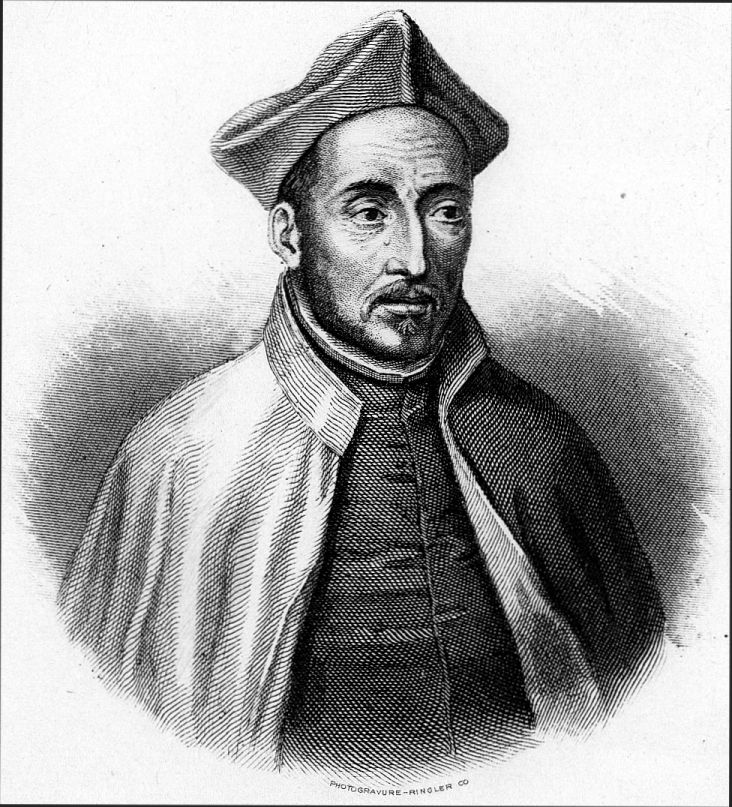
But in spite of such variations from the old monastic type, the Society of Jesus would doubtless never have appeared, had not the way for its existence been paved by previous monastic societies. Its aims and its methods were the natural sequence of monastic history. They were merely a development of past experiences, for the objects of the society were practically the objects of the Mendicants; the vows were the same with a change of emphasis. The abandonment of austerities as a means of salvation or spiritual power was the natural fruit of past experiments that had proved the uselessness of asceticism merely for the sake of acquiring a spirit of self-denial. The extirpation of heresy undertaken by Ignatius had already been attempted by the friars, while the education of the young had long been carried on with considerable success by the Benedictine and Dominican monks. The spirit of its founder, however, gave the Society of Jesus a unique character, and monasticism now passed out from the cell forever. The Jesuit may fairly be regarded as a monk, unlike any of his predecessors but nevertheless the legitimate fruit of centuries of monastic experience.