Front matter (continued 2)
Reading edition
Hemipenes
The hemipenes of Conophis are moderately caliculate, having spines covering the surface from the base to near the apex (fig. 9). These spines are largest near the base and are reduced to small papillate projections near the apex. The apex terminates in a small disc having three to five laminae in C. vittatus and one lamina in C. lineatus concolor. The sulcus is bifurcate; the fork is near the base and almost gives the appearance of two sulci on some specimens. Distally the apices are widely separated, and the intervening space gives the hemipenis a slightly bilobed appearance in some species (especially C. vittatus) or a deeply bilobed appearance in others (especially C. lineatus concolor).
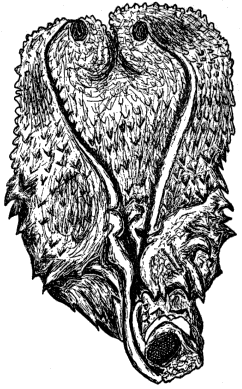
Fig. 9. The everted left hemipenis of Conophis vittatus (UMMZ 82650). × 5.
The everted hemipenis reaches posteriorly to the eighth subcaudal scale. The sulcus bifurcates at the third subcaudal scale. The situation is similar in situ (Cope, 1895:pl. 28, fig. 2).
There are no apparent hemipenial differences among the species of the genus Conophis. As can be seen in the above description, the hemipenis of C. vittatus is less bilobed and has a more pronounced disc at the apex than the others. The hemipenis of C. lineatus concolor is most bilobed, but has the smallest apical disc. The other species and subspecies vary widely within these extremes.
Food and Feeding
Conophis eats mostly small lizards, especially Cnemidophorus. In México Conophis occurs in semi-arid habitat where Cnemidophorus is common. A specimen each of Conophis vittatus and C. lineatus lineatus were obtained while I was collecting Cnemidophorus. The only record of Conophis having fed on a warm-blooded vertebrate was obtained in the course of this study, when I recovered from the stomach of a Conophis lineatus concolor (CNHM 36299) from Chichén Itzá, Yucatán, a heteromyid rodent (Heteromys gaumeri).
Ralph Axtell (personal communication) observed Conophis actively searching for food at dusk. His observations were made near Tehuantepec, Oaxaca, and the snakes were seen to chase lizards of the genus Cnemidophorus. Near Alvarado, Veracruz, in the late afternoon, I watched a Conophis lineatus lineatus follow a lizard into a hole.
Mittleman (1944:122) presents the only discussion of the mode of feeding of a captive specimen of Conophis lineatus ssp. When presented with a Thamnophis slightly smaller than itself, the Conophis struck, and within eight minutes immobilized the Thamnophis. Within one-half hour the Thamnophis was swallowed. Three days later the Conophis ate another Thamnophis, though still distended from its first meal; nine days later it ate a Storeria. In the course of several months, the Conophis ate various toads and hylids and two more Storeria. Apparently members of the genus Conophis do not constrict their prey, but rely upon a combination of loss of blood and action of the venom to completely immobilize their prey.
Ditmars (1931:pls. 26-27) showed three photographs of "Conophis lineatus" (actually Conophis pulcher) ingesting another snake, identified by him as a young Ophis (= Xenodon) colubrinus.
Effect of Poison
The rear fangs of these snakes are large for the size of the snake. Various collectors have been bitten, and several reports of the effect of the poison have been published. The snakes are aggressive and bite constantly while being handled. A field companion, Dale L. Hoyt, was bitten on the forefinger by a specimen of C. l. lineatus and immediately felt a burning sensation. The finger swelled, much as it would if stung by a wasp, but it returned to normal size in about twenty-four hours. Ditmars (1931:legend pl. 27) reported immediate burning pain and a localized swelling, an inch in diameter and half an inch high, which lasted for several hours. Mertens (1952b:83) reported merely that the hand of the gardener at the Instituto Tropical in San Salvador bled strongly for a full hour. Edward H. Taylor was bitten by a specimen of Conophis vittatus (Taylor and Smith, 1939:252); pain and swelling lasted for some time. Taylor (personal communication) is still troubled by damage incurred by that bite, which apparently resulted in mechanical damage to the second joint of the middle finger, for the joint swells when the finger is used or exercised. William E. Duellman (personal communication) was bitten on the hand in July, 1956. There was immediate pain and localized swelling, both of which disappeared several hours later.
TAXONOMIC RELATIONSHIPS AND EVOLUTION
The genus Conophis is known only from the Recent. Except that Conophis belongs to the subfamily xenodontinae and probably is of New World origin, little is known about the relationships of the genus. Auffenberg (1958) described a new genus and species of fossil colubrid snake from the Miocene of Montana as Dryinoides oxyrhachis and compared it with several recent genera. This specimen, of which there is a relatively complete skull and a series of vertebrae, seems most closely to resemble a specimen of Conophis lineatus dunni (UF 7657) from Honduras, with which it was compared in basic osteology. The two genera could be related, for the progenitors of Conophis possibly inhabited much of North America in the Miocene.
Another possibility is that the main stock of the xenodontines reached South America in earliest Tertiary times, and that the formation of the Panamanian and Colombian seaways that separated South America and Central America from the Late Paleocene to the middle of the Pliocene left the Conophis stock isolated in Middle America where members of the genus dispersed through semi-arid habitats.
Turning our attention now to the species within the genus, instead of the genus as a whole, Conophis vittatus is readily set apart from other members of the genus on the basis of the universal presence of seven supralabials. In basic coloration it also differs, having no stripe on the 1st scale-row, or spots on the venter, and a maximum of four broad stripes on the body. The other species appear to be more closely related; these make up the C. lineatus-group. Conophis nevermanni differs so much from the other species that it might be placed in a separate group. Nevertheless, the basic striped pattern, which is masked by the increased melanism of many specimens, indicates that nevermanni is more closely related to the lineatus-group than to vittatus. The lineatus-group, thus, consists of pulcher, nevermanni and the three subspecies of lineatus. In this group the color pattern is characterized by the high frequency of ventral spotting, darkening of part of the supralabials, dark pigmentation on the 1st scale-row, and more than four dark stripes on the body of adults. Conophis lineatus concolor, on which the dark pigmentation on the body apparently is secondarily lost, is an exception.
If differences in color pattern be used as an indication of the relationships between the species and subspecies of the genus Conophis, I would consider C. vittatus the most divergent unit. The subspecies of lineatus closely resemble one another and, as a unit, resemble pulcher from which they differ primarily in the position of the dorsalmost stripes. Conophis nevermanni is more divergent than is pulcher from the species lineatus, but probably is not so far removed from lineatus as is vittatus.
In the light of what has been pointed out immediately above with respect to resemblances of, and differences between, the species, an hypothesis to account for their formation and for their presence in the areas where they are today is the following: Concurrent with climatic fluctuations in the Late Pliocene and Pleistocene, the northernmost population differentiated into the species vittatus, and has subsequently spread north and west from the region of Tehuantepec, México. During the same period nevermanni became isolated in northern Costa Rica.
The species pulcher probably differentiated from the remaining lineatus stock during the Early Pleistocene orogenic upheaval in Guatemala. The pulcher stock was isolated on the Pacific Coastal slopes of Guatemala, while lineatus moved through the subhumid corridor of northern Middle America into México and southward toward Costa Rica (Stuart, 1954a). In the Late Pleistocene and Recent, pulcher moved back across the central Guatemalan highlands occupying its present range in northern Middle America. Primarily because of the formation of unsuitable habitat (wet forest) that presently separates the geographic ranges of populations of lineatus, this species differentiated into three subspecies.
SUMMARY
The genus Conophis Peters, 1860, contains four species. Three are monotypic and the fourth has three subspecies, making a total of six taxa.
The genus is characterized by maxillary teeth of equal size followed by a diastema and two enlarged grooved fangs. The scales are smooth, in 19 rows at mid-body, and 17 nearer the tail. The anal is divided, apical pits are lacking, the head shields are normal for a colubrid, and the hemipenis is bilobed having many large basal spines.
The six taxa are separated primarily on the basis of color pattern, but characters of scutellation, including numbers of dorsals, ventrals, caudals, and places of reduction of the number of dorsal scale-rows, were analyzed.
Snakes of this genus are distributed throughout semi-arid environments from southern México southward into Costa Rica. They feed upon lizards, primarily of the genus Cnemidophorus; in addition they are known to eat small rodents and other snakes.
Conophis is a member of the subfamily Xenodontinae and, as presently understood, has no known living close relatives. A single specimen of Dryinoides from the Miocene of Montana has been compared with this genus. The genus Conophis is thought to have evolved in Middle America. The present distribution and differentiation probably are primarily the result of climatic fluctuations in Middle America, which produced the areas of subhumid environment where Conophis presently lives.
LITERATURE CITED
Auffenberg, W.
1958. A new genus of colubrid snake from the Upper Miocene of North America. Amer. Mus. Novitates, 1874:1-16. February 27.
Cope, E. D.
1861. Contributions to the ophiology of Lower California, México and Central America. Proc. Acad. Nat. Sci. Philadelphia, 13:292-306. December 28.
1867. Fifth contribution to the herpetology of tropical America. Proc. Acad. Nat. Sci. Philadelphia, 18:317-323. February 20.
1871. Ninth contribution to the herpetology of tropical America. Proc. Acad. Nat. Sci. Philadelphia, 23(2):200-224. October 24.
1876. On the batrachia and reptilia of Costa Rica. Journ. Acad. Nat. Sci. Philadelphia, series 2, 8(4):93-154, 6 pls.
1895. The classification of the ophidia. Trans. Amer. Philos. Soc., 18:186-219, 33 pls. April 15.
1900. The crocodilians, lizards, and snakes of North America. Ann. Rept. U. S. Natl. Mus. for 1898, pp. 153-1270, 36 pls.
Ditmars, R. L.
1931. Snakes of the World. New York, The MacMillan Company, 1931. xi + 207 pp., 84 pls.
Dowling, H. G.
1951. A proposed standard system of counting ventrals in snakes. British Journ. Herpetology, 1(5):97-99, fig. 1.
Duellman, W. E.
1958. A preliminary analysis of the herpetofauna of Colima, Mexico. Occas. Papers Mus. Zool. Univ. Michigan, 589:1-22, March 21.
Duméril, A. M. C., Bibron, G., and Duméril, A. H. A.
1854. Érpétologie genérale, ou histoire naturelle des reptiles. Paris, 7(pt. 2):xii + 785. February 25. Atlas, 24 pp., 108 pls.
Duméril, A. H. A., Bocourt, M., and Mocquard, F.
1870-1909. Mission Scientifique au Mexique et dans l'Amerique Centrale … Etudes sur les Reptiles. Paris, vol. 2:xiv + 1012 pp., 77 pls.
Garman, S.
1884a. The North American reptiles and batrachians. Bull. Essex Inst., 16:1-46. January 9.
1884b. The reptiles and batrachians of North America. Mem. Mus. Comp. Zool., 8(3):xxxi + 185 pp., 9 pls. July.
Günther, A. C. L. G.
1858. Catalogue of colubrine snakes in the collection of the British Museum. London. xiv + 281 pp.
Huxley, J.
1942. Evolution. The Modern Synthesis. London. 645 pp.
Jan, G. and Sordelli, F.
1866. Iconographie Generale des Ophidiens. Milano. livr. 19, pls. 1-6. December.
1881. Iconographie Generale des Ophidiens. Milano. livr. 50, pls. 1-7. November.
Mayr, E.
1942. Systematics and the Origin of Species. New York, x + 334 pp., 29 figs.
Mayr, E., Linsley, E. G., and Usinger, R. L.
1953. Methods and Principles of Systematic Zoology. New York. ix + 328 pp., 45 figs.
Mertens, R.
1952a. Neues uber die Reptilienfauna von El Salvador. Zool. Anz., 148:87-93. February.
1952b. Die Amphibien und Reptilien von El Salvador auf grund der reisen von R. Mertens und A. Zilch. Abhand. Senken. Naturw. Gesell., 487:83, 1 Kart., 16 taf. December 1.
Mittleman, M. B.
1944. Feeding habits of a Central American opisthoglyph snake. Copeia, no. 2:122. June 30.
Neill, W. T. and Allen, R.
1961. Further studies on the herpetology of British Honduras. Herpetologica, 17(1):37-52. April 15.
Parker, W. K.
1878. On the structure and development of the skull in the common snake (Tropidonotus natrix). Phil. Trans. Roy. Soc. London, pt. 2:385-417, pp., pls. 27-33.
Peters, W.
1860. Drei neue amerikanisches Schlangen. Monatsb. Akad. Wiss. Berlin, 1860:517-521, pl., fig. 3. October.
Radovanovic, M.
1937. Osteologie des Schlangenkopfs. Jenaische Zeitschr. Naturw., 71(2):179-312.
Savage, J. M.
1949. Notes on the Central American snake, Conophis lineatus dunni Smith, with a record from Honduras. Trans. Kansas Acad. Sci., 50:483-486. December 31.
Schmidt, K. P.
1928. Reptiles collected in Salvador for the California Institute of Technology. Zool. Ser. Field Mus. Nat. Hist., 12(16):193-201. November 21.
Schmidt, K. P. and Inger, R. F.
1957. Living Reptiles of the World. Garden City, New York, Hanover House. 287 pp.
Smith, H. M.
1941. Notes on snakes of the genus Conophis. Journ. Washington Acad. Sci., 31(3):117-124. March 15.
Smith, H. M. and Taylor, E. H.
1950. Type localities of Méxican reptiles and amphibians. Univ. Kansas Sci. Bull., 33:313-380. March 20.
Stuart, L. C.
1948. The amphibians and reptiles of Alta Verapaz, Guatemala. Misc. Publ. Mus. Zool. Univ. Michigan, 69:1-109. June 12.
1954a. A description of a subhumid corridor across northern Central America, with comments on its herpetofaunal indicators. Contr. Lab. Vert. Biol. Univ. Michigan, 65:1-26 pp., 6 pls. March.
1954b. Herpetofauna of the southeast highlands of Guatemala. Contr. Lab. Vert. Biol. Univ. Michigan, 68:1-65 pp., 3 pls. November.
Szunyoghy, J.
1932. Beitrage zur vergleichenden Formenlehre des Colubridenschadels, nebst einer Kraniologischen Synopsis der fossilen Schlangen Ungarns. Acta Zool., 13:1-56.
Taylor, E. H.
1955. Additions to the known herpetological fauna of Costa Rica with comments on other species. No. II. Univ. Kansas Sci. Bull., 37:299-575. October 15.
Taylor, E. H. and Smith, H. M.
1939. Miscellaneous notes on Mexican snakes. Univ. Kansas Sci. Bull., 25:239-258. July 10.
Wettstein, O.
1934. Ergibnisse der osterreichischen biologischen Costa Rica—Expedition 1930. Die Amphibia und Reptilien. Stiz. Akad. Wiss. Wien, mathem-naturw. kl., Abt. 1, bd. 143:1-39.
Transmitted November 30, 1962.
29-5936

UNIVERSITY OF KANSAS PUBLICATIONS
MUSEUM OF NATURAL HISTORY
Institutional libraries interested in publications exchange may obtain this series by addressing the Exchange Librarian, University of Kansas Library, Lawrence, Kansas. Copies for individuals, persons working in a particular field of study, may be obtained by addressing instead the Museum of Natural History, University of Kansas, Lawrence, Kansas. There is no provision for sale of this series by the University Library, which meets institutional requests, or by the Museum of Natural History, which meets the requests of individuals. However, when individuals request copies from the Museum, 25 cents should be included, for each separate number that is 100 pages or more in length, for the purpose of defraying the costs of wrapping and mailing.
* An asterisk designates those numbers of which the Museum's supply (not the Library's supply) is exhausted. Numbers published to date, in this series, are as follows:
Vol. 1. Nos. 1-26 and index. Pp. 1-638, 1946-1950.
*Vol. 2. (Complete) Mammals of Washington. By Walter W. Dalquest. Pp. 1-444, 140 figures in text. April 9, 1948.
Vol. 3. *1. The avifauna of Micronesia, its origin, evolution, and distribution. By Rollin H. Baker. Pp. 1-359, 16 figures in text. June 12, 1951.
*2. A quantitative study of the nocturnal migration of birds. By George H. Lowery, Jr. Pp. 361-472, 47 figures in text. June 29, 1951.
3. Phylogeny of the waxwings and allied birds. By M. Dale Arvey. Pp. 473-530, 530, 49 figures in text, 13 tables. October 10. 1951.
*4. Birds from the state of Veracruz, Mexico. By George H. Lowery, Jr., and Walter W. Dalquest. Pp. 531-649, 7 figures in text, 2 tables. October 10, 1951.
Index. Pp. 651-681.
*Vol. 4. (Complete) American weasels. By E. Raymond Hall. Pp. 1-466, 41 plates, 31 figures in text. December 27, 1951.
Vol. 5. Nos. 1-37 and index. Pp. 1-676, 1951-1953.
*Vol. 6. (Complete) Mammals of Utah, taxonomy and distribution. By Stephen D. Durrant. Pp. 1-549, 91 figures in text, 30 tables. August 10, 1952.
Vol. 7. Nos. 1-15 and index. Pp. 1-651, 1952-1955.
Vol. 8. Nos. 1-10 and index. Pp. 1-675, 1954-1956.
Vol. 9. *1. Speciation of the wandering shrew. By James S. Findley. Pp. 1-68, 18 figures in text. December 10, 1955.
2. Additional records and extension of ranges of mammals from Utah. By Stephen D. Durrant, M. Raymond Lee, and Richard M. Hansen. Pp. 69-80. December 10, 1955.
3. A new long-eared myotis (Myotis evotis) from northeastern Mexico. By Rollin H. Baker and Howard J. Stains. Pp. 81-84. December 10, 1955.
4. Subspeciation in the meadow mouse, Microtus pennsylvanicus, in Wyoming. By Sydney Anderson. Pp. 85-104, 2 figures in text. May 10, 1956.
5. The condylarth genus Ellipsodon. By Robert W. Wilson. Pp. 105-116, 6 figures in text. May 19, 1956.
6. Additional remains of the multituberculate genus Eucosmodon. By Robert W. Wilson. Pp. 117-123, 10 figures in text. May 19, 1956.
7. Mammals of Coahulia, Mexico. By Rollin H. Baker. Pp. 125-335, 75 figures in text. June 15, 1956.
8. Comments on the taxonomic status of Apodemus peninsulae, with description of a new subspecies from North China. By J. Knox Jones, Jr. Pp. 337-346, 1 figure in text, 1 table. August 15, 1956.
9. Extensions of known ranges of Mexican bats. By Sydney Anderson. Pp. 347-351. August 15, 1956.
10. A new bat (Genus Leptonycteris) from Coahulia. By Howard J. Stains. Pp. 353-356. January 21, 1957.
11. A new species of pocket gopher (Genus Pappogeomys) from Jalisco, Mexico. By Robert J. Russell. Pp. 357-361. January 21, 1957.
12. Geographic variation in the pocket gopher, Thomomys bottae, in Colorado. By Phillip M. Youngman. Pp. 363-384, 7 figures in text. February 21, 1958.
13. New bog lemming (genus Synaptomys) from Nebraska. By J. Knox Jones, Jr. Pp. 385-388. May 12, 1958.
14. Pleistocene bats from San Josecito Cave, Nuevo León, México. By J. Knox Jones, Jr. Pp. 389-396. December 19, 1958.
15. New subspecies of the rodent Baiomys from Central America. By Robert L. Packard. Pp. 397-404. December 19, 1958.
16. Mammals of the Grand Mesa, Colorado. By Sydney Anderson. Pp. 405-414, 1 figure in text, May 20, 1959.
17. Distribution, variation, and relationships of the montane vole, Microtus montanus. By Sydney Anderson. Pp. 415-511, 12 figures in text, 2 tables. August 1, 1959.
18. Conspecificity of two pocket mice, Perognathus goldmani and P. artus. By E. Raymond Hall and Marilyn Bailey Ogilvie. Pp. 513-518, 1 map, January 14, 1960.
19. Records of harvest mice, Reithrodontomys, from Central America, with description of a new subspecies from Nicaragua. By Sydney Anderson and J. Knox Jones, Jr. Pp. 519-529. January 14, 1960.
20. Small carnivores from San Josecito Cave (Pleistocene), Nuevo León, México. By E. Raymond Hall. Pp. 531-538, 1 figure in text. January 14, 1960.
21. Pleistocene pocket gophers from San Josecito Cave, Nuevo León, México. By Robert J. Russell. Pp. 539-548, 1 figure in text. January 14, 1960.
22. Review of the insectivores of Korea. By J. Knox Jones, Jr., and David H. Johnson. Pp. 549-578. February 23, 1960.
23. Speciation and evolution of the pygmy mice, genus Baimoys. By Robert L. Packard. Pp. 579-670, 4 plates, 12 figures in text. June 16, 1960.
Index. Pp. 671-690
Vol. 10. 1. Studies of birds killed in nocturnal migration. By Harrison B. Tordoff and Robert M. Mengel. Pp. 1-44, 6 figures in text, 2 tables. September 12, 1956.
2. Comparative breeding behavior of Ammospiza caudacuta and A. maritima. By Glen E. Woolfenden. Pp. 45-75, 6 plates, 1 figure. December 20, 1956.
3. The forest habitat of the University of Kansas Natural History Reservation. By Henry S. Fitch and Ronald R. McGregor. Pp. 77-127, 2 plates, 7 figures in text, 4 tables. December 31, 1956.
4. Aspects of reproduction and development in the prairie vole (Microtus ochrogaster). By Henry S. Fitch. Pp. 129-161, 8 figures in text, 4 tables. December 19, 1957.
5. Birds found on the Arctic slope of northern Alaska. By James W. Bee. Pp. 163-211, plates 9-10, 1 figure in text. March 12, 1958.
*6. The wood rats of Colorado: distribution and ecology. By Robert B. Finley, Jr. Pp. 213-552, 34 plates, 8 figures in text, 35 tables. November 7, 1958.
7. Home ranges and movements of the eastern cottontail in Kansas. By Donald W. Janes. Pp. 553-572, 4 plates, 3 figures in text. May 4, 1959.
8. Natural history of the salamander, Aneides hardyi. By Richard F. Johnston and Gerhard A. Schad. Pp. 573-585. October 8, 1959.
9. A new subspecies of lizard, Cnemidophorus sacki, from Michoacán, México. By William E. Duellman. Pp. 587-598, 2 figures in text. May 2, 1960.
10. A taxonomic study of the middle American snake, Pituophis deppei. By William E. Duellman. Pp. 599-610. 1 plate, 1 figure in text. May 2, 1960.
Index. Pp. 611-626.
Vol. 11. Nos. 1-10 and index. Pp. 1-703, 1958-1960.
Vol. 12. 1. Functional morphology of three bats: Sumops, Myotis, Macrotus. By Terry A. Vaughan. Pp. 1-153, 4 plates, 24 figures in text. July 8, 1959.
*2. The ancestry of modern Amphibia: a review of the evidence. By Theodore H. Eaton, Jr. Pp. 155-180, 10 figures in text. July 10, 1959.
3. The baculum in microtine rodents. By Sydney Anderson. Pp. 181-216, 49 figures in text. February 19, 1960.
*4. A new order of fishlike Amphibia from the Pennsylvanian of Kansas. By Theodore H. Eaton, Jr., and Peggy Lou Stewart. Pp. 217-240, 12 figures in text. May 2, 1960.
5. Natural history of the bell vireo. By Jon C. Barlow. Pp. 241-296, 6 figures in text. March 7, 1962.
6. Two new pelycosaurs from the lower Permian of Oklahoma. By Richard C. Fox. Pp. 297-307, 6 figures in text. May 21, 1962.
7. Vertebrates from the barrier island of Tamaulipas, México. By Robert K. Selander, Richard F. Johnston, B. J. Wilks, and Gerald G. Raun. Pp. 309-345, pls. 5-8. June 18, 1962.
8. Teeth of Edestid sharks. By Theodore H. Eaton, Jr. Pp. 347-362, 10 figures in text. October 1, 1962.
More numbers will appear in volume 12.
Vol. 13. 1. Five natural hybrid combinations in minnows (Cyprinidae). By Frank B. Cross and W. L. Minckley. Pp. 1-18. June 1, 1960.
2. A distributional study of the amphibians of the Isthmus of Tehuantepec, México. By William E. Duellman. Pp. 19-72, pls. 1-8, 3 figures in text. August 16, 1960.
3. A new subspecies of the slider turtle (Pseudemys scripta) from Coahulia, México. By John M. Legler. Pp. 73-84, pls. 9-12, 3 figures in text. August 16, 1960.
4. Autecology of the copperhead. By Henry S. Fitch. Pp. 85-288, pls. 13-20, 26 figures in text. November 30, 1960.
5. Occurrence of the garter snake, Thamnophis sirtalis, in the Great Plains and Rocky Mountains. By Henry S. Fitch and T. Paul Maslin. Pp. 289-308, 4 figures in text. February 10, 1961.
6. Fishes of the Wakarusa river in Kansas. By James E. Deacon and Artie L. Metcalf. Pp. 309-322, 1 figure in text. February 10, 1961.
7. Geographic variation in the North American cyprinid fish, Hybopsis gracilis. By Leonard J. Olund and Frank B. Cross. Pp. 323-348, pls. 21-24, 2 figures in text. February 10, 1961.
8. Descriptions of two species of frogs, genus Ptychohyla; studies of American hylid frogs, V. By William E. Duellman. Pp. 349-357, pl. 25, 2 figures in text. April 27, 1961.
9. Fish populations, following a drought, in the Neosho and Marais des Cygnes rivers of Kansas. By James Everett Deacon. Pp. 359-427, pls. 26-30, 3 figs. August 11, 1961.
10. Recent soft-shelled turtles of North America (family Trionychidae). By Robert G. Webb. Pp. 429-611, pls. 31-54, 24 figures in text. February 16, 1962.
Index. Pp. 613-624.
Vol. 14. 1. Neotropical bats from western México. By Sydney Anderson. Pp. 1-8. October 24, 1960.
2. Geographic variation in the harvest mouse. Reithrodontomys megalotis, on the central Great Plains and in adjacent regions. By J. Knox Jones, Jr., and B. Mursaloglu. Pp. 9-27, 1 figure in text. July 24, 1961.
3. Mammals of Mesa Verde National Park, Colorado. By Sydney Anderson. Pp. 29-67, pls. 1 and 2, 3 figures in text. July 24, 1961.
4. A new subspecies of the black myotis (bat) from eastern Mexico. By E. Raymond Hall and Ticul Alvarez. Pp. 69-72, 1 figure in text. December 29, 1961.
5. North American yellow bats, "Dasypterus," and a list of the named kinds of the genus Lasiurus Gray. By E. Raymond Hall and J. Knox Jones, Jr. Pp. 73-98, 4 figures in text. December 29, 1961.
6. Natural history of the brush mouse (Peromyscus boylii) in Kansas with description of a new subspecies. By Charles A. Long. Pp. 99-111, 1 figure in text. December 29, 1961.
7. Taxonomic status of some mice of the Peromyscus boylii group in eastern Mexico, with description of a new subspecies. By Ticul Alvarez. Pp. 113-120, 1 figure in text. December 29, 1961.
8. A new subspecies of ground squirrel (Spermophilus spilosoma) from Tamaulipas, Mexico. By Ticul Alvarez. Pp. 121-124. March 7, 1962.
9. Taxonomic status of the free-tailed bat, Tadarida yucatanica Miller. By J. Knox Jones, Jr., and Ticul Alvarez. Pp. 125-133, 1 figure in text. March 7, 1962.
10. A new doglike carnivore, genus Cynaretus, from the Clarendonian Pliocene, of Texas. By E. Raymond Hall and Walter W. Dalquest. Pp. 135-138, 2 figures in text. April 30, 1962.
11. A new subspecies of wood rat (Neotoma) from northeastern Mexico. By Ticul Alvarez. Pp. 139-143. April 30, 1962.
12. Noteworthy mammals from Sinaloa, Mexico. By J. Knox Jones, Jr., Ticul Alvarez, and M. Raymond Lee. Pp. 145-159, 1 figure in text. May 18, 1962.
13. A new bat (Myotis) from Mexico. By E. Raymond Hall. Pp. 161-164, 1 figure in text. May 21, 1962.
14. The mammals of Veracruz. By E. Raymond Hall and Walter W. Dalquest. Pp. 165-362, 2 figures. May 20, 1963.
15. The recent mammals of Tamaulipas, México. By Ticul Alvarez. Pp. 363-473, 5 figures in text. May 20, 1963.
More numbers will appear in volume 14.
Vol. 15. 1. The amphibians and reptiles of Michoacán, México. By William E. Duellman. Pp. 1-148, pls. 1-6, 11 figures in text. December 20, 1961.
2. Some reptiles and amphibians from Korea. By Robert G. Webb, J. Knox Jones, Jr., and George W. Byers. Pp. 149-173. January 31, 1962.
3. A new species of frog (Genus Tomodactylus) from western México. By Robert G. Webb. Pp. 175-181, 1 figure in text. March 7, 1962.
4. Type specimens of amphibians and reptiles in the Museum of Natural History, the University of Kansas. By William E. Duellman and Barbara Berg. Pp. 183-204. October 26, 1962.
5. Amphibians and Reptiles of the Rainforests of Southern El Petén, Guatemala. By William E. Duellman. Pp. 205-249, pls. 7-10, 6 figures in text. October 4, 1963.
6. A revision of snakes of the genus Conophis (Family Colubridae, from Middle America). By John Wellman. Pp. 251-295, 9 figures in text. October 4, 1963.
More numbers will appear in volume 15.
Transcriber's Notes
For consistancy, a number of word which had alternate spellings were altered to match the most prevalent version used. For example, where the word Mexico was used in the body of the article, the more frequent spelling (México) was substituted. However, in the reference sections, the spelling was not altered as that may have been the spelling used by the article's author. All occurrances of Érpétologie Genérale were correcteded to Erpétologie Générale (Pp. 255, 262, 267, 277, and 278).
On page 279 under Variation there appears to be a miscalculation:
668 mm. + 182 mm. = 850 mm. not 840 as in original text.
Typographical Corrections
Page Correction
264 immaculaate ⇒ immaculate
264 chacteristic ⇒ characteristic
266 elevatons ⇒ elevations
267 Dumeril ⇒ Duméril
277 Duméil ⇒ Duméril
279 Tehauntepec ⇒ Tehuantepec
280 Deleted repeated "Oaxaca,"
292 primarly ⇒ primarily
295 hertetofaunal ⇒ herpetofaunal
i V. 9 No. 12 - Pp. 363-387 ⇒ Pp. 363-384
iii V. 13 No. 8 - Decriptions ⇒ Descriptions
iii V. 14 No. 8 - anad ⇒ and
iii V. 14 No. 14 - anad ⇒ and