Church of St. Cybi. SERMON
Reading edition
Preached on the Reopening of St. Cybi’s Church, Holyhead, after Restoration, 1879, by ARTHUR PENRHYN STANLEY, D.D., Dean of Westminster.
“Look unto the rock whence ye are hewn, and to the hole of the pit whence ye are digged.
“Look unto Abraham your father, and unto Sarah that bare you.”
Isaiah li. 1, 2.
We have been reading for several Sundays in church the history of the Patriarchs. The words of the Prophet which I have taken for my text give us the key to that history. We all know the value of the graces and gifts we derive from our families. Who is there that does not recognise in himself or in those about him what has come to him and them from father, mother—nay, it may even be grandfather or great-grandfather, uncle and aunt—or what may be breathed again into him by brother, sister, cousin. These, if anything in the world, are gifts to us from without. These, if anything, are gifts from God. What we drink in, as we say, with our mother’s milk our mother’s tongue, our mother’s faith and prayers, it may be, our mother’s character; what we have had impressed upon us of our father’s spirit, of our “fatherland,” of our father’s blood—the innocent joys, the tragical sorrows of home and household;—these are the materials out of which our souls and spirits are fashioned. We may have our own personal character besides, but without these our characters would not be what they are.
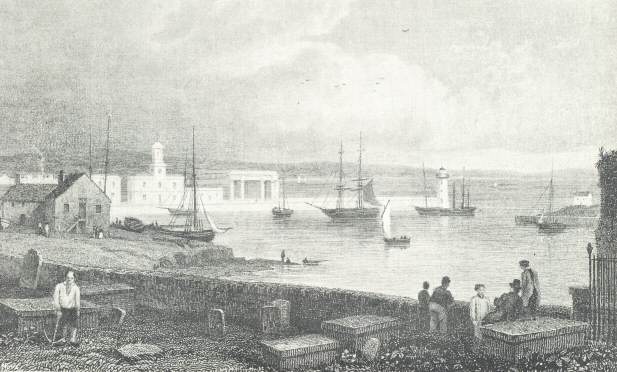
Now, what is thus true of the family in respect of individuals, is true of races of men in respect both of nations and individuals; and this is one lesson which those early chapters in the Book of Genesis impress upon us. They tell us of the family. But, over and above this, they tell us of the race; they tell us of the immense importance to the Israelites, and through them to us, of the fact that they sprang from no ignoble or commonplace nation, but from those whom God had specially selected for His work on earth—from the tribe of Jacob, from the seed of Abraham, from the race of Shem. This is the true “predestination” of God’s counsels; this is the true “election” of the chosen vessels. Race and nationality, as well as family, are the precious gifts of God, to be used and recognised and taken account of as amongst the mighty moving powers of the world. If we wish to see what work we or others are called to do, we must not forget to look back to the ancient rock from whence we are hewn, and the deep pit from whence we are digged.
There is also the lesson which all such inquiries bring before us, and which is specially impressed upon us by these early records of the Bible—the advantage of being transported to remote ages and scenes wholly unlike our own. In those stories of Abraham, Isaac, and Jacob there is a freshness as of the dew of the womb of the morning. We feel younger as we read; they refresh us in the weary pilgrimage of life; we catch the early fragrance of the first dawn of the human race. There had been many great epochs and many great men in Israel since the time of Abraham and Sarah: there had been Jacob, or Israel, from whom they derived their name and some of the chief elements of their character; there had been Moses, under whom they had won their freedom and their laws, and Joshua, by whose prowess they had conquered the Promised Land, and David, with all the line of kings and prophets that followed. But still there was a charm about their first ancestor, Abraham, and their first mother, Sarah, which they could find in no later times. There was a delight in seeing the peculiar blessings which they had gained from those old primitive patriarchs, and for which they were to be ever thankful to God, through whom these and all other gifts had come.
I. May I take up the Prophet’s words and the lessons of the Book of Genesis, and give them a special application which this day suggests. We are met to celebrate the reopening of one of the most ancient churches of the Welsh people. Most of the building has stood for five hundred years—one aged arch, we are told, for a thousand years. [27] Let us then, Englishmen or Welshmen, who are assembled here, ask, in no spirit of boastfulness or rivalry, but of thankfulness to God, what are the special gifts for good which the British Celtic race has contributed to our common country? As the Israelites had for their ancestors Abraham and Sarah, before their own special patriarch Israel or Jacob—ancestors by whom they were connected with other races besides their own, Edomite, Arabian, Mesopotamian—so we were Britons before we were Englishmen; and we by that Celtic parentage are made one in blood with that old original people which is parent alike to the Welsh, the Irish, the Scottish, and the French nations.
What, then, are the best peculiarities of the Welsh people?
(1) To the ancient Cambrian British race we owe that distant atmosphere of romance, of sentiment, of poetry, which neither Saxon nor Norman have given or could have given us.
These mountains and vales and creeks and bays, the refuge of the ancient inhabitants retreating before the invader, have retained, even in their very names and forms, a poetic inspiration which has elsewhere passed away.
The four Welsh dioceses each of them speak of this poetic, mystic past. That marvellous cathedral of St. David’s, in its secluded basin at the very extremity of the land, shut out from the world and enclosed as within a natural sanctuary, with its craggy coast and headland and island and glistening shore and purple cliff, every spring and bay and inlet teeming with some strange legend of those primitive days of David and Nun and Lily; or, again, that lovely cathedral of St. Teilo, on the banks of the Taff, in its green vale, with its crystal stream and its solemn yews; or, again, that lesser cathedral of St. Asaph, founded by the most romantic of all the saints of the Celtic race of the north—the darling Mungo of the Scottish nation—founded as he wandered to and from his own Glasgow on the Clyde; or, again, this diocese in which we are now assembled, with Snowdon as the guardian mount that stands round about its small Jerusalem, this ancient refuge of the Druids and Bards of old from the Roman conqueror, this Holy Mount of the Holy Island of Mona, stretching out its arms to the neighbouring shore of Ireland, another Isle of Saints:—Look at all these ancient sanctuaries, east and west, north and south. Look at the rock from which we were hewn and the deep pit from which we were digged. Despise not these feelings which God by a thousand marks has stamped with His own peculiar approval. Cherish these venerable ruins and monuments of early times.
There is a legend which tells us that if we take a clod of turf from St. David’s churchyard, and stand upon it by the shore of that western sea, we shall see rising in the distant waters the green islands of the fairies, the vision of a land, not indeed of heaven, but still not of this earth. It is by taking our stand on that old British soil that we can catch for ourselves a glimpse of a higher, more romantic, ideal world than any other part of English history can show. The Bards, indeed, themselves have perished—
Cold is Cadwallo’s tongue That hush’d the stormy main; Brave Urien sleeps upon his craggy bed; Mountains, ye mourn in vain Modred, whose magic song Made huge Plinlimmon bow his cloud-topt head.
But the world which they created still lives in that marvellous cycle of legends which gather round the name of King Arthur, and which, in our own day, has given to the first of our living poets the worthiest subject which our island could furnish—the career of the stainless king and his gallant knights, which our children and our children’s children will read with their souls more and more raised to nobler and higher thoughts. The rocks and seas on which we look from Holyhead—“the shaggy top of Mona high,”—the wide bay “where Deva spreads her wizard stream,” inspired in Milton some of his wildest and most pathetic strains in speaking of his loved companion Lycidas, who was lost off these very coasts. The solid prosaic sense of the Saxon is necessary; the energy and enterprise of the Norman is useful; have been indispensable to the greatness of Britain; but do not forget the romance and the song and the sentiment of the mountains and the minstrels of Wales. Leave a corner in your minds for the visions of other days. Remember that there are things in heaven and earth more than our plain homely English philosophy has dreamed of. Such innocent, beautiful stories and thoughts, from whatever quarter they come, though not in themselves religious, yet smooth and purify the course of life. They prepare us for the poetry of parables like the Pilgrim’s Progress—they prepare us for the poetry of the Psalms and of the Prophets of the Bible. As these mountains, these bays, these rocks, which gave to us in their early days our poetic and romantic thoughts, have, in these later days, given to us our quarries and our harbours and our lighthouses and our piers, so it is that out of every generous and inspiring thought there may come at last the most solid, the most useful, the most comprehensive materials of God’s glory and man’s usefulness.
(2) There is another aspect of this element in the national character of the old Celtic races.
I have said that the names of the old Welsh saints remind us of the antique poetic phase of the national British Church. But they also remind us of its devotional emotions and fervent enthusiasm. We know but little of St. Cybi or St. Seiriol—those gaunt hermits, wrapped up in shaggy goat-skins, with their sacred bells and their favourite animals. But we know thus much—that they were amongst the enthusiastic spirits who appeared in those dark times to keep up by a strange unearthly presence the sense of things unseen. And such as they were, with their childish visions and their solitary musings, such was the old British Church altogether—hardly ever leaving a permanent impression on the great practical world without, though producing now and then a holy prelate like St. David, now and then a holy anchorite like St. Cybi, now and then a holy heresiarch like Pelagius. And so in later times, the same passionate religious sentiment has shown itself in the fervour with which the Welsh people received the ministrations and the influence of John Wesley and George Whitefield, and the affection with which they clung to the hymns of their own rude Methodist poets. Amidst much folly and much obstinacy and much waywardness, all honour to those old saints who achieved what the Norman prelates could not achieve,—to those Methodist teachers who reached classes which perhaps could not have been reached by better and wiser men.
Such enthusiasm is not sufficient by itself to produce true religion; it is compatible with a very imperfect morality and a very low stage of Christianity. Still it belongs to the great central fires which keep the human soul alive, and it has in various forms been God’s special gift to the Celtic races of mankind, especially in this country. If we were to remove it out of our national existence England would not be the great nation that she now is, and the English Church would lose one powerful means of raising the spiritual energies of the people. “Prove all things,” says the Apostle, and “hold fast that which is good”; but in the same breath, he says, “Quench not the spirit,” “Despise not prophesyings.” Quench not enthusiasm, despise not strong emotions: labour only to turn them into proper channels, so that they may help to make men more pure and more truthful—more near to God, more like to Christ. It is not only in the worship and teaching of our country that this enthusiasm shows itself. Listen to the account of the gallant deeds of Welsh soldiers, in the letter of an English officer writing to a friend, [32] describing the defence of Rorke’s Drift:—
“Private John Williams was posted, together with Private Joseph Williams and Private William Harrison, in a further ward of the hospital. They held it for more than an hour—so long as they had a round of ammunition left.
“When communication was for a time cut off, the Zulus were enabled to advance and burst open the door. A hand-to-hand conflict then ensued, during which Private Joseph Williams and two of the patients were dragged out and assegaied.
“Whilst the Zulus were occupied with the slaughter of those unfortunate men, a lull took place, which enabled Private John Williams (who with two of the patients were the only men left alive in the ward) to succeed in knocking a hole in the partition and taking the two patients with him into the next ward, where he found Private Henry Hook.
“These two men together, one man working whilst the other fought and held the enemy at bay with his bayonet, broke through three more partitions, and were thus enabled to bring eight more patients through a small window into the inner line of defence.
“In another ward facing the hill Private William Jones and Private Robert Jones had been placed. They defended their post to the last, and till six out of seven patients had been removed.
“Corporal William Allen and Frederick Hitch must also be mentioned. It was chiefly due to their courageous conduct that communication with the hospital was kept up at all, holding together at all costs a most dangerous post, raked in reverse by the enemy’s fire from the hill. They were both severely wounded, but their determined conduct enabled the patients to be withdrawn from the hospital, and when incapacitated by their wounds from fighting, they continued, as soon as their wounds were dressed, to serve out ammunition to their comrades through the night.”
Welshmen all of them.
That is the determined enthusiasm which all Welshmen ought to show not only in the battlefield, but against our worst foes at home—the foes of intemperance and dishonesty and hypocrisy and deceitfulness.
(3) There is one more addition which the Welsh people, the British element of our race, has made to the course of English history. There is something in the Celtic blood, something in the Cambrian stock, which, mingling with the Saxon and Norman races, has unquestionably produced a larger result, such as without it would, humanly speaking, have been difficult or impossible. That poetic refinement, that spiritual fervour, of which I have already spoken, has, for the most part, been nourished by seclusion from the active world. Yet there was one channel in which the old British character displayed itself that directly bore on practical life—namely, the quick temper, the vivacious intelligence, which impart to other useful qualities exactly the stimulus they most need. Not seldom can we trace in families the sudden turn given to a sluggish, steady, stagnant stock of purely English extraction by contact with the imaginative, lively, mercurial character of Welsh or Celtic parentage. And what is thus seen in private life may be also faintly traced in the great course of our national history.
I will not speak of individuals, though I might mention that two of the most stirring characters who ever filled the office of Dean of Westminster were Welshmen: one was Gabriel Goodman, one of the translators of the Bible, friend of Lord Burleigh; the other was John Williams, who in his earlier days was twice committed to the Tower, once by the King, and once by the Parliament, who defended the Castle of Conway against the army of the Commonwealth, and who now after his stormy life reposes in the lovely church of Llandegai, the last ecclesiastical Lord Keeper of Great Britain.
But there is a more general influence which has left its permanent mark on England. Within that old cathedral of St. David, of which I just now spoke, the most conspicuous tomb which rises in the midst of it, and which, according to the tradition of the place, saved the cathedral itself from destruction, is that of Edmund Tudor, father of Henry VII. and grandfather of Henry VIII., who, for its sake, spared the venerable church where it stands. This very church of Holyhead was in great part rebuilt in the time of Henry VII. son of that Edmund Tudor. The rose of the Tudor family is visible to this day on its walls. Owen Tudor, the ancestor of them all, was a native of this island of Anglesey. We are thus reminded of the fact, which we sometimes forget, that, after Saxon and Norman and Plantagenet had done their best and passed away, a Welsh and British dynasty at last was seated once more on the throne of Britain, and swayed the destinies of the whole empire.
When in Westminster Abbey we pass from the tombs of the earlier kings to the magnificent chapel of King Henry VII., it is a striking thought to any one, especially to any one who has a drop of the ancient Welsh blood in his veins, that he enters there on a new field of the history of England, inaugurated by a succession of princes whose boast it was to be descended, not from Edward the Confessor or William the Conqueror, but from Arthur and Llewellyn, and that about the tomb of the first Tudor sovereign, intertwined with the emblems of his English descent, is to be seen the Red Dragon of Cadwallader.
That Tudor race, in their quick understanding, in their fiery temper, the true representatives of their ancient Celtic lineage, were the instruments raised up by God’s providence at the critical season of the new birth of England in the Reformation, for guiding, stimulating, freshening the Church and the nation to the performance of new duties, the fulfilment of new hopes, the application of new truths.
The sharpness of wit and liveliness of mind which were amongst the precocious gifts of Henry and Edward and Elizabeth, were common to them with their Welsh ancestors, and contributed in no small degree to the fresh start which England then made in the movements of that moving age. These qualities, whenever found, though they are not the highest of gifts, are inestimable for enlivening, cheering, enkindling the more powerful and the more highly civilised to action and to enquiry. Cherish them, even if they sometimes outrun discretion; correct them, if so be, not by repressing them, but by striving to develop the opposite gifts which are needed to balance and to chasten them.
II. And this leads us to two general remarks in conclusion.
(1) First let us remember that these graces of the Cambrian or Celtic character, which our Heavenly Father has thus vouchsafed to us, are also by His good providence blended in the English race with exactly those qualities which furnish their counterpoise—with that self-control, that moral discipline, that solid steadiness of purpose, without which poetic sentiment, religious fervour, mental vivacity are often useless, or worse than useless.
The old hermit in his solitude, the preacher in his fervid appeal, was good; but the honest, manly Christian, doing his duty faithfully and truthfully in his own station of life, is better. The sailor who remembers on the broad sea that God’s eye is always upon him; the workman or tradesman who endeavours to render to his Maker the best of all services, the offering of honest labour, the offering of unadulterated food, the offering of an upright conscientious traffic; the railway official or partner who cheers and encourages friendless travellers by a kindly word or by a helping hand, not for reward, but for love of his fellow creatures,—these are the modes by which, far more than by sudden conversion or enthusiastic hymns, we can fulfil God’s goodwill towards us.
(2) Another remark, still more obvious, but one of which we sometimes lose sight in speaking of the good influences of race and nationality, is that the power of religion, of the Christian religion, though coloured by these several influences, is yet above and beyond and independent of them all. I spoke before of the old story which tells how he who stands on the turf from St. David’s churchyard and looks out on the western sea was believed to see in the distance the green island of the fairies. But there is a still better thing that can be done by each one of us, Saxon or Celt, Englishman or Briton, old and young, rich and poor. Take your stand on any good religious lesson, learnt from whatever quarter—any piece of fresh fragment of knowledge, cut out of your inner experience—a good text from your Bible, a good prayer from your prayer-book, a good hymn from your hymn-book, a good counsel, or example of friend or teacher anywhere, which has enabled you better to know yourself, and better to know what God is,—stand fast upon it, and look out over the wide sea of your future years, and the still wider ocean of eternity beyond, and from that green turf of duty or of knowledge you will see in the distance the islands, not of the fairies, but something far better—the islands of the blessed, of the eternal shores across the stormy waves of this troublesome world.
Such an example, such a memory, such a life [39] you have had in the recollection of her who devoted her life to the welfare of the people of Holyhead, who loved the Welsh nation with a constant love, who spoke their tongue as her own, who cherished all their traditions, who longed for the restoration of this venerable church, whose heart’s desire has been on this day fulfilled by its reproduction in all its antique simplicity, in all its gracious adaptation to our living needs. She was a Welshwoman to the heart’s core; but she was also a generous, loving, wise, Christian spirit; and when we stand round her grave, and in this church which is the monument of her goodness, we stand as it were on the fragment of St. David’s turf, and we look out beyond a wider than any earthly sea to those islands of the better land where she and the great family of God’s servants have gone before; the islands of eternal rest—the islands where truth and holiness have “room and verge enough” to flourish undisturbed by earthly tempests, unwarped by the winds of earthly cares—in the haven where they and we would all be, through the grace of God and the power of His Spirit in our Lord Jesus Christ.
On a granite cross standing upon rocky ground near Llanfawr, is engraven the following inscription by Dean Stanley.
To the dear memory of Ellin, forty-four years the beloved and loving wife of the Honble. William Owen Stanley of Penrhos, Lord Lieutenant of Anglesey. The constant friend of the poor and afflicted of her native Wales, with which, from youth to age, she was one in heart and speech, in word and deed. Born Nov. 9th, 1809. Died Nov. 24th, 1876. This was erected by her sorrowing husband.