VOLUME X (continued 3)
William F. Fleming translation
The Stoics and Platonics admitted a divine and universal nature; the Epicureans denied it. The pontiffs spoke only of a single God in their mysteries. Where then were the idolaters? All our declaimers exclaim against idolatry like little dogs, that yelp when they hear a great one bark.
As to the rest, it is one of the greatest errors of the "Dictionary" of Moréri to say, that in the time of Theodosius the younger, there remained no idolaters except in the retired countries of Asia and Africa. Even in the seventh century there were many people still heathen in Italy. The north of Germany, from the Weser, was not Christian in the time of Charlemagne. Poland and all the south remained a long time after him in what was called idolatry; the half of Africa, all the kingdoms beyond the Ganges, Japan, the populace of China, and a hundred hordes of Tartars, have preserved their ancient religion. In Europe there are only a few Laplanders, Samoyedes, and Tartars, who have persevered in the religion of their ancestors.
Let us conclude with remarking, that in the time which we call the middle ages, we dominated the country of the Mahometans pagan; we treated as idolaters and adorers of images, a people who hold all images in abhorrence. Let us once more avow, that the Turks are more excusable in believing us idolaters, when they see our altars loaded with images and statues.
A gentleman belonging to Prince Ragotski assured me upon his honor, that being in a coffee-house at Constantinople, the mistress ordered that he should not be served because he was an idolater. He was a Protestant, and swore to her that he adored neither host nor images. "Ah! if that is the case," said the woman, "come to me every day, and you shall be served for nothing."
IGNATIUS LOYOLA.
If you are desirous of obtaining a great name, of becoming the founder of a sect or establishment, be completely mad; but be sure that your madness corresponds with the turn and temper of your age. Have in your madness reason enough to guide your extravagances; and forget not to be excessively opinionated and obstinate. It is certainly possible that you may get hanged; but if you escape hanging, you will have altars erected to you.
In real truth, was there ever a fitter subject for the Petites-Maisons, or Bedlam, than Ignatius, or St. Inigo the Biscayan, for that was his true name? His head became deranged in consequence of his reading the "Golden Legend"; as Don Quixote's was, afterwards, by reading the romances of chivalry. Our Biscayan hero, in the first place, dubs himself a knight of the Holy Virgin, and performs the Watch of Arms in honor of his lady. The virgin appears to him and accepts his services; she often repeats her visit, and introduces to him her son. The devil, who watches his opportunity, and clearly foresees the injury he must in the course of time suffer from the Jesuits, comes and makes a tremendous noise in the house, and breaks all the windows; the Biscayan drives him away with the sign of the cross; and the devil flies through the wall, leaving in it a large opening, which was shown to the curious fifty years after the happy event.
His family, seeing the very disordered state of his mind, is desirous of his being confined and put under a course of regimen and medicine. He extricates himself from his family as easily as he did from the devil, and escapes without knowing where to go. He meets with a Moor, and disputes with him about the immaculate conception. The Moor, who takes him exactly for what he is, quits him as speedily as possible. The Biscayan hesitates whether he shall kill the Moor or pray to God for his conversion; he leaves the decision to his horse, and the animal, rather wiser than its master, takes the road leading to the stable.
Our hero, after this adventure, undertakes a pilgrimage to Bethlehem, begging his bread on the way: his madness increases as he proceeds; the Dominicans take pity on him at Manrosa, and keep him in their establishment for some days, and then dismiss him uncured.
He embarks at Barcelona, and goes to Venice; he returns to Barcelona, still travelling as a mendicant, always experiencing trances and ecstacies, and frequently visited by the Holy Virgin and Jesus Christ.
At length, he was given to understand that, in order to go to the Holy Land with any fair view of converting the Turks, the Christians of the Greek church, the Armenians, and the Jews, it was necessary to begin with a little study of theology. Our hero desires nothing better; but, to become a theologian, it was requisite to know something of grammar and a little Latin; this gives him no embarrassment whatever: he goes to college at the age of thirty-three; he is there laughed at, and learns nothing.
He was almost broken-hearted at the idea of not being able to go and convert the infidels. The devil, for this once, took pity on him. He appeared to him, and swore to him, on the faith of a Christian, that, if he would deliver himself over to him, he would make him the most learned and able man in the church of God. Ignatius, however, was not to be cajoled to place himself under the discipline of such a master; he went back to his class; he occasionally experienced the rod, but his learning made no progress.
Expelled from the college of Barcelona, persecuted by the devil, who punished him for refusing to submit to his instructions, and abandoned by the Virgin Mary, who took no pains about assisting her devoted knight, he, nevertheless, does not give way to despair. He joins the pilgrims of St. James in their wanderings over the country. He preaches in the streets and public places, from city to city, and is shut up in the dungeons of the Inquisition. Delivered from the Inquisition, he is put in prison at Alcala. He escapes thence to Salamanca, and is there again imprisoned. At length, perceiving that he is no prophet in his own country, he forms a resolution to go to Paris. He travels thither on foot, driving before him an ass which carried his baggage, money, and manuscripts. Don Quixote had a horse and an esquire, but Ignatius was not provided with either.
He experiences at Paris the same insults and injuries as he had endured in Spain. He is absolutely flogged, in all the regular form and ceremony of scholastic discipline, at the college of St. Barbe. His vocation, at length, calls him to Rome.
How could it possibly come to pass, that a man of such extravagant character and manners, should at length obtain consideration at the court of Rome, gain over a number of disciples, and become the founder of a powerful order, among whom are to be found men of unquestionable worth and learning? The reason is, that he was opinionated, obstinate, and enthusiastic; and found enthusiasts like himself, with whom he associated. These, having rather a greater share of reason than himself, were instrumental in somewhat restoring and re-establishing his own; he became more prudent and regular towards the close of his life, and occasionally even displayed in his conduct proofs of ability.
Perhaps Mahomet, in his first conversations with the angel Gabriel, began his career with being as much deranged as Ignatius; and perhaps Ignatius, in Mahomet's circumstances, would have performed as great achievements as the prophet; for he was equally ignorant, and quite as visionary and intrepid.
It is a common observation, that such cases occur only once: however, it is not long since an English rustic, more ignorant than the Spaniard Ignatius, formed the society of people called "Quakers"; a society far superior to that of Ignatius. Count Zinzendorf has, in our own time, formed the sect of Moravians; and the Convulsionaries of Paris were very nearly upon the point of effecting a revolution. They were quite mad enough, but they were not sufficiently persevering and obstinate.
IGNORANCE.
SECTION I.
There are many kinds of ignorance; but the worst of all is that of critics, who, it is well known, are doubly bound to possess information and judgment as persons who undertake to affirm and to censure. When they pronounce erroneously, therefore, they are doubly culpable.
A man, for example, composes two large volumes upon a few pages of a valuable book which he has not understood, and in the first place examines the following words:
"The sea has covered immense tracts.... The deep beds of shells which are found in Touraine and elsewhere, could have been deposited there only by the sea."
True, if those beds of shells exist in fact; but the critic ought to be aware that the author himself discovered, or thought he had discovered, that those regular beds of shells have no existence.
He ought to have said:
"The universal Deluge is related by Moses with the agreement of all nations."
1. Because the Pentateuch was long unknown, not only to the other nations of the world, but to the Jews themselves.
2. Because only a single copy of the law was found at the bottom of an old chest in the time of King Josiah.
3. Because that book was lost during the captivity.
4. Because it was restored by Esdras.
5. Because it was always unknown to every other nation till the time of its being translated by the Seventy.
6. Because, even after the translation ascribed to the Seventy, we have not a single author among the Gentiles who quotes a single passage from this book, down to the time of Longinus, who lived under the Emperor Aurelian.
7. Because no other nation ever admitted a universal deluge before Ovid's "Metamorphoses"; and even Ovid himself does not make his deluge extend beyond the Mediterranean.
8. Because St. Augustine expressly acknowledges that the universal deluge was unknown to all antiquity.
9. Because the first deluge of which any notice is taken by the Gentiles, is that mentioned by Berosus, and which he fixes at about four thousand four hundred years before our vulgar era; which deluge did not extend beyond the Euxine Sea.
10. Finally, because no monument of a universal deluge remains in any nation in the world.
In addition to all these reasons, it must be observed, that the critic did not even understand the simple state of the question. The only inquiry is, whether we have any natural proof that the sea has successively abandoned many tracts of territory? and upon this plain and mere matter-of-fact subject, M. Abbé François has taken occasion to abuse men whom he certainly neither knows nor understands. It is far better to be silent, than merely to increase the quantity of bad books.
The same critic, in order to prop up old ideas, now almost universally despised and derided, and which have not the slightest relation to Moses, thinks proper to say: "Berosus perfectly agrees with Moses in the number of generations before the Deluge."
Be it known to you, my dear reader, that this same Berosus is the writer who informs us that the fish Oannes came out to the river Euphrates every day, to go and preach to the Chaldæans; and that the same fish wrote with one of its bones a capital book about the origin of things. Such is the writer whom the ingenious abbé brings forward as a voucher for Moses.
"Is it not evident," he says, "that a great number of European families, transplanted to the coasts of Africa, have become, without any mixture of African blood, as black as any of the natives of the country?"
It is just the contrary of this, M. l'Abbé, that is evident. You are ignorant that the "reticulum mucosum" of the negroes is black, although I have mentioned the fact times innumerable. Were you to have ever so large a number of children born to you in Guinea, of a European wife, they would not one of them have that black unctuous skin, those dark and thick lips, those round eyes, or that woolly hair, which form the specific differences of the negro race. In the same manner, were your family established in America, they would have beards, while a native American will have none. Now extricate yourself from the difficulty, with Adam and Eve only, if you can.
"Who was this 'Melchom,' you ask, who had taken possession of the country of God? A pleasant sort of god, certainly, whom the God of Jeremiah would carry off to be dragged into captivity."
Ah, M. l'Abbé! you are quite smart and lively. You ask, who is this Melchom? I will immediately inform you. Melek or Melkom signified the Lord, as did Adoni or Adonai, Baal or Bel, Adad or Shadai, Eloi or Eloa. Almost all the nations of Syria gave such names to their gods; each had its lord, its protector, its god. Even the name of Jehovah was a Phoenician and proper name; this we learn from Sanchoniathon, who was certainly anterior to Moses; and also from Diodorus.
We well know that God is equally the God, the absolute master, of Egyptians and Jews, of all men and all worlds; but it is not in this light that he is represented when Moses appears before Pharaoh. He never speaks to that monarch but in the name of the God of the Hebrews, as an ambassador delivers the orders of the king his master. He speaks so little in the name of the Master of all Nature, that Pharaoh replies to him, "I do not know him." Moses performs prodigies in the name of this God; but the magicians of Pharaoh perform precisely the same prodigies in the name of their own. Hitherto both sides are equal; the contest is, who shall be deemed most powerful, not who shall be deemed alone powerful. At length, the God of the Hebrews decidedly carries the day; he manifests a power by far the greater; but not the only power. Thus, speaking after the manner of men, Pharaoh's incredulity is very excusable. It is the same incredulity as Montezuma exhibited before Cortes, and Atahualpa before the Pizarros.
When Joshua called together the Jews, he said to them: "Choose ye this day whom ye will serve, whether the gods which your father served, that were on the other side of the flood, or the gods of the Amorites in whose land ye dwell; but as for me and my house, we will serve the Lord." The people, therefore, had already given themselves up to other gods, and might serve whom they pleased.
When the family of Micah, in Ephraim, hire a Levitical priest to conduct the service of a strange god, when the whole tribe of Dan serve the same god as the family of Micah; when a grandson of Moses himself becomes a hired priest of the same god—no one murmurs; every one has his own god, undisturbed; and the grandson of Moses becomes an idolater without any one's reviling or accusing him. At that time, therefore, every one chose his own local god, his own protector.
The same Jews, after the death of Gideon, adore Baal-berith, which means precisely the same as Adonai—the lord, the protector; they change their protector.
Adonai, in the time of Joshua, becomes master of the mountains; but he is unable to overcome the inhabitants of the valleys, because they had chariots armed with scythes. Can anything more correctly represent the idea of a local deity, a god who is strong in one place, but not so in another?
Jephthah, the son of Gilead, and a concubine, says to the Moabites: "Wilt thou not possess what Chemosh, thy god, giveth thee to possess? So, whomsoever the Lord our God shall drive out from before us, them will we possess."
It is then perfectly proved, that the undistinguishing Jews, although chosen by the God of the universe, regarded him notwithstanding as a mere local god, the god of a particular territory of people, like the god of the Amorites, or that of the Moabites, of the mountains or of the valleys.
It is unfortunately very evident that it was perfectly indifferent to the grandson of Moses whether he served Micah's god or his grandfather's. It is clear, and cannot but be admitted, that the Jewish religion was not formed, that it was not uniform, till the time of Esdras; and we must, even then, except the Samaritans.
You may now, probably, have some idea of the meaning of this lord or god Melchom. I am not in favor of his cause—the Lord deliver me from such folly!—but when you remark, "the god which Jeremiah threatened to carry into slavery must be a curious and pleasant sort of deity," I will answer you, M. l'Abbé, with this short piece of advice:—"From your own house of glass do not throw stones at those of your neighbors."
They were the Jews who were at that very time carried off in slavery to Babylon. It was the good Jeremiah himself who was accused of being bribed by the court of Babylon, and of having consequently prophesied in his favor. It was he who was the object of public scorn and hatred, and who it is thought ended his career by being stoned to death by the Jews themselves. This Jeremiah, be assured from me, was never before understood to be a joker.
The God of the Jews, I again repeat, is the God of all nature. I expressly make this repetition that you may have no ground for pretending ignorance of it, and that you may not accuse me before the ecclesiastical court. I still, however, assert and maintain, that the stupid Jews frequently knew no other God than a local one.
"It is not natural to attribute the tides to the phases of the moon. They are not the high tides which occur at the full moon, that are ascribed to the phases of that planet." Here we see ignorance of a different description.
It occasionally happens that persons of a certain description are so much ashamed of the part they play in the world, that they are desirous of disguising themselves sometimes as wits, and sometimes as philosophers.
In the first place, it is proper to inform M. l'Abbé, that nothing is more natural than to attribute an effect to that which is always followed by this effect. If a particular wind is constantly followed by rain, it is natural to attribute the rain to the wind. Now, over all the shores of the ocean, the tides are always higher in the moon's "syzygies"—if you happen to know the meaning of the term—than at its quarterings. The moon rises every day later; the tide is also every day later. The nearer the moon approaches our zenith, the greater is the tide; the nearer the moon approaches its perigee, the higher the tide still rises. These experiences and various others, these invariable correspondences with the phases of the moon, were the foundation of the ancient and just opinion, that that body is a principal cause of the flux and reflux of the ocean.
After numerous centuries appeared the great Newton—Are you at all acquainted with Newton? Did you ever hear, that after calculating the square of the progress of the moon in its orbit during the space of a minute, and dividing that square by the diameter of that orbit, he found the quotient to be fifteen feet? that he thence demonstrated that the moon gravitates towards the earth three thousand six hundred times less than if she were near the earth? that he afterwards demonstrated that its attractive force is the cause of three-fourths of the elevation of the sea by the tide, and that the force of the sun is the cause of the remaining fourth? You appear perfectly astonished. You never read anything like this in the "Christian Pedagogue." Endeavor henceforward, both you and the porters of your parish, never to speak about things of which you have not even the slightest idea.
You can form no conception of the injury you do to religion by your ignorance, and still more by your reasonings. In order to preserve in the world the little faith that remains in it, it would be the most judicious measure possible to restrain you, and such as you, from writing and publishing in behalf of it.
I should absolutely make your astonished eyes stare almost to starting, were I to inform you, that this same Newton was persuaded that Samuel is the author of the Pentateuch. I do not mean to say that he demonstrated it in the same way as he calculated and deduced the power of gravitation. Learn, then, to doubt and to be modest. I believe in the Pentateuch, remember; but I believe, also, that you have printed and published the most enormous absurdities. I could here transcribe a large volume of instances of your own individual ignorance and imbecility, and many of those of your brethren and colleagues. I shall not, however, take the trouble of doing it. Let us go on with our questions.
SECTION II.
I am ignorant how I was formed, and how I was born. I was perfectly ignorant, for a quarter of my life, of the reasons of all that I saw, heard, and felt, and was a mere parrot, talking by rote in imitation of other parrots.
When I looked about me and within me, I conceived that something existed from all eternity. Since there are beings actually existing, I concluded that there is some being necessary and necessarily eternal. Thus the first step I took to extricate myself from my ignorance, overpassed the limits of all ages—the boundaries of time.
But when I was desirous of proceeding in this infinite career, I could neither perceive a single path, nor clearly distinguish a single object; and from the flight which I took to contemplate eternity, I have fallen back into the abyss of my original ignorance.
I have seen what is denominated "matter," from the star Sirius, and the stars of the "milky way," as distant from Sirius as that is from us, to the smallest atom that can be perceived by the microscope; and yet I know not what matter is.
Light, which has enabled me to see all these different and distant beings, is perfectly unknown to me; I am able by the help of a prism to anatomize this light, and divide it into seven pencillings of rays; but I cannot divide these pencillings themselves; I know not of what they are composed. Light resembles matter in having motion and impinging upon objects, but it does not tend towards a common centre like all other bodies; on the contrary it flies off by some invincible power from the centre, while all matter gravitates towards a centre. Light appears to be penetrable, and matter is impenetrable. Is light matter, or is it not matter? What is it? With what numberless properties can it be invested? I am completely ignorant.
This substance so brilliant, so rapid, and so unknown, and those other substances which float in the immensity of space—seeming to be infinite—are they eternal? I know nothing on the subject. Has a necessary being, sovereignly intelligent, created them from nothing, or has he only arranged them? Did he produce this order in time, or before time? Alas! what is this time, of which I am speaking? I am incapable of defining it. O God, it is Thou alone by whom I can be instructed, for I am neither enlightened by the darkness of other men nor by my own.
Mice and moles have their resemblances of structure, in certain respects, to the human frame. What difference can it make to the Supreme Being whether animals like ourselves, or such as mice, exist upon this globe revolving in space with innumerable globes around it?
Why have we being? Why are there any beings? What is sensation? How have I received it? What connection is there between the air which vibrates on my ear and the sensation of sound? between this body and the sensation of colors? I am perfectly ignorant, and shall ever remain ignorant.
What is thought? Where does it reside? How is it formed? Who gives me thoughts during my sleep? Is it in virtue of my will that I think? No, for always during sleep, and often when I am awake, I have ideas against, or at least without, my will. These ideas, long forgotten, long put away, and banished in the lumber room of my brain, issue from it without any effort or volition of mine, and suddenly present themselves to my memory, which had, perhaps, previously made various vain attempts to recall them.
External objects have not the power of forming ideas in me, for nothing can communicate what it does not possess; I am well assured that they are not given me by myself, for they are produced without my orders. Who then produces them in me? Whence do they come? Whither do they go? Fugitive phantoms! What invisible hand produces and disperses you?
Why, of all the various tribes of animals, has man alone the mad ambition of domineering over his fellow? Why and how could it happen, that out of a thousand millions of men, more than nine hundred and ninety-nine have been sacrificed to this mad ambition?
How is it that reason is a gift so precious that we would none of us lose it for all the pomp or wealth of the world, and yet at the same time that it has merely served to render us, in almost all cases, the most miserable of beings? Whence comes it, that with a passionate attachment to truth, we are always yielding to the most palpable impostures?
Why do the vast tribes of India, deceived and enslaved by the bonzes, trampled upon by the descendant of a Tartar, bowed down by labor, groaning in misery, assailed by diseases, and a mark for all the scourges and plagues of life, still fondly cling to that life? Whence comes evil, and why does it exist?
O atoms of a day! O companions in littleness, born like me to suffer everything, and be ignorant of everything!—are there in reality any among you so completely mad as to imagine you know all this, or that you can solve all these difficulties? Certainly there can be none. No; in the bottom of your heart you feel your own nothingness, as completely as I do justice to mine. But you are nevertheless arrogant and conceited enough to be eager for our embracing your vain systems; and not having the power to tyrannize over our bodies, you aim at becoming the tyrants of our souls.
IMAGINATION.
SECTION I.
Imagination is the power which every being, endowed with perception and reason, is conscious he possesses of representing to himself sensible objects. This faculty is dependent upon memory. We see men, animals, gardens, which perceptions are introduced by the senses; the memory retains them, and the imagination compounds them. On this account the ancient Greeks called the muses, "the daughters of memory."
It is of great importance to observe, that these faculties of receiving ideas, retaining them, and compounding them, are among the many things of which we can give no explanation. These invisible springs of our being are of nature's workmanship, and not of our own.
Perhaps this gift of God, imagination, is the sole instrument with which we compound ideas, even those which are abstract and metaphysical.
You pronounce the word "triangle;" but you merely utter a sound, if you do not represent to yourself the image of some particular triangle. You certainly have no idea of a triangle but in consequence of having seen triangles, if you have the gift of sight, or of having felt them, if you are blind. You cannot think of a triangle in general, unless your imagination figures to itself, at least in a confused way, some particular triangle. You calculate; but it is necessary that you should represent to yourself units added to each other, or your mind will be totally insensible to the operation of your hand.
You utter the abstract terms—greatness, truth, justice, finite, infinite; but is the term "greatness" thus uttered, anything more or less, than a mere sound, from the action of your tongue, producing vibrations in the air, unless you have the image of some greatness in your mind? What meaning is there in the words "truth" and "falsehood," if you have not perceived, by means of your senses, that some particular thing which you were told existed, did exist in fact; and that another of which you were told the same, did not exist? And, is it not from this experience, that you frame the general idea of truth and falsehood? And, when asked what you mean by these words, can you help figuring to yourself some sensible image, occasioning you to recollect that you have sometimes been told, as a fact, what really and truly happened, and very often what was not so?
Have you any other notion of just and unjust, than what is derived from particular actions, which appeared to you respectively of these descriptions? You began in your childhood by learning to read under some master: you endeavored to spell well, but you really spelled ill: your master chastised you: this appeared to you very unjust. You have observed a laborer refused his wages, and innumerable instances of the like nature. Is the abstract idea of just and unjust anything more than facts of this character confusedly mixed up in your imagination?
Is "finite" anything else in your conception than the image of some limited quantity or extent? Is "infinite" anything but the image of the same extent or quantity enlarged indefinitely? Do not all these operations take place in your mind just in the same manner as you read a book? You read circumstances and events recorded in it, and never think at the time of the alphabetical characters, without which, however, you would have no notion of these events and circumstances. Attend to this point for a single moment, and then you will distinctly perceive the essential importance of those characters over which your eye previously glided without thinking of them. In the same manner all your reasonings, all your accumulations of knowledge are founded on images traced in your brain. You have, in general, no distinct perception or recollection of them; but give the case only a moment's attention, and you will then clearly discern, that these images are the foundation of all the notions you possess. It may be worth the reader's while to dwell a little upon this idea, to extend it, and to rectify it.
The celebrated Addison, in the eleven essays on the imagination with which he has enriched the volumes of the "Spectator," begins with observing, that "the sense of sight is the only one which furnishes the imagination with ideas." Yet certainly it must be allowed, that the other senses contribute some share. A man born blind still hears, in his imagination, the harmony which no longer vibrates upon his ear; he still continues listening as in a trance or dream; the objects which have resisted or yielded to his hands produce a similar effect in his head or mind. It is true that the sense of sight alone supplies images; and as it is a kind of touching or feeling which extends even to the distance of the stars, its immense diffusion enriches the imagination more than all the other senses put together.
There are two descriptions of imagination; one consists in retaining a simple impression of objects; the other arranges the images received, and combines them in endless diversity. The first has been called passive imagination, and the second active. The passive scarcely advances beyond memory, and is common to man and to animals. From this power or faculty it arises, that the sportsman and his dog both follow the hunted game in their dreams, that they both hear the sound of the horn, and the one shouts and the other barks in their sleep. Both men and brutes do something more than recollect on these occasions, for dreams are never faithful and accurate images. This species of imagination compounds objects, but it is not the understanding which acts in it; it is the memory laboring under error.
This passive imagination certainly requires no assistance from volition, whether we are asleep or awake; it paints, independently of ourselves, what our eyes have seen; it hears what our ears have heard, and touches what we have touched; it adds to it or takes from it. It is an internal sense, acting necessarily, and accordingly there is nothing more common, in speaking of any particular individual, than to say, "he has no command over his imagination."
In this respect we cannot but see, and be astonished at the slight share of power we really possess. Whence comes it, that occasionally in dreams we compose most coherent and eloquent discourses, and verses far superior to what we should write on the same subject if perfectly awake?—that we even solve complicated problems in mathematics? Here certainly there are very combined and complex ideas in no degree dependent on ourselves. But if it is incontestable that coherent ideas are formed within us independently of our will in sleep, who can safely assert that they are not produced in the same manner when we are awake? Is there a man living who foresees the idea which he will form in his mind the ensuing minute? Does it not seem as if ideas were given to us as much as the motions of our fibres; and had Father Malebranche merely maintained the principle that all ideas are given by God, could any one have successfully opposed him?
This passive faculty, independent of reflection, is the source of our passions and our errors; far from being dependent on the will, the will is determined by it. It urges us towards the objects which it paints before us, or diverts us from them, just according to the nature of the exhibition thus made of them by it. The image of a danger inspires fear; that of a benefit excites desire. It is this faculty alone which produces the enthusiasm of glory, of party, of fanaticism; it is this which produces so many mental alienations and disorders, making weak brains, when powerfully impressed, conceive that their bodies are metamorphosed into various animals, that they are possessed by demons, that they are under the infernal dominion of witchcraft, and that they are in reality going to unite with sorcerers in the worship of the devil, because they have been told that they were going to do so. This species of slavish imagination, which generally is the lot of ignorant people, has been the instrument which the imagination of some men has employed to acquire and retain power. It is, moreover, this passive imagination of brains easily excited and agitated, which sometimes produces on the bodies of children evident marks of the impression received by the mother; examples of this kind are indeed innumerable, and the writer of this article has seen some so striking that, were he to deny them, he must contradict his own ocular demonstration. This effect of imagination is incapable of being explained; but every other operation of nature is equally so; we have no clearer idea how we have perceptions, how we retain them, or how we combine them. There is an infinity between us and the springs or first principles of our nature.
Active imagination is that which joins combination and reflection to memory. It brings near to us many objects at a distance; it separates those mixed together, compounds them, and changes them; it seems to create, while in fact it merely arranges; for it has not been given to man to make ideas—he is only able to modify them.
This active imagination then is in reality a faculty as independent of ourselves as passive imagination; and one proof of its not depending upon ourselves is that, if we propose to a hundred persons, equally ignorant, to imagine a certain new machine, ninety-nine of them will form no imagination at all about it, notwithstanding all their endeavors. If the hundredth imagines something, is it not clear that it is a particular gift or talent which he has received? It is this gift which is called "genius"; it is in this that we recognize something inspired and divine.
This gift of nature is an imagination inventive in the arts—in the disposition of a picture, in the structure of a poem. It cannot exist without memory, but it uses memory as an instrument with which it produces all its performances.
In consequence of having seen that a large stone which the hand of man could not move, might be moved by means of a staff, active imagination invented levers, and afterwards compound moving forces, which are no other than disguised levers. It is necessary to figure in the mind the machines with their various effects and processes, in order to the actual production of them.
It is not this description of imagination that is called by the vulgar the enemy of judgment. On the contrary, it can only act in union with profound judgment; it incessantly combines its pictures, corrects its errors, and raises all its edifices according to calculation and upon a plan. There is an astonishing imagination in practical mathematics; and Archimedes had at least as much imagination as Homer. It is by this power that a poet creates his personages, appropriates to them characters and manners, invents his fable, presents the exposition of it, constructs its complexity, and prepares its development; a labor, all this, requiring judgment the most profound and the most delicately discriminative.
A very high degree of art is necessary in all these imaginative inventions, and even in romances. Those which are deficient in this quality are neglected and despised by all minds of natural good taste. An invariably sound judgment pervades all the fables of Æsop. They will never cease to be the delight of mankind. There is more imagination in the "Fairy Tales"; but these fantastic imaginations, destitute of order and good sense, can never be in high esteem; they are read childishly, and must be condemned by reason.
The second part of active imagination is that of detail, and it is this to which the world distinguishingly applies the term. It is this which constitutes the charm of conversation, for it is constantly presenting to the mind what mankind are most fond of—new objects. It paints in vivid colors what men of cold and reserved temperament hardly sketch; it employs the most striking circumstances; it cites the most appropriate examples; and when this talent displays itself in union with the modesty and simplicity which become and adorn all talents, it conciliates to itself an empire over society. Man is so completely a machine that wine sometimes produces this imagination, as intoxication destroys it. This is a topic to excite at once humiliation and wonder. How can it happen that a small quantity of a certain liquor, which would prevent a man from effecting an important calculation, shall at the same time bestow on him the most brilliant ideas?
It is in poetry particularly that this imagination of detail and expression ought to prevail. It is always agreeable, but there it is necessary. In Homer, Virgil, and Horace, almost all is imagery, without even the reader's perceiving it. Tragedy requires fewer images, fewer picturesque expressions and sublime metaphors and allegories than the epic poem and the ode; but the greater part of these beauties, under discreet and able management, produce an admirable effect in tragedy; they should never, however, be forced, stilted, or gigantic.
Active imagination, which constitutes men poets, confers on them enthusiasm, according to the true meaning of the Greek word, that internal emotion which in reality agitates the mind and transforms the author into the personage whom he introduces as the speaker; for such is the true enthusiasm, which consists in emotion and imagery. An author under this influence says precisely what would be said by the character he is exhibiting.
Less imagination is admissible in eloquence than in poetry. The reason is obvious—ordinary discourse should be less remote from common ideas. The orator speaks the language of all; the foundation of the poet's performance is fiction. Accordingly, imagination is the essence of his art; to the orator it is only an accessory.
Particular traits or touches of imagination have, it is observed, added great beauties to painting. That artifice especially is often cited, by which the artist covers with a veil the head of Agamemnon at the sacrifice of Iphigenia; an expedient, nevertheless, far less beautiful than if the painter had possessed the secret of exhibiting in the countenance of Agamemnon the conflict between the grief of a father, the majesty of a monarch, and the resignation of a good man to the will of heaven; as Rubens had the skill to paint in the looks and attitude of Mary de Medici the pain of childbirth, the joy of being delivered of a son, and the maternal affection with which she looks upon her child.
In general, the imaginations of painters when they are merely ingenious, contribute more to exhibit the learning in the artist than to increase the beauty of the art. All the allegorical compositions in the world are not worth the masterly execution and fine finish which constitute the true value of paintings.
In all the arts, the most beautiful imagination is always the most natural. The false is that which brings together objects incompatible; the extravagant paints objects which have no analogy, allegory, or resemblance. A strong imagination explores everything to the bottom; a weak one skims over the surface; the placid one reposes in agreeable pictures; the ardent one piles images upon images. The judicious or sage imagination is that which employs with discrimination all these different characters, but which rarely admits the extravagant and always rejects the false.
If memory nourished and exercised be the source of all imagination, that same faculty of memory, when overcharged, becomes the extinction of it. Accordingly, the man whose head is full of names and dates does not possess that storehouse of materials from which he can derive compound images. Men occupied in calculation, or with intricate matters of business, have generally a very barren imagination.
When imagination is remarkably stirring and ardent, it may easily degenerate into madness; but it has been observed that this morbid affection of the organs of the brain more frequently attaches to those passive imaginations which are limited to receiving strong impressions of objects than to those fervid and active ones which collect and combine ideas; for this active imagination always requires the association of judgment, the other is independent of it.
It is not perhaps useless to add to this essay, that by the words perception, memory, imagination, and judgment, we do not mean distinct and separate organs, one of which has the gift of perceiving, another of recollecting, the third of imagining, and the last of judging. Men are more inclined, than some are aware, to consider these as completely distinct and separate faculties. It is, however, one and the same being that performs all these operations, which we know only by their effects, without being able to know anything of that being itself.
SECTION II.
Brutes possess imagination as well as ourselves; your dog, for example, hunts in his dreams. "Objects are painted in the fancy," says Descartes, as others have also said. Certainly they are; but what is the fancy, and how are objects painted in it? Is it with "the subtle matter"? "How can I tell" is the appropriate answer to all questions thus affecting the first principles of human organization.
Nothing enters the understanding without an image. It was necessary, in order to our obtaining the confused idea we possess of infinite space, that we should have an idea of a space of a few feet. It is necessary, in order to our having the idea of God, that the image of something more powerful than ourselves should have long dwelt upon our minds.
We do not create a single idea or image. I defy you to create one. Ariosto did not make Astolpho travel to the moon till long after he had heard of the moon, of St. John, and of the Paladins.
We make no images; we only collect and combine them. The extravagances of the "Thousand and One Nights" and the "Fairy Tales" are merely combinations. He who comprises most images in the storehouse of his memory is the person who possesses most imagination.
The difficulty is in not bringing together these images in profusion, without any selection. You might employ a whole day in representing, without any toilsome effort, and almost without any attention, a fine old man with a long beard, clothed in ample drapery, and borne in the midst of a cloud resting on chubby children with beautiful wings attached to their shoulders, or upon an eagle of immense size and grandeur; all the gods and animals surrounding him; golden tripods running to arrive at his council; wheels revolving by their own self-motion, advancing as they revolve; having four faces covered with eyes, ears, tongues, and noses; and between these tripods and wheels an immense multitude of dead resuscitated by the crash of thunder; the celestial spheres dancing and joining in harmonious concert, etc. The lunatic asylum abounds in such imaginations.
We may, in dealing with the subject of imagination distinguish:
1. The imagination which disposes of the events of a poem, romance, tragedy, or comedy, and which attaches the characters and passions to the different personages. This requires the profoundest judgment and the most exquisite knowledge of the human heart; talents absolutely indispensable; but with which, however, nothing has yet been done but merely laying the foundation of the edifice.
2. The imagination which gives to all these personages the eloquence or diction appropriate to their rank, suitable to their station. Here is the great art and difficulty; but even after doing this they have not done enough.
3. The imagination in the expression, by which every word paints an image in the mind without astonishing or overwhelming it; as in Virgil:
.... Remigium alarum.—ÆNEID, vi, 19. Mærentem abjungens fraterna morte juvencum. —GEORGICS, iii, 517. .... Velorum pandimus alas.—ÆNEID, iii, 520. Pendent circum oscula nati.—GEORGICS, ii, 523. Immortale jecur tundens fecundaque pœnis Viscera.—ÆNEID, vi, 598-599. Et caligantem nigra formidine lucum. —GEORGICS, iv, 468. Fata vocant, conditque natantia lumina somnus. —GEORGICS, iv, 496.
Virgil is full of these picturesque expressions, with which he enriches the Latin language, and which are so difficult to be translated into our European jargons—the crooked and lame offspring of a well-formed and majestic sire, but which, however, have some merit of their own, and have done some tolerably good things in their way.
There is an astonishing imagination, even in the science of mathematics. An inventor must begin with painting correctly in his mind the figure, the machine invented by him, and its properties or effects. We repeat there was far more imagination in the head of Archimedes than in that of Homer.
As the imagination of a great mathematician must possess extreme precision, so must that of a great poet be exceedingly correct and chaste. He must never present images that are incompatible with each other, incoherent, highly exaggerated, or unsuitable to the nature of the subject.
The great fault of some writers who have appeared since the age of Louis XIV. is attempting a constant display of imagination, and fatiguing the reader by the profuse abundance of far-fetched images and double rhymes, one-half of which may be pronounced absolutely useless. It is this which at length brought into neglect and obscurity a number of small poems, such as "Ver Vert," "The Chartreuse," and "The Shades," which at one period possessed considerable celebrity. Mere sounding superfluity soon finds oblivion.
Omne supervacuum pleno depectore manat. —HORACE, Art of Poetry, 837.
The active and the passive imagination have been distinguished in the "Encyclopædia." The active is that of which we have treated. It is the talent of forming new pictures out of all those contained in our memory.
The passive is scarcely anything beyond memory itself, even in a brain under strong emotion. A man of an active and fervid imagination, a preacher of the League in France, or a Puritan in England, harangues the populace with a voice of thunder, with an eye of fire, and the gesture of a demoniac, and represents Jesus Christ as demanding justice of the Eternal Father for the new wounds he has received from the royalists, for the nails which have been driven for the second time through his feet and hands by these impious miscreants. Avenge, O God the Father, avenge the blood of God the Son; march under the banner of the Holy Spirit; it was formerly a dove, but is now an eagle bearing thunder! The passive imaginations, roused and stimulated by these images, by the voice, by the action of those sanguinary empirics, urge the maddened hearers to rush with fury from the chapel or meeting house, to kill their opponents and get themselves hanged.
Persons of passive imaginations, for the sake of high and violent excitement, go sometimes to the sermon and sometimes to the play; sometimes to the place of execution; and sometimes even to what they suppose to be the midnight and appalling meetings of presumed sorcerers.
IMPIOUS.
Who is the impious man? It is he who exhibits the Being of Beings, the great former of the world, the eternal intelligence by whom all nature is governed, with a long white beard, and having hands and feet. However, he is pardonable for his impiety—a weak and ignorant creature, the sight or conduct of whom we ought not to allow to provoke or to vex us.
If he should even paint that great and incomprehensible Being as carried on a cloud, which can carry nothing; if he is so stupid as to place God in a mist, in rain, or on a mountain, and to surround him with little round, chubby, painted faces, accompanied by two wings, I can smile and pardon him with all my heart.
The impious man, who ascribes to the Being of Beings absurd predictions and absolute iniquities, would certainly provoke me, if that Great Being had not bestowed upon me the gift of reason to control my anger. This senseless fanatic repeats to me once more what thousands of others have said before him, that it is not our province to decide what is reasonable and just in the Great Being; that His reason is not like our reason, nor His justice like our justice. What then, my rather too absurd and zealous friend, would you really wish me to judge of justice and reason by any other notions than I have of them myself? Would you have me walk otherwise than with my feet, or speak otherwise than with my mouth?
The impious man, who supposes the Great Being to be jealous, proud, malignant, and vindictive, is more dangerous. I would not sleep under the same roof with such a man.
But how will you treat the impious man, the daring blasphemer, who says to you: "See only with my eyes; do not think for yourself; I proclaim to you a tyrant God, who ordained me to be your tyrant; I am His well-beloved; He will torment to all eternity millions of His creatures, whom He detests, for the sake of gratifying me; I will be your master in this world and will laugh at your torments in the next!"
Do you not feel a very strong inclination to beat this cruel blasphemer? And, even if you happen to be born with a meek and forgiving spirit, would you not fly with the utmost speed to the West, when this barbarian utters his atrocious reveries in the East?
With respect to another and very different class of the impious—those who, while washing their elbows, neglect to turn their faces towards Aleppo and Erivan, or who do not kneel down in the dirt on seeing a procession of capuchin friars at Perpignan, they are certainly culpable; but I hardly think they ought to be impaled.
IMPOST.
SECTION I.
So many philosophical works have been written on the nature of impost, that we need say very little about it here. It is true that nothing is less philosophical than this subject; but it may enter into moral philosophy by representing to a superintendent of finances or to a Turkish teftardar that it accords not with universal morals to take his neighbor's money; and that all receivers and custom-house officers and collectors of taxes are cursed in the gospel.
Cursed as they are, it must, however, be agreed that it is impossible for society to subsist unless each member pays something towards the expenses of it; and as, since every one ought to pay, it is necessary to have a receiver, we do not see why this receiver is to be cursed and regarded as an idolater. There is certainly no idolatry in receiving money of guests to-day for their supper.
In republics, and states which with the name of kingdoms are really republics, every individual is taxed according to his means and to the wants of society.
In despotic kingdoms—or to speak more politely—in monarchical states, it is not quite the same—the nation is taxed without consulting it. An agriculturist who has twelve hundred livres of revenue is quite astonished when four hundred are demanded of him. There are several who are even obliged to pay more than half of what they receive.
The cultivator demands why the half of his fortune is taken from him to pay soldiers, when the hundredth part would suffice. He is answered that, besides the soldiers, he must pay for luxury and the arts; that nothing is lost; and that in Persia towns and villages are assigned to the queen to pay for her girdles, slippers, and pins.
He replies that he knows nothing of the history of Persia, and that he should be very indignant if half his fortune were taken for girdles, pins, and shoes; that he would furnish them from a better market, and that he endures a grievous imposition.
He is made to hear reason by being put into a dungeon, and having his goods put up to sale. If he resists the tax-collectors whom the New Testament has damned, he is hanged, which renders all his neighbors infinitely accommodating.
Were this money employed by the sovereign in importing spices from India, coffee from Mocha, English and Arabian horses, silks from the Levant, and gew-gaws from China, it is clear that in a few years there would not remain a single sous in the kingdom. The taxes, therefore, serve to maintain the manufacturers; and so far what is poured into the coffers of the prince returns to the cultivators. They suffer, they complain, and other parts of the state suffer and complain also; but at the end of the year they find that every one has labored and lived some way or other.
If by chance a clown goes to the capital, he sees with astonishment a fine lady dressed in a gown of silk embroidered with gold, drawn in a magnificent carriage by two valuable horses, and followed by four lackeys dressed in a cloth of twenty francs an ell. He addresses himself to one of these lackeys, and says to him: "Sir, where does this lady get money to make such an expensive appearance?" "My friend," says the lackey, "the king allows her a pension of forty thousand livres." "Alas," says the rustic, "it is my village which pays this pension." "Yes," answers the servant; "but the silk that you have gathered and sold has made the stuff in which she is dressed; my cloth is a part of thy sheep's wool; my baker has made my bread of thy corn; thou hast sold at market the very fowls that we eat; thus thou seest that the pension of madame returns to thee and thy comrades."
The peasant does not absolutely agree with the axioms of this philosophical lackey; but one proof that there is something true in his answer is that the village exists, and produces children who also complain, and who bring forth children again to complain.
SECTION II.
If we were obliged to read all the edicts of taxation, and all the books written against them, that would be the greatest tax of all.
We well know that taxes are necessary, and that the malediction pronounced in the gospel only regards those who abuse their employment to harass the people. Perhaps the copyist forgot a word, as for instance the epithet pravus. It might have meant pravus publicanus; this word was much more necessary, as the general malediction is a formal contradiction to the words put into the mouth of Jesus Christ: "Render unto Cæsar the things which are Cæsar's." Certainly those who collected the dues of Cæsar ought not to have been held in horror. It would have been, at once, insulting the order of Roman Knights and the emperor himself; nothing could have been more ill-advised.
In all civilized countries the imposts are great, because the charges of the state are heavy. In Spain the articles of commerce sent to Cadiz, and thence to America, pay more than thirty per cent. before their transit is accomplished.
In England all duty upon importation is very considerable; however, it is paid without murmuring; there is even a pride in paying it. A merchant boasts of putting four or five thousand guineas a year into the public treasury. The richer a country is, the heavier are the taxes. Speculators would have taxes fall on landed productions only. What! having sown a field of flax, which will bring me two hundred crowns, by which flax a great manufacturer will gain two hundred thousand crowns by converting it into lace—must this manufacturer pay nothing, and shall I pay all, because it is produced by my land? The wife of this manufacturer will furnish the queen and princesses with fine point of Alençon, she will be patronized; her son will become intendant of justice, police, and finance, and will augment my taxes in my miserable old age. Ah! gentlemen speculators, you calculate badly; you are unjust.
The great point is that an entire people be not despoiled by an army of alguazils, in order that a score of town or court leeches may feast upon its blood.
The Duke de Sully relates, in his "Political Economy," that in 1585 there were just twenty lords interested in the leases of farms, to whom the highest bidders gave three million two hundred and forty-eight thousand crowns.
It was still worse under Charles IX., and Francis I., and Louis XIII. There was not less depredation in the minority of Louis XIV. France, notwithstanding so many wounds, is still in being. Yes; but if it had not received them it would have been in better health. It was thus with several other states.
SECTION III.
It is just that those who enjoy the advantages of a government should support the charges. The ecclesiastics and monks, who possess great property, for this reason should contribute to the taxes in all countries, like other citizens. In the times which we call barbarous, great benefices and abbeys Were taxed in France to the third of their revenue.
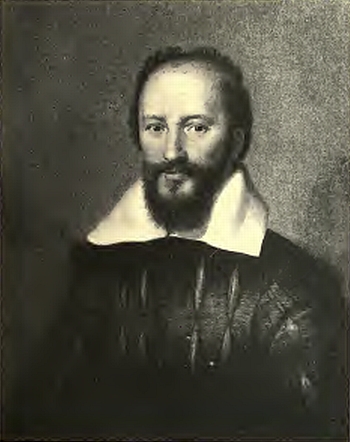
The Duke of Sully.
By a statute of the year 1188, Philip Augustus imposed a tenth of the revenues of all benefices. Philip le Bel caused the fifth, afterwards the fifteenth, and finally the twentieth part, to be paid, of all the possessions of the clergy.
King John, by a statute of March 12, 1355, taxed bishops, abbots, chapters, and all ecclesiastics generally, to the tenth of the revenue of their benefices and patrimonies. The same prince confirmed this tax by two other statutes, one of March 3, the other of Dec. 28, 1358.
In the letters-patent of Charles V., of June 22, 1372, it is decreed, that the churchmen shall pay taxes and other real and personal imposts. These letters-patent were renewed by Charles VI. in the year 1390.
How is it that these laws have been abolished, while so many monstrous customs and sanguinary decrees have been preserved? The clergy, indeed, pay a tax under the name of a free gift, and, as it is known, it is principally the poorest and most useful part of the church—the curates (rectors)—who pay this tax. But, why this difference and inequality of contributions between the citizens of the same state? Why do those who enjoy the greatest prerogatives, and who are sometimes useless to the public, pay less than the laborer, who is so necessary? The Republic of Venice supplies rules on this subject, which should serve as examples to all Europe.
SECTION IV.
Churchmen have not only pretended to be exempt from taxes, they have found the means in several provinces to tax the people, and make them pay as a legitimate right.
In several countries, monks having seized the tithes to the prejudice of the rectors, the peasants are obliged to tax themselves, to furnish their pastors with subsistence; and thus in several villages, and above all, in Franche-Comté, besides the tithes which the parishioners pay to the monks or to chapters, they further pay three or four measures of corn to their curates or rectors. This tax was called the right of harvest in some provinces, and boisselage in others.
It is no doubt right that curates should be well paid, but it would be much better to give them a part of the tithes which the monks have taken from them, than to overcharge the poor cultivator.
Since the king of France fixed the competent allowances for the curates, by his edict of the month of May, 1768, and charged the tithe-collectors with paying them, the peasants should no longer be held to pay a second tithe, a tax to which they only voluntarily submitted at a time when the influence and violence of the monks had taken from their pastors all means of subsistence.
The king has abolished this second tithe in Poitou, by letters-patent, registered by the Parliament of Paris July 11, 1769. It would be well worthy of the justice and beneficence of his majesty to make a similar law for other provinces, which are in the same situation as those of Poitou, Franche-Comté, etc.
By M. CHR., Advocate of Besançon.
IMPOTENCE.
I commence by this question, in favor of the impotent—"frigidi et maleficiati," as they are denominated in the decretals: Is there a physician, or experienced person of any description, who can be certain that a well-formed young man, who has had no children by his wife, may not have them some day or other? Nature may know, but men can tell nothing about it. Since, then, it is impossible to decide that the marriage may not be consummated some time or other, why dissolve it?
Among the Romans, on the suspicion of impotence, a delay of two years was allowed, and in the Novels of Justinian three are required; but if in three years nature may bestow capability, she may equally do so in seven, ten, or twenty.
Those called "maleficiati" by the ancients were often considered bewitched. These charms were very ancient, and as there were some to take away virility, so there were others to restore it; both of which are alluded to in Petronius.
This illusion lasted a long time among us, who exorcised instead of disenchanting; and when exorcism succeeded not, the marriage was dissolved.
The canon law made a great question of impotence. Might a man who was prevented by sorcery from consummating his marriage, after being divorced and having children by a second wife—might such man, on the death of the latter wife, reject the first, should she lay claim to him? All the great canonists decided in the negative—Alexander de Nevo, Andrew Alberic, Turrecremata, Soto, and fifty more.
It is impossible to help admiring the sagacity displayed by the canonists, and above all by the religious of irreproachable manners in their development of the mysteries of sexual intercourse. There is no singularity, however strange, on which they have not treated. They have discussed at length all the cases in which capability may exist at one time or situation, and impotence in another. They have inquired into all the imaginary inventions to assist nature; and with the avowed object of distinguishing that which is allowable from that which is not, have exposed all which ought to remain veiled. It might be said of them: "Nox nocti indicat scientiam."
Above all, Sanchez has distinguished himself in collecting cases of conscience which the boldest wife would hesitate to submit to the most prudent of matrons. One query leads to another in almost endless succession, until at length a question of the most direct and extraordinary nature is put, as to the manner of the communication of the Holy Ghost with the Virgin Mary.
These extraordinary researches were never made by anybody in the world except theologians; and suits in relation to impotency were unknown until the days of Theodosius.
In the Gospel, divorce is spoken of as allowable for adultery alone. The Jewish law permitted a husband to repudiate a wife who displeased him, without specifying the cause. "If she found no favor in his eyes, that was sufficient." It is the law of the strongest, and exhibits human nature in its most barbarous garb. The Jewish laws treat not of impotence; it would appear, says a casuist, that God would not permit impotency to exist among a people who were to multiply like the sands on the seashore, and to whom he had sworn to bestow the immense country which lies between the Nile and Euphrates, and, by his prophets, to make lords of the whole earth. To fulfil these divine promises, it was necessary that every honest Jew should be occupied without ceasing in the great work of propagation. There was certainly a curse upon impotency; the time not having then arrived for the devout to make themselves eunuchs for the kingdom of heaven.
Marriage in the course of time having arrived at the dignity of a sacrament and a mystery, the ecclesiastics insensibly became judges of all which took place between husband and wife, and not only so, but of all which did not take place.
Wives possessed the liberty of presenting a request to be embesognées—such being our Gallic term, although the causes were carried on in Latin. Clerks pleaded and priests pronounced judgment, and the process was uniformly to decide two points—whether the man was bewitched, or the woman wanted another husband.
What appears most extraordinary is that all the canonists agree that a husband whom a spell or charm has rendered impotent, cannot in conscience apply to other charms or magicians to destroy it. This resembles the reasoning of the regularly admitted surgeons, who having the exclusive privilege of spreading a plaster, assure us that we shall certainly die if we allow ourselves to be cured by the hand which has hurt us. It might have been as well in the first place to inquire whether a sorcerer can really operate upon the virility of another man. It may be added that many weak-minded persons feared the sorcerer more than they confided in the exorcist. The sorcerer having deranged nature, holy water alone would not restore it.
In the cases of impotency in which the devil took no part, the presiding ecclesiastics were not less embarrassed. We have, in the Decretals, the famous head "De frigidis et maleficiatis," which is very curious, but altogether uninforming. The political use made of it is exemplified in the case of Henry IV. of Castile, who was declared impotent, while surrounded by mistresses, and possessed of a wife by whom he had an heiress to the throne; but it was an archbishop of Toledo who pronounced this sentence, not the pope.
Alfonso, king of Portugal, was treated in the same manner, in the middle of the seventeenth century. This prince was known chiefly by his ferocity, debauchery, and prodigious strength of body. His brutal excesses disgusted the nation; and the queen, his wife, a princess of Nemours, being desirous of dethroning him, and marrying the infant Don Pedro his brother, was aware of the difficulty of wedding two brothers in succession, after the known circumstance of consummation with the elder. The example of Henry VIII. of England intimidated her, and she embraced the resolution of causing her husband to be declared impotent by the chapter of the cathedral of Lisbon; after which she hastened to marry his brother, without even waiting for the dispensation of the pope.
The most important proof of capability required from persons accused of impotency, is that called "the congress." The President Bouhier says, that this combat in an enclosed field was adopted in France in the fourteenth century. And he asserts that it is known in France only.
This proof, about which so much noise has been made, was not conducted precisely as people have imagined. It has been supposed that a conjugal consummation took place under the inspection of physicians, surgeons, and midwives, but such was not the fact. The parties went to bed in the usual manner, and at a proper time the inspectors, who were assembled in the next room, were called on to pronounce upon the case.
In the famous process of the Marquis de Langeais, decided in 1659, he demanded "the congress"; and owing to the management of his lady (Marie de St. Simon) did not succeed. He demanded a second trial, but the judges, fatigued with the clamors of the superstitious, the plaints of the prudes, and the raillery of the wits, refused it. They declared the marquis impotent, his marriage void, forbade him to marry again, and allowed his wife to take another husband. The marquis, however, disregarded this sentence, and married Diana de Navailles, by whom he had seven children!
His first wife being dead, the marquis appealed to the grand chamberlain against the sentence which had declared him impotent, and charged him with the costs. The grand chamberlain, sensible of the ridicule applicable to the whole affair, confirmed his marriage with Diana de Navailles, declared him most potent, refused him the costs, but abolished the ceremony of the congress altogether.
The President Bouhier published a defence of the proof by congress, when it' was no longer in use. He maintained, that the judges would not have committed the error of abolishing it, had they not been guilty of the previous error of refusing the marquis a second trial.
But if the congress may prove indecisive, how much more uncertain are the various other examinations had recourse to in cases of alleged impotency? Ought not the whole of them to be adjourned, as in Athens, for a hundred years? These causes are shameful to wives, ridiculous for husbands, and unworthy of the tribunals, and it would be better not to allow them at all. Yes, it may be said, but, in that case, marriage would not insure issue. A great misfortune, truly, while Europe contains three hundred thousand monks and eighty thousand nuns, who voluntarily abstain from propagating their kind.
INALIENATION—INALIENABLE.
The domains of the Roman emperors were anciently inalienable—it was the sacred domain. The barbarians came and rendered it altogether inalienable. The same thing happened to the imperial Greek domain.
After the re-establishment of the Roman Empire in Germany, the sacred domain was declared inalienable by the priests, although there remains not at present a crown's worth of territory to alienate.
All the kings of Europe, who affect to imitate the emperors, have had their inalienable domain. Francis I., having effected his liberty by the cession of Burgundy, could find no other expedient to preserve it, than a state declaration, that Burgundy was inalienable; and was so fortunate as to violate both his honor and the treaty with impunity. According to this jurisprudence, every king may acquire the dominions of another, while incapable of losing any of his own. So that, in the end, each would be possessed of the property of somebody else. The kings of France and England possess very little special domain: their genuine and more effective domain is the purses of their subjects.
INCEST.
"The Tartars," says the "Spirit of Laws," "who may legally wed their daughters, never espouse their mothers."
It is not known of what Tartars our author speaks, who cites too much at random: we know not at present of any people, from the Crimea to the frontiers of China, who are in the habit of espousing their daughters. Moreover, if it be allowed for the father to marry his daughter, why may not a son wed his mother?
Montesquieu cites an author named Priscus Panetes, a sophist who lived in the time of Attila. This author says that Attila married with his daughter Esca, according to the manner of the Scythians. This Priscus has never been printed, but remains in manuscript in the library of the Vatican; and Jornandes alone makes mention of it. It is not allowable to quote the legislation of a people on such authority. No one knows this Esca, or ever heard of her marriage with her father Attila.
I confess I have never believed that the Persians espoused their daughters, although in the time of the Cæsars the Romans accused them of it, to render them odious. It might be that some Persian prince committed incest, and the turpitude of an individual was imputed to the whole nation.
Quidquid delirant reges, plectuntur Achivi. —HORACE, i, epistle ii, 14. ....When doting monarchs urge Unsound resolves, their subjects feel the scourge. —FRANCIS.
I believe that the ancient Persians were permitted to marry with their sisters, just as much as I believe it of the Athenians, the Egyptians, and even of the Jews. From the above it might be concluded, that it was common for children to marry with their fathers or mothers; whereas even the marriage of cousins is forbidden among the Guebers at this day, who are held to maintain the doctrines of their forefathers as scrupulously as the Jews.
You will tell me that everything is contradictory in this world; that it was forbidden by the Jewish law to marry two sisters, which was deemed a very indecent act, and yet Jacob married Rachel during the life of her elder sister Leah; and that this Rachel is evidently a type of the Roman Catholic and apostolic church. You are doubtless right, but that prevents not an individual who sleeps with two sisters in Europe from being grievously censured. As to powerful and dignified princes, they may take the sisters of their wives for the good of their states, and even their own sisters by the same father and mother, if they think proper.
It is a far worse affair to have a commerce with a gossip or godmother, which was deemed an unpardonable offence by the capitularies of Charlemagne, being called a spiritual incest.
One Andovere, who is called queen of France, because she was the wife of a certain Chilperic, who reigned over Soissons, was stigmatized by ecclesiastical justice, censured, degraded, and divorced, for having borne her own child to the baptismal font. It was a mortal sin, a sacrilege, a spiritual incest; and she thereby forfeited her marriage-bed and crown. This apparently contradicts what I have just observed, that everything in the way of love is permitted to the great, but then I spoke of present times, and not of those of Andovere.
As to carnal incest, read the advocate Voglan, who would absolutely have any two cousins burned who fall into a weakness of this kind. The advocate Voglan is rigorous—the unmerciful Celt.
INCUBUS.
Have there ever been incubi and succubi? Our learned juriconsults and demonologists admit both the one and the other.
It is pretended that Satan, always on the alert, inspires young ladies and gentlemen with heated dreams, and by a sort of double process produces extraordinary consequences, which in point of fact led to the birth of so many heroes and demigods in ancient times.
The devil took a great deal of superfluous trouble: he had only to leave the young people alone, and the world will be sufficiently supplied with heroes without any assistance from him.
An idea may be formed of incubi by the explanation of the great Delrio, of Boguets, and other writers learned in sorcery; but they fail in their account of succubi. A female might pretend to believe that she had communicated with and was pregnant by a god, the explication of Delrio being very favorable to the assumption. The devil in this case acts the part of an incubus, but his performances as a succubus are more inconceivable. The gods and goddesses of antiquity acted much more nobly and decorously; Jupiter in person, was the incubus of Alcmena and Semele; Thetis in person, the succubus of Peleus, and Venus of Anchises, without having recourse to the various contrivances of our extraordinary demonism.
Let us simply observe, that the gods frequently disguised themselves, in their pursuit of our girls, sometimes as an eagle, sometimes as a pigeon, a swan, a horse, a shower of gold; but the goddesses assumed no disguise: they had only to show themselves, to please. It must however be presumed, that whatever shapes the gods assumed to steal a march, they consummated their loves in the form of men.
As to the new manner of rendering girls pregnant by the ministry of the devil, it is not to be doubted, for the Sorbonne decided the point in the year 1318.
"Per tales artes et ritus impios et invocationes et demonum, nullus unquam sequatur effectus ministerio demonum, error."—"It is an error to believe, that these magic arts and invocations of the devils are without effect."
This decision has never been revoked. Thus we are bound to believe in succubi and incubi, because our teachers have always believed in them.
There have been many other sages in this science, as well as the Sorbonne. Bodin, in his book concerning sorcerers, dedicated to Christopher de Thou, first president of the Parliament of Paris, relates that John Hervilier, a native of Verberie, was condemned by that parliament to be burned alive for having prostituted his daughter to the devil, a great black man, whose caresses were attended with a sensation of cold which appears to be very uncongenial to his nature; but our jurisprudence has always admitted the fact, and the prodigious number of sorcerers which it has burned in consequence will always remain a proof of its accuracy.
The celebrated Picus of Mirandola—a prince never lies—says he knew an old man of the age of eighty years who had slept half his life with a female devil, and another of seventy who enjoyed a similar felicity. Both were buried at Rome, but nothing is said of the fate of their children. Thus is the existence of incubi and succubi demonstrated.
It is impossible, at least, to prove to the contrary; for if we are called on to believe that devils can enter our bodies, who can prevent them from taking kindred liberties with our wives and our daughters? And if there be demons, there are probably demonesses; for to be consistent, if the demons beget children on our females, it must follow that we effect the same thing on the demonesses. Never has there been a more universal empire than that of the devil. What has dethroned him? Reason.
INFINITY.
Who will give me a clear idea of infinity? I have never had an idea of it which was not excessively confused—possibly because I am a finite being.
What is that which is eternally going on without advancing—always reckoning without a sum total—dividing eternally without arriving at an indivisible particle?
It might seem as if the notion of infinity formed the bottom of the bucket of the Danaïdes. Nevertheless, it is impossible that infinity should not exist. An infinite duration is demonstrable.
The commencement of existence is absurd; for nothing cannot originate something. When an atom exists we must necessarily conclude that it has existed from all eternity; and hence an infinite duration rigorously demonstrated. But what is an infinite past?—an infinitude which I arrest in imagination whenever I please. Behold! I exclaim, an infinity passed away; let us proceed to another. I distinguish between two eternities, the one before, the other behind me.
When, however, I reflect upon my words, I perceive that I have absurdly pronounced the words: "one eternity has passed away, and I am entering into another." For at the moment that I thus talk, eternity endures, and the tide of time flows. Duration is not separable; and as something has ever been, something must ever be.
The infinite in duration, then, is linked to an uninterrupted chain. This infinite perpetuates itself, even at the instant that I say it has passed. Time begins and ends with me, but duration is infinite. The infinite is here quickly formed without, however, our possession of the ability to form a clear notion of it.
We are told of infinite space—what is space? Is it a being, or nothing at all? If it is a being, what is its nature? You cannot tell me. If it is nothing, nothing can have no quality; yet you tell me that it is penetrable and immense. I am so embarrassed, I cannot correctly call it either something or nothing.
In the meantime, I know not of anything which possesses more properties than a void. For if passing the confines of this globe, we are able to walk amidst this void, and thatch and build there when we possess materials for the purpose, this void or nothing is not opposed to whatever we might choose to do; for having no property it cannot hinder any; moreover, since it cannot hinder, neither can it serve us.
It is pretended that God created the world amidst nothing, and from nothing. That is abstruse; it is preferable to think that there is an infinite space; but we are curious—and if there be infinite space, our faculties cannot fathom the nature of it. We call it immense, because we cannot measure it; but what then? We have only pronounced words.
Of the Infinite in Number.
We have adroitly defined the infinite in arithmetic by a love-knot, in this manner ∞; but we possess not therefore a clearer notion of it. This infinity is not like the others, a powerlessness of reaching a termination. We call the infinite in quantity any number soever, which surpasses the utmost number we are able to imagine.
When we seek the infinitely small, we divide, and call that infinitely small which is less than the least assignable quantity. It is only another name for incapacity.
Is Matter Infinitely Divisible?
This question brings us back again precisely to our inability of finding the remotest number. In thought we are able to divide a grain of sand, but in imagination only; and the incapacity of eternally dividing this grain is called infinity.
It is true, that matter is not always practically divisible, and if the last atom could be divided into two, it would no longer be the least; or if the least, it would not be divisible; or if divisible, what is the germ or origin of things? These are all abstruse queries.
Of the Universe.
Is the universe bounded—is its extent immense—are the suns and planets without number? What advantage has the space which contains suns and planets, over the space which is void of them? Whether space be an existence or not, what is the space which we occupy, preferable to other space?
If our material heaven be not infinite, it is but a point in general extent. If it is infinite, it is an infinity to which something can always be added by the imagination.
Of the Infinite in Geometry.
We admit, in geometry, not only infinite magnitudes, that is to say, magnitudes greater than any assignable magnitude, but infinite magnitudes infinitely greater, the one than the other. This astonishes our dimension of brains, which is only about six inches long, five broad, and six in depth, in the largest heads. It means, however, nothing more than that a square larger than any assignable square, surpasses a line larger than any assignable line, and bears no proportion to it.
It is a mode of operating, a mode of working geometrically, and the word infinite is a mere symbol.
Of Infinite Power, Wisdom, Goodness.
In the same manner, as we cannot form any positive idea of the infinite in duration, number, and extension, are we unable to form one in respect to physical and moral power.
We can easily conceive, that a powerful being has modified matter, caused worlds to circulate in space, and formed animals, vegetables, and metals. We are led to this idea by the perception of the want of power on the part of these beings to form themselves. We are also forced to allow, that the Great Being exists eternally by His own power, since He cannot have sprung from nothing; but we discover not so easily His infinity in magnitude, power, and moral attributes.
How are we to conceive infinite extent in a being called simple? and if he be uncompounded, what notions can we form of a simple being? We know God by His works, but we cannot understand Him by His Nature. If it is evident that we cannot understand His nature, is it not equally so, that we must remain ignorant of His attributes?
When we say that His power is infinite, do we mean anything more than that it is very great? Aware of the existence of pyramids of the height of six hundred feet, we can conceive them of the altitude of 600,000 feet.
Nothing can limit the power of the Eternal Being existing necessarily of Himself. Agreed: no antagonists circumscribe Him; but how convince me that He is not circumscribed by His own nature? Has all that has been said on this great subject been demonstrated?
We speak of His moral attributes, but we only judge of them by our own; and it is impossible to do otherwise. We attribute to Him justice, goodness, etc., only from the ideas we collect from the small degree of justice and goodness existing among ourselves. But, in fact, what connection is there between our qualities so uncertain and variable, and those of the Supreme Being?
Our idea of justice is only that of not allowing our own interest to usurp over the interest of another. The bread which a wife has kneaded out of the flour produced from the wheat which her husband has sown, belongs to her. A hungry savage snatches away her bread, and the woman exclaims against such enormous injustice. The savage quietly answers that nothing is more just, and that it was not for him and his family to expire of famine for the sake of an old woman.
At all events, the infinite justice we attribute to God can but little resemble the contradictory notions of justice of this woman and this savage; and yet, when we say that God is just, we only pronounce these words agreeably to our own ideas of justice.
We know of nothing belonging to virtue more agreeable than frankness and cordiality, but to attribute infinite frankness and cordiality to God would amount to an absurdity.
We have such confused notions of the attributes of the Supreme Being, that some schools endow Him with prescience, an infinite foresight which excludes all contingent event, while other schools contend for prescience without contingency.
Lastly, since the Sorbonne has declared that God can make a stick divested of two ends, and that the same thing can at once be and not be, we know not what to say, being in eternal fear of advancing a heresy. One thing may, however, be asserted without danger—that God is infinite, and man exceedingly bounded.
The mind of man is so extremely narrow, that Pascal has said: "Do you believe it impossible for God to be infinite and without parts? I wish to convince you of an existence infinite and indivisible—it is a mathematical point—moving everywhere with infinite swiftness, for it is in all places, and entire in every place."
Nothing more absurd was ever asserted, and yet it has been said by the author of the "Provincial Letters." It is sufficient to give men of sense the ague.
INFLUENCE.
Everything around exercises some influence upon us, either physically or morally. With this truth we are well acquainted. Influence may be exerted upon a being without touching, without moving that being.
In short, matter has been demonstrated to possess the astonishing power of gravitating without contact, of acting at immense distances. One idea influences another; a fact not less incomprehensible.
I have not with me at Mount Krapak the book entitled, "On the Influence of the Sun and Moon," composed by the celebrated physician Mead; but I well know that those two bodies are the cause of the tides; and it is not in consequence of touching the waters of the ocean that they produce that flux and reflux: it is demonstrated that they produce them by the laws of gravitation.
But when we are in a fever, have the sun and moon any influence upon the accesses of it, in its days of crisis? Is your wife constitutionally disordered only during the first quarter of the moon? Will the trees, cut at the time of full moon, rot sooner than if cut down in its wane? Not that I know. But timber cut down while the sap is circulating in it, undergoes putrefaction sooner than other timber; and if by chance it is cut down at the full moon, men will certainly say it was the full moon that caused all the evil. Your wife may have been disordered during the moon's growing; but your neighbor's was so in its decline.
The fitful periods of the fever which you brought upon yourself by indulging too much in the pleasures of the table occur about the first quarter of the moon; your neighbor experiences his in its decline. Everything that can possibly influence animals and vegetables must of course necessarily exercise that influence while the moon is making her circuit.
Were a woman of Lyons to remark that the periodical affections of her constitution had occurred in three or four successive instances on the day of the arrival of the diligence from Paris, would her medical attendant, however devoted he might be to system, think himself authorized in concluding that the Paris diligence had some peculiar and marvellous influence on the lady's constitution?
There was a time when the inhabitants of every seaport were persuaded, that no one would die while the tide was rising, and that death always waited for its ebb.
Many physicians possessed a store of strong reasons to explain this constant phenomenon. The sea when rising communicates to human bodies the force or strength by which itself is raised. It brings with it vivifying particles which reanimate all patients. It is salt, and salt preserves from the putrefaction attendant on death. But when the sea sinks and retires, everything sinks or retires with it; nature languishes; the patient is no longer vivified; he departs with the tide. The whole, it must be admitted, is most beautifully explained, but the presumed fact, unfortunately, is after all untrue.
The various elements, food, watching, sleep, and the passions, are constantly exerting on our frame their respective influences. While these influences are thus severally operating on us, the planets traverse their appropriate orbits, and the stars shine with their usual brillancy. But shall we really be so weak as to say that the progress and light of those heavenly bodies are the cause of our rheums and indigestion, and sleeplessness; of the ridiculous wrath we are in with some silly reasoner; or of the passion with which we are enamored of some interesting woman?
But the gravitation of the sun and moon has made the earth in some degree flat at the pole, and raises the sea twice between the tropics in four-and-twenty hours. It may, therefore, regulate our fits of fever, and govern our whole machine. Before, however, we assert this to be the case, we should wait until we can prove it.
The sun acts strongly upon us by its rays, which touch us, and enter through our pores. Here is unquestionably a very decided and a very benignant influence. We ought not, I conceive, in physics, to admit of any action taking place without contact, until we have discovered some well-recognized and ascertained power which acts at a distance, like that of gravitation, for example, or like that of your thoughts over mine, when you furnish me with ideas. Beyond these cases, I at present perceive no influences but from matter in contact with matter.
The fish of my pond and myself exist each of us in our natural element. The water which touches them from head to tail is continually acting upon them. The atmosphere which surrounds and closes upon me acts upon me. I ought not to attribute to the moon, which is ninety thousand miles distant, what I might naturally ascribe to something incessantly in contact with my skin. This would be more unphilosophical than my considering the court of China responsible for a lawsuit that I was carrying on in France. We should never seek at a distance for what is absolutely within our immediate reach.
I perceive that the learned and ingenious M. Menuret is of a different opinion in the "Encyclopædia" under the article on "Influence." This certainly excites in my mind considerable diffidence with respect to what I have just advanced. The Abbé de St. Pierre used to say, we should never maintain that we are absolutely in the right, but should rather say, "such is my opinion for the present."
Influence of the Passions of Mothers upon their Fœtus.
I think, for the present, that violent affections of pregnant women produce often a prodigious effect upon the embryo within them; and I think that I shall always think so: my reason is that I have actually seen this effect. If I had no voucher of my opinion but the testimony of historians who relate the instance of Mary Stuart and her son James I., I should suspend my judgment; because between that event and myself, a series of two hundred years has intervened, a circumstance naturally tending to weaken belief; and because I can ascribe the impression made upon the brain of James to other causes than the imagination of Mary. The royal assassins, headed by her husband, rush with drawn swords into the cabinet where she is supping in company with her favorite, and kill him before her eyes; the sudden convulsion experienced by her in the interior of her frame extends to her offspring; and James I., although not deficient in courage, felt during his whole life an involuntary shuddering at the sight of a sword drawn from a scabbard. It is, however, possible that this striking and peculiar agitation might be owing to a different cause.