Chapter XXI · PUBLIC AND SEMIPUBLIC BUILDINGS (continued 2)
Reading edition
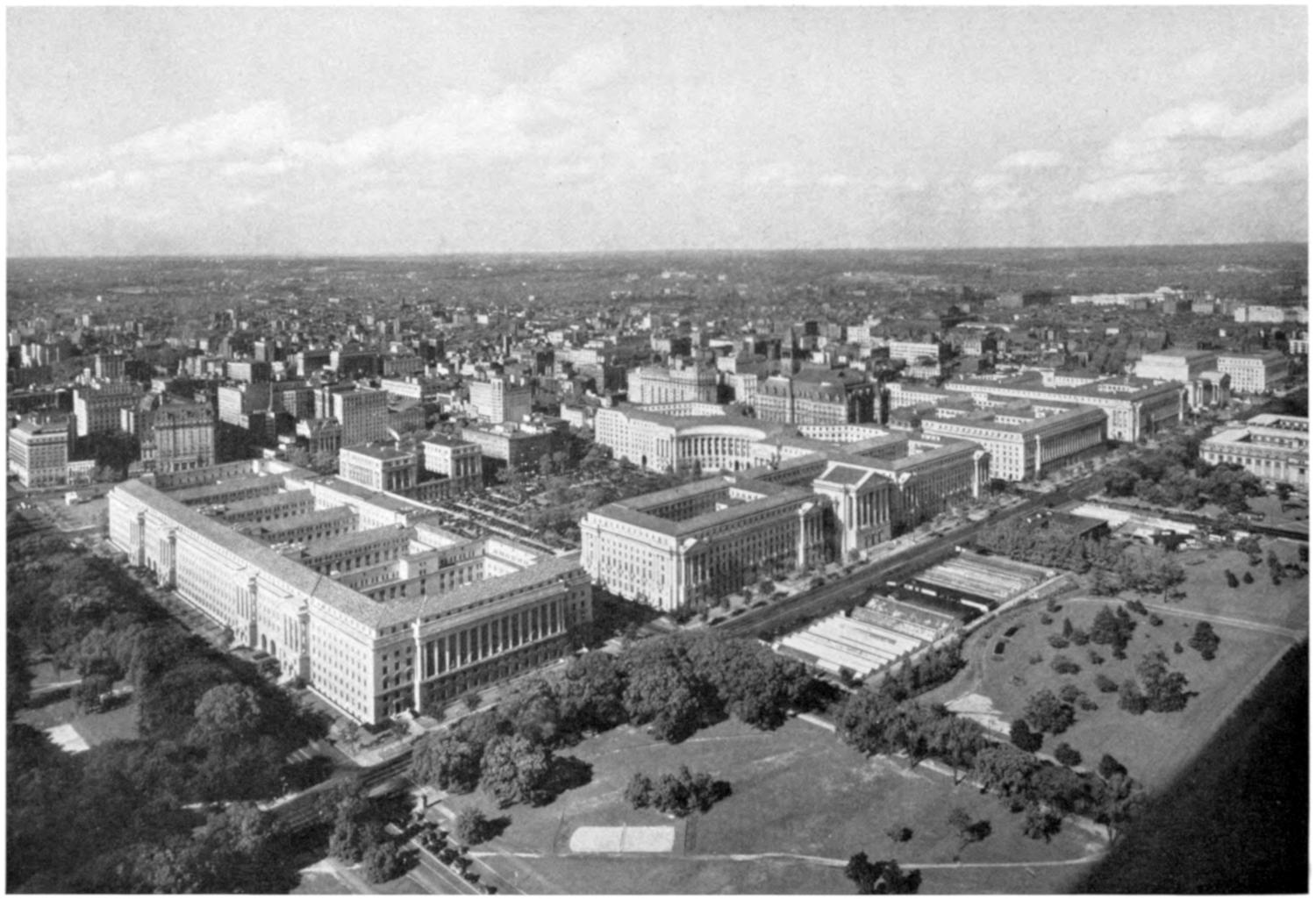
THE TRIANGLE GROUP OF PUBLIC BUILDINGS ALONG CONSTITUTION AVENUE
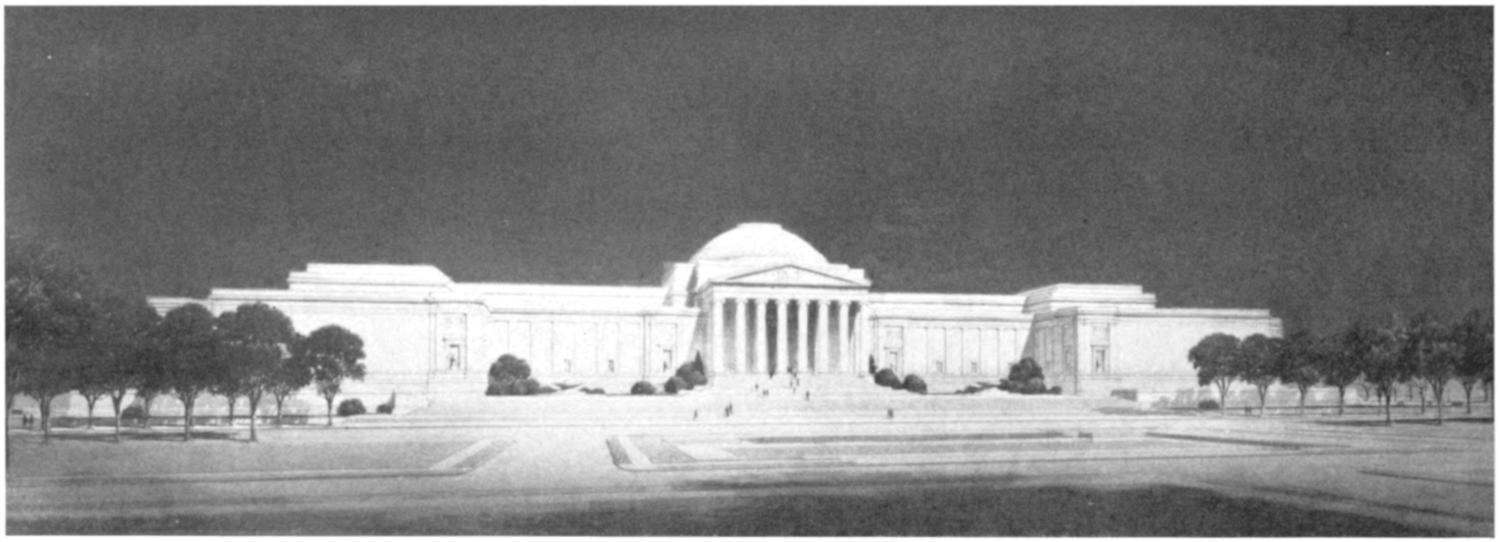
THE NATIONAL GALLERY OF ART
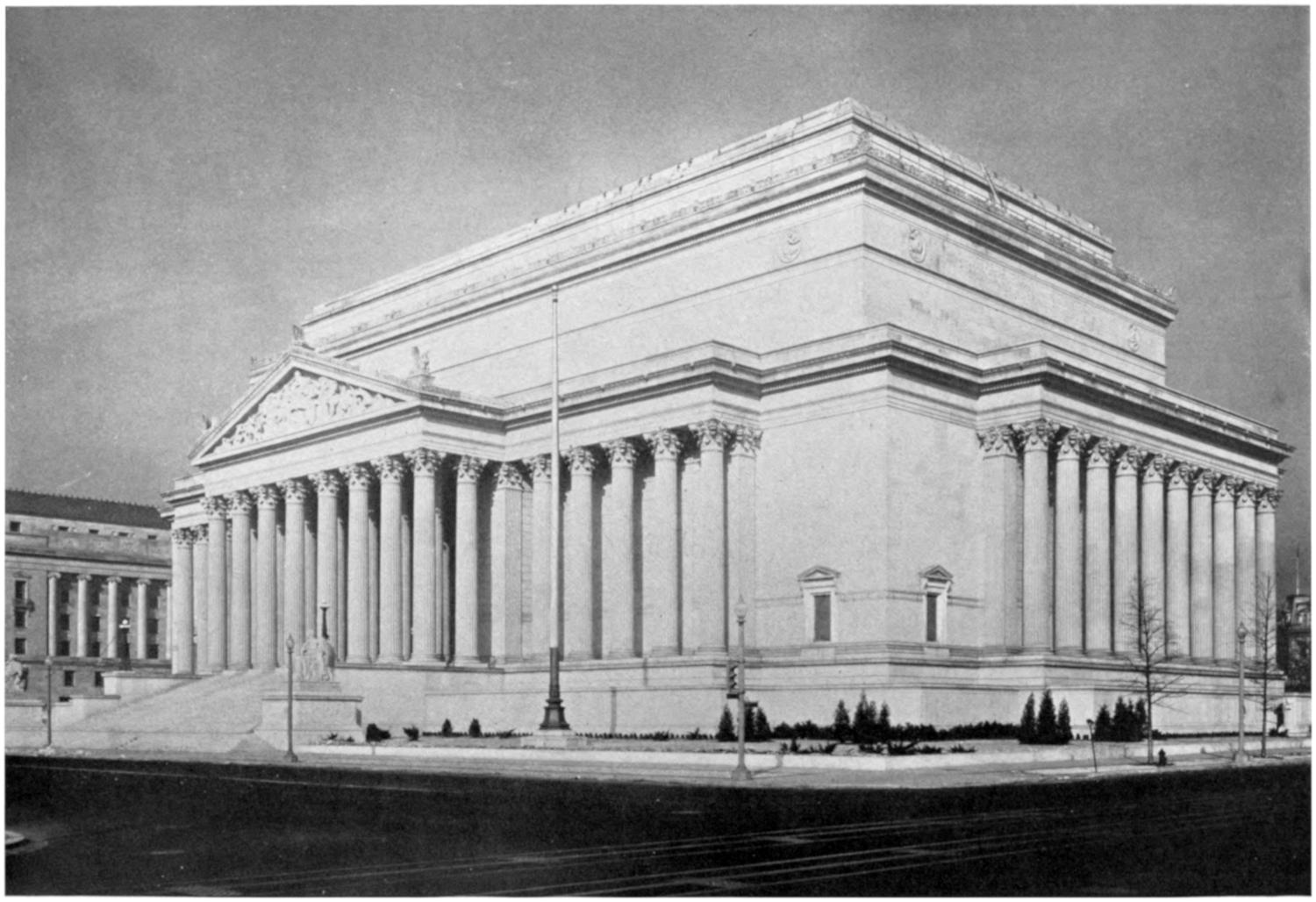
THE NATIONAL ARCHIVES BUILDING
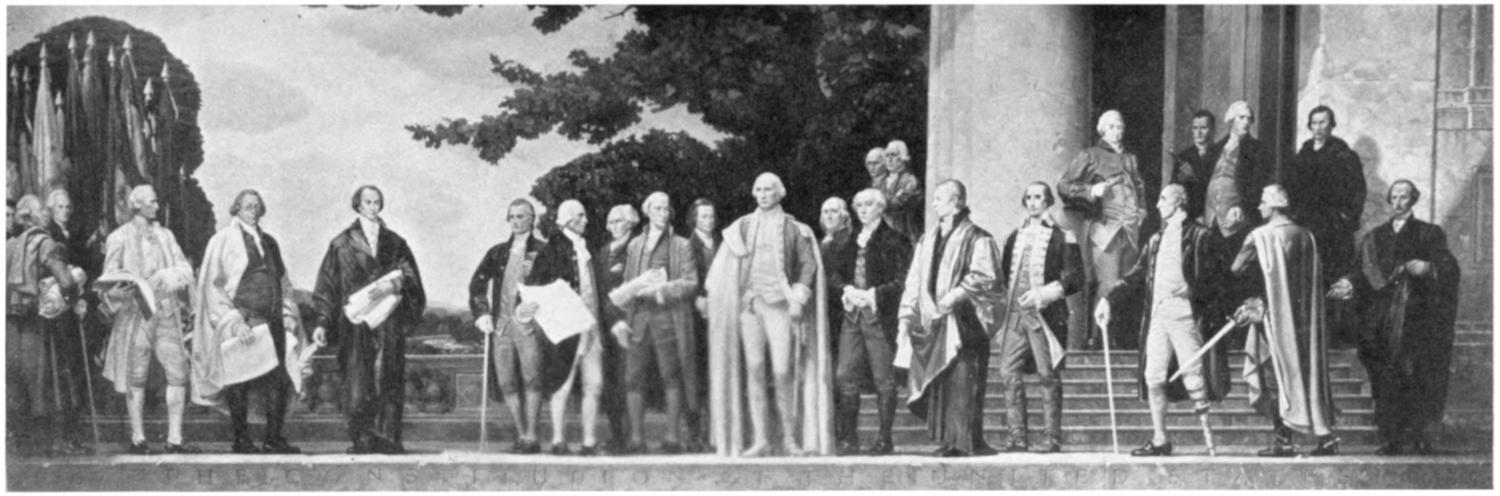
THE MAKERS OF THE CONSTITUTION
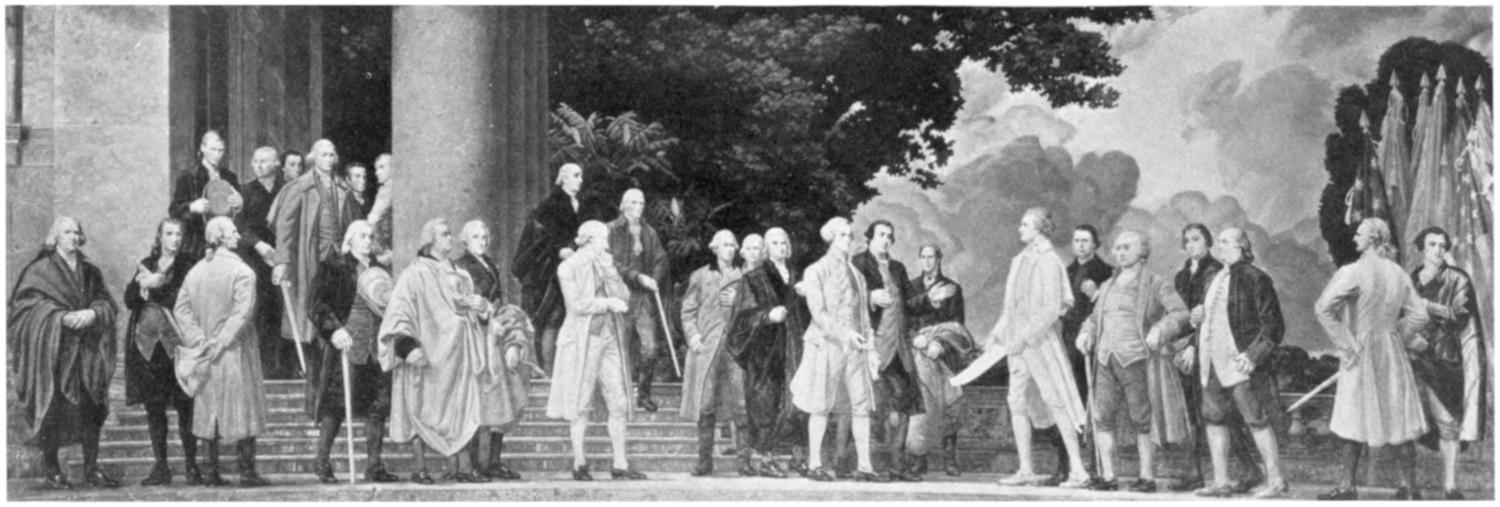
THE SIGNERS OF THE DECLARATION OF INDEPENDENCE
Other buildings are: The Central Heating Plant (for heating 75 buildings), Paul P. Cret, architect; Bureau of Engraving and Printing, W. B. Olmstead, architect; Smithsonian Institution (begun in 1846), James Renwick, architect; National Museum Building, Hornblower & Marshall, architects; Freer Gallery of Art, Charles A. Platt, architect; Department of Agriculture Building, Rankin, Kellogg & Crane, architects; Department of Agriculture South Building, the Supervising Architect; Naval Observatory; State, War, and Navy Building, A. B. Mullett, supervising architect; Old Pension Office Building (General Accounting Office); Army War College, McKim, Mead & White, architects; Walter Reed Hospital; Naval Hospital; Public Library, Ackerman & Ross, architects; United States Bureau of Standards; National Zoological Park (large new buildings completed in 1937); National Gallery of Art (now under construction), John Russell Pope, architect.
IMPORTANT BRIDGES OF WASHINGTON
Arlington Memorial Bridge, McKim, Mead & White, architects; Calvert Street Bridge, Paul P. Cret, architect; Francis Scott Key Bridge, Nathan Wyeth, architect; Connecticut Avenue (Taft) Bridge, Edward P. Casey, architect, lions by R. Hinton Perry; Q Street Bridge, Glenn Brown and Bedford Brown, architects, A. Phimister Proctor, sculptor; Klingle Ford Bridge, Connecticut Avenue, Paul P. Cret, architect; New Chain Bridge, designed under supervision of Brig. Gen. Dan I. Sultan, former Engineer Commissioner of the District of Columbia; John Philip Sousa Bridge, Southeast, McKim, Mead & White, architects.
CATHEDRAL OF ST. PETER AND ST. PAUL (WASHINGTON CATHEDRAL)
The cathedral is situated on Mount St. Alban, in the northwestern part of the city, on a hill 400 feet in height, said to be the highest point in the District of Columbia, giving a superb view over the National Capital.
The cathedral, also known as the National Cathedral, was designed by George F. Bodley, of London, and Henry Vaughn, of Boston. It is a typical fourteenth century Gothic edifice. The cornerstone was laid in 1907, and since then a large part of the cathedral has been completed. Its ultimate cost, it is estimated, will be $20,000,000. The central nave is about complete, the apse and north transept are finished as are also several of the chapels, such as the Bethlehem Chapel, the Norman Chapel, the Chapel of St. John, and the Chapel of St. Mary. There are costly stones in the building from many parts of the world, including a stone from Bethlehem, which formed the cornerstone.
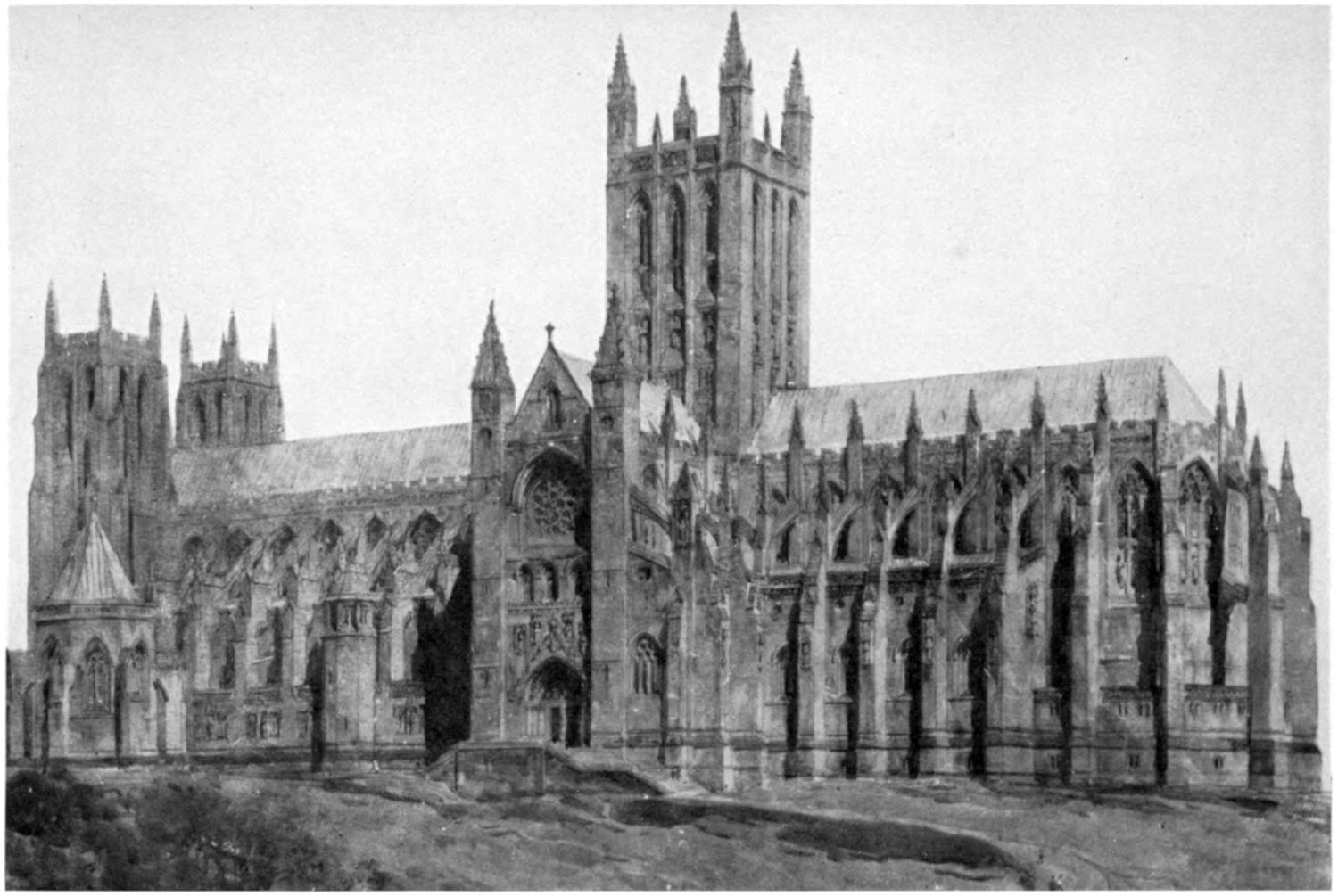
WASHINGTON CATHEDRAL
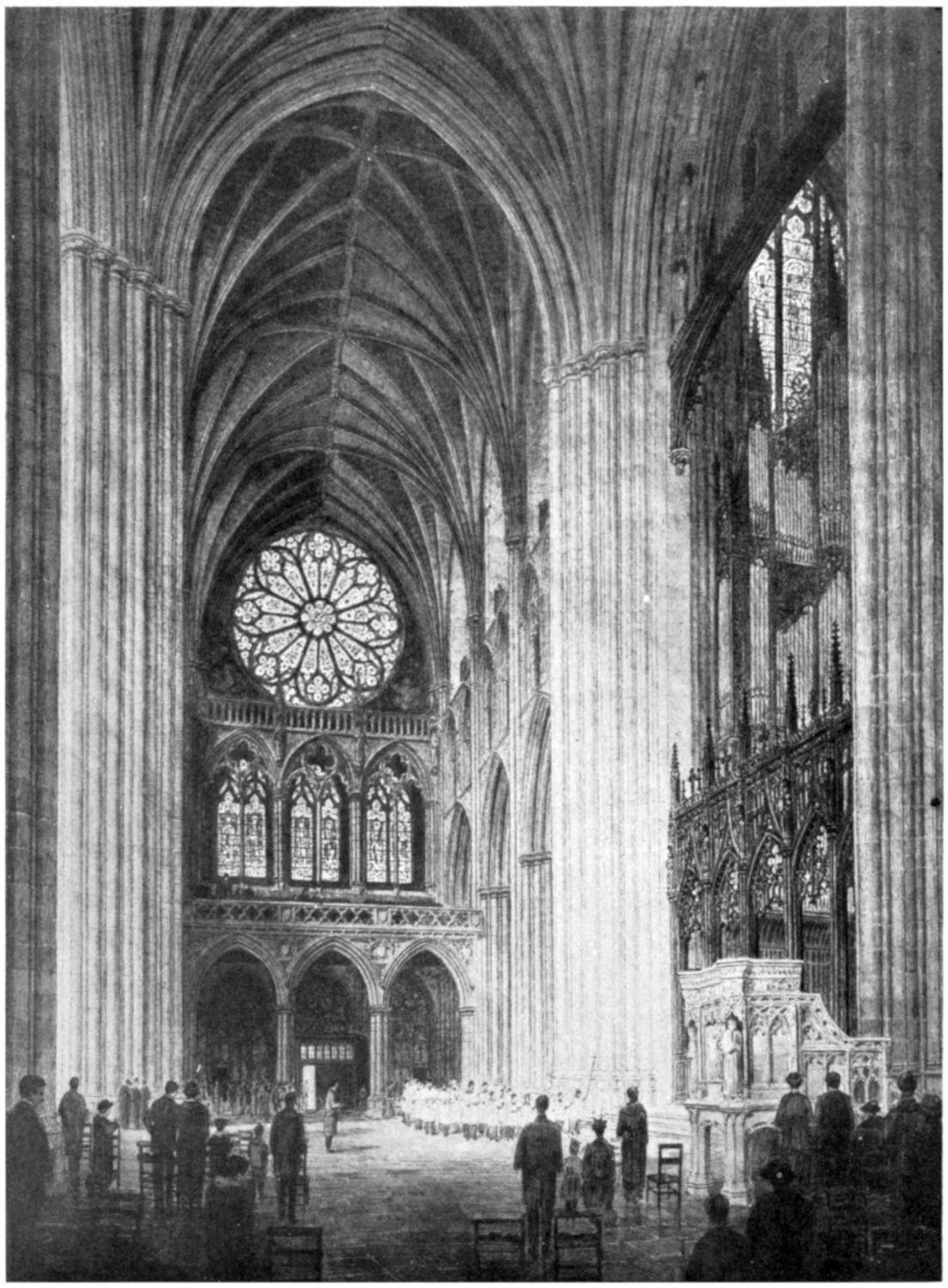
WASHINGTON CATHEDRAL
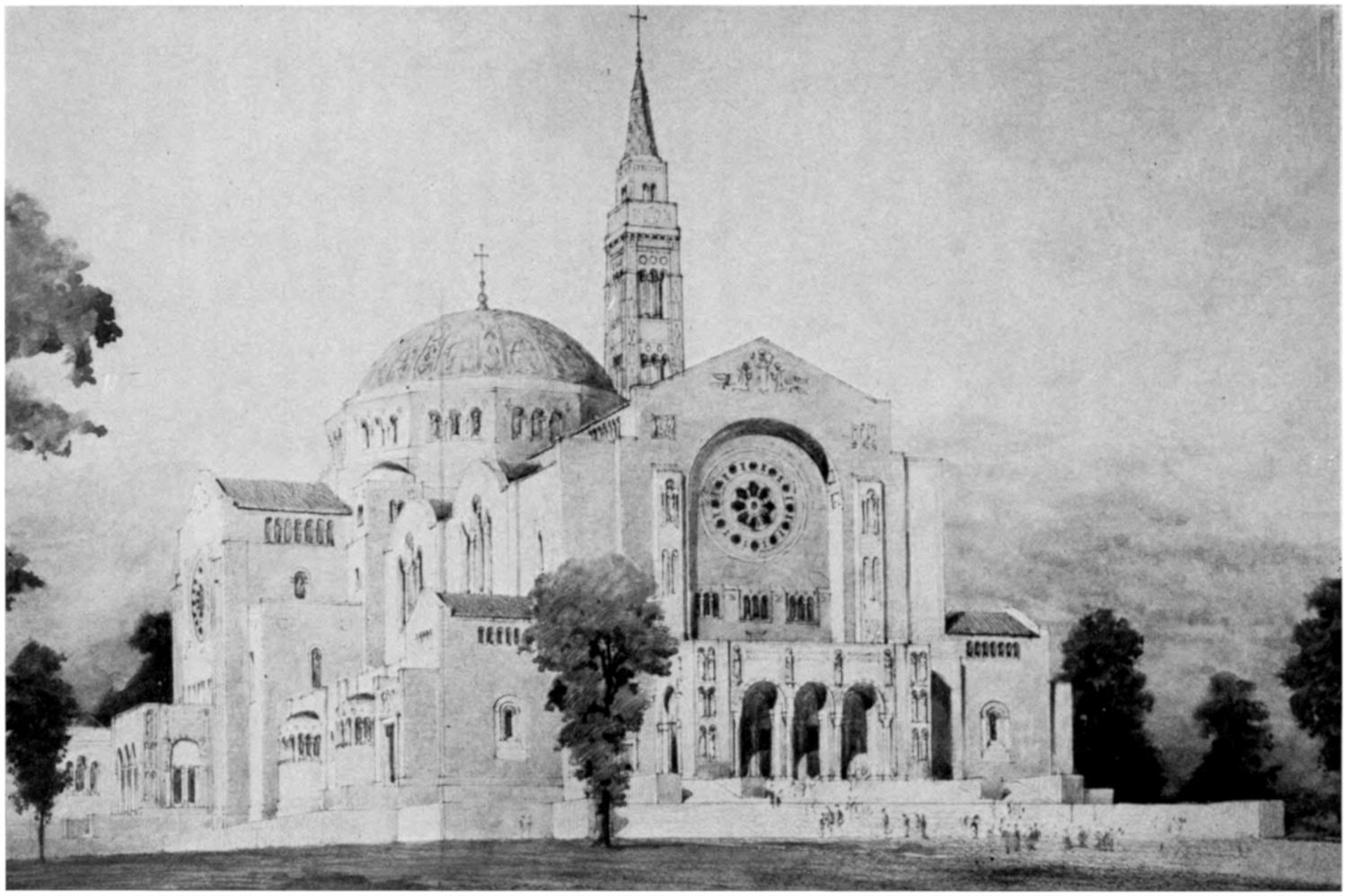
NATIONAL SHRINE OF THE IMMACULATE CONCEPTION
The building is constructed of limestone. The sculpture and beautifully stained glass windows form the principal decorations.
The total length of the building from the exterior of the apse at the eastern end to the main entrance at the western end will be 534 feet. The total spread of the transepts will be 215 feet, and each of these arms of the cross will be 105 feet wide. The ground area of the cathedral will be 71,000 square feet, and this will be ample to provide standing room for 27,000 persons or seating space for 7,500. The central tower will rise to a height of 262 feet and each of the two western towers will be 195 feet high. The nave will have a span of 40 feet and its height will be 95 feet.
Within the cathedral are buried Woodrow Wilson, our World War President; also Admiral George Dewey, General Nelson A. Miles, and several bishops of the Episcopal Church.
The grounds comprise 67 acres, and the carefully designed Bishop’s Garden forms an interesting feature. The National Cathedral School for Girls and for Boys and the College of Preachers are within the grounds.
NATIONAL SHRINE OF THE IMMACULATE CONCEPTION
This cathedral has been designed in the Roman-Byzantine style of architecture. It is located on Michigan Avenue, Brookland, in the Catholic University grounds. The cornerstone for the church was laid in 1920. It is estimated that the total cost will be $50,000,000. The architects are Maginnis & Walsh, of Boston, and Professor Frederick V. Murphy, architect, of Washington.
The building as designed is cruciform in plan, with a triple apse, at the focus of which is placed the central altar within a great baldachin. The apse is of vast scale and, with the presbytery that separates it from the transepts, will admit of important ceremonies. The dome will be 250 feet high; the tall campanile, or bell tower, 330 feet high. The building is to take its place with such notable memorials as Santa Maria Maggiore, of Rome, and Santa Maria del Fiore, of Florence. It is to stand as a symbol of American Catholic devotion to the Virgin Mary. The availability of the Byzantine tradition for the rendering of this idea was readily perceived. The crypt, capable of seating approximately 1,500 persons, has been completed. Here a most interesting decorative scheme in terms of faïence has been introduced to enrich the effect of the vaults. The central altar is of Algerian onyx. The pavement is of Italian marble. The crypt is richly treated with still other marbles and with mosaics.
NATIONAL CHURCHES IN WASHINGTON
There is no city in the country that has so many representative churches as the city of Washington, which is undoubtedly due to the fact that this is the National Capital. The leading denominations of the country, recognizing the importance of religion in the life of the Nation, have erected or are raising funds for the erection of great edifices, including memorial churches, fittingly to represent them at the seat of government.
In chapter XX attention has already been directed to the earliest churches in Washington.
EMBASSIES AND LEGATIONS
Among the notable buildings in the National Capital that have had a distinguished place since the early days of the Republic are the residences, embassies, and legations of the representatives from foreign countries. At the present time there are 53, representing the leading countries of the world.
The legation and embassy buildings are held territory of the respective countries to which they belong, and fly the flag of their respective nations, excepting on state occasions, when they fly both their own flag and that of the United States.
L’Enfant, in his plan of the city, contemplated diplomatic buildings to line the Mall. But as the Mall was delayed in its development for over a century, the museum type of building has been erected on the Mall and the diplomatic establishments located elsewhere. In later years the suggestion was offered to locate them in the vicinity of the State Department.
At the present time the embassies and legations are located, for the most part, in the residential section of northwest Washington. Quite a number are on Sixteenth Street in the vicinity of Meridian Hill Park. In more recent years several of the leading countries have built new embassies on spacious grounds. In this Great Britain has taken the lead, having built a large embassy on 4 acres of ground at 3100 Massachusetts Avenue, near the Naval Observatory. Three blocks beyond, the Norwegian Legation building has recently been completed. In recent years the Imperial Japanese Government built a new embassy at 2514 Massachusetts Avenue. The French Government recently purchased the home of John Hays Hammond for its new embassy.
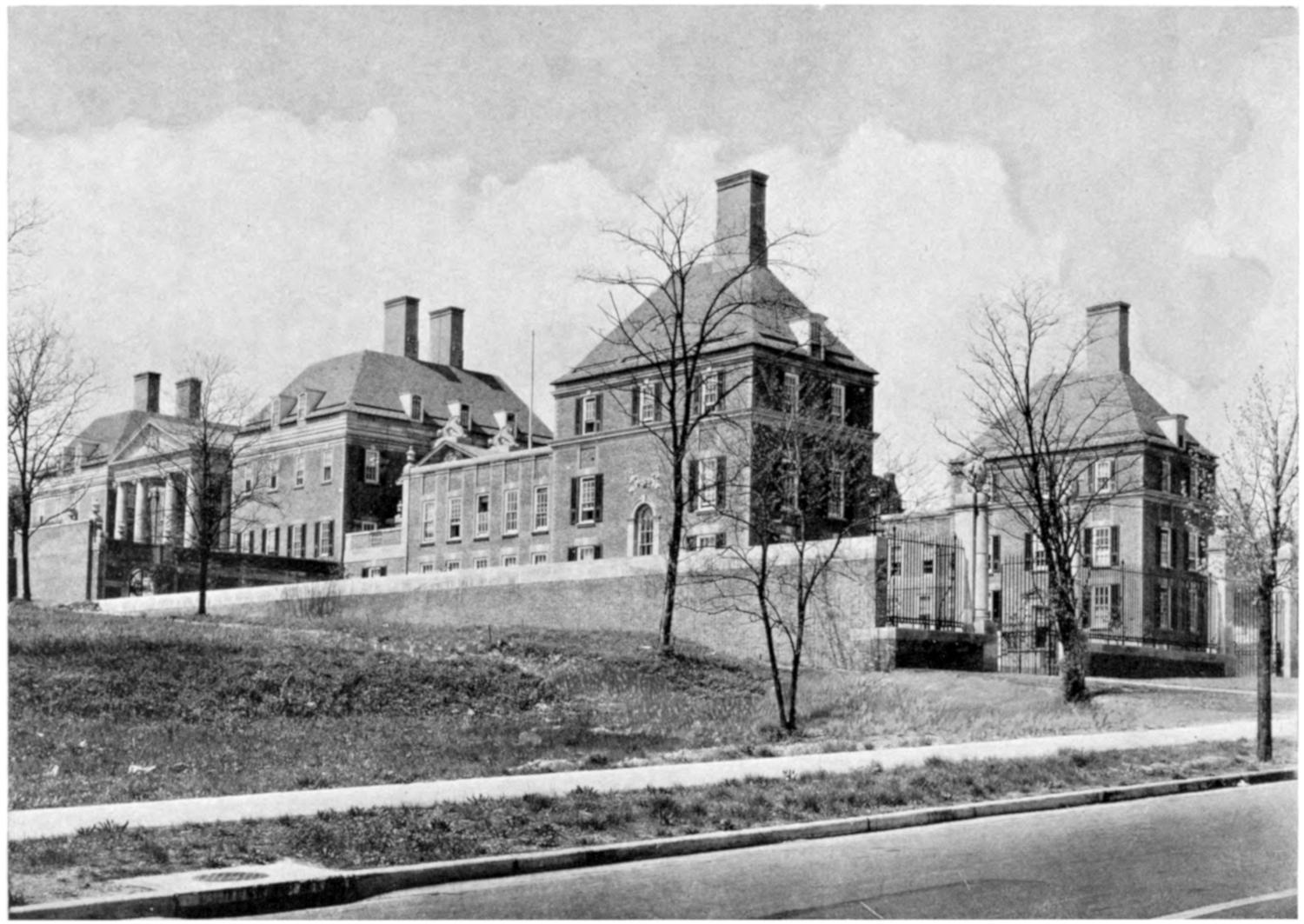
BRITISH EMBASSY
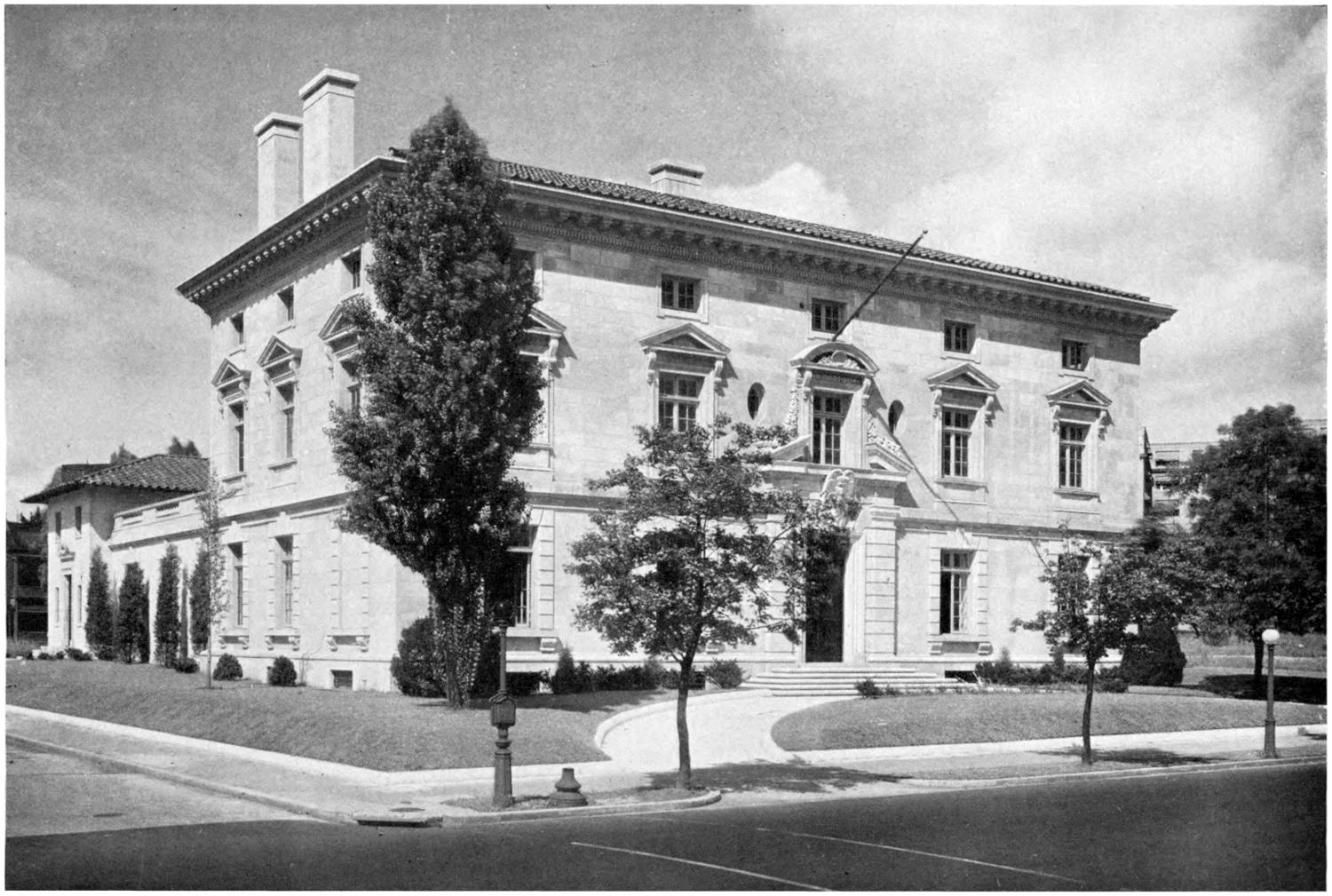
ITALIAN EMBASSY
A list of the countries having embassies and legations in Washington (with the exception of Estonia, whose representative is located in New York City) is as follows:
Albania: The Mayflower Hotel.
Argentina: 1806 Corcoran Street.
Belgium: 1777 Massachusetts Avenue.
Bolivia: Fifteenth and K Streets.
Brazil: 3007 Whitehaven Street.
Bulgaria: 2881 Woodland Drive.
Canada: 1746 Massachusetts Avenue.
Chile: 2154 Florida Avenue.
China: 2001 Nineteenth Street.
Colombia: 1520 Twentieth Street.
Costa Rica: 2128 Bancroft Place.
Cuba: 2630 Sixteenth Street.
Czechoslovakia: 2349 Massachusetts Avenue.
Denmark: 1868 Columbia Road.
Dominican Republic: 2633 Sixteenth Street.
Ecuador: Barr Building.
Egypt: 2301 Massachusetts Avenue.
El Salvador: 2400 Sixteenth Street.
Estonia: Rockefeller Plaza, New York City.
Finland: 2416 Tracy Place.
France, Chancery: 1601 V Street.
Germany: 1439 Massachusetts Avenue.
Great Britain: 3100 Massachusetts Avenue.
Greece: 2221 Massachusetts Avenue.
Guatemala: 1614 Eighteenth Street.
Haiti: 5017 Sixteenth Street.
Honduras: 2611 Woodley Place.
Hungary: 1424 Sixteenth Street.
Ireland: 2310 Tracy Place.
Italy: 2700 Sixteenth Street.
Japan: 2514 Massachusetts Avenue.
Latvia: 1715 Twenty-second Street.
Lithuania: 2622 Sixteenth Street.
Mexico: 2829 Sixteenth Street.
Netherlands: 1470 Euclid Street.
Nicaragua: 1521 New Hampshire Avenue.
Norway: 3401 Massachusetts Avenue.
Panama: 1536 Eighteenth Street.
Paraguay: Wardman Park Hotel.
Peru: 1300 Sixteenth Street.
Poland: 2640 Sixteenth Street.
Portugal: Wardman Park Hotel.
Rumania: 1601 Twenty-third Street.
Siam: 2300 Kalorama Road.
Spain: 2801 Sixteenth Street.
Sweden: 2247 R Street.
Switzerland: 2419 Massachusetts Avenue.
Turkey: 1606 Twenty-third Street.
Union of South Africa: 3101 Massachusetts Avenue.
Union of Soviet Socialist Republics: 1125 Sixteenth Street.
Uruguay: 1010 Vermont Avenue.
Venezuela: 2400 Sixteenth Street.
Yugoslavia: 1520 Sixteenth Street.