HENRY JAMES
Reading edition · Edition 2
with ninety-four illustrations by
JOSEPH PENNELL
LONDON WILLIAM HEINEMANN 1900
Preface
Contents
List of Illustrations
Introductory
Preface
Preface
The notes presented in this volume were gathered, as will easily be perceived, a number of years ago and on an expectation not at that time answered by the event, and were then published in the United States. The expectation had been that they should accompany a series of drawings, and they themselves were altogether governed by the pictorial spirit. They made, and they make in appearing now, after a considerable interval and for the first time, in England, no pretension to any other; they are impressions, immediate, easy, and consciously limited; if the written word may ever play the part of brush or pencil, they are sketches on "drawing-paper" and nothing more. From the moment the principle of selection and expression, with a tourist, is not the delight of the eyes and the play of fancy, it should be an energy in every way much larger; there is no happy mean, in other words, I hold, between the sense and the quest of the picture, and the surrender to it, and the sense and the quest of the constitution, the inner springs of the subject—springs and connections social, economic, historic.
One must really choose, in other words, between the benefits of the perception of surface—a perception, when fine, perhaps none of the most frequent—and those of the perception of very complex underlying matters. If these latter had had, for me, to be taken into account, my pages would not have been collected. At the time of their original appearance the series of illustrations to which it had been their policy to cling for countenance and company failed them, after all, at the last moment, through a circumstance not now on record; and they had suddenly to begin to live their little life without assistance. That they have seemed able in any degree still to prolong even so modest a career might perhaps have served as a reason for leaving them undisturbed. In fact, however, I have too much appreciated—for any renewal of inconsistency—the opportunity of granting them at last, in an association with Mr. Pennell's admirable drawings, the benefit they have always lacked. The little book thus goes forth finally as the picture-book it was designed to be. Text and illustrations are, altogether and alike, things of the play of eye and hand and fancy—views, head-pieces, tail-pieces; through the artist's work, doubtless, in a much higher degree than the author's.
But these are words enough on a minor point. Many things come back to me on reading my pages over—such a world of reflection and emotion as I can neither leave unmentioned nor yet, in this place, weigh them down with the full expression of. Difficult indeed would be any full expression for one who, deeply devoted always to the revelations of France, finds himself, late in life, making of the sentiment no more substantial, no more direct record than this mere revival of an accident. Not one of these small chapters but suggests to me a regret that I might not, first or last, have gone farther, penetrated deeper, spoken oftener—closed, in short, more intimately with the great general subject; and I mean, of course, not in such a form as the present, but in many another, possible and impossible. It all comes back, doubtless, this vision of missed occasions and delays overdone, to the general truth that the observer, the enjoyer, may, before he knows it, be practically too far in for all that free testimony and pleasant, easy talk that are incidental to the earlier or more detached stages of a relation. There are relations that soon get beyond all merely showy appearances of value for us. Their value becomes thus private and practical, and is represented by the process—the quieter, mostly, the better—of absorption and assimilation of what the relation has done for us. For persons thus indebted to the genius of France—however, in its innumerable ways, manifested—the profit to be gained, the lesson to be learnt, is almost of itself occupation enough. They feel that they bear witness by the intelligent use and application of their advantage, and the consciousness of the artist is therefore readily a consciousness of pious service. He may repeatedly have dreamt of some such happy combination of mood and moment as shall launch him in a profession of faith, a demonstration of the interesting business; he may have had inner glimpses of an explicit statement, and vaguely have sketched it to himself as one of the most candid and charming ever drawn up; but time, meanwhile, has passed, interruptions have done their dismal work, the indirect tribute, too, has perhaps, behind the altar, grown and grown; and the reflection has at all events established itself that honour is more rendered by seeing and doing one's work in the light than by brandishing the torch on the house-tops. Curiosity and admiration have operated continually, but with as little waste as they could. The drawback is only that in this case, to be handsomely consequent, one would perhaps rather not have appeared to celebrate any rites. The moral of all of which is that those here embodied must pass, at the best, but for what they are worth.
H. J.
August 9, 1900.
Contents
chapter page
Introductory1
I.Tours3
II.Tours: the Cathedral12
III.Tours: Saint Martin17
"Saint Julian20
"Plessis-les-Tours22
"Marmoutier23
IV.Blois26
V.Chambord36
VI.Amboise47
Chaumont51
VII.Chenonceaux54
VIII.Azay-le-Rideau64
IX.Langeais68
X.Loches72
XI.Bourges77
"The Cathedral80
XII.Bourges: Jacques Cœur86
XIII.Le Mans94
XIV.Angers101
XV.Nantes107
XVI.La Rochelle115
XVII.Poitiers122
XVIII.Angoulême130
Bordeaux132
XIX.Toulouse136
XX.Toulouse: the Capitol141
XXI.Toulouse: Saint-Sernin145
XXII.Carcassonne150
XXIII.Carcassonne157
XXIV.Narbonne163
XXV.Montpellier170
XXVI.The Pont du Gard178
XXVII.Aigues-Mortes183
XXVIII.Nîmes188
XXIX.Tarascon195
XXX.Arles202
"The Theatre205
XXXI.Arles: the Museum209
XXXII.Les Baux213
XXXIII.Avignon223
"The Palace of the Popes226
XXXIV.Villeneuve-lès-Avignon230
XXXV.Vaucluse235
XXXVI.Orange243
XXXVII.Macon249
XXXVIII.Bourg-en-Bresse254
The Church at Brou255
XXXIX.Beaune262
XL.Dijon267
List of Illustrations
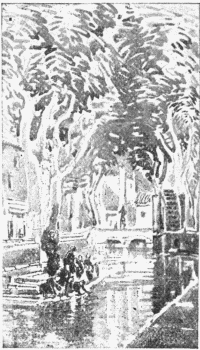
Nîmes: the Garden (Photogravure)Frontispiece
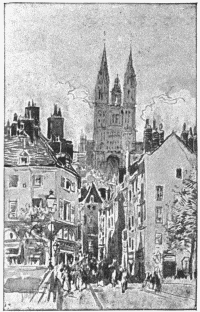
Tours: the House of BalzacTo face page8
Tours: the Cathedral (Photogravure)" 14
Tours: the Towers of St. Martin"18
Blois (Photogravure)"26
Blois: the Château"28
Chambord"38
Amboise: the Château"48
Chenonceaux (Photogravure)"56
Azay-le-Rideau"64
Loches"72
Loches: the Church"74
Bourges: the House of Jacques Cœur (Photogravure)"86
Bourges: Doorway, House of Jacques Cœur"90
Bourges: the Cathedral (West Front)"92
Le Mans: the Cathedral"98
Angers: Old Timbered Houses"104
La Rochelle"118
La Rochelle: the Hôtel de Ville (Photogravure)"120
Poitiers: Church of St. Radegonde (Photogravure)"126
Bordeaux: the Quay (Photogravure)"134
Toulouse: St. Sernin (the Transept)"146
Toulouse: the Garonne (Photogravure)"148
Carcassonne"158
Carcassonne (another View)"160
Narbonne: the Washing Place"166
Narbonne: the Cathedral and Hôtel de Ville (Photogravure)"168
The Pont du Gard"180
Aigues-Mortes"186
Nîmes: the Cathedral"190
Nîmes: the Amphitheatre"192
Tarascon: the Castle"198
Arles: St. Trophimus"204
Arles: Ruins of the Roman Theatre"206
Arles: Door of St. Trophimus"210
Arles: the Cloisters (Photogravure)"212
Avignon: the Church"226
Vaucluse: Ruins of Castle"240
Orange: the Theatre"246
Lyons"250
Brou: the Church (Photogravure)"256
Beaune: the Hospital"264
Dijon"266
Dijon: the Park"268
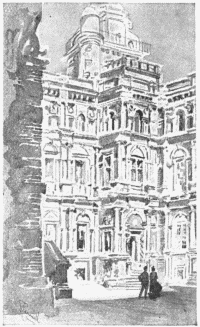
Courtyard, House of Jacques CœurHalf-title
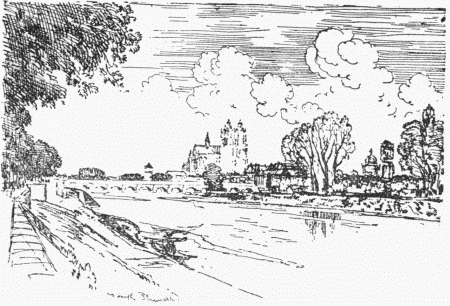
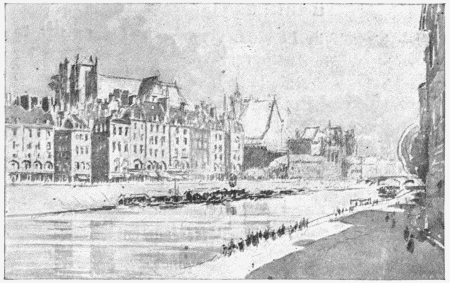
Angers from the BridgeTitle-page
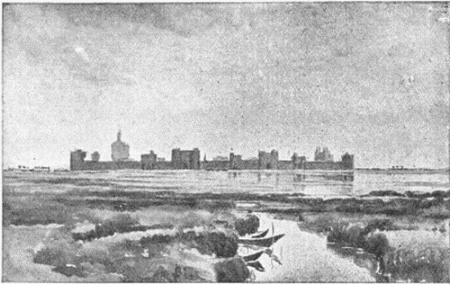
Aigues-Mortesv
Isle-sur-Sorguesviii
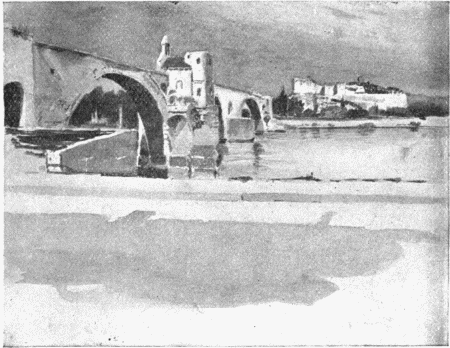
Saint-Bénazet: the Broken Bridgeix
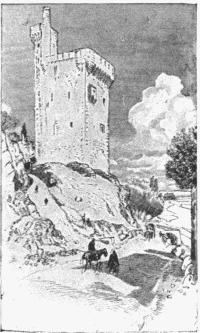
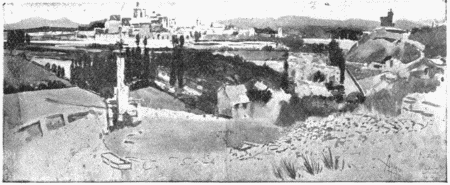
Villeneuve-lès-Avignonxi
Narbonne: the Fish Marketix
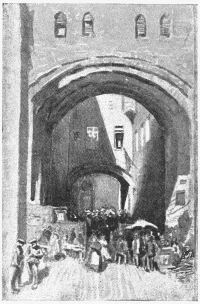
Avignon from Villeneuvexiii
Toulouse: Hôtel d'Assézatxvi
Nantes1
Tours from the River3
Langeais3
Chaumont from the River17
Blois26
Chambord36
Chaumont from the Bridge47
Chenonceaux54
Azay-le-Rideau64
Langeais from the Loire68
Loches72
Bourges77
Bourges: the Hôtel Lallemont86
Le Mans94
Angers: the Castle101
Nantes: the Quay107
La Rochelle: Tour de la Lanterne115
Poitiers: the Cathedral122
Bordeaux130
Toulouse: the Cathedral136
Toulouse: the Place de Capitol141
Toulouse: Saint-Sernin145
Carcassonne from the River150
Carcassonne157
Arles, Landscape near163
Montpellier: the Aqueduct170
The Pont du Gard178
Aigues-Mortes183
Nîmes: the Maison Carrée188
Tarascon and Beaucaire195
Provençal Landscape202
Montmajeur209
Les Baux213
Villeneuve-lès-Avignon218
Avignon223
Vaucluse, Approach to235
Orange: the Gateway243
Valence249
Macon254
Macon: the Bridge262
Beaune: the Hospital267
Introductory
Introductory
Though the good city of Paris appears to be less in fashion than in other days with those representatives of our race—not always, perhaps, acknowledged as the soundest and stiffest—curious of foreign opportunity and addicted to foreign sojourns, it probably none the less remains true that such frequentations of France as may be said still to flourish among us have as much as ever the wondrous capital, and the wondrous capital alone, for their object. The taste for Paris, at all events, is—or perhaps I should say was, alluding as I do, I fear, to a vanished order—a taste by itself; singularly little bound up, of necessity, with such an interest in the country at large as would be implied by an equal devotion, in other countries, to other capitals. Putting aside the economic inducement, which may always operate, and limiting the matter to the question of free choice, it is sufficiently striking that the free chooser would have to be very fond of England to quarter himself in London, very fond of Germany to quarter himself in Berlin, very fond of America to quarter himself in New York. It had, on the other hand, been a common reflection for the author of these light pages that the fondness for France (throughout the company of strangers more or less qualified) was oddly apt to feed only on such grounds for it as made shift to spread their surface between the Arc de Triomphe and the Gymnase Theatre: as if there were no good things in the doux pays that could not be harvested in that field. It matters little how the assumption began to strike him as stupid, especially since he himself had doubtless equally shared in the guilt of it. The light pages in question are but the simple record of a small personal effort to shake it off. He took, it must be confessed, no extraordinary measures; he merely started, one rainy morning in mid-September, for the charming little city of Tours, where he felt that he might as immediately as anywhere else see it demonstrated that, though France might be Paris, Paris was by no means France. The beauty of the demonstration—quite as prompt as he could have desired—drew him considerably farther, and his modest but eminently successful adventure begot, as aids to amused remembrance, a few informal notes.