Front matter
Reading edition
Transcriber's Note:
Obvious typographical errors have been corrected. Inconsistent spelling and hyphenation in the original document have been preserved.
Manus Island, page 202. No location named. Should probably be East Indies.
Gulf of Kas, page 195. Missing longitude.
Fitze-long Bay, page 187. Wrong map coordinates.
The Index lists Dharmapuri, Diggi, Kang-ping and Radhan as having Glossary entries which do not exist.
Alternative spellings of Ibn Batuta include Batutu, Batatu, and Batouka.
Inconsistencies between latitude and longitude in the Index and the Glossary have been left as printed, including Ajmere, Bahera, Bitlis, Carmel, the Dead Sea, Deogarh, Dharwar, Diarbekr, Dondra Head, Elichpur, Hugli, Kagoshima, and Kamagawa.
EVERYMAN'S LIBRARY EDITED BY ERNEST RHYS
REFERENCE
A LITERARY AND HISTORICAL ATLAS OF ASIA
THE PUBLISHERS OF EVERYMAN'S LIBRARY WILL BE PLEASED TO SEND FREELY TO ALL APPLICANTS A LIST OF THE PUBLISHED AND PROJECTED VOLUMES TO BE COMPRISED UNDER THE FOLLOWING THIRTEEN HEADINGS:
TRAVEL * SCIENCE * FICTION THEOLOGY & PHILOSOPHY HISTORY * CLASSICAL FOR YOUNG PEOPLE ESSAYS * ORATORY POETRY & DRAMA BIOGRAPHY REFERENCE ROMANCE

IN FOUR STYLES OF BINDING: CLOTH, FLAT BACK, COLOURED TOP, LEATHER, ROUND CORNERS, GILT TOP; LIBRARY BINDING IN CLOTH, & QUARTER PIGSKIN
London: J. M. DENT & SONS, Ltd. New York: E. P. DUTTON & CO.
TO THE WISE MAN ALL THE WORLD'S A SOIL BEN JONSON
A LITERARY & HISTORICAL ATLAS OF ASIA
J G. BARTHOLOMEW LL.D LONDON: PUBLISHED by J·M·DENT & SONS LTD AND IN NEW YORK BY E·P·DUTTON & CO
INTRODUCTION
Fourth in the series of special atlases designed for "Everyman's Library" the present volume deals with the countries of Asia, whose history and geography, and whose possibilities, great and grave, are alike reflected in the maps and charts that follow. When Queen Elizabeth granted to certain merchants of London a charter that gave them a roving commission to trade in the East Indies, she could not foresee the immense developments that were to rise from that adventurous commerce between east and west. The successive maps of India with their frontier changes mark the gradual advance of an old world toward the new one knit by powerful mutual ties to the Isle of Britain; and recently we have seen what it is to be hoped will open a greater era for those regions, marked by a return to the old capital of Delhi, and a resuming of ancient rites which first gained their symbolism in those lands.
But Asia, as Japan has taught us and as China will undoubtedly teach us again, has her own destiny to bear out, apart from our European interests and politics; and it is in that aspect we need to study her on the lines laid down and made clear and positive in this volume. It is not the military records, the charts of mutinies and battle-fields, interesting as they are, which are alone important; but those showing the conditions, physical and climatic, of the country; the dispersion of the tongues, the sites of the old religions, the wealth and tillage of the earth with its fruits, grain and minerals, its rice fields and tea plantations; the prevalence of rain, sun and trade-winds; and the course of the sea-roads that affect its human and industrial life.
A gazetteer does not always seem to the ordinary man a very entertaining thing, but in this of Asia its compiler, Miss Grant, has tried to mark in brief, close compacted in small type, the place-associations, historical and other, that give life to the names of town or country. She has related them to the books that have dealt with them, and the events they have witnessed: given Ning-po its allusion to Marco Polo's travels, and Madras its San Thomé pedigree, connected Palmyra with Tamerlane, and Puri, Bengal, with the gold tooth of the Buddha and the Temple of Vishnu's incarnation. In the Brief Survey of the Coins and Coinage, Mr. J. Allan (of the Coins and Medal Department, British Museum) has traced the record from Lydia, six centuries and more B.C., to our own time. His notes on the Phoenician coins—"tetradrachms of Tyre with a dolphin or the god Melkart riding on a sea-horse," or an owl with a crook and a flail (Egyptian royal symbols); or the double shekels of Sidon with a galley, sails, or oars, before a walled city on one side, and a king of Persia on the other—show how much of history a set of coins, apparently so secretive, may hide in their silver and gold impressions.
In this Asian Atlas, of small dimensions as it requires to be to fit its pocket, Irkutsk in the north, "far Mandalay," the details of the East and West Indies, the route of Marco Polo, coasts like the Carnatic, towns like Lucknow and Cawnpore, Lhasa, "the Forbidden City" of Tibet, and Matsuye, the old capital of Idzumo, which Lafcadio Hearn describes, all have their record. It remains to be said, that as in other volumes of the same set, Dr. Bartholomew of Edinburgh has acted as cartographer; and the editor and publishers wish to acknowledge his large practical aid in the design of the atlas. Also, they owe a word of thanks to Mr. William Foster of the India Office for his expert advice.
Finally, they wish to dedicate the volume to the people and the princes of India, Japan, and the other countries of which it is a memorial, believing in their great future.
E. R.
CONTENTS
COLOURED MAPS
PAGE
The World according to Hecatæus, B.C. 500 1
The World according to Eratosthenes, B.C. 220 2
Quadrans Habitabilis according to Abu Rihan Birunensis, A.D. 1030 3
Egyptian Empire, B.C. 1450 4
Babylonian Empire, B.C. 560 5
Persian Empire at its greatest Extent, 525 B.C. 6, 7
Empire of Alexander the Great, 325 B.C. 8, 9
Asia Minor 10, 11
Palestine, Old Testament 12
Palestine, New Testament 13
Asia, Early Explorers 14, 15
Asia, Thirteenth Century 16
Asia, about 1740 17
India, 1705 18
India, 1765 19
India, 1805 20
India, 1857 21
The Far East, 1800 22, 23
Russian Advances in Central Asia 24, 25
The World on Mercator's Projection. Showing Routes to Asia 26, 27
Asia—Orographical 28
River Basins 29
January Temperature 30
July Temperature 31
January Rainfall 32
July Rainfall 33
Mean Annual Rainfall 34
Vegetation 35
Races 36
Religions 37
Population 38
Political 39
Economic Map of Asia on Mercator's Projection 40, 41
Trade Routes of Asia on Mercator's Projection 42, 43
Turkey in Asia, Arabia, Persia, Afghanistan, and Baluchistan 44, 45
Asia Minor, Syria, etc. 46, 47
Suez Canal 48
Aden 49
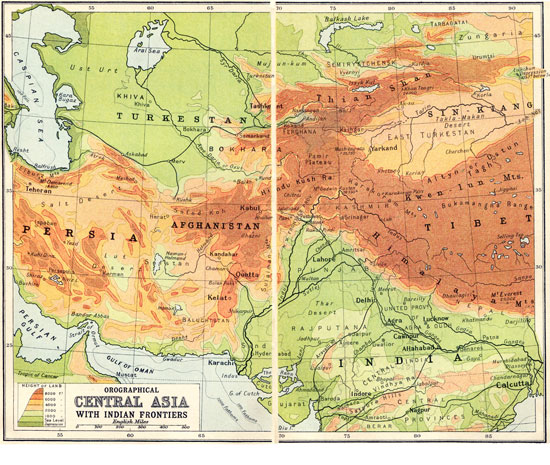
Orographical Central Asia, with Indian Frontiers 50, 51
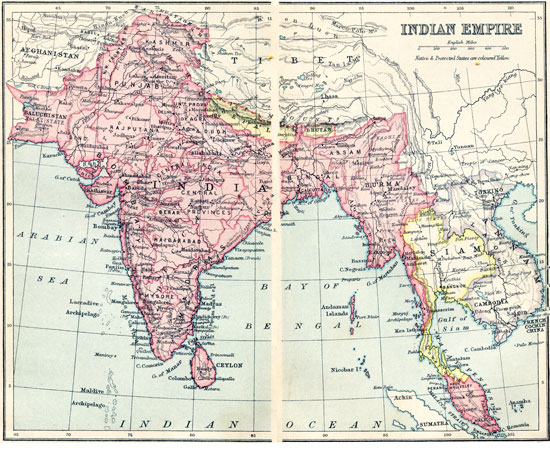
Indian Empire 52, 53
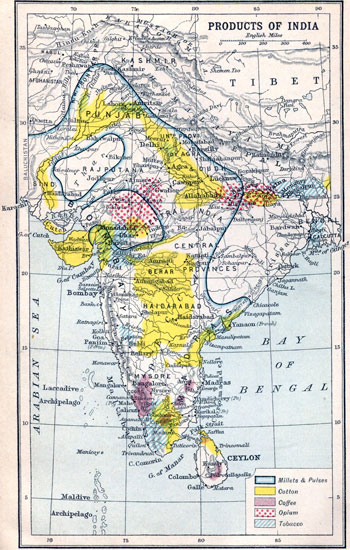
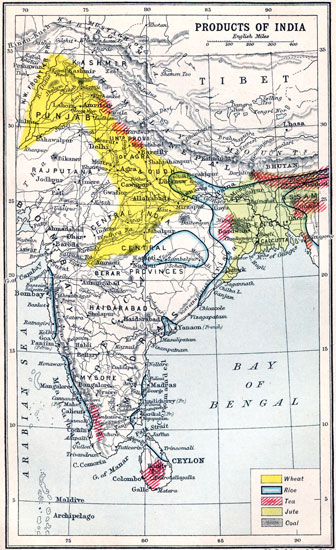
Products of India 54, 55
Bombay, Berar, and part of Central India 56, 57
Punjab, Sind, Rajputana, Kashmir, etc. 58, 59
United and Central Provinces, Bengal, Assam, etc. 60, 61
Madras, Haidarabad, Mysore, and Ceylon 62, 63
Environs of Bombay 64
Environs of Calcutta 65
Orographical Farther India 66
Burma 67
Malay States 68, 69
Siam and Indo-China 70, 71
The Far East, Economic 72, 73
East Indies 74, 75
Java 76
Philippine Islands 77
Island of Singapore 78
Hong-Kong 79
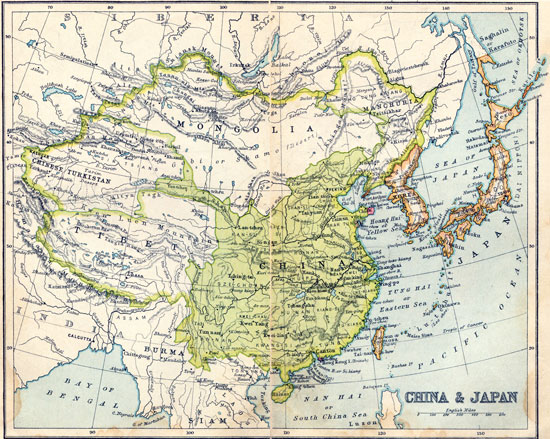
China and Japan 80, 81
Northern China 82, 83
Southern China 84, 85
Environs of Peking and Shanghai 86
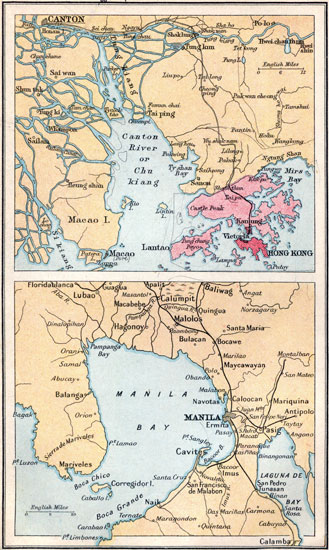
Environs of Hong-Kong and Manila 87
Japan 88, 89
Korea and Manchuria 90
Central Japan 91
Environs of Tokio 92
Environs of Port-Arthur and Nagasaki 93
Siberia 94, 95
Environs of Vladivostok 96
A BRIEF SURVEY OF THE COINAGES OF ASIA, From the Earliest Times to the Present Day, by J. Allan, M.A., M.R.A.S. 97
LINE MAPS
PAGE
Battle of Sirangapatam, February 1792130
Battle of Assaye, September 1803131
Battle of Meanee, February 1843131
Battle of Aliwal, January 1846132
Battle of Sobraon, February 1846132
Indian Mutiny, showing Distribution of Troops, May 1857133
Aryan Languages of India134
Non-Aryan Languages of India135
Sites of Ancient Indian Temples136, 137
Military Divisions of India138
Delhi139
Lucknow140
Cawnpore141
Lahore142
Rangoon143
Lhasa, "The Forbidden City"144
A Gazetteer of Towns and Places in Asia having an Historic Interest145
Index173
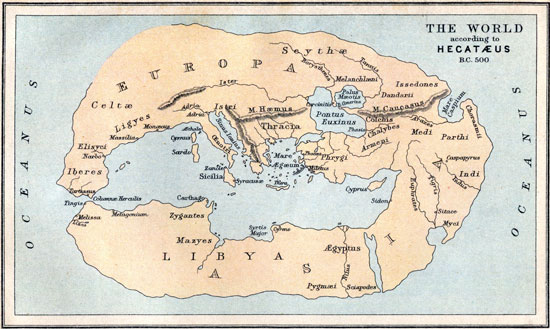
THE WORLD according to HECATÆUS B.C. 500
John Bartholomew & Co., Edinr
View larger image
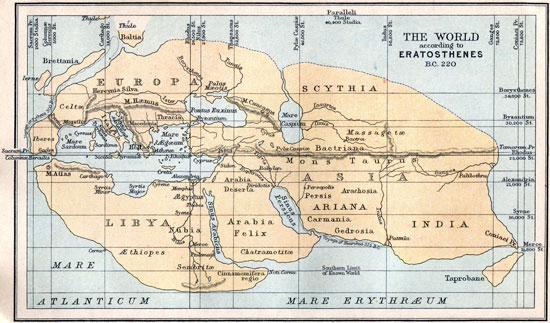
THE WORLD according to ERATOSTHENES B.C. 220
John Bartholomew & Co., Edinr
View larger image
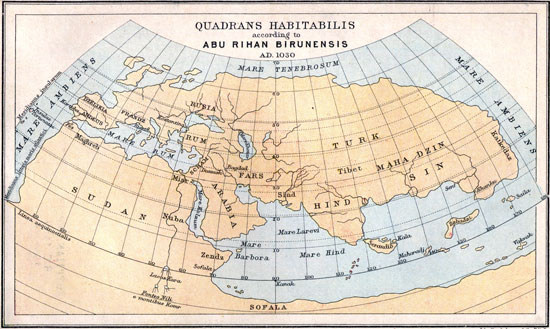
QUADRANS HABITABILIS according to ABU RIHAN BIRUNENSIS A.D. 1030
John Bartholomew & Co., Edinr
View larger image
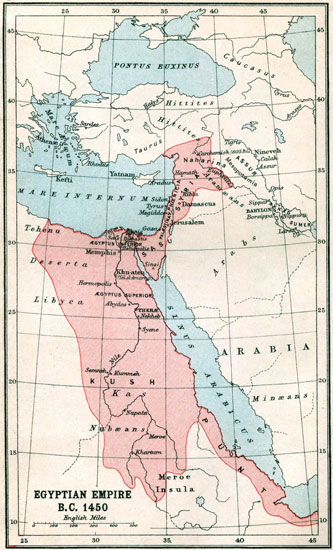
EGYPTIAN EMPIRE B.C. 1450
View larger image
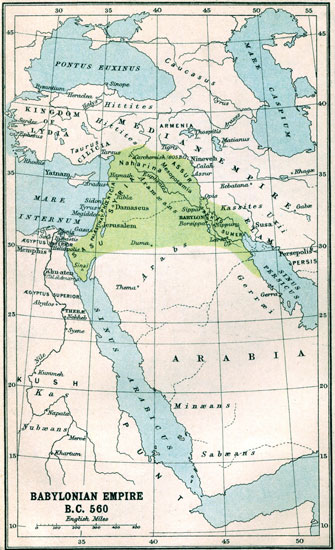
BABYLONIAN EMPIRE B.C. 560
John Bartholomew & Co., Edinr
View larger image
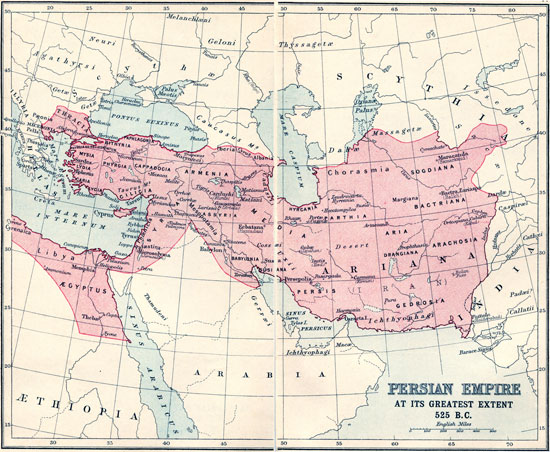
PERSIAN EMPIRE AT ITS GREATEST EXTENT 525 B.C.
John Bartholomew & Co., Edinr
View larger image
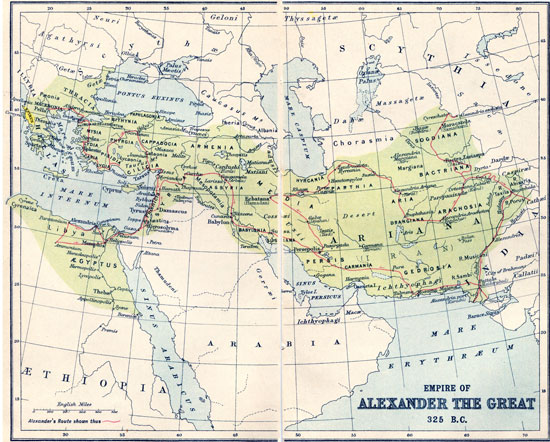
EMPIRE OF ALEXANDER THE GREAT 325 B.C.
John Bartholomew & Co., Edinr
View larger image
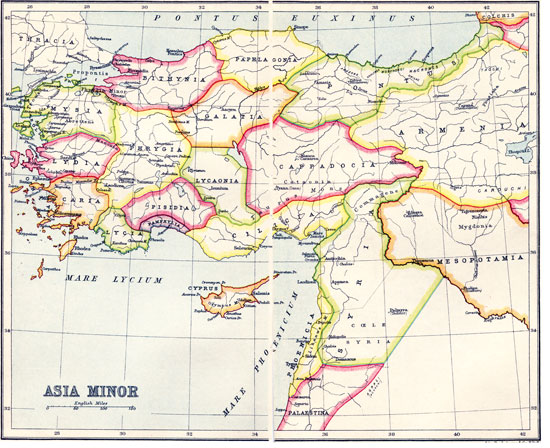
ASIA MINOR
John Bartholomew & Co., Edinr
View larger image
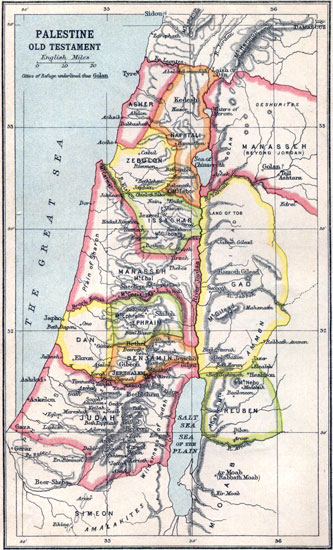
PALESTINE OLD TESTAMENT
View larger image
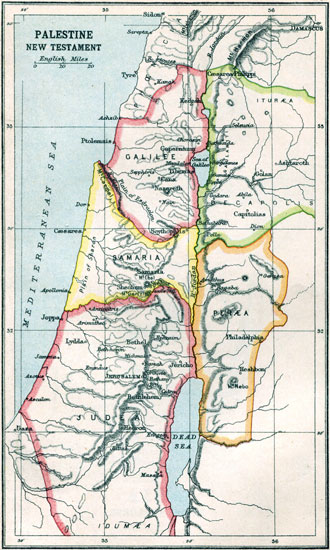
PALESTINE NEW TESTAMENT
John Bartholomew & Co., Edinr
View larger image
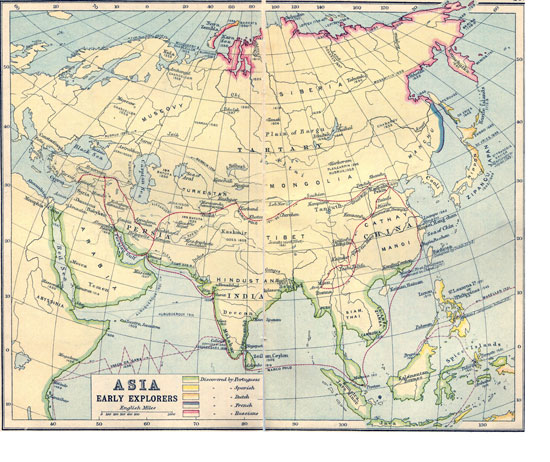
ASIA EARLY EXPLORERS
John Bartholomew & Co., Edinr
View larger image
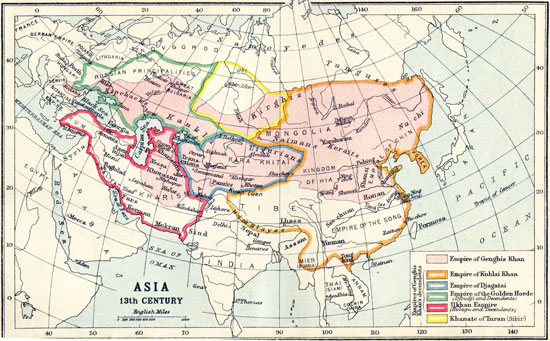
ASIA 13th CENTURY
View larger image
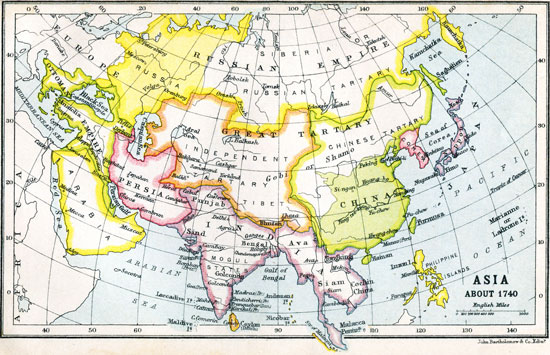
ASIA ABOUT 1740
John Bartholomew & Co., Edinr
View larger image
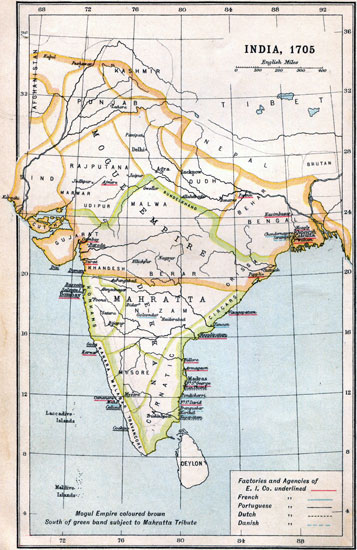
INDIA, 1705
View larger image
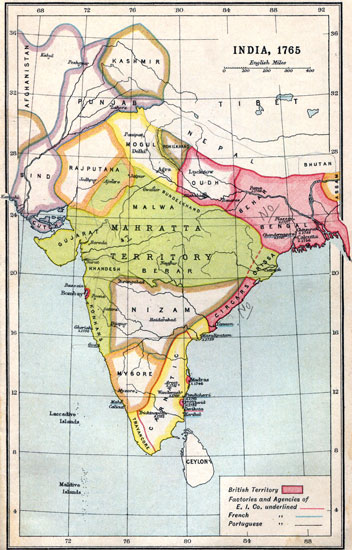
INDIA, 1765
John Bartholomew & Co., Edinr
View larger image
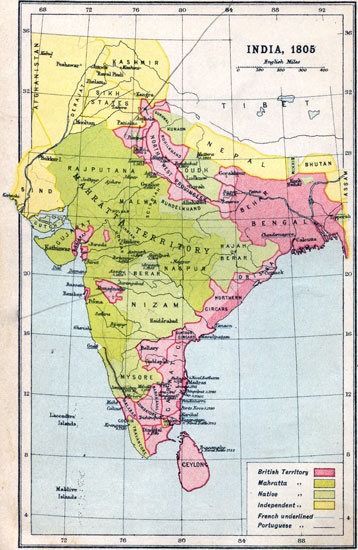
INDIA, 1805
View larger image
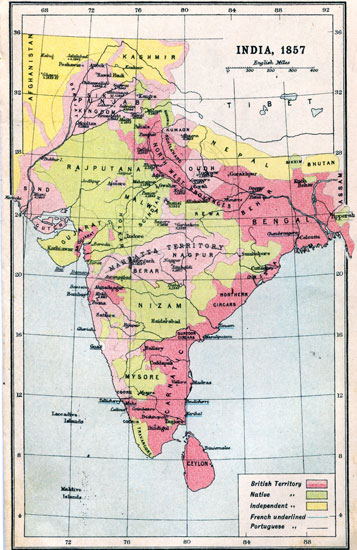
INDIA, 1857
John Bartholomew & Co., Edinr
View larger image
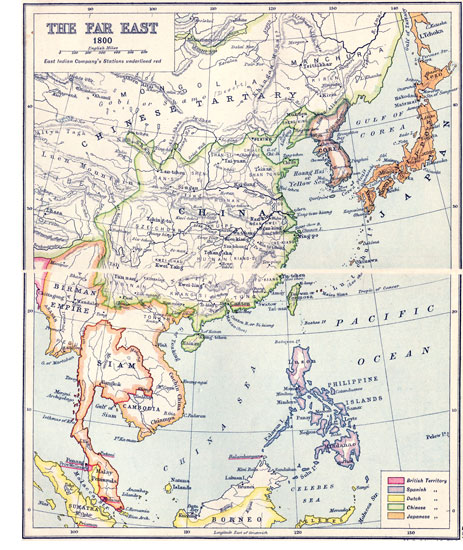
THE FAR EAST 1800
John Bartholomew & Co., Edinr
View larger image
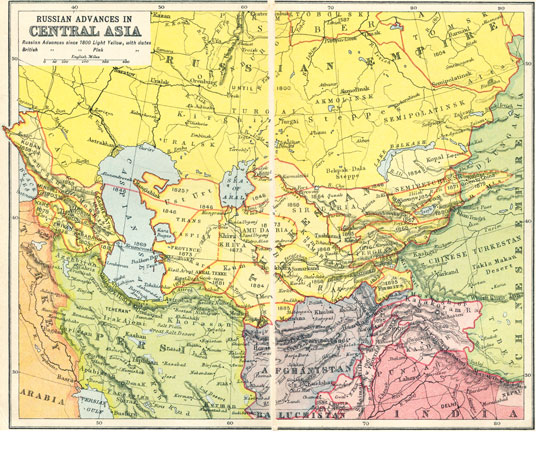
RUSSIAN ADVANCES IN CENTRAL ASIA
John Bartholomew & Co., Edinr
View larger image
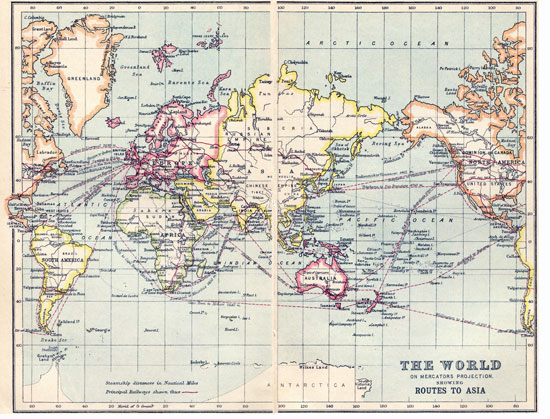
THE WORLD ON MERCATORS PROJECTION. SHOWING ROUTES TO ASIA
John Bartholomew & Co., Edinr
View larger image
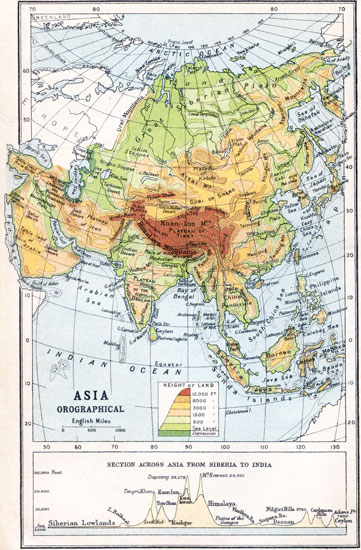
ASIA OROGRAPHICAL
View larger image
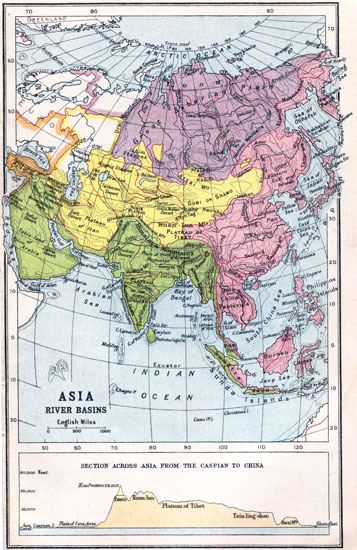
ASIA RIVER BASINS
John Bartholomew & Co., Edinr
View larger image
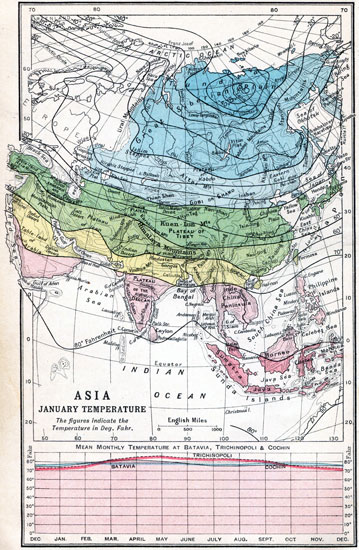
ASIA JANUARY TEMPERATURE
View larger image
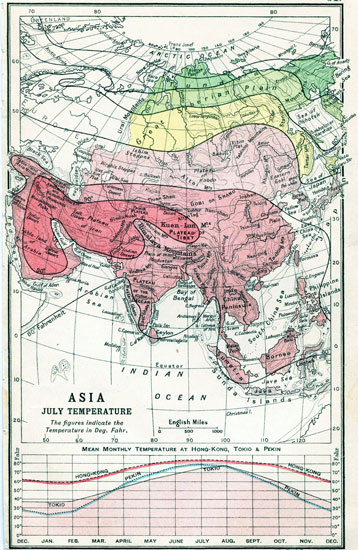
ASIA JULY TEMPERATURE
John Bartholomew & Co., Edinr
View larger image
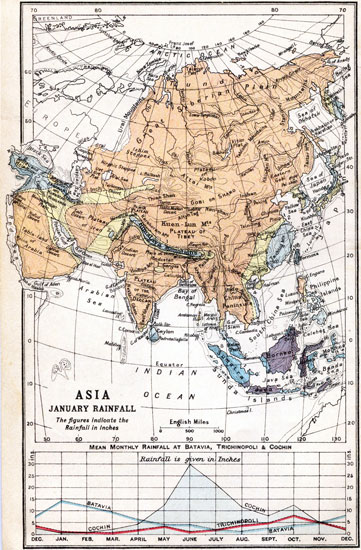
ASIA JANUARY RAINFALL
View larger image
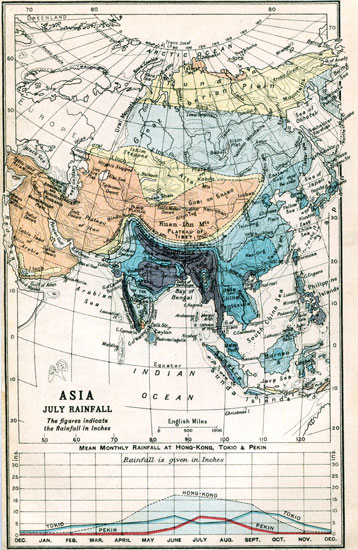
ASIA JULY RAINFALL
John Bartholomew & Co., Edinr
View larger image
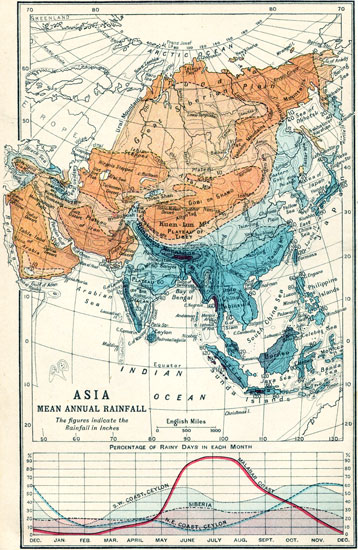
ASIA MEAN ANNUAL RAINFALL
View larger image
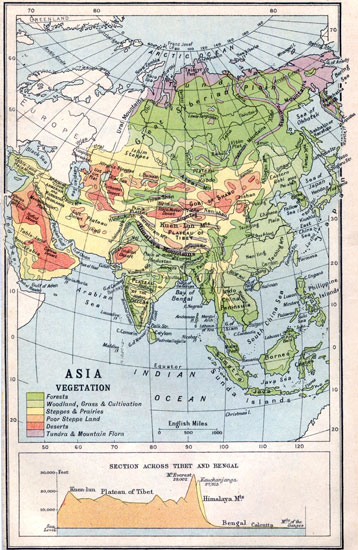
ASIA VEGETATION
John Bartholomew & Co., Edinr
View larger image
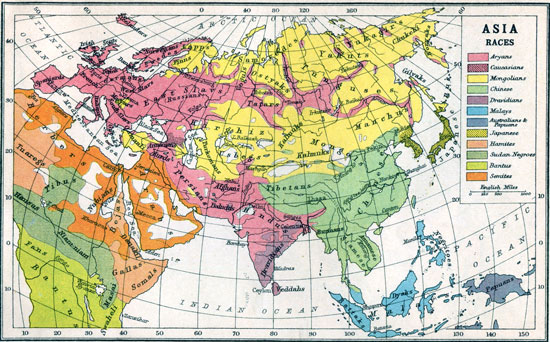
ASIA RACES
View larger image
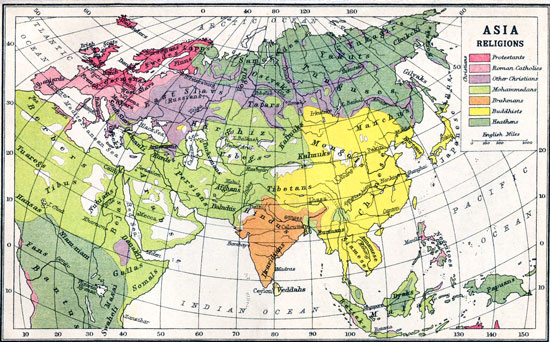
ASIA RELIGIONS
John Bartholomew & Co., Edinr
View larger image
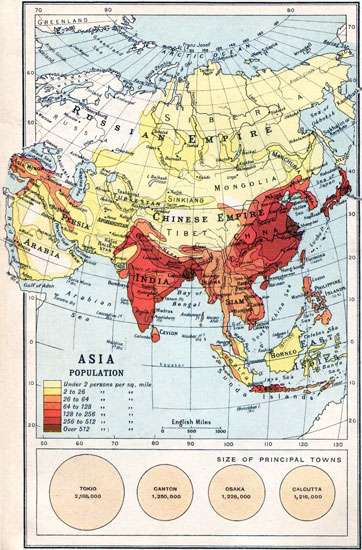
ASIA POPULATION
View larger image
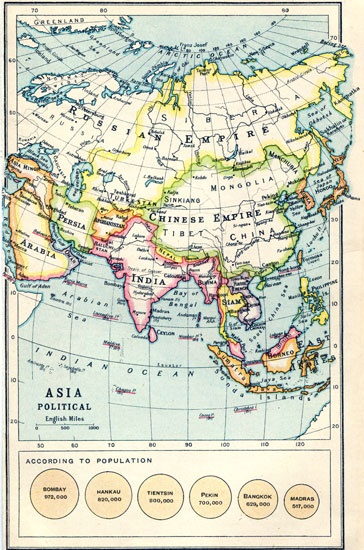
ASIA POLITICAL
John Bartholomew & Co., Edinr
View larger image
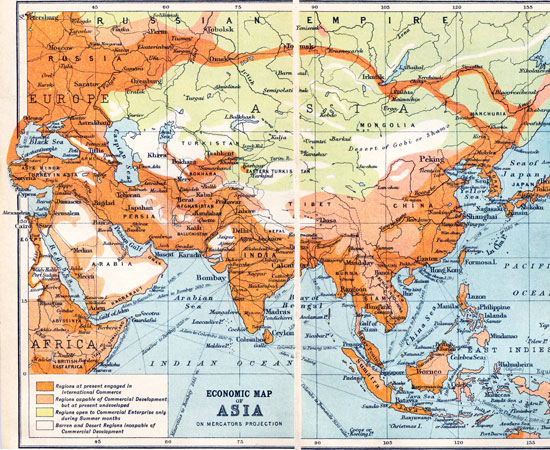
ECONOMIC MAP OF ASIA ON MERCATORS PROJECTION
John Bartholomew & Co., Edinr
View larger image
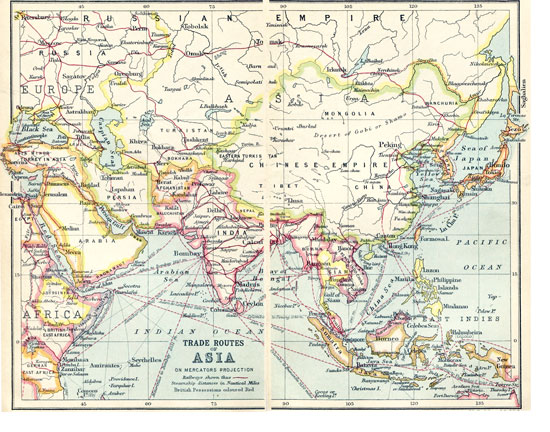
TRADE ROUTES OF ASIA ON MERCATORS PROJECTION
John Bartholomew & Co., Edinr
View larger image
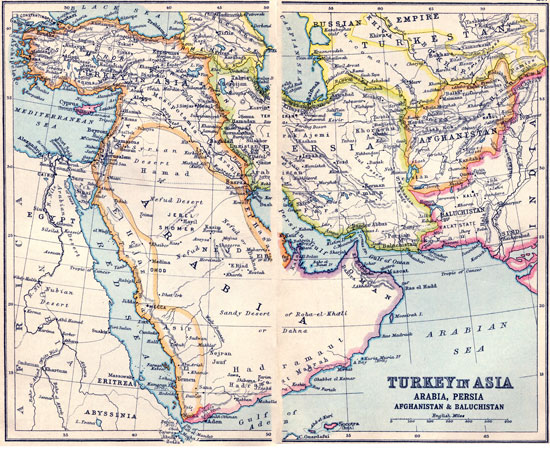
TURKEY IN ASIA ARABIA, PERSIA AFGHANISTAN & BALUCHISTAN
View larger image
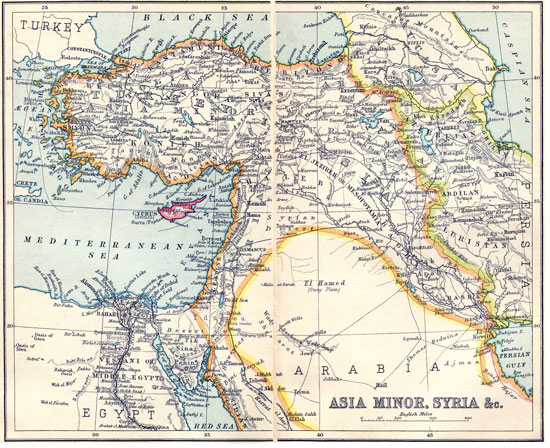
ASIA MINOR, SYRIA &c.
John Bartholomew & Co., Edinr
View larger image
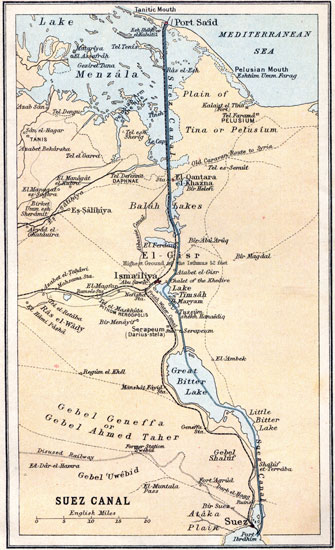
SUEZ CANAL
View larger image
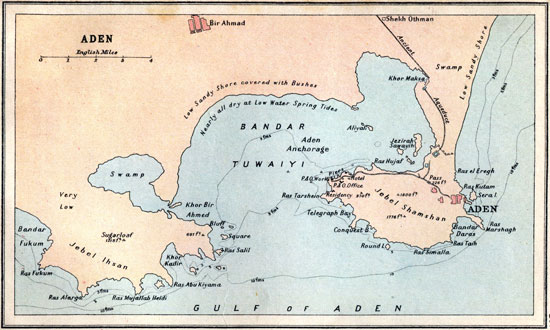
ADEN
John Bartholomew & Co., Edinr
View larger image
OROGRAPHICAL CENTRAL ASIA WITH INDIAN FRONTIERS
John Bartholomew & Co., Edinr
View larger image
INDIAN EMPIRE
John Bartholomew & Co., Edinr
View larger image
PRODUCTS OF INDIA
View larger image
PRODUCTS OF INDIA
John Bartholomew & Co., Edinr
View larger image
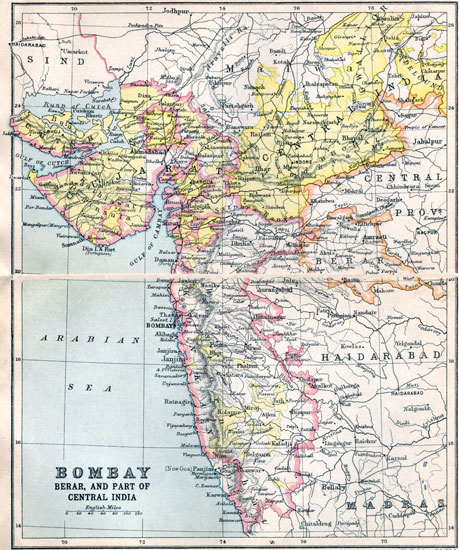
BOMBAY BERAR, AND PART OF CENTRAL INDIA
John Bartholomew & Co., Edinr
View larger image
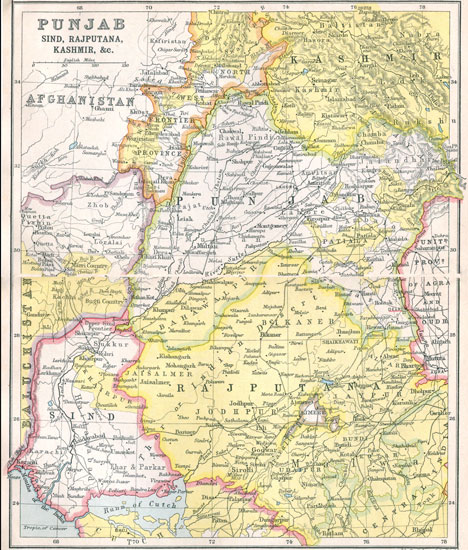
PUNJAB SIND, RAJPUTANA, KASHMIR, &c.
John Bartholomew & Co., Edinr
View larger image
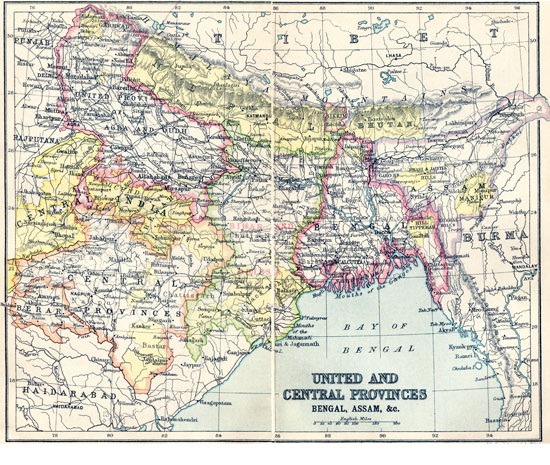
UNITED AND CENTRAL PROVINCES BENGAL, ASSAM, &c.
John Bartholomew & Co., Edinr
View larger image
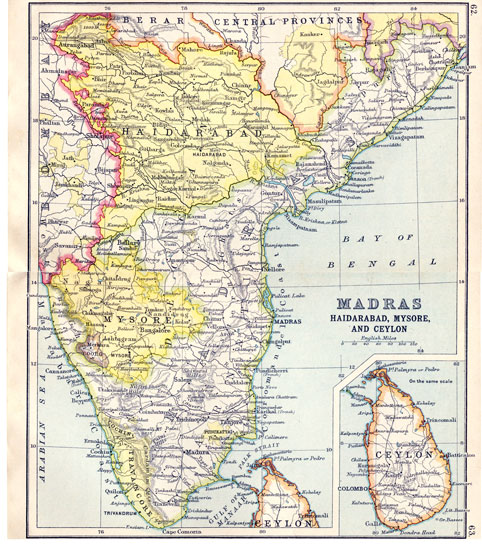
MADRAS HAIDARABAD, MYSORE, AND CEYLON
John Bartholomew & Co., Edinr
View larger image
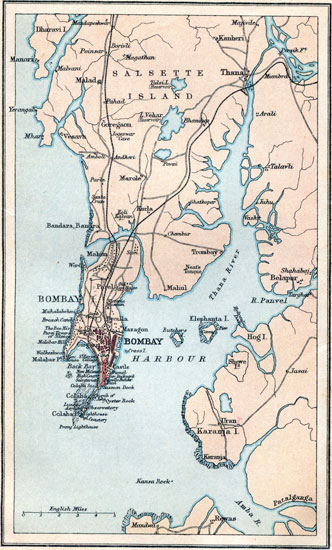
View larger image
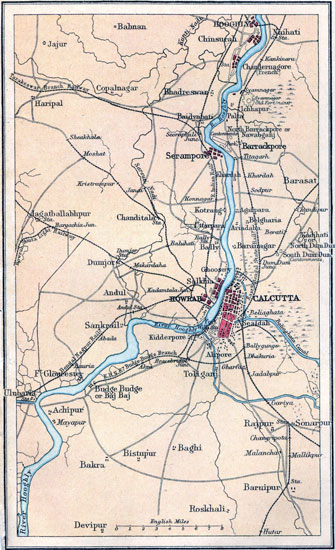
John Bartholomew & Co., Edinr
View larger image
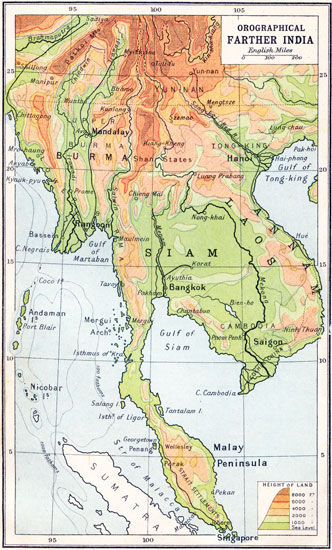
OROGRAPHICAL FARTHER INDIA
View larger image
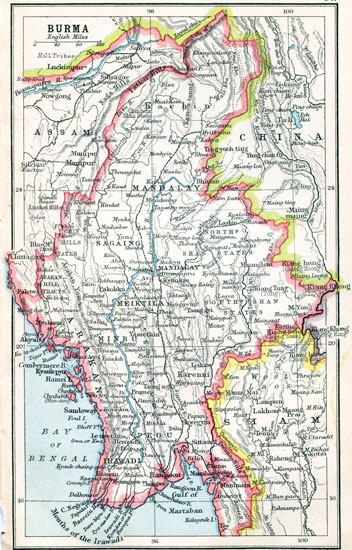
BURMA
John Bartholomew & Co., Edinr
View larger image
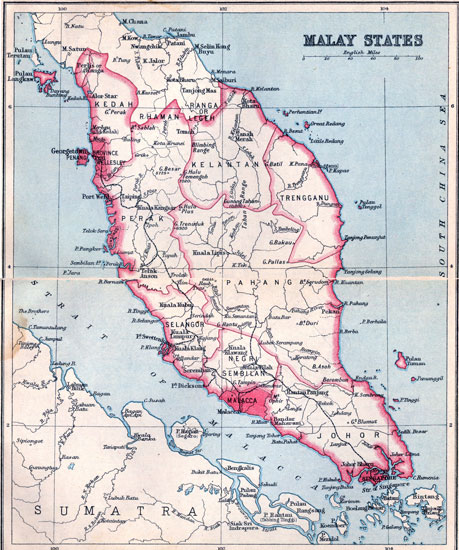
MALAY STATES
John Bartholomew & Co., Edinr
View larger image
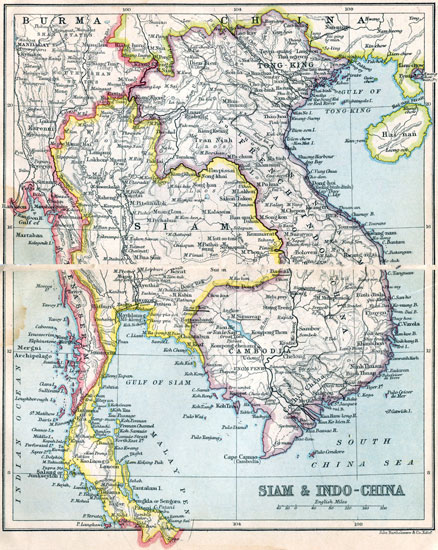
SIAM & INDO-CHINA
John Bartholomew & Co., Edinr
View larger image
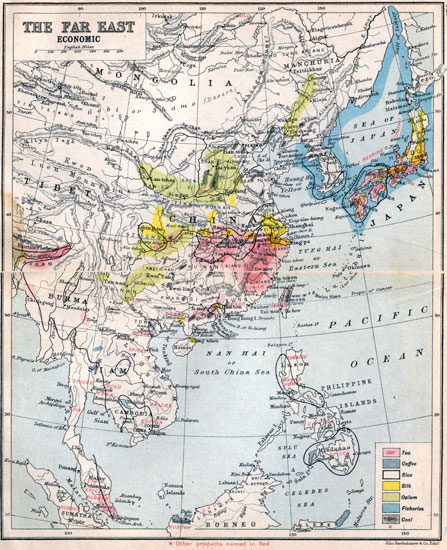
THE FAR EAST ECONOMIC
John Bartholomew & Co., Edinr
View larger image
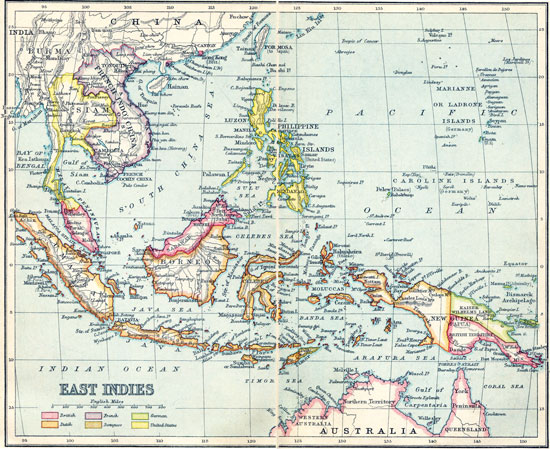
EAST INDIES
John Bartholomew & Co., Edinr
View larger image
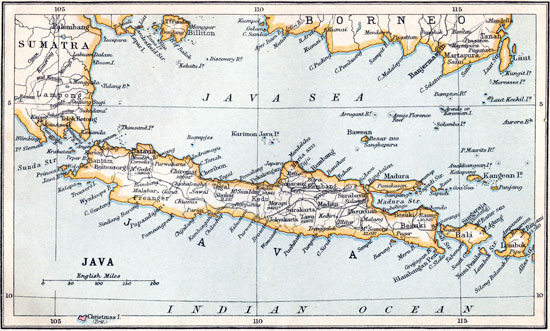
JAVA
View larger image
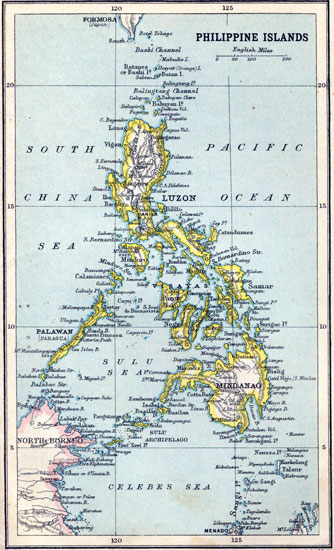
PHILIPPINE ISLANDS
John Bartholomew & Co., Edinr
View larger image
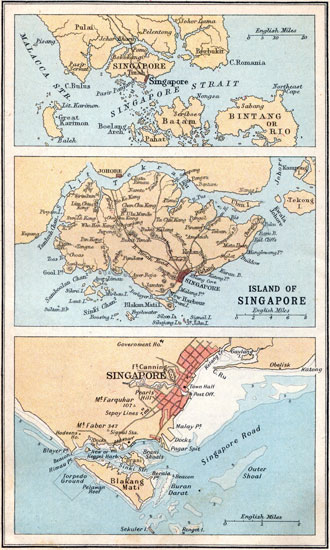
ISLAND OF SINGAPORE
View larger image
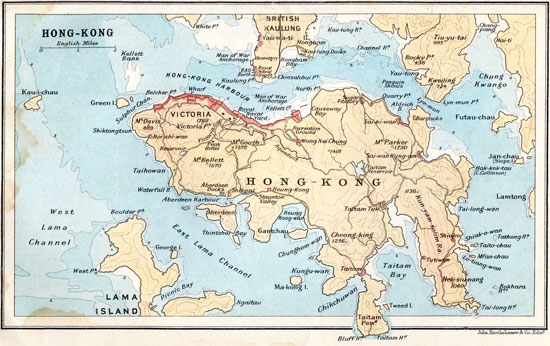
HONG-KONG
John Bartholomew & Co., Edinr
View larger image
CHINA & JAPAN
John Bartholomew & Co., Edinr
View larger image
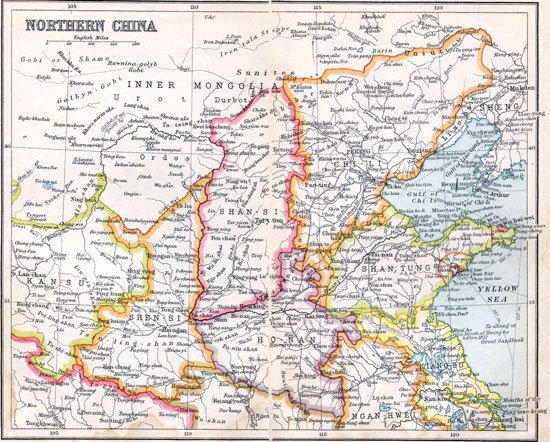
NORTHERN CHINA
John Bartholomew & Co., Edinr
View larger image
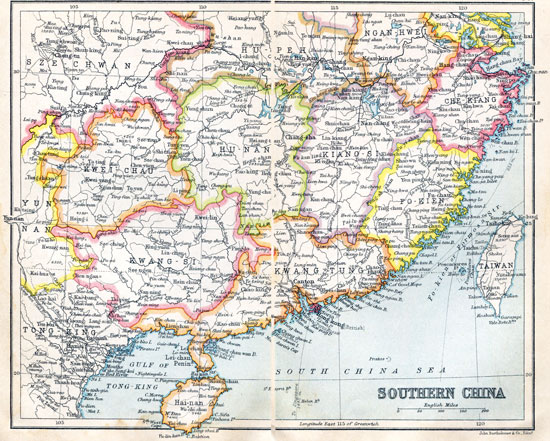
SOUTHERN CHINA
John Bartholomew & Co., Edinr
View larger image
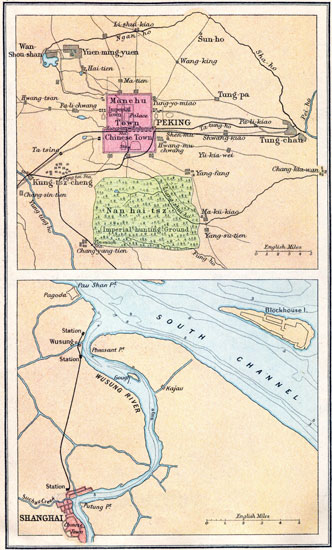
View larger image
John Bartholomew & Co., Edinr
View larger image
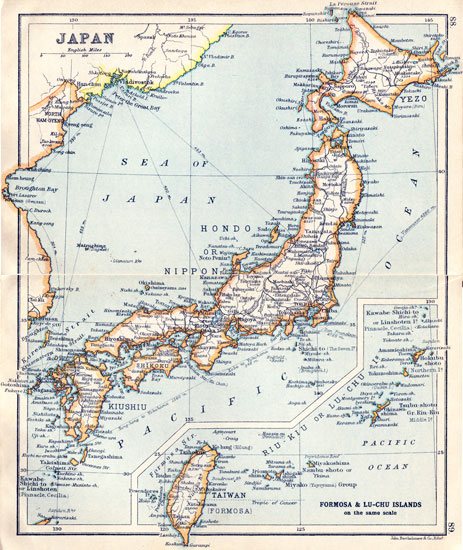
JAPAN
John Bartholomew & Co., Edinr
View larger image
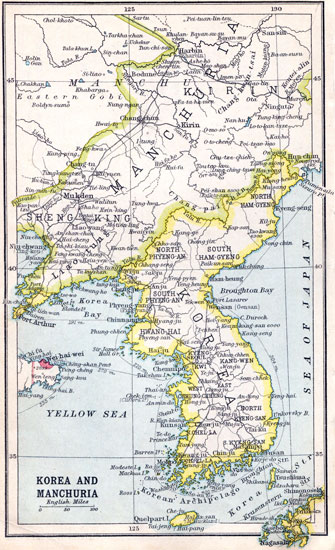
KOREA AND MANCHURIA
View larger image
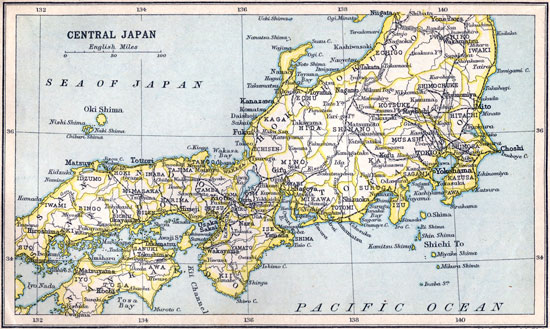
CENTRAL JAPAN
John Bartholomew & Co., Edinr
View larger image
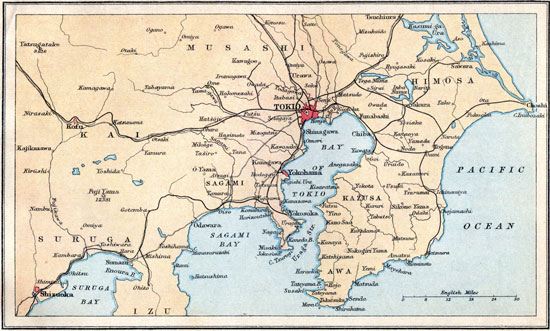
View larger image
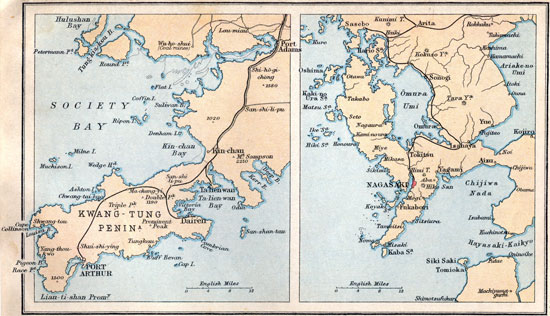
John Bartholomew & Co., Edinr
View larger image
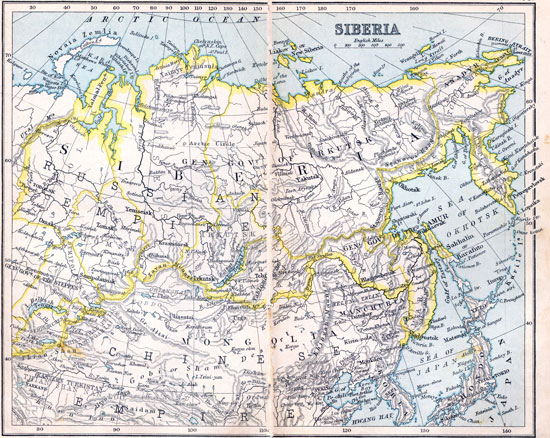
SIBERIA
John Bartholomew & Co., Edinr
View larger image
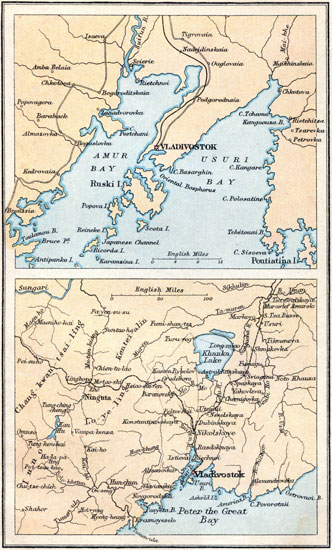
View larger image
A BRIEF SURVEY OF THE COINAGES OF ASIA FROM THE EARLIEST TIMES TO THE PRESENT DAY
A BRIEF SURVEY OF THE COINAGES OF ASIA FROM THE EARLIEST TIMES (700 B.C.) TO THE PRESENT DAY
By J. ALLAN, M.A., M.R.A.S. Of the Department of Coins, British Museum
The coins of Asia from the earliest times may be conveniently reviewed in the following geographical and chronological sections: I. Ancient coins of Western and Central Asia (to the rise of Islam, excluding the majority of Greek and Roman coins which have no claim to be Asiatic); II. Mohammadan coins of Western and Central Asia; III. Coins of India (Hindu and Mohammadan); IV. Coins of the Far East; V. Coins struck by European nations for their Asiatic possessions.
I.—ANCIENT COINS OF WESTERN AND CENTRAL ASIA
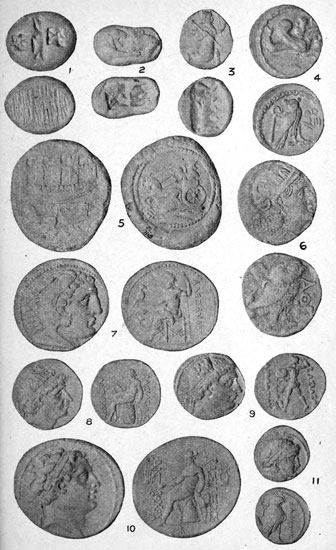
Origin of Coinage in Lydia.—According to Herodotus (I. 94) the Lydians were the first people to strike coins of gold and silver, while other writers attribute the invention of coinage to Pheidon, king of Argos, who struck coins in Aegina. The truth appears to be that gold, or rather electrum, was first coined in Lydia in the seventh century B.C., while silver was first minted in Aegina about the same time. The earliest Lydian coins are believed to have been issued in the time of Gyges, king of Lydia (687-652 B.C.). These are rude oval pieces of electrum, a natural mixture of gold and silver found locally, and are stamped on one side only (Plate I. 1). The uncertain value of this metal was found an embarrassment to commerce, and Croesus (561-546 B.C.), under whose rule Lydia became a great and wealthy power, introduced a coinage of pure gold and of pure silver, ten staters of silver being equal to one of gold (Plate I. 2, gold stater).
Persia.—When Cyrus conquered Lydia in 546 B.C., the Persians, who, like the Assyrians, had no coined money, became acquainted with the art of coinage. It is not certain when the Persians began to issue coins, but from the statement of Herodotus that Darius Hystaspis (521-486 B.C.) coined gold of the finest quality, and the probable etymology of "daric" from Darius, the beginning of the Achaemenid coinage is placed in his reign; it is most probable that it was at Sardes in Lydia that Darius first struck his coins, as there he would be most likely to find skilled artificers. The coins of the Persian empire were the daric of gold about equal in value to the stater of Croesus (or rather more than an English sovereign in metal value) and the siglos (shekel) of which twenty were the equivalent of a daric. The types were the same on each coin, viz., on the obverse, the Persian King in a half-kneeling position holding a bow in his left hand and a spear in his right, while the reverse still had no type but only a rough incuse caused in striking the coins (Plate I. 3, daric). These two coins remained the official coinage of the Persian empire till its fall. The conquered Greek cities were not allowed to strike gold, but the issue of silver and copper by them was not interfered with; in addition certain Persian satraps were allowed to issue silver coins bearing their own names.
Phoenicia.—In spite of their commercial activity, the Phoenician cities of the Mediterranean coast did not begin to strike coins until comparatively late times, the end of the fifth and beginning of the fourth centuries B.C. We possess extensive silver coinages of the fourth century for most of these cities, those of Tyre and Sidon being particularly important. The tetradrachms of Tyre have as types, a dolphin or the god Melkart riding on a sea-horse and an owl with crook and flail, Egyptian symbols of royalty (Plate I. 4, c. 410-332 B.C.). The double shekels of Sidon bear on the obverse a galley with sails or rowers often before a walled city, and on the reverse the suzerain king of Persia in a chariot (Plate I. 5, c. 400-384 B.C.).
Imitations of Athenian coins.—The coins of Athens circulated very widely in the ancient world, particularly in Central Asia, where imitations of them were made when the Athenian mint could no longer supply the demand (Plate I. 6, imitation of Athenian tetradrachm). On some of these imitations the owl was replaced by an eagle, while Athenian influence can still be traced in the remarkably neat coins of Sophytes (Plate I. 11, reverse, cock), whom Alexander found reigning on the North-West Indian frontier on his march across it in 326 B.C.
Alexander III., the Great.—When the Persian empire fell before Alexander the Great his coins became current throughout Asia, from the Mediterranean to the Indus, and profoundly influenced all later coinages. His gold coins (the stater, with its multiple the distater and its sub-divisions) have on the obverse a head of Athena, and on the reverse a winged Victory with the king's name; the silver (drachm, with multiples and subdivisions) has on the obverse a head of the young Herakles in lion-skin, and reverse, Zeus seated on throne holding eagle and sceptre (Plate I. 7). Tetradrachms bearing Alexander's name and types continued to be struck for a century and a half after his death, and they are at the present day the commonest of ancient coins.
Seleucid Kings of Syria.—We possess an extensive series of coins of the Seleucid kings of Syria, the dynasty founded by Seleucus Nikator (312-280 B.C.), the general of Alexander who succeeded to his Asiatic heritage. The earliest Seleucid coins (before 306 B.C.) retained the name and types of Alexander, but soon a greater variety of types was adopted, while the king's head began to appear regularly on the obverse. The Seleucid coins are remarkable for the unique series of portraits they give us. One of the commonest types of the Seleucid series has the king's head on the obverse, and a seated Apollo with bow and arrow on the reverse (Plate I. 8, gold stater of Antiochus I., 280-266 B.C.; Plate I. 10, silver tetradrachm of Antiochus IV., 175-166 B.C.).
Bactria.—About the middle of the third century B.C. the empire founded by Seleucus began to break up. A line of kings was founded in Bactria by Diodotos, a revolted satrap, whose independence Antiochus II. had to acknowledge. The earlier coins of these kings, who afterwards crossed into India and gradually lost their Hellenism, present some of the finest examples of portraiture on Greek coins (Plate I. 9, gold stater of Diodotos I., c. 250 B.C.).
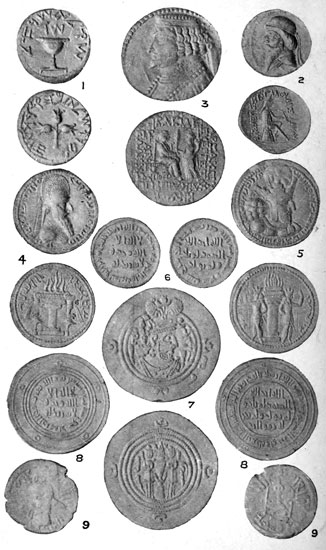
Judaea.—Among the smaller kingdoms who became independent of the Seleucids in the second century B.C. may be mentioned that of the Jews. Certain shekels, bearing on the obverse a chalice with the legend "shekel of Israel," and on the reverse a branch with three buds and the legend "Jerusalem the Holy" (Plate II. 1), have been attributed to Simon Maccabaeus (143-135 B.C.), but they may belong to the First Revolt (66-70 A.D.).
Parthia.—About the same period, the great Parthian kingdom was founded in Central Asia and lasted till 220 A.D. The Parthian coinage is of silver (drachms and tetradrachms) and bronze. Although Parthian drachms are at the present day one of the most extensive of ancient coinages, their classification is exceedingly difficult on account of our ignorance of Parthian history, and the fact that the coins do not bear the name of the issuer but of Arsakes, the founder of the dynasty. The silver drachms bear on the obverse the portrait of the reigning king, and on the reverse the first king Arsakes seated holding a bow, with a legend in Greek characters which is at first simply (coin of) "the king Arsakes" (Plate II. 2, drachm of Mithridates I. the Great, 171-138 B.C.), but gradually increases in length till a century later it assumes the form (coin of) "the king of kings Arsakes, the just, the illustrious, the beneficent, the friend of the Greeks," which remains the usual legend. Tetradrachms with similar legends were also struck in large numbers; their usual reverse type is the Parthian king seated, receiving a wreath from the goddess of Victory or from a City goddess (Plate II. 3, tetradrachm of Phraates IV., 38-3 B.C.). After the reign of Phraates IV. the coins are dated in the Seleucid era, while the later coins bear a Pehlevi legend in addition to the Greek inscription which is by this time almost unintelligible.
Sassanian Empire.—Early in the third century A.D. the last remnants of Parthian power were destroyed by Ardashir, a Persian prince, who founded the Sassanian empire, which after successfully disputing the supremacy of Asia with the Romans for four centuries finally fell before the conquering hosts of Islam. The Sassanian silver coins, particularly of the later kings, are exceedingly numerous at the present day, but the gold and copper are rare. The types of the gold and silver are throughout the dynasty the same; on the obverse is the head of the king with a long legend of the form, "Ardashir, worshipper of Ahura Mazda, divine king of kings of Iran, a scion of the celestial race," on the reverse a fire-altar, usually with two attendant priests, and at first the legend "the fire of Ardashir" (etc.), later the mint and regnal year of issue. The earlier coins are of remarkably good workmanship, and give us fine portraits of the Sassanian kings (Plate II. 4, gold coin of Ardashir I., 226-241 A.D.; Plate II. 5, silver drachm of Sapor I., 241-272 A.D.). The gold coins weigh rather less than an English sovereign, and their standard appears to be derived from Roman solidi; the silver coins are drachms following the Parthian standard, and, particularly the latter pieces, are remarkable for their thin fabric (e.g. Plate II. 7, Khusrau (Chosroes) II., Parvez, 590-628 A.D.) which was copied by the Arabs in their silver coins, and can be traced in certain Mohammadan series to the present day.
Bibliography.—B. V. Head, Historia Numorum (Oxford, 1911), pp. 643-845; B. V. Head, Coinage of Lydia and Persia (London, 1878); British Museum Catalogue of Greek Coins, Lydia (1901), Syria (1878), Parthia (1905), Phoenicia (1910); E. Babelon, Perses Acheménides (Paris, 1893); E. Babelon, Rois de Syrie (Paris, 1890); Dorn & Bartholomaei, Monnaies Sassanides (St. Petersburg, 1875).
II.—MOHAMMADAN COINAGES (Exclusive of India)
Beginnings of Arab Coinage.—The Arabs were unacquainted with the art of coinage till they learned it on their campaigns of conquest in Syria (Byzantine) and Persia (Sassanian). At first they were content to issue gold and copper pieces imitated from contemporary Byzantine coins (Plate II. 9, early copper coin of Abd-al-Malik; obverse, figure of the Caliph; reverse, modified Byzantine cross), while their silver pieces were copies of late Sassanian coins (like Plate II. 7), with the addition of bismillah (in the name of God) on the margin.
Abd-al-Malik's Reformed Currency.—Though one traditionist says that even Adam felt the need for money and struck dinars and dirhems, more reliable authorities agree in attributing to Abd-al-Malik, the fifth Omayyad Caliph (684-705 A.D.), the institution in 696 A.D. of a purely Muslim coinage, worthy of the great Arab empire and the foundations on which it was built. This coinage was of gold, silver, and copper, and the names dinar (denarius aureus), dirhem (drachma), and falus (follis), which have remained in use practically to the present day, were borrowed from the Byzantines. The dinar originally weighed rather more than half a sovereign, while the dirhem was a little less than sixpence in English money, but the names came to mean simply gold and silver coin respectively.
Mohammad's interdiction of any form of image-making, as savouring of idolatry, limited the orthodox Caliph to legends on his coins, but thereby gave Arab coins an importance as historical documents possessed by no other series. From the earliest times they bore the mint and date (in the Mohammadan era dating from 622 A.D.), and later the ruler's name and titles, often including valuable genealogical data, were added. The right of striking coins was one of the privileges of sovereignty, and Muslim coins thus throw a good deal of light on Arab history.
Plate II. 6 is a dinar, and Plate II. 8 a dirhem of Abd-al-Malik; both bear on the obverse the profession of faith, "There is no god but God; He hath no associate:" around the reverse of the dinar is the legend, "In the name of God this dinar was struck in the year 77" (696 A.D.), while the similar inscription on the dirhem includes the mint (Damascus, 79 A.H.) and is placed around the obverse. On both the reverse areas is "God is alone; God is eternal; He begets not and is not begotten" (the dinar ends here, but the dirhem continues) "nor is there any one like unto Him" (Koran, cxii.). Around the obverse of the dinar and reverse of the dirhem is, "Mohammad is the prophet of God, sent with guidance and the religion of truth to make it prevail over all other religions" (dinar stops here), "averse though the idolaters may be" (Koran ix. 33).
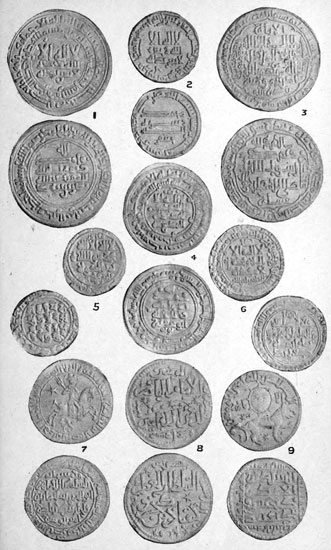
Abbasids.—In 750 A.D. the Abbasids overthrew the Omayyads, and at first made but superficial alterations in the coinage; the long reverse formula was replaced by the simple profession, "Mohammad is the prophet of God." Plate III. 2, a dinar of the "good" Caliph Harun-al-Rashid (786-809 A.D.) is typical of the period, except that it bears the name of his ill-fated vizier, Ja'afar, who will be remembered by readers of the Arabian Nights as the companion of the Caliph's nocturnal ramblings, on whom this signal honour was conferred. In the ninth century a second marginal inscription, "To God belongs the order before and after, and in that day the believers shall rejoice in the help of God" (Koran, xxx. 3, 4) was added on the obverse, while the Caliph's name begins to appear regularly on the reverse area.
Contemporaries of the Caliphs.—Coins with similar legends were struck by the various dynasties which arose on the weakening of the authority of the Caliph in the ninth and tenth centuries. In addition to the ruler's name they usually bear the name of the reigning Caliph, whose spiritual authority was still recognised; such are Plate III. 1, a dirhem of the Samanid Nasr b. Ahmad struck in 300 A.H. at Samarkand, which was then one of the great centres of Mohammadan learning and literary activity; Plate III. 4, a Buwayhid dinar of Rukn-al-Daula (932-976 A.D.), struck at Hamadan in 352 A.H., bearing the name of the fainéant Caliph al-Muti; and Plate III. 6, a dinar, struck at Rayy, 447 A.H., of the Great Seljuk Toghrul Beg (1037-1063 A.D.), the Turkish conqueror of Western Asia whose descendants were among the most redoubtable of the "Saracens." Plate III. 3, a dinar of the last Abbasid Caliph—Al-Mustasim (1242-1258 A.D.), illustrates the change in the fabric and calligraphy of the coinage which had taken place in six centuries. Plate III. 5 is a dinar of Mahmud of Ghazni (998-1030 A.D.), with the reverse legend in Sanskrit for the benefit of his Indian subjects.
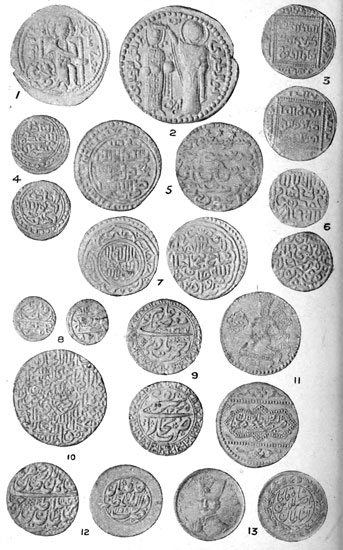
Seljuks, Ortukids, and Ayyubids (Saracens).—Plate III. 7, a dirhem of Sulaiman II. (1199-1203 A.D.), a Seljuk of Asia Minor, is the first of a series of striking deviations from the orthodox Mohammadan type, prompted as much by necessities of commerce with Christian nations as by a lack of orthodoxy on the part of their issuers, heretics though they were. The obverse area is occupied by a horseman holding a mace over his shoulder, while around is the Shia form of the Mohammadan creed (as above, with the addition of the words "Ali is the friend of God"); the reverse bears the usual data. Plate III. 8 is a dirhem of one of his successors Kaikubad I. (1219-1236 A.D.), a fine specimen of the calligraphy of the period; Plate III. 9, is a dirhem of his successor, Kai-Khusru II. (1136-1245 A.D.), bearing the "lion and sun," the horoscope of his beautiful Georgian wife, whose portrait he wished to place on his coins, till his counsellors persuaded him to be content with her horoscope. The coins of the Ortukids, who were also prominent opponents of the Crusaders, are remarkable for their immense variety of types borrowed from all sources (Greek, Roman, Byzantine, etc.). Plate IV. 1, reverse of a copper coin of Kara Arslan (1148-1174 A.D.), and Plate IV. 2, of a copper coin of Alpi (1152-1176 A.D.), represent Christ seated and the Virgin crowning the emperor respectively, both well-known Byzantine types. The Saracen best known by name to English readers is Saladin the Ayyubid Sultan of Egypt and Syria (1169-93 A.D.) whose capture of Jerusalem in 1187 provoked the Third Crusade in which Richard I., Cœur-de-Lion, took a prominent part. Plate IV. 3 is a dirhem struck by him at Damascus, his Syrian capital, in 582 A.H. (1186 A.D.).
Mongols.—In the thirteenth century the Mongols, led by the Chingiz Khan (1206-1227 A.D.), one of the greatest conquerors the world has known, subjugated practically all Asia with the exception of India. Plate IV. 4 is one of the rare coins attributed to Chingiz Khan, while Plate IV. 5 is a handsome dinar struck by Arghun, one of the earliest (1284-1295 A.D.) of the Persian line of Mongols (obverse, Mohammadan (Shia) creed and date, etc.; reverse, the Khan's titles, etc., in Mongol). Tamerlane (1369-1404 A.D.) (Timur Lang, Timur the Lame), a distant descendant of Chingiz Khan, is another great conqueror familiar to English readers through Marlowe and Gibbon. One of the coins struck by him, with the name of his nominal sovereign, Suyurghatmish, is figured on Plate IV. 6. Plate IV. 7 is a dirhem of his son and ultimate successor, Shah Rukh (1404-1447 A.D.), of a type (obverse, Mohammadan creed, with the names of the four orthodox Caliphs around the margin; reverse, titles) which was very popular in the fifteenth and sixteenth century. Plate IV. 8 is an early Ottoman coin struck by Mohammad I. (1402-1421 A.D.) at Brusa in 822 A.H. (1419 A.D.), of a type which served the Turks for some centuries.
Persia.—The earliest coins of the Shahs of Persia (e.g. Plate IV. 10, reverse of a silver coin of Ismail I. (1502-1524 A.D.) struck at Meshhed in 924 A.H. (1518 A.D.)) are of the type instituted by Shah Rukh to which they may be traced through the Shaibanid coinage; the later Persian coins are smaller and thicker (Plate IV. 12, mohur of the great conqueror Nadir Shah (1736-1747 A.D.)). Plate IV. 11, a gold tuman of Fath-Ali Shah (1797-1834 A.D.), the first Shah with whom England entered into diplomatic relations, is a remarkable fine product of the Persian mint. Nasir-al-Din (1848-1896 A.D.) instituted a mint on the European model in Teheran, and struck coins with his portrait (e.g. Plate IV. 13, a gold tuman), or the Lion and Sun, on the obverse and his titles on the reverse.
Bukhara.—The coins of the Emirs of Bukhara, now under Russian suzerainty, are mainly of gold (e.g. Plate IV. 9, a gold tila of the fanatical Haidar Tora, 1800-1826 A.D.).
Afghanistan.—The Emirs (Durrani and Barakzai) of Afghanistan, who became independent of Persia in the eighteenth century, adopted the standards and types of their Moghul contemporaries. A mint on the European model has recently been established in Kabul, and its coins are rapidly replacing older issues.
Bibliography.—O. Codrington, Musulman Numismatics (London, 1904); S. Lane-Poole, Mohammadan Dynasties (London, 1894); British Museum Catalogue of Oriental Coins, vols, i.-x.; British Museum Catalogue of Persian Coins, Shahs of Persia (1887); W. H. Valentine, Copper Coins of Modern Muhammadan States (London, 1911); M. Longworth Dames, Coins of the Durranis (Numismatic Chronicle, 1888); L. White King, Coins of the Barakzais (Numismatic Chronicle, 1896).
III.—COINS OF INDIA
Early Hindu Coins.—The earliest coins of India are square or oblong pieces of silver or copper punched with various symbols, the exact significance of which is not exactly known. They were probably made by money-changers or by the authority responsible for the purity of the coin. These pieces date from as early as the fourth century B.C. and circulated all over India (Plate V. 1). To a somewhat later date belong the coins of various native states in North India; these soon became profoundly influenced by the coinages of foreign invaders, and indeed it is only lately that the independent origin of coinage in India has been generally recognised (Plate V. 3, silver coin of the Kuninda king, Amoghabhuti, second century B.C.).
Foreign Invaders.—Early in the second century B.C., in the reign of Euthydemus, the Greeks of Bactria began to invade India. We possess coins of his son Demetrius, of the square Indian form with an Indian legend on the reverse, showing a compromise between the Greek and Indian methods of coinage. Henceforth the coins of his successors, many of whom are otherwise unknown to history, are bilingual (Plate V. 2, hemidrachm of Apollodotos I., c. 150 B.C.). Towards the end of the second century B.C. the Scythians invaded Bactria and India; their coins are imitated from those of their Greek predecessors, but are much inferior as works of art (Plate V. 4, silver coin of Azes I., c. 90 B.C.).
They were followed about the middle of the first century B.C. by the Kushans who founded a great empire in North-West India. The Kushan kings of whom the greatest was Kanishka, famed in Buddhist legend, have left a great wealth of gold and copper coins remarkable for the variety of deities (Zoroastrian, Greek, Hindu, and Buddha) depicted on their reverses (Plate V. 5, gold coin of Kanishka).
Andhras and Western Satraps.—During the first three centuries A.D. the Western Satraps, a dynasty of Scythic origin, ruled a powerful kingdom in Western India. Their coinage of silver, forming a long dated series, appears to be derived from hemidrachms of the Greek kings possibly influenced by Roman denarii (Plate V. 8, Damaghsada, c. 180 A.D.). Unique among India coinages is the lead coinage of the Andhras who ruled in Central and Southern India from the third century B.C. till they fell before the Satraps (Plate V. 7, Vilivayakura, c. 100 A.D.; reverse only).
Guptas.—A new era in the history of India begins in the fourth century A.D. with the rise of the Gupta dynasty which conquered practically all India and held it for two centuries. Their coinage, mainly of gold, is derived from the Kushan, but displays great originality and variety of types, and has legends in pure Sanskrit (Plate V. 9, gold coin (suvarna) of Samudragupta, 340-380 A.D., commemorating his horse-sacrifice on his conquests; V. 10, suvarna of Kumaragupta I., 414-450 A.D.).
Huns.—The Gupta empire finally fell before the inroads of barbarous Huns, who swept down through Persia on India about the same time that their kinsmen under Attila were ravaging Europe. They have left numerous coins imitated from Sassanian or Indian types (Plate V. 12, silver coin of Toramana, c. 514-544 A.D., with Sassanian types). From the Hun imitations of Sassanian coins are descended certain coins of very rude fabric known to the natives as "asses' head" money, which circulated very largely in North India from the sixth to the eighth century (Plate V. 11).
Mediaeval Hindu Dynasties.—The later Kushan type (Plate V. 6, gold, c. 250 A.D.), with a king standing, sacrificing at altar on the obverse and a goddess enthroned facing on the reverse, survived for centuries on the base gold and rude copper coins of Kashmir (Plate VI. 1, gold, Yasovarman, c. 730 A.D.), and the seated goddess remains a familiar type on the gold coins of the mediaeval Hindu dynasties of the present United and Central Provinces, and even survived on the coins of Mohammadan invaders (Plate VI. 4, gold coin of Hallakshanavarman, 1097-1110 A.D., of Jejahuti). Among the commonest of Indian coins are the silver "Bull and Horseman" coins of the Brahman kings of Kandahar (Plate VI. 2, Spalapatideva, c. 875 A.D.), the types of which were copied by various Hindu kings (e.g. Plate VI. 3, Prithvi-Raja of Delhi, 1166-1192 A.D.) and retained by their Mohammadan conquerors.
South India.—In South India the primitive punch-marked coins remained much longer in circulation than in the north, and from the frequent finds of Roman gold and silver coins, it is probable that these formed the major part of the currency in the early centuries of the Christian era. Many of the Hindu coins of South India are uninscribed, and their attribution is still uncertain. To the Chera dynasty of Malabar are attributed certain gold coins having an elephant on the obverse (Plate V. 13, thirteenth century). Copper coins, having on the obverse a figure of the king standing and on the reverse the king seated, were introduced by Rajaraja of the Chola dynasty (c. 1030 A.D.); this type spread through South India, was introduced into Ceylon on the Chola conquest, and adopted there by the independent kings of Kandy (Plate VI. 7, Parakramabahu, 1153-1186 A.D.). Thick gold cup-shaped pieces are attributed to the Western Chalukyas of the Deccan (eighth century A.D., Plate VI. 6), while large thin gold coins were struck by the eastern branch of the family (Plate VI. 8, Rajaraja, 1021-1062 A.D.); both bear the Chalukya emblem, the boar. Certain cup-shaped gold pieces bearing a lotus were struck by the Kadambas of Northern Mysore (Plate VI. 9). The great mediaeval Hindu kingdom of Vijayanagara (Mysore) has left an extensive series of gold and copper coins. Its small gold coins called pagodas (Plate VI. 5, Venkata Raya, c. 1530-1542 A.D.), bearing one or more deities on the obverse, formed the pattern for later coinages not only of the native states but also of various European invaders of South India.
Sultans of Delhi.—When Mohammad bin Sam (1193-1205 A.D.) defeated the allied Hindu forces on the plain of Thaneswar in 1193 he became master of India and founded the dynasty known as the Sultans of Delhi, which survived till the Moghul conquest. In addition to striking coins of the usual Mohammadan type he copied the coins of his Hindu predecessors (e.g. Plate VI. 10, copper, cf. 2 and 3; VI. 11, gold, cf. 4). The coins of his successors are the tanka (about 175 grains) in gold and in silver, in addition to smaller coins of copper and billon. Plate VI. 13 may be taken as typical; it is a gold tanka of Mohammad III. bin Tughlak (1324-1351 A.D.); on one side it bears the name of the Sultan, "Mohammad Shah Sultan who trusts in the support of the Merciful One," with a marginal inscription giving the date and mint (Delhi, 726 A.H. (1326 A.D.)); on the other side is a form of the Muslim creed. Plate VI. 12 is one of the remarkable brass tokens with which the same Sultan sought to displace gold and silver money. It bears a legend giving the value at which it was to pass, and an appeal to the piety of his subjects in a legend from the Koran, "He that obeys the Sultan obeys the Merciful One." Though no fraud was intended, this token currency was a failure. Plate VI. 14 is a silver tanka of Sher Shah (1539-1545 A.D.), one of the last and one of the greatest of the Sultans of Delhi. The obverse bears the Mohammadan creed and the names of the first four caliphs on the margin, a type which survived for two centuries longer in the Moghul coins. The coins of the various Mohammadan states which became independent of Delhi in the fifteenth century cannot be detailed here. Plate VII. 1, a silver tanka of Ghiyas-al-Din of Malwa (1468-1500 A.D.), may be taken as typical of them.
Moghul Emperors.—The Moghul Emperors made but little change in the types and standards of the coins of their predecessors, but gave the standard gold coin the name mohur, while the silver was called the rupee. Plate VII. 2 is a mohur of Jalal-al-Din ("Glory of the Faith"), Mohammad Akbar (1556-1605 A.D.), struck at Agra in 976 A.H. (1568 A.D.), similar in type to Sher Shah's tanka (Plate VI. 14). The coins of his son Nur-al-Din ("Light of the Faith"), Mohammad Jahangir (1605-1627 A.D.), are the most remarkable of the series. Plate VII. 3, a mohur of Jahangir, is a fine specimen of calligraphy (obverse, Mohammadan creed; reverse, titles and mint; Lahore, 1015 A.H.), while Plate VII. 4 is the obverse (Ram) of a mohur of the remarkable series issued by him bearing the signs of the zodiac. Jahangir was, like many of the Moghuls, a heavy drinker, and went so far as to portray himself with the wine cup in his hand on a well-known mohur (Plate VII. 5). Plate VII. 6, a mohur of his successor Shihab-al-Din ("Flame of the Faith"), Shah Jahan (1628-1659), is typical of the coinage of the period (obverse as Plate VII. 2, reverse, titles; Agra, 1050 A.H. (1640 A.D.)). His successor, Aurangzib (1659-1707 A.D.), replaced the religious legends on the obverse by the mint and date, and this remained the usual type to the end of the series. (Plate VII. 7, mohur of Shah Alam II. 1759-1806 A.D.; Delhi, 1205 A.H.).
At the end of the eighteenth century numerous states became practically independent of the Great Moghul, but struck coins which still bore his name. When the last Moghul Emperor was deposed in 1858, the name of Queen Victoria began to appear on the coins of such native states as were allowed to continue issuing coins. To attain uniformity in the currency of the empire this right has been gradually curtailed by the British government, and is now exercised only by a few of the more important states, such as Hyderabad, which issues coins struck by modern European machinery.
Assam and Nepal.—Two important Hindu kingdoms, Assam and Nepal, were never subject to the Moghuls. The kings of Assam issued an extensive coinage (octagonal in form) till their territory was acquired by Britain (Plate VII. 8, rupee "of the divine king Siva Sinha (1714-1744 A.D.) a bee on the lotus feet of Hara and Gauri"). Plate VII. 9 is a silver mohur of Prthvi Vira Vikrama (1881) of Nepal, the reigning Maharaja of Nepal.
Bibliography.—E. J. Rapson, Indian Coins (Strassburg, 1897); Sir A. Cunningham, Coins of Ancient India (London, 1891), Coins of Mediaeval India (1894); British Museum Catalogue of Indian Coins, Greek and Scythic Kings (1886), Andhras and Western Ksatrapas (1908), Sultans of Delhi (1885), Muhammadan States (1885), Moghul Emperors (1891); Catalogue of Coins in the Indian Museum, vol. i. by V. A. Smith (Oxford, 1906), vols. ii. and iii. (1907, 1908) by H. Nelson Wright; E. H. Walsh, The Coins of Nepal (Journ. of Roy. Asiat. Society, 1907); J. Allan, Coinage of Assam (Num. Chron., 1908).
IV.—THE COINAGES OF THE FAR EAST
China.—The earliest coins of China, like those of Western Asia, date from the seventh century B.C.: these are small bronze spades and knives, copies of the actual spades, knives, or rather billhooks, and other small articles of husbandry which had previously been used for barter. The knives are about seven inches long and bear an inscription giving the weight or value and the name of the town or confederacy which issued it; a modified form of the spade money, called the pu (flattened) money, circulated widely in the fifth and fourth centuries B.C. (Plate VIII. 1, a pu coin of the town of Lu-Yang). Round money had been made as early as the fourth century B.C., but it was not till 221 B.C. that the great reformer Shih Huang Ti (221-210 B.C.), the "First Emperor," definitely superseded all previous currencies by round coins. His coins were pieces of half an ounce (pan-liang), and were continued by the Han dynasty (Plate VIII. 6, a pan-liang of the Empress Kao Hou, 187-179 B.C.).
This coinage gradually became so debased and counterfeited that in 118 B.C. the Emperor Wu Ti (122-117 B.C.) issued a new bronze coinage of five-chu pieces (Plate VIII. 2); the five-chu piece remained the standard coin for the next eight centuries. The attempted monetary reforms of the usurper Wang Mang (9-22 A.D.) may be mentioned here. In addition to reviving a modified pu and knife money (Plate VIII. 4), he instituted a round coinage (ho tsiuen, Plate VIII. 3), but after his assassination and the restoration of the Han dynasty the five-chu piece was restored. The history of Chinese currency is henceforth a continual struggle between the government and the counterfeiter. On one occasion at least, the government sought to get rid of the forgers by making the most skilled of them mint officials.
In 618 A.D. the Tang emperor Kao Tsu (618-627 A.D.) issued the Kai yuan tung pao, "current money of the inauguration" (i.e. of the Tang dynasty, Plate VIII. 5), which gave the coinages of the Far East the form they have retained almost to the present day. From the time of the Sung dynasty (960-1120 A.D.) onwards the legend took the form "current money of" (name of regnal period) (Plate VIII. 8, "current money of (the) Sung Yuan" period, 960-976 A.D.). The Southern Sung dynasty (1127-1278 A.D.) dated their coins on the reverse in regnal years. The Mongols (1260-1341 A.D.) issued but little copper money. An account of their extensive paper currency in the reign of Kublai Khan (1260-1295 A.D.) is given by Marco Polo. The Ming dynasty (1368-1628 A.D.) placed the mint-name on the reverse, while the Ching dynasty (1628-1911) placed the mint-name in Manchu on the reverse (Plate VIII. 7, Shun-che period, 1644-1662 A.D.; Pekin mint).
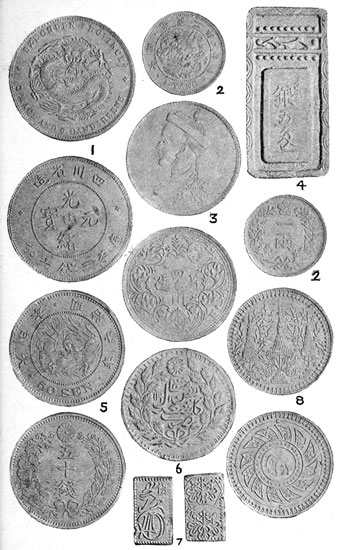
It is only recently that a serious attempt to institute a silver coinage in China has been made. In the nineties of last century, mints with European machinery were instituted in each province, and struck silver and copper coins of European fabric (Plate IX. 1, half-dollar of the late Emperor Kuang Hsü, 1875-1910) for Sze-Chuan. During the last thirty years bilingual silver coins have been issued for the Mohammadan population of Chinese Turkestan (Plate IX. 6, reverse of a five mithkal piece of Kashgar). One of the most remarkable of Chinese coins is the silver rupee recently issued for the Sze-chuan province, bearing the Emperor's head, and copied from the Indian rupee, with which it is destined to compete for Tibetan trade (Plate IX. 3).
Japan.—The Japanese borrowed the art of coinage from the Chinese, and issued coins as early as 708 A.D. Plate VIII. 9 is an early Japanese copper coin or sen of the period 818-835 A.D. (inscription—"Divine Treasure of Wealth and Longevity"). From the tenth to the sixteenth centuries the main coinage of Japan consisted of imitations of contemporary Chinese coins. One of the commonest of Japanese coins is the kwan-ei sen (Plate VIII. 10), which was extensively issued from 1624-1859. Large, flat gold coins (obans and kobans) were frequently issued from the sixteenth to nineteenth centuries. The smaller gold and silver coins of this period are rectangular (Plate IX. 7, a gold bu of 1837 A.D.). Plate IX. 4 is the obverse of a coin (a piece of 5 momme) with an interesting history. In 1765, a high official named Taruna ordered that all silver ornaments should be confiscated as useless luxuries and made into coins. This edict aroused great indignation, particularly among the fair sex, and its enforcement was one of the causes which led to the assassination of the tyrannical governor. In 1869 a mint with European machinery was established in Tokio, and a coinage of gold, silver (yen or dollar), and copper (sen, 100 = 1 dollar) on the European model adopted (Plate IX. 5, 50 sen of the sixth year of Meiji, 1873).
Corea, Annam, and Siam.—Corea issued bronze coins in the Chinese style in its various intervals of independence. The commonest is the Shang Ping cash issued at various mints from 1790 to 1881 (Plate VIII. 11). Plate IX. 2 is a piece of one yang (silver) issued by the new mint in 1898. Japanese influence may be traced in it (cf. Plate IX. 5), as on the Chinese coin of Kashgar (Plate IX. 6). The kings of Annam issued an extensive coinage modelled on the Chinese till Annam became a French possession. Siam has issued a coinage struck by European machinery since 1850 (Plate IX. 8, rupee of Phra Chom Klao, 1850-1868 A.D.).
Bibliography.—Terrien de Lacouperie, British Museum Catalogue of Chinese Coins, vol. i. (all published) (1892); J. H. S. Lockhart, Currency of the Farther East (Hong-Kong, 1893-1895); H. G. Munro, Coinage of Japan (Yokohama, 1904); A. Schroeder, Annam, Etudes Numismatiques (Paris, 1905).
V.—COINS OF EUROPEAN POSSESSIONS IN ASIA
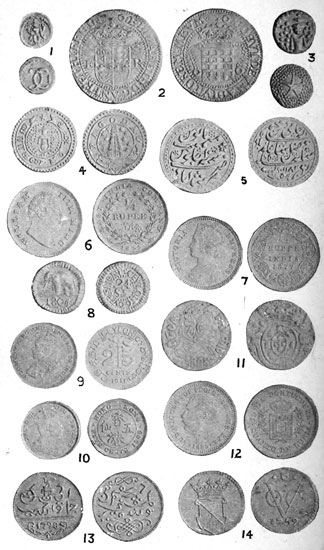
English.—In 1600 Queen Elizabeth granted a Royal Charter to "The Governor and Company of Merchants of London trading into the East Indies," and soon afterwards ordered silver coins to be struck at the Tower Mint for the Company's use in the Indies (Plate X. 2, sixpence or real of this issue). In 1677 the first English mint in India was established at Bombay, which had come to Charles II. in 1662 as part of the dowry of Catherine of Braganza, and rupees and copper cash were issued in the name of Charles II., or "bearing the name of their impure king" as an indignant Moghul historian describes them. For trade with the natives, however, the Company required coins of a type familiar to them, and had to send their bullion to be minted at the Moghul mints or to imitate Moghul coins at their own mints, the latter course being really forgery, as it was not till the middle of the eighteenth century that the Great Moghul finally allowed them to issue coins freely in his name (Plate X. 5, half-rupee of Murshidabad struck by the East India Company in name of Shah Alam II. in 1768 A.D.). In 1641 the Company had acquired a settlement at Fort St. George (Madras) and thenceforth issued coins in imitation of the local currencies of the Coromandel coast (Plate X. 3, gold star pagoda; Plate X. 1, silver fanam (cf. Plate VI. 5); Plate X. 4 is the later pagoda of European fabric issued at the end of the eighteenth century). It was not till 1835 that the name of an English king again appeared on the coins of the East India Company, when a uniform coinage of English style was adopted for India (Plate X. 6, quarter-rupee of William IV.). There has since been little change in the type then adopted. In 1858 the name of the East India Company disappears from the reverse, and in 1877 the proclamation of Queen Victoria as Empress of India necessitated a change of title on the obverse (Plate X. 7, quarter-rupee of Victoria).
In 1796, the English occupied Ceylon, hitherto a Dutch possession, and were confirmed in its possession by the treaty of Amiens in 1802. The earlier coins were struck on the standard introduced by their predecessors (Plate X. 8, a silver piece of 24 stivers). In 1836 the English standard was adopted, and silver coins (three-halfpenny pieces) and copper (half-farthings) issued till 1870, when the cent was adopted as the standard coin (Plate X. 9, 25 cents (silver) of George V.).
The East India Company issued coins similar to their later Indian issues for their possessions in the Malay Peninsula, and since 1867 there has been a regular Imperial coinage (100 cents = one dollar) for the Straits Settlements and also for Hong-Kong (Plate X. 10, 5 cents (silver) of Edward VII.).
Portuguese.—In 1510 Albuquerque captured Goa, which became the capital of the Portuguese empire in the east, and increased in wealth and commercial importance so rapidly that it became known as "Golden Goa" (Goa Dourada). From the time of Albuquerque the Portuguese have issued coins here, always with European types. Plate X. 11 is a pardao or half-rupee of Maria struck at Goa in 1808, and is typical of the coinage for nearly three centuries previous. Since 1881 the coins for Goa, which is now all that is left of the Portuguese possessions in the East, have been struck at the Bombay mint, and are uniform with those of British India (Plate X. 12, quarter-rupee, 1885).
Dutch, etc.—Towards the end of the sixteenth century the Dutch began to dispute Portuguese supremacy in the East, and ultimately acquired considerable possessions in the Malay Archipelago. An extensive coinage was issued by the Dutch East India Company in Java in the eighteenth century (Plate X. 13, gold rupee of Java, and X. 14, copper doit). The latter coins of the Dutch territories in the East are similar to the coins of Holland. Coins have also been struck for their Indian possessions of France (Pondichery) and Denmark (Tranquebar) on local standards but with European types.
Bibliography.—J. Atkins, Coins of the British Possessions and Colonies (London, 1889); E. Thurston, The Coinage of the East India Company (Madras, 1890); G. da Cuñha, Indo-Portuguese Numismatics (Bombay, 1880); J. A. van der Chijs, De Munten van Nederlandsch Indië (Batavia, 1859).
PLATE I.
View larger image
PLATE II.
View larger image
PLATE III.
View larger image
PLATE IV.
View larger image
PLATE V
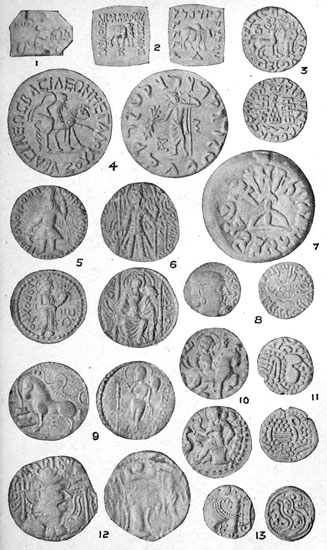
View larger image
PLATE VI.
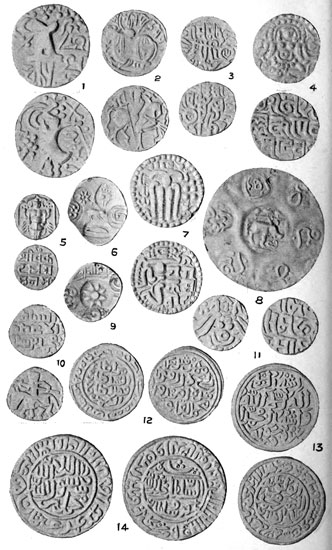
View larger image
PLATE VII.
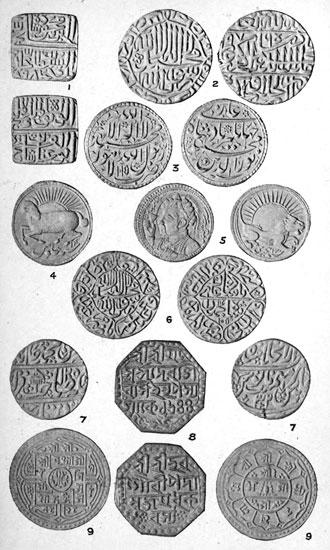
View larger image
PLATE VIII.
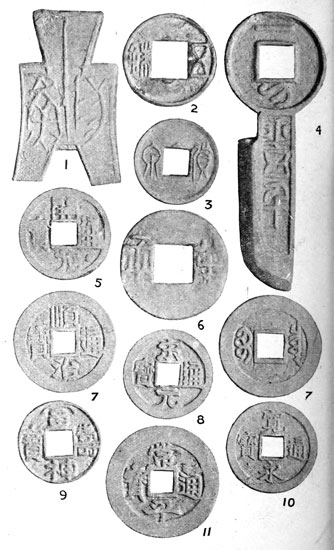
View larger image
PLATE IX.
View larger image
PLATE X.
View larger image
MAPS AND PLANS OF NOTABLE BATTLES, DISTRICTS, & TOWNS CONNECTED WITH THE HISTORY OF ASIA
PLANS OF THE FIVE CHIEF BATTLES OF INDIA
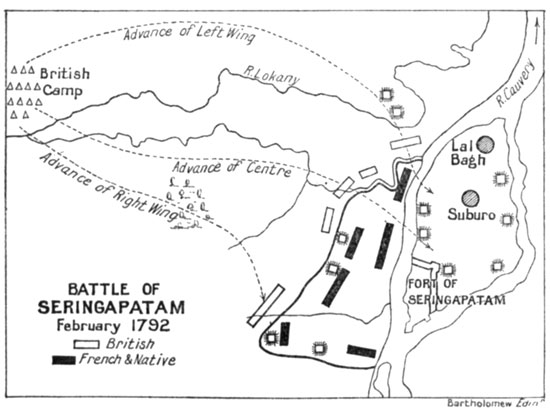
BATTLE OF SERINGAPATAM February 1792
Bartholomew Edinr
View larger image
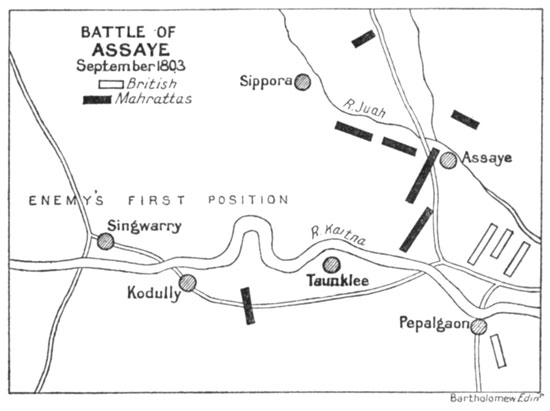
BATTLE OF ASSAYE September 1803
Bartholomew Edinr
View larger image
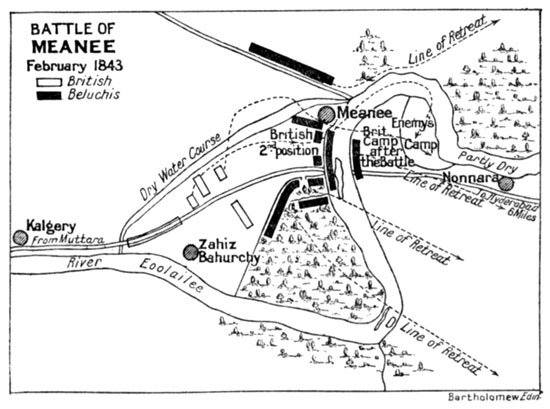
BATTLE OF MEANEE February 1843
Bartholomew Edinr
View larger image
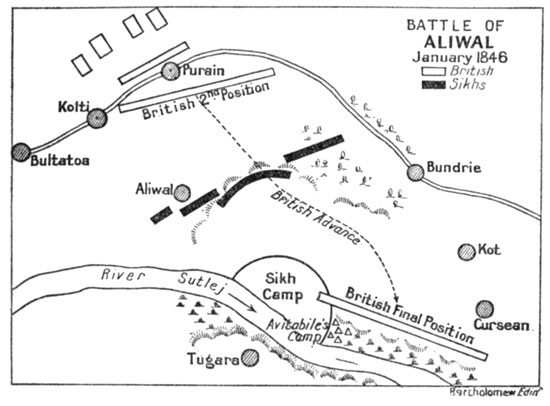
BATTLE OF ALIWAL January 1846
Bartholomew Edinr
View larger image
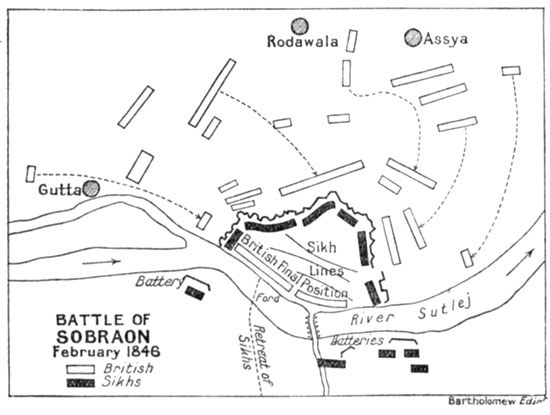
BATTLE OF SOBRAON February 1846
Bartholomew Edinr
View larger image
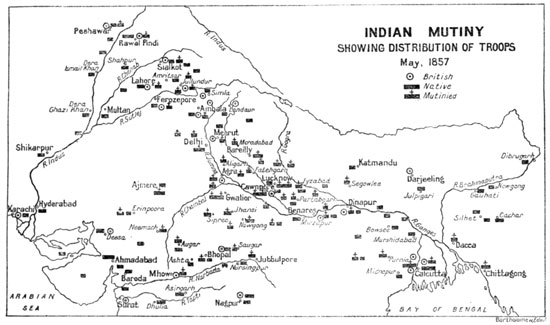
INDIAN MUTINY SHOWING DISTRIBUTION OF TROOPS May, 1857
Bartholomew Edinr
View larger image
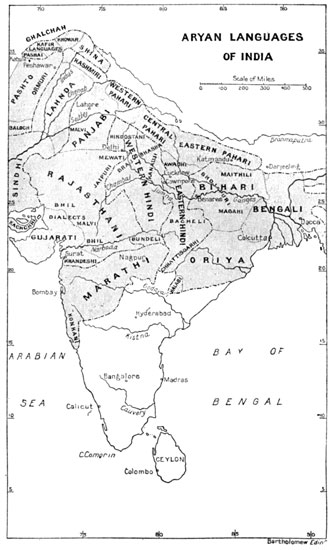
ARYAN LANGUAGES OF INDIA
Bartholomew Edinr
View larger image
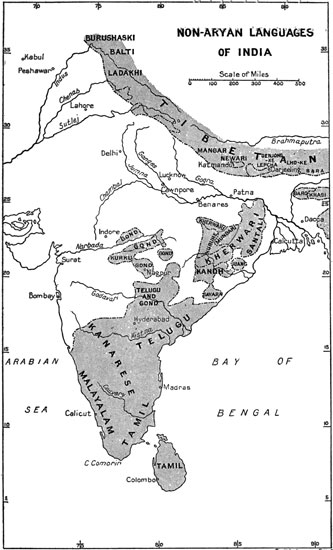
NON-ARYAN LANGUAGES OF INDIA
Bartholomew Edinr
View larger image
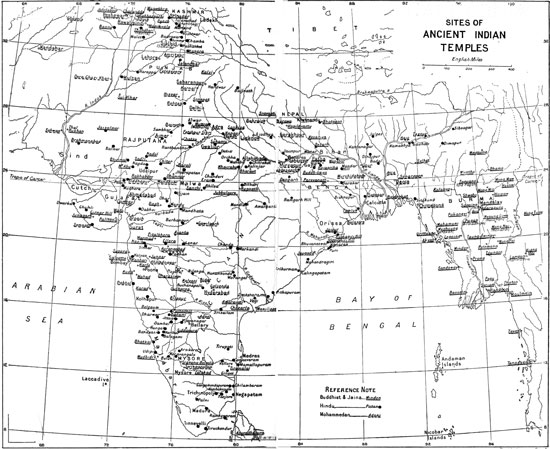
SITES OF ANCIENT INDIAN TEMPLES
Bartholomew Edinr
View larger image
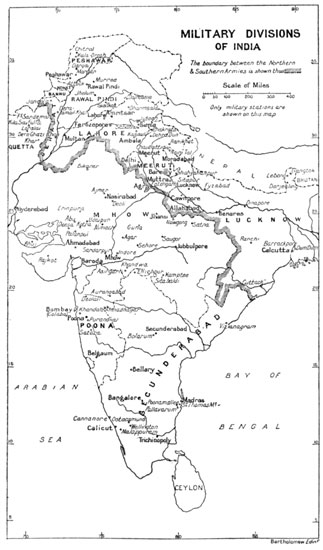
MILITARY DIVISIONS OF INDIA
Bartholomew Edinr
View larger image
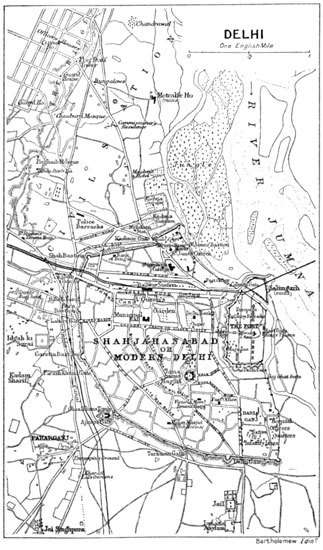
DELHI
Bartholomew Edinr
View larger image
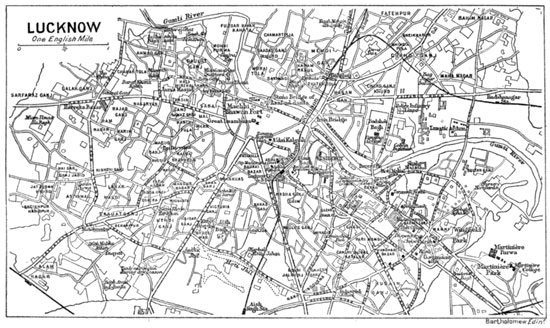
LUCKNOW
Bartholomew Edinr
View larger image
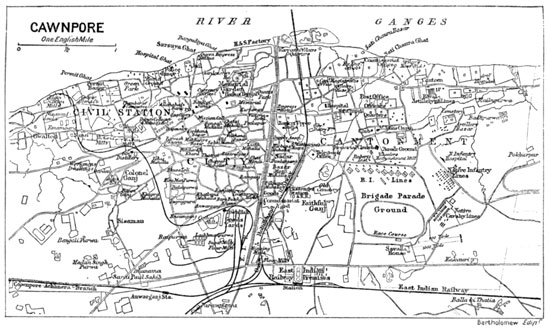
CAWNPORE
Bartholomew Edinr
View larger image
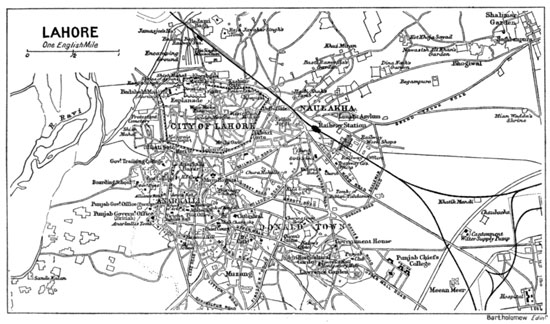
LAHORE
Bartholomew Edinr
View larger image
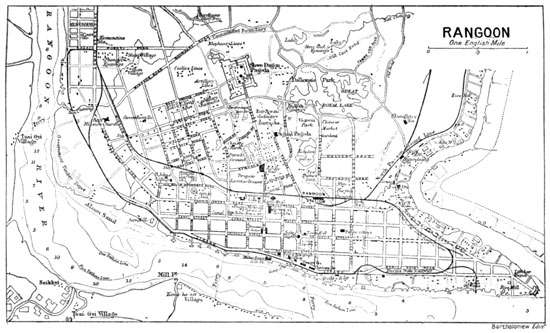
RANGOON
Bartholomew Edinr
View larger image
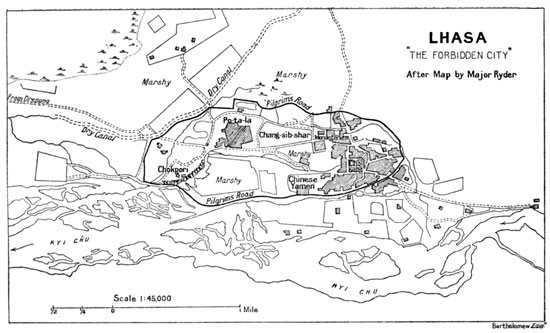
LHASA "THE FORBIDDEN CITY" After Map by Major Ryder
Bartholomew Edinr
View larger image
A GAZETTEER OF TOWNS AND PLACES IN ASIA
A GAZETTEER OF TOWNS AND PLACES IN ASIA[1]
ABBREVIATIONS
F. Founded. | Res. Residence. | Bp. Birthplace. | Provs. Provinces.
Abila, Palestine. 33N. 36E. Traditional burial-place of Abel.
Abohar, Punjab. 30N. 74E. Said to have been f. by Jaura; visited by Ibn Batuta, 1332.
Aboo, Rajputana. 25N. 73E. Contains famous Jain temple, the Vimla Sah, f. in 1032.
Abydos, Asia Minor. 40N. 26E. Xerxes entered Europe, B.C. 480. Scene of story of Hero and Leander. (See Byron's 'Bride of Abydos.')
Acre, Palestine. 33N. 35E. Taken by the Crusaders, 1104; retaken by Saladin, 1187; recovered by Richard Cœur de Lion, 1191; surrendered to Saracens, 1291; unsuccessfully besieged by Napoleon, 1799; stormed by Ibrahim Pasha, 1832; bombarded by a combined English, Austrian, and Turkish fleet, 1840. (See Scott's 'Talisman,' 'Travels of Marco Polo,' Thomson's 'Land and the Book,' Volney's 'Voyage en Syrie et en Egypte.')
Adalia, Asiatic Turkey. 36N. 31E. Visited by Kinglake, who gives an account of the city in 'Eothen.'
Adam's Peak, Ceylon. 7N. 80E. Supposed to contain tomb of Adam. (See 'Travels of Marco Polo.')
Adas, Bombay. 22N. 73E. Scene of Hamid Khan's victory over Rustam Ali, 1723; Mahrattas over Raghunath Rao Peshwa, 1775; British over Mahrattas, 1775.
Aden, Arabia. 13N. 45E. Taken from the Portuguese by Turks, 1538; annexed to British India, 1839. (See 'Purchas His Pilgrimes,' 'Travels of Marco Polo.')
Adoni, Madras. 16N. 77E. Seized by Sultan of Bijapur, 1568; by Aurungzebe, 1686; unsuccessfully attacked by Hyder Ali, 1779; taken by Tippoo Sahib, 1786; ceded to British, 1800.
Agra, United Provs. 27N. 78E. Contains palace of Shah Jehan, the Pearl Mosque, and the Taj Mahal, and was the supposed scene of incarnation of Vishnu. Capital of Mogul sovereigns, 1526-1658. Taken by British, 1803. (See Sir Edwin Arnold's 'With Sa'di in the Garden,' Whittier's 'Miriam,' 'Purchas His Pilgrimes.')
Ahar, United Provs. 28N. 78E. Town from which Rukminí, wife of Krishna, was said to have been taken.
Ahmadabad ('the abode of Ahmed'), Bombay. 23N. 73E. F. in 1412. Ancient Mohammedan capital, famed for architectural relics. Taken by British, 1818.
Ahmadnagar, Bombay. 19N. 75E. F. by Ahmed Nuzam Shah, 1494. Taken by General Wellesley, 1803.
Aivalli, Bombay. 16N. 76E. Contains famous temples, and is sacred spot of Vishnu.
Ajmere, Rajputana. 26N. 75E. Capital of Ajmere-Merwara. Contains tomb of Mussulman saint, Kwajah. Purchased by Britain, 1818. Mayo College f. 1875.
Akashi, Japan. 35N. 135E. Contains Shinto temple in honour of the poet Kakinomoto-no-Hitomaro.
Ak-su, Eastern Turkestan. 41N. 81E. Nearly destroyed by earthquake, 1718. Captured by Khan of Kashgar, 1867; retaken by Chinese, 1877.
Alandi, Bombay. 19N. 74E. Resort of Hindu pilgrims, and said to have been res. of Jnaneshvar.
Aleppo, Syria. 36N. 37E. Taken by Saracens, 636; conquered by Tamerlane, 1402; by Turks, 1517. Visited by earthquakes, 1170, 1822. Contains the Jami Sakarya, or Great Mosque, in which lie alleged remains of Zacharias, father of John the Baptist. Res. of Mutanabbi. (See Volney's 'Voyage en Syrie et en Egypte,' Hakluyt's 'Voyages,' Burckhardt's 'Travels in Syria and the Holy Land.')
Aligarh, United Provs. 28N. 78E. Contains Fort Aligarh, captured by General Lake from Mahrattas, 1803. Seat of Mohammedan Anglo-Oriental College.
Allahabad ('city of God'), United Provs. 25N. 82E. F. by Akbar, 1575. Taken by Britain, 1801. Contains Muir Central College. Scene of journeying of Rama and Sita described in the 'Ramayana' as the hermitage of Bharadvaja.
Allah Shehr, Asia Minor. 38N. 29E. F. by Attalus Philadelphus, c. 200 B.C.; supposed to be one of 'seven churches of Asia' mentioned in Apocalypse.
Amarapura ('city of the gods'), Burma. 22N. 96E. Former capital of Burma. F. in 1783, by Bodawpaya. Destroyed by fire, 1810; by earthquake, 1839. Contains celebrated temple with colossal bronze statue of Gautama.
Amasia, Asiatic Turkey. 41N. 36E. Former capital of kings of Pontus. Bp. of Strabo.
Ambur, Madras. 13N. 79E. Muzaffar Jang conquered Anwar-ud-din, Nawab of Arcot, 1749.
Amoy ('gallery gate'), China. 24N. 118E. Taken by Britain, 1841; opened to foreign trade by Treaty of Nanking, 1842.
Amritsar ('pool of immortality'), Punjab. 32N. 75E. F. round sacred reservoir by Guru Ram Das, 1574. Contains Darbar Sahib, chief Sikh temple; also fortress of Govindgarh, 1809.
Amroha, United Provs. 29N. 78E. Said to have been f. by Hastinapur; res. of Shah Wilayat. In the vicinity the Mongols were conquered, 1304.
Amu Daria, Turkestan. 37N. 73E. Ancient river Oxus, occurring as Amoo in 'The Veiled Prophet of Khorassan.' (See Moore's 'Lalla Rookh.')
Anantapur, Madras. 15N. 78E. F. by Chikkappa Udaiyar, 1364; attacked by Mahrattas, 1757.
Aneysa, Arabia. 26N. 45E. Bp. of Abdul-Wahab, founder of Wahabis. (See Doughty's 'Travels in Arabia Deserta.')
Angkor, Indo-China. 13N. 104E. Ruined city, near which are ruins of Angkor-Vat, a famous Cambodian temple. (See Little's 'Far East.')
Angora, Asiatic Turkey. 40N. 33E. Supposed to have been f. by Midas. Scene of Christian Councils, 314, 358. Contains temple erected to Augustus. Sultan Bejazet I. captured by Tamerlane, 1402.
Ani, Asiatic Turkey. 41N. 43E. Ancient Armenian capital. Taken by Greeks, 1045; by Seljuks, 1064. Destroyed by earthquake, 1319.
Anjangaon, Berar. 21N. 77E. Treaty signed between British and Daulat Rao Sindhia after second Mahratta War, 1803.
Anjengo, Madras. 9N. 77E. Bp. of historian, Robert Orme, and res. of Eliza Draper, friend of Laurence Sterne.
Anjidiv, Bombay. 15N. 74E. Island visited by Ibn Batatu, 1342; by Vasco da Gama, 1498. Occupied by Portuguese, 1505. Mentioned by Ptolemy.
Ankai Tonkai, Bombay. 20N. 74E. Conquered by Shah Jehan, 1635; occupied by British, 1818.
Antioch, Syria. 36N. 36E. F. by Seleucus Nicator, c. 300 B.C. Scene of St. Paul's first ministry. Destroyed by earthquakes, 526, 1872. Ruined by Persians, 538; taken by Saracens, 658; by Turks, 1516. Bp. of Archias, St. Luke, and Chrysostom. (See Volney's 'Voyage en Syrie et en Egypte.')
An-tung, Manchuria. 40N. 125E. General Kuroki established here during Russo-Japanese War, 1904-1905. (See McKenzie's 'From Tokyo to Tiflis.')
Anupshahr, United Provs. 28N. 78E. Occupied by Ahmad Shah Durrani, 1757; by British, 1773.
Arafat ('the mountain of mercy'), Arabia. 21N. 40E. Mountain on which Adam and Eve are alleged to have met after the fall. Scene of many Mohammedan pilgrimages. (See Burton's 'Pilgrimage to Al-Madinah and Meccah,' Burckhardt's 'Travels in Arabia.')
Arantangi, Madras. 10N. 79E. Seized by Raghunatha Levan, c. 1646, 1698.
Ararat, Asiatic Turkey. 40N. 44E. One of mountains in Asia on which Noah's ark is said to have rested. Parrot first ascended Great Ararat, 1829. Severe earthquake experienced, 1840. (See 'Travels of Marco Polo.')
Arcot ('six deserts'), Madras. 13N. 79E. Contains ruins of Nawab's palace. Mentioned by Ptolemy. Clive defended city successfully against siege, 1751.
Ardahan, Asiatic Turkey. 41N. 43E. Successfully stormed by Russians, 1877; ceded to Russia by Turkey, 1878.
Argaum, Berar. 21N. 77E. Mahrattas defeated by Wellesley, 1803.
Arginusæ Is., off W. coast of Asia Minor. 39N. 27E. Spartan fleet defeated by Athenians near these islands, 406 B.C.
Arjesh, Turkish Armenia. 39N. 43E. Taken by Jelal-ed-Din, 1228. Destroyed by earthquake, 1246.
Arni, Madras. 13N. 79E. Clive defeated Raja Sahib and French forces, 1751.
Aror, Bombay. 28N. 69E. Captured by Mohammedans, c. 712.
Arpad, Syria. 37N. 37E. Taken by Tiglath Pileser II., 740 B.C.
Arrah, Bengal. 26N. 85E. In Indian Mutiny 12 Englishmen and 50 Sikhs held out against 3000 Sepoys for 8 days, 1857.
Artaxata, Russian Armenia. 39N. 45E. Ancient capital of Armenia, now in ruins. Hannibal supposed to have superintended building of city; named after Artaxis I., c. 180 B.C. Destroyed by Romans, 58; by Persians, 370. Joseph, the patriarch, presided over ecclesiastical council, 450.
Ashdod, Palestine. 32N. 35E. Captured by Jonathan, 147 B.C. Mentioned by Herodotus. Contained famous temple of Dagon. (See Thomson's 'Land and the Book.')
Ashta, Central India. 23N. 77E. Contains fort built by Dost Mohammed Khan, 1716; captured by Mahrattas, 1745; stormed by Kudsia Begam, 1837.
Ashta, Bombay. 18N. 75E. British defeated Baji Rao Peshwa, 1818.
Asirgarh, Central Provs. 21N. 76E. Massacre of garrison by Ala-ud-din Khilji, 1295; captured by Akbar, 1600; by General Wellesley, 1803; besieged by British, 1819.
Askelon, Palestine. 32N. 35E. Ancient seat of worship of Astarte, and of Dagon and Dercetis, whose temple was plundered by Scythians, 630 B.C. Bp. of Herod I., who embellished it. Godfrey de Bouillon defeated Egyptians, 1099; city taken by Crusaders, 1153; by Saladin, 1187; destroyed by Sultan Bibars, 1270. (See Scott's 'The Talisman.')
Assaye, Haidarabad. 20N. 76E. Mahrattas conquered by Sir Arthur Wellesley, 1803. (See Malleson's 'Decisive Battles of India.')
Athni, Bombay. 17N. 75E. Visited by French traveller Mandelslo, 1639. Yielded to Rajah Sahu of Satara, 1730; British possession, 1839.
Atrauli, N.W. Provs. 28N. 78E. Held for three months by Mohammedans during Mutiny, 1857.
Attock, Punjab. 34N. 72E. Contains fort built by Akbar, 1581; captured by Ranjit Singh, 1812.
Augur, Central India. 24N. 76E. F. by Agra Bhil; destroyed by Bapuji Sindhia, 1801; suffered during Mutiny, 1857.
Aurungabad ('the abode of Aurungzebe'), Haidarabad. 20N. 75E. F. in 1620. Contains Buddhist caves, and mausoleum built by Aurungzebe in memory of his daughter.
Ava ('a fish-pond'), Burma. 22N. 96E. F. by Thadominpaya, 1364. Former capital of Burma. Ruined by earthquake, 1839.
Ayodhya, United Provs. 27N. 82E. Famous in legend as city of Dasa-ratha, father of Rama. (See 'Ramayana.')
Ayuthia, Siam. 14N. 101E. Founded in 1351; capital of Siam until nearly destroyed by Burmese, 1767. Chief ruin is a Buddhist temple, the 'Golden Mount.' (See Little's 'Far East.')
Baalbek ('city of Baal'), Syria. 34N. 36E. Contains Temple of the Sun, built by Antoninus Pius. Taken by Arabs, 748; by Tamerlane, 1400. Destroyed by earthquake, 1170, 1750. (See Twain's 'New Pilgrim's Progress,' Lamartine's 'Voyage en Orient,' Moore's 'Lalla Rookh,' Volney's 'Voyage en Syrie et en Egypte,' Burckhardt's 'Travels in Syria and the Holy Land.')
Babylon ('the gate of the god'), Asiatic Turkey. 33N. 45E. First mentioned, 3800 B.C.; capital of Babylonia, c. 2300 B.C. Destroyed by Sennacherib, 689 B.C.; attained eminence under Nabopolassar, 625-604 B.C.; under Nebuchadnezzar, 604-561 B.C. Surrendered to Cyrus, 539 B.C. Alexander the Great died in palace of Nebuchadnezzar, 323 B.C. (See 'Purchas His Pilgrimes,' Hakluyt's 'Voyages.')
Badami, Bombay. 16N. 76E. Contains famous cave-temple, f. 650. Captured by General Munro, 1818; by Arabs, 1840.
Badarpur, Bengal. 25N. 93E. British defeated Burmese, 1824.
Badnera, Berar. 21N. 78E. Partially destroyed by Rajah Ram, 1822.
Bagalkot, Bombay. 16N. 76E. Captured by Peshwa of Savanur, 1775; by Hyder Ali, 1778; by General Munro, 1818.
Baghdad, Asiatic Turkey. 33N. 44E. F. by Caliph Al-Mansur, c. 762; embellished by Harun-al-Rashid; taken by Hulaku Khan, 1258; by Tamerlane, 1393; by Amurath IV., 1638. Contains tomb of Zobeida, wife of Harun-al-Rashid, and is famous by means of the 'Arabian Nights.' (See Firdausi's 'Sha Name,' Gosse's 'Firdausi in Exile,' 'Purchas His Pilgrimes,' 'Travels of Marco Polo.')
Baghput, Punjab. 29N. 77E. Said to be the Vyaghraprastha mentioned in the 'Mahabharata.'
Bahera, Punjab. 32N. 73E. Captured by Babar, 1519; pillaged by Nur-ud-din, 1757.
Bahraich, United Provs. 28N. 82E. Contains tomb of Mohammedan saint, Masaud.
Baj-Baj, Bengal. 22N. 88E. Fort captured by Clive from Siraj-ud-daula, 1756.
Bajwara, Punjab. 32N. 76E. Rajah Sansar Chand conquered Sirdar Bhup Singh, 1801; fort captured by Ranjit Singh, 1825.
Balkh, Afghan Turkestan. 37N. 67E. Zoroaster first preached his doctrine, 549 B.C.; died at Balkh. Visited by Chinese explorer, Fa Hian, 402; Hiouen Thsang, 643; by Marco Polo, 1263. Besieged and taken by Ninus, 1933 B.C.; pillaged by Genghis Khan, 1221; destroyed by Tamerlane, 1390. (See 'Travels of Marco Polo.')
Bamian, Afghanistan. 35N. 68E. Destroyed by Genghis Khan, 1221.
Bander Abbas ('harbour of Abbas'), Persia. 27N. 56E. Ancient Harmozia. Portuguese driven out by Shah Abbas the Great with help of British, 1623. (See Moore's 'Lalla Rookh,' story of 'The Fire-Worshippers.')
Bandhogarh, Central India. 24N. 81E. Attacked by Asaf Khan, 1563; captured by Patr Das, 1597; yielded to Anup Singh, 1658. Said to be bp. of Akbar.
Banera, Rajputana. 26N. 75E. Conquered by Akbar, 1567; fort built in 1726; captured by Rajah of Shahpura, c. 1756.
Bangalore, Mysore. 13N. 78E. F. by Hyder Ali, 1537. Taken by Lord Cornwallis, 1791. Contains palace of Tippoo Sahib, and Central College.
Bangkok, Siam. 14N. 101E. Ceded to Louis XIV., 1687; became royal residence, 1767. Contains famous temples, and a colossal statue of Buddha. (See Little's 'Far East.')
Banias, Syria. 33N. 36E. Visited by W. M. Thomson, and described in 'The Land and the Book.'
Bankapur, Bombay. 15N. 76E. First mentioned, 898. Stormed by Firoz Shah, 1406; conquered by Hyder Ali, 1776; ceded to British, 1802.
Bantam, East Indies. 6S. 106E. Described in first part of 'Purchas His Pilgrimes' as celebrated town of Java.
Baragaon, Bengal. 25N. 85E. Visited by Hiuen Tsiang, who here studied religion.
Bardwan, Bengal. 23N. 88E. Scene of the third story of the vampire in Burton's 'Vikram and the Vampire.'
Bareilly, United Provs. 28N. 79E. New town f. by Rajah Makrand-Mughals, 1657. Taken by English, 1801; Europeans massacred during Mutiny, 1857; recaptured by Sir Colin Campbell, 1858.
Baroda, Bombay, 22N. 73E. Tributary to Great Britain, 1802; Malhar Rao succeeded Sayaji Rao III., 1875.
Barpeta, Bengal. 26N. 91E. Sankar Deb, follower of Vishnu, here f. a religious college. Partially destroyed by earthquake, 1897.
Barrackpur, Bengal. 23N. 88E. Prominent town in Sepoy mutinies, 1824, 1857. Contains Lady Canning's tomb.
Barsana, United Provs. 28N. 77E. Fabled to be a res. of Radha, mistress of Kishna. Pillaged by imperial troops, 1774.
Barwani, Central India. 22N. 75E. Said to have been f. by Rana Chandra Singh, c. 1650. Near town is sacred hill of Jains, and temple with inscription dating from 1166.
Basarh, Bengal. 26N. 85E. Visited by Buddha, and sacred town of Buddhists. Visited by explorers Fa Hian and Hieun Tsiang.
Basavapatna, Mysore. 14N. 76E. Captured by Bijapurs, 1637; destroyed by Hyder Ali, 1763; plundered by Mahrattas, 1791. Ancient res. of Baba Budan.
Basra ('fortress'), Asiatic Turkey. 30N. 48E. F. under Omar, 656. Contains tomb of Zobeir. (See 'Travels of Marco Polo.')
Bassein, Bombay. 19N. 73E. Ceded to Portuguese, 1534; taken by Mahrattas, 1765; by British, 1780.
Batala, Punjab. 32N. 75E. F. by Rai Ram Deo, c. 1465. Contains tomb of Shamsher Khan, foster-brother of Akbar.
Batavia ('good land'), East Indies. 6S. 107E. First European settlement f. by Pieter Both, 1610; new city f. by Jean Koen, 1621. Unsuccessfully besieged by Kings of Bantam and Jacantra, 1619. Earthquake experienced, 1699.
Bayana, Punjab. 26N. 77E. Contains temple with inscription dated 1043. Fort near captured by Mohammed Ghori, 1196; by Sikanda Lodi, 1492; by Humayun, 1535.
Bayazid, Turkish Armenia. 39N. 44E. Captured by Russians, 1828, 1854, 1877. Yielded to Turkey by Treaty of Berlin, 1878.
Bednore ('bamboo city'), Mysore. 14N. 75E. Capital of Rajah of Ikari, 1645. Taken by Hyder Ali, 1763; by General Matthews, 1783; by Tippoo Sahib, 1784.
Beer-Sheba ('well of the oath'), Palestine. 31N. 35E. Only ruins remain of ancient city famous in Biblical history from time of Abraham's digging a well and planting a grove.
Begampur, Bombay. 18N. 76E. Contains tomb of daughter of Aurungzebe.
Behar ('monastery'), Bengal. 25N. 86E. Famous as ancient centre of Buddhism, and as city in which Buddha preached.
Behistun ('place of the gods'), Persia. 34N. 47E. Rock on which cuneiform inscriptions recounting deeds of Darius I. are engraved; discovered by Sir Henry Rawlinson, 1835.
Beit Jibrin, Syria. 32N. 35E. Visited by W. M. Thomson, and described in 'The Land and the Book.'
Bela, Baluchistan. 26N. 66E. Contains tomb of Sir Robert Sandeman.
Belgaum, Bombay. 16N. 75E. Taken by Aurungzebe, 1686; by Hyder Ali, 1776; by British, 1818.
Bellary, Madras. 15N. 77E. Captured by Sivaji, the Mahratta, c. 1678; ceded to British, 1800.
Benares ('the splendid'), N.W. Provs. 25N. 83E. Visited by Hsuan Tsang in 7th century A.D. Religious capital of India, containing many temples. Taken by Sultan Mahmoud, 1190; ceded to England, 1775; outbreak during Indian Mutiny, 1857. (See Sir Edwin Arnold's 'Light of Asia,' Burton's 'Vikram and the Vampire.')
Bencoolen, Sumatra. 4S. 102E. F. by British, 1685; Fort Marlborough built, 1714. Formerly chief British possession in Sumatra; ceded to Holland in exchange for Malacca, 1824.
Bendemeer, Persia. 30N. 52E. (See Thos. Moore's 'Lalla Rookh,' story of the 'Veiled Prophet of Khorassan.')
Berasia, Central India. 24N. 77E. Contains tomb of his father built by Dost Mohammed.
Berea, Palestine. 32N. 35E. Battle fought in which Judas Maccabæus was killed, 161 B.C.
Berezov, Siberia. 64N. 65E. F. in 1593. Partially burnt, 1719, 1808. Prince Menshikov died in exile, 1729; Prince Dolgoruki, 1730. General Ostermann exiled, 1742; died, 1747.
Berghama, Asiatic Turkey. 39N. 27E. Ancient capital of Pergamus, and contains many magnificent ruins; bequeathed to Romans by Attalus III., 133 B.C. Bp. of Galen and Apollodorus.
Berhampur, Bengal. 24N. 88E. Indian Mutiny originated here, 1857.
Besika, Asia Minor. 40N. 26E. Bay used as station for British fleet, 1853-1854, 1877-1878.
Bethany, Palestine. 32N. 35E. Frequently mentioned in the Bible as the house of Lazarus, Martha and Mary, Simon the leper. Contains alleged tomb of Lazarus, and village is now called 'El-Azariyeh,' the 'Place of Lazarus.'
Bethel ('house of God'), Palestine. 32N. 35E. Supposed to have been f. by Abraham or Jacob. Rachel and Deborah died at Bethel.
Beth-horon ('place of caves'), Palestine. 32N. 35E. The Syrians under Prince Sorom vanquished by Judas Maccabæus.
Bethlehem ('house of bread'), Palestine. 33N. 35E. Bp. of David and of Christ. Devastated by Hadrian, 132. Contains Church of the Nativity built by Constantine; enlarged by Justinian; embellished by Manuel Comnenus, 1170; by Edward IV. and Philip of Burgundy, 1482. Burial-place of Jerome. (See Kinglake's 'Eothen,' Twain's 'New Pilgrim's Progress,' Lamartine's 'Voyage en Orient,' 'Purchas His Pilgrimes,' Thomson's 'Land and the Book.')
Beyrout, Syria. 34N. 35E. Destroyed by Tryphon, 140 B.C.; taken by Arabs, 635; by Baldwin, 1111; re-captured by Saladin, 1187; by Turks, 1763. Lamartine's only daughter died here, 1832. (See Kinglake's 'Eothen,' Burton's 'Wanderings in Three Continents,' Lamartine's 'Voyage en Orient,' Thomson's 'Land and the Book,' Volney's 'Voyage en Syrie et en Egypte.')
Bhadaur, Punjab. 30N. 75E. F. by Sirdar Dunna Singh, 1718; res. of Bhadaur chiefs.
Bhagalpur, Bengal. 25N. 87E. Contains famous Jain temples, and native monument to Augustus Cleveland.
Bhagwangola, Bengal. 24N. 88E. Unsuccessfully besieged by Mahrattas, 1743; burnt by Mahrattas, 1750. Temporary res. of Surajah Dowlah.
Bhainsrorgarh, Rajputana. 25N. 76E. Said to have been f. by Bhainsa Sah; captured by Ala-ud-din, c. 1303.
Bhanpura, Rajputana. 25N. 76E. Res. and burial-place of Jaswant Rao Holkar.
Bhartpur ('city of Bhurat'), Rajputana. 27N. 78E. Unsuccessfully stormed by Lord Lake, 1805; taken by Lord Combermere, 1826. Under British administration, 1853. (See Malleson's 'Decisive Battles of India.')
Bhatner, Punjab. 30N. 74E. Captured and partially destroyed by Tamerlane, 1398.
Bhilsa, Rajputana. 24N. 78E. Contains mosques built by Akbar, 1583; by Aurungzebe, 1682. Plundered by Altamsh, 1235; seized by Ala-ud-din, 1290.
Bhojpur, Bombay. 19N. 74E. Contains stones bearing ancient carvings and inscription dating from c. 200 B.C.
Bhubaneswar, Bengal. 20N. 86E. Sacred city of the followers of Siva; of great antiquity.
Bhuj, Bombay. 23N. 70E. Taken by storm by Sir William Kier, 1819.
Bidar, Haidarabad. 18N. 78E. Captured by Ulugh Khan, 1321; by Aurungzebe, 1656.
Biderra, Bengal. 23N. 88E. Colonel Forde conquered Dutch under Colonel Roussel, 1759. (See Malleson's 'Decisive Battles of India.')
Bijanagur ('city of triumph'), Madras. 16N. 77E. F. in 1336; destroyed by Mohammedan kings, 1564. Contains temples made of granite.
Bijapur ('city of victory'), Bombay. 17N. 76E. Taken by Aurungzebe, 1686; given to Rajah of Satara by British, 1818.
Bilsa, Bengal. 24N. 88E. Remarkable Buddhist remains discovered by English travellers, 1822; contains tomb of Mussulman, Djelal-ed-din Bhokhary.
Bimlipatam, Madras. 18N. 83E. Captured by Mahrattas, 1754; ceded to British by Dutch, 1825.
Bindraban, Bengal. 26N. 88E. Krishna is supposed to have passed his childhood here, and several temples are erected in his honour.
Birsinha, Bengal. 23N. 88E. Bp. of Iswar Chandra Vidyasagar, writer of 'Sitar Banabas.'
Bisauli, United Provs. 28N. 79E. Res. and burial-place of Dunde Khan.
Bithur, United Provs. 27N. 80E. One of chief centres of worship of Brahma. Nana Sahib here defeated by Havelock during Mutiny, 1857.
Bitlis, Asiatic Turkey. 38N. 42E. Supposed to have been f. by Alexander the Great. Taken by Arabs, 648. Scene of defeat of Solyman by Persians, 1554.
Blagovieshtchensk ('city of the annunciation'), Siberia. 76N. 146E. F. in 1856; capital of Amur district, 1858. Attacked unsuccessfully by Chinese, 1900. (See Fraser's 'Real Siberia.')
Boca Tigris ('the tiger's mouth'), China. 23N. 114E. Entrance to the Canton river, containing fortified islands taken by British, 1841, 1856.
Bodinayakkanur, Madras. 10N. 77E. Captured by Hyder Ali, 1776.
Bokhara ('a church'), Turkestan. 40N. 65E. Burnt by Djenghis-Khan, 1221. Contains 360 mosques and many colleges. Scene of youth of Zelica and Azim in Moore's 'Lalla Rookh.'
Bombay, Bombay. 19N. 73E. Ceded to Portugal, 1530; part of marriage-portion of Catherine of Portugal, 1661; British established themselves here, 1666.
Borsad, Bombay. 22N. 73E. Res. of Rangoji, 1741; here made prisoner, 1748.
Botad, Bombay. 22N. 72E. Town near which is tomb of Pir Hamir Khan, Mussulman saint.
Brahmakund, Bengal. 28N. 96E. Pool which was the scene of an incident in which Parasu Rama, an incarnation of Vishnu, took part.
Brahmapuri, Bombay. 18N. 76E. Res. of Aurungzebe from 1695 to 1700.
Brahmini, Bengal. 21N. 86E. Famous as scene of wooing of Matsya Gandha, mother of alleged compiler of 'Mahabharata' and the Vedas.
Broach, Bombay. 22N. 73E. Captured by British, 1772; ceded to Scindia, 1783; re-captured by British, 1803.
Brusa, Asiatic Turkey. 40N. 29E. Former capital of Bithynia. F. by Prusus II., King of Bithynia. Captured by Sultan Orkhan of Turkey, 1326; plundered by Tartars, 1402; suffered from earthquakes, 1855.
Budaun, United Provs. 28N. 78E. Supposed to have been f. c. 905. Seized by Kutb-ud-din, 1196; joined in Mutiny, 1857. Res. of Ala-ud-din.
Buddha-Gaya, Bengal. 25N. 85E. Formerly centre of worship of Buddha, and contains sacred pipal-tree under which Sakyamuni reached Buddhahood. Visited by Hieun Tsiang, 635.
Budihaul, Madras. 14N. 76E. Captured by Hyder Ali, 1761; by Mahrattas, 1771, 1790.
Budrum, Asiatic Turkey. 37N. 27E. F. on site of ancient Halicarnassus. Contains a fortress built by the knights of Rhodes, 1402. Bp. of Herodotus and Dionysius.
Burhanpur, Central Provs. 21N. 76E. F. by Nasir Khan, c. 1400; adorned by Akbar, 1600. Pillaged by Mahrattas, 1685; captured by Wellesley, 1803.
Buxar, Bengal. 26N. 84E. Mir Kasim defeated by Sir Hector Munro, 1764. Of literary interest as res. of writers of Vedic hymns.
Cæsarea, Palestine. 32N. 35E. F. by Herod the Great on site of Strato's Tower. Famous in biblical history as city in which St. Peter preached to Cornelius, and St. Paul was incarcerated for two years. Vespasian became emperor, 69; Eusebius was bishop, 315-318; captured by Crusaders but regained by Saladin, 1101; destroyed by Sultan Bibars, 1265. (See Lamartine's 'Voyage en Orient,' Thomson's 'Land and the Book.')
Calah, Asiatic Turkey. 36N. 43E. One of ancient capitals of Assyria; f. by Shalmaneser I., c. 1300 B.C.; rebuilt by Asurnazirpal, 880 B.C. Ruins discovered by Sir A. H. Layard, 1845.
Calcutta, Bengal. 23N. 88E. F. by Governor Job Charnock, 1686; Fort William established, 1696; besieged by Surajah Dowlah, Nawab of Bengal, and captives imprisoned in the 'Black Hole,' 1756; recaptured by Clive, 1757; chief seat of British government, 1773. (See Kipling's 'City of Dreadful Night.')
Calicut, Madras. 11N. 76E. Covilham landed here, 1486; Vasco da Gama, 1498; Captain Keeling, 1615. Don Fernando Coutinho repulsed, 1509; devastated by Hyder Ali, 1765; taken by British, 1782; by Tippoo Sahib, 1788; re-taken by British, 1790. (See Burton's 'Goa and the Blue Mountains,' also 'Purchas His Pilgrimes.')
Cambay, Bombay. 22N. 73E. Taken by General Goddard, 1780; given to Mahrattas, 1783; ceded to British, 1803. (See Hakluyt's 'Voyages.')
Cana, Palestine. 33N. 35E. Famous in biblical history as scene of Christ's first miracle. Bp. of his disciple Simon.
Cannanore, Madras. 12N. 75E. Visited by Vasco de Gama, 1498.
Canton, China. 23N. 113E. Bogue forts captured by British, 1841; city occupied by French and British forces, 1857. (See Little's 'Far East,' Kipling's 'From Sea to Sea.')
Capernaum ('village of Nahum'), Palestine. 33N. 36E. City in which Christ resided, and performed many miracles; home of St. Matthew. (See Thomson's 'Land and the Book.')
Carchemish, Asiatic Turkey. 37N. 38E. Captured by Tiglath-pileser I., c. 1120 B.C.; Josiah killed by Necho II. of Egypt, 609 B.C.; Necho vanquished by Nebuchadnezzar, 605 B.C.
Carmel, Palestine. 33N. 35E. Mountain on which Elijah slaughtered the priests of Baal. Napoleon used one of the monasteries situated here as a hospital, 1799. Visited by Lamartine, 1832.
Cawnpur ('city of Krishna'), United Provs. 26N. 80E. Scene of the massacre of Europeans by Nana Sahib during Mutiny, 1857. (See Trevelyan's 'Cawnpore.')
Cayster, Asia Minor. 38N. 28E. River made famous by Virgil in the 'Georgics' and Ovid in the 'Metamorphoses.' Remains of Ephesus are near its mouth.
Celebes, Malay Archipelago. 4S. 121E. Discovered by Portuguese, 1512; established fort at Macassar, 1525; driven out by Dutch, 1660; taken by British, but yielded to Dutch, 1814.
Ceylon, Indian Ocean. 8N. 81E. Visited by Portuguese, 1505; driven from island by Dutch, 1658; ceded to Britain by Treaty of Amiens, 1802; annexed, 1815.
Chakan, Bombay. 19N. 74E. Captured by Malik Ahmad, 1486; by Shaista Khan, 1662; by Lieut.-Col. Deacon, 1818.
Chakdaha, Bengal. 23N. 89E. Bp. of Karta Baba, who f. the Kartabhaja sect.
Champaner, Bombay. 22N. 74E. Taken by Mahmoud Begara, 1484; plundered by Humayun, 1535.
Chanar, United Provs. 25N. 83E. Supposed to have been f. by Bhartrinath. Taken by Humayun, 1537; by Akbar, 1575; attempted seizure by Major Munro, 1763. Near fort is tomb of Saint Shah Kasim Sulaimani.
Chandaur, Bombay. 20N. 74E. Taken by the Mogols, 1635; by Aurungzebe, 1665; by Colonel Wallace, 1804; British possession, 1818.
Chanderi, Central India. 25N. 78E. Seized by Ghiyas-ud-din, 1251; by Mahmoud Khilji I., 1438; by Jean Baptiste Filose, 1811; by Sir Hugh Rose, 1858.
Chandernagore ('city of the moon'), Bengal. 23N. 88E. Ceded to French by Aurungzebe, 1688; taken by British, 1757; restored to French, 1816.
Chandragiri, Madras. 14N. 79E. Said to have been f. by Immadi Narashima Yadava Rayalu, 1000. Res. of deposed Vijayanagar kings. Conquered by Hyder Ali, 1782.
Charsadda, Punjab. 34N. 72E. Mentioned by Ptolemy and Arrian; visited by Hieun Tsiang.
Chaul, Bombay. 19N. 73E. Occupied by Portuguese, 1516; pillaged by Gujerat troops, 1529; Ahmadnagar army defeated by Portuguese, 1594; taken by Mahrattas, 1740.
Chemulpo, Korea. 37N. 127E. In Russian-Japanese war, Russians defeated by Admiral Urin, 1904. (See McKenzie's 'From Tokyo to Tiflis.')
Chengalput, Madras. 13N. 80E. Said to have been f. by Timmarajah. Captured by French, 1751; by Clive, 1752; place of refuge of British troops, 1780.
Chetwai, Madras. 11N. 76E. Occupied by Dutch, 1717; taken by Hyder Ali, 1776; British possession, 1790.
Chhapia, United Provs. 27N. 82E. Bp. of Swami Narayan, incarnation of Krishna.
Chidambaram ('the atmosphere of wisdom'), Madras. 11N. 80E. Taken by French, 1753; unsuccessfully attacked by British, 1759; captured by Major Monson, 1760; unsuccessfully attacked by Sir Eyre Coote, 1781.
Chi-fu, China. 38N. 122E. Convention held between Sir Thomas Wade and Li Hung Chang, 1876; meeting-place of blockade runners, 1904-5.
Chiknayakanhilli, Madras. 13N. 77E. Pillaged by Mahrattas, 1791. Burial-place of Dodda Deva Rajah.
Chillianwallah, Punjab. 33N. 74E. Sikhs defeated in doubtful battle by Lord Gough, 1849. (See Malleson's 'Decisive Battles of India.')
Chinchvad, Bombay. 19N. 74E. Res. of Moroba, incarnation of Ganpati, and scene of his miracles.
Chin-Kiang, China. 35N. 108E. Partially destroyed by Tai-pings, 1853.
Chinsurah, Bengal. 23N. 88E. F. by Dutch, 1656; routed by British under Colonel Forde, 1758; occupied by British, 1795; restored to Dutch, 1814; ceded to British, 1825.
Chitakul, Bombay. 15N. 74E. Captured by Portuguese, 1752; by Fazl-ullah Khan, 1763.
Chitrakut, United Provs. 25N. 81E. Mentioned in the 'Ramayana' as scene of wanderings of Rama and Sita, and here they were sought out by Bharat.
Chittagong, Burma. 22N. 92E. Visited by Portuguese, 1618; belonged to Mogol empire, 1666; taken by British, 1760.
Chupni, Bengal. 25N. 92E. Bp. of Akhay Kumar Datta, prose-writer of Bengal.
Cnidus, Asia Minor. 37N. 27E. Supposed to have been f. by Triopas. Famous for the worship of Venus. Near the coast of Cnidus Conon defeated the Spartan fleet, 314 B.C. Bp. of Eudoxus, Ctesias, and Sostratus.
Cochin, Madras. 10N. 76E. Taken from the Portuguese by Dutch, 1633; captured by British, 1795; ceded by treaty to British, 1814. Visited by Vasco da Gama, 1502; by St. Francis Xavier, 1530. (See Hakluyt's 'Voyages.')
Coimbatore, Madras. 11N. 77E. Taken by British from Tippoo Sahib, 1799.
Colgong, Bengal. 25N. 87E. Death of Ghiyas-ud-din Mahmoud, last king of Bengal, took place here, 1539.
Colombo, Ceylon. 7N. 80E. Taken by Portuguese, 1517; ousted by Dutch, 1603; conquered by British, 1796.
Colophon, Asia Minor. 38N. 27E. Supposed to have been f. by Andracmon of Pylos or by Mopsus. Bp. of Homer, Mimnermus, and Nicander.
Colossæ, Asia Minor. 38N. 29E. Now represented by Khonas, bp. of Nicetas Khoniates. Mentioned by Xenophon and Herodotus. St. Paul sent a letter to its church during his imprisonment at Rome.
Conjeveram, Madras. 13N. 80E. Captured by Mussulmans, 1310, 1646; by Mahrattas, 1677; by Clive, 1752; burnt by French, 1757.
Coringa, Madras. 17N. 82E. Became British possession, 1759. Inundated and partially destroyed by ocean, 1787, 1832.
Cossimbazar, Bengal. 24N. 88E. British defeated by Surajah Dowlah, 1757. Contains tomb of first wife of Warren Hastings.
Covelong, Madras. 13N. 80E. Captured by French, 1750; by Clive, 1752.
Cranganore, Madras. 10N. 76E. Fortress erected by Portuguese, 1505; ceded to Dutch, 1660; sold to Rajah of Travancore.
Cunaxa, Asiatic Turkey. 33N. 44E. Cyrus the Younger killed here in a battle with his brother, Artaxerxes Mnemon, 401 B.C.
Cydnus, Asia Minor. 37N. 35E. River up which Cleopatra sailed to meet Antony.
Cyprus, Asiatic Turkey. 35N. 33E. Seat of worship of Aphrodite; bp. of Barnabas. Conquered by Arabs, 646; retaken by Greeks, 648; secured by Haroun-al-Raschid, 802; by Comnenus, 1184; ruled by Guy de Lusignan, 1193; occupied by Turks, 1570; ruled by British, 1878. (See Kinglake's 'Eothen,' Hakluyt's 'Voyages.')
Dafar, Arabia. 17N. 54E. Described in 'Travels of Marco Polo' as Dulfar.
Damalcheruvu Pass, Madras. 13N. 79E. Mahrattas defeated and killed Nawab Dost Ali, 1740.
Daman, Bombay. 20N. 73E. Portuguese possession since 1531.
Damascus, Syria. 34N. 36E. Supposed to have been f. by Uz. Conquered by David, by Jeroboam II., Tiglath-Pileser, Sennacherib, and Nebuchadnezzar. Subdued by Pompey, 64 B.C.; by Mohammedans, 635; conquered by Nureddin, 1154; Saladin died here, 1193; Egyptians defeated by Tamerlane, 1401; taken from Turks by Selim I., 1516; captured by Ibrahim Pasha, 1832; ceded to Turkey, 1840. Massacre of Jews, 1840; of Christians, 1860. The English historian Buckle died here. (See Kinglake's 'Eothen,' Burton's 'Wanderings in Three Continents,' Twain's 'New Pilgrim's Progress,' Lamartine's 'Voyage en Orient,' Hakluyt's 'Voyages,' Burckhardt's 'Travels in Syria and the Holy Land.')
Daminya, Bengal. 25N. 88E. Bp. of Mukunda Ram Chakrabarti.
Daulatabad ('abode of prosperity'), Haidarabad. 20N. 75E. F. by Bhillama I., c. 1187 A.D.; seized by Ala-ud-din Khilji, 1294; by Mohammedans, 1307, 1310; Rajah Harpal flayed alive, 1318; captured by Nijam Shakis from Bahmanis, 1526; from Emperor Akbar, 1595; taken by Malik Amber, 1607; by Shah Jahan, 1633; Abul Hasan imprisoned here by Aurungzebe, 1687.
Dead Sea, Palestine. 32N. 36E. Frequently mentioned in biblical history. (See Kinglake's 'Eothen,' Lamartine's 'Voyage en Orient.')
Deglur, Haidarabad. 19N. 78E. Contains tomb of Shah Zia-ud-din Rifai.
Delhi, Punjab. 29N. 77E. Captured by Mohammedans, 1193; by Tamerlane, 1398; Sultan Baber established Mogol dynasty, 1526; burnt by Mahrattas, 1736; taken by Persians, who plundered it of treasures, including Koh-i-noor diamond, 1739; recaptured by Mahrattas, 1789; seized by Lord Lake, 1803; scene of terrible massacre of British in Mutiny, 1857; Durbar of Edward VII. held here, 1903; of George V., 1911. (See Mrs. F. A. Steel's 'On the Face of the Waters' and 'India through the Ages,' Madhu Sudan Datta's 'Captive Ladie,' Moore's 'Lalla Rookh.')
Deogarh, United Provs. 25N. 78E. Contains carvings dating from 1097. Captured by Colonel Baptiste, 1811.
Deogurk, Bengal. 25N. 87E. Contains many temples to Siva, and is famous place of pilgrimage.
Deraiyeh, Arabia. 25N. 46E. Ancient capital of Wahabis; destroyed by Egyptians under Ibrahim Pasha, 1818.
Devanhalli, Madras. 15N. 78E. F. in 1501; captured by Lord Cornwallis, 1791. Bp. of Tippoo Sahib.
Devikottai, Madras. 11N. 80E. Taken from Pratap Singh by British, 1749; occupied by British garrison, 1760.
Dhampur, United Provs. 29N. 79E. Captured by Dunde Khan, c. 1750; by Amir Khan, 1805.
Dhar, Central India. 23N. 75E. Destroyed by Jaya Sinha, 1020; yielded to Aurungzebe, 1658. Bp. of Baji Rao II., and contains mausoleum of Abdullah Shah Changal, Mohammedan saint.
Dharapuram, Madras. 11N. 78E. Taken by Colonel Wood, 1768; by Hyder Ali, 1768; by General Medows, 1790.
Dharwar, Bombay. 15N. 75E. Fort said to have been f. by Dhar Rao, 1403; captured by Ali Adil Shah, 1573; by Aurungzebe, 1685; by Hyder Ali, 1778; British possession, 1818.
Dholka, Bombay. 23N. 72E. Captured by Mahrattas, 1736; ceded to British, 1804.
Dholpur ('the town of Dholan'), Rajputana. 27N. 78E. Alleged to have been f. by Dholan Deo. Taken by Sikander Lodi, 1501; by Babar, 1526.
Dhulia, Bombay. 21N. 75E. Devastated by Holkar, 1803; British possession, 1818.
Diarbekr, Asiatic Turkey. 38N. 40E. F. on the site of ancient city of Amida. Fortified by Constantius, 340; captured by Persians, 502; by Arabs, 640; by Sultan Selim I., 1515.
Dig, Rajputana. 27N. 77E. Fell to Najaf Khan, 1776; General Frazer conquered Holkar in the vicinity, 1804.
Dindigull, Madras. 10N. 78E. Overcome by Rajah of Mysore, 1755; taken by British from Tippoo Sahib, 1783, but given back, 1784; ceded to British, 1792.
Dipalpur, Punjab. 31N. 74E. Conquered by Tamerlane, 1398; besieged by Babar, 1524; by Mahrattas, 1758.
Diu, Bombay. 21N. 71E. Occupied by Portuguese, 1515; fortified, 1535; plundered by Arabs, 1670.
Dolon-nor, Mongolia. 42N. 116E. Contains many Buddhist temples, and the ruins of Changtou described by Marco Polo are near this city.
Dondra Head ('island's end'), Ceylon. 6N. 80E. Most southernly point of island, considered sacred by the Hindus. Ibn Batouka, the Arabian geographer, visited this place, 1344. Destroyed by Portuguese, 1587.
Dumdum, Bengal. 23N. 88E. Scene of Sepoy rising in Mutiny, 1857.
Dwarka, Bombay. 22N. 69E. Taken by British, 1816. Associated with Krishna, and sometimes said to be his birthplace.
Ecbatana ('an assembly'), Persia. 35N. 48E. Ancient capital of Media, supposed to have been f. by Deioces, c. 705 B.C.; now known as Hamadan. Conquered and plundered by Seleucus, 313; by Alexander, 331 B.C. Contains tombs alleged to be those of Mordecai and Esther, also mosque of Avicenna.
Efsene, Turkestan. 40N. 65E. Bp. of Avicenna, Persian philosopher and physician.
Ekron, Palestine. 32N. 35E. Ancient city of Philistia, frequently mentioned in the Bible. Taken by Thothmes III., c. 1500 B.C.; by Sennacherib, 701 B.C.
Elburz, Persia. 37N. 50E. Mountains, on one of which Saum exposed his son Zalzer. (See Firdausi's 'Sha Name.')
El Elah, Arabia. 26N. 39E. Visited by C. M. Doughty, and described in 'Travels in Arabia Deserta.'
Elephanta, Bombay. 19N. 73E. Sacred island in Hindu mythology, containing many temples.
Ellichpur, Berar. 21N. 77E. F. by Rajah Ellon. Besieged by Mahrattas, 1772; taken by Ala-Eddin, 1794.
Ellora, Haidarabad. 20N. 75E. Contains wonderful temples to Buddha hewn out of rock. The Kailasa temple possesses sculptures of scenes from the 'Ramayana' and the 'Mahabharata.'
Endor, Palestine. 33N. 35E. Place where witch summoned before Saul the spirit of Samuel, who foretold his defeat and death.
Engedi ('goat's spring'), Palestine. 31N. 35E. Frequently mentioned in the Bible, especially as the wilderness to which David fled from Saul. Pliny refers to it as a ruin.
Enoshima, Japan. 35N. 140E. An island near Yokohama containing celebrated shrine. (See Lafcadio Hearn's 'Glimpses of Unfamiliar Japan.')
Ephesus, Asia Minor. 38N. 27E. Said to have been f. by Amazons, or by Androcles, son of Codrus. Taken by the Arabs from the Persians, 1283. Famous as a sacred city of Artemis. The first Christian church established here, of which Timothy was bishop. John the Baptist and the Virgin Mary are said to have died in this city. Bp. of Heraclitus, Hermodorus, Hipponax, and Parrhasius. (See Mark Twain's 'New Pilgrim's Progress.')
Erbil, Asiatic Turkey. 36N. 44E. Darius finally defeated by Alexander, 331 B.C.
Erivan, Transcaucasia. 40N. 45E. Taken by the Turks 1582; by Shah Abbas, 1604; stormed by Turks, 1615; unsuccessfully attacked by Heraclius, 1780; by Russians, 1804; taken by Paskevich, 1827; ceded to Russia, 1828. Partially destroyed by earthquake, 1679. (See Bodenstedt's 'Tausend und ein Tage im Orient' for Tatar poem in celebration of Russian victory.)
Erode, Madras. 11N. 78E. Captured by British, 1768; by Hyder Ali, 1768; by General Medows, 1790.
Erzerum, Turkish Armenia. 40N. 41E. Taken by Seljuks, 1201; by Mogols, 1242; by Turks, 1517; by Russians, 1828, 1878; but restored to Turks, 1878. Experienced severe earthquake, 1859.
Erzingan, Asiatic Turkey. 40N. 40E. Home of St. Gregory. Greatly suffered from earthquake, 1774.
Esdraelon ('God has sown'), Palestine. 33N. 35E. Plain frequently occurring in biblical history, notably at the time of Barak's defeat of Sisera, Gideon's victory over Midianites, and Philistines over Saul, also in the time of Ahab.
Eskishehr, Asiatic Turkey. 40N. 30E. Contains several tombs of Mohammedan saints. Near the city Godfrey of Bouillon defeated Soliman.
Etchmiadsin, Transcaucasia. 40N. 44E. Ecclesiastical capital of Armenia, with famous monastery. Taken by Russians during Russo-Persian war, 1827; ceded to Russians, 1828.
Euphrates, Asiatic Turkey. 30N. 48E. Most important river of the world. One of the four rivers of Eden; on its banks Nimrod f. the Babylonian empire, and the Old Testament patriarchs dwelt.
Eurymedon, Asia Minor. 37N. 31E. River at whose mouth Persians were defeated by Cimon, 466 B.C.
Everest, Mount, Nepal. 28N. 87E. Highest known peak in the world, the altitude of which was discovered by Sir George Everest, 1841; named in his honour by Sir Andrew Waugh, 1856.
Falta, Bengal. 22N. 88E. Scene of British retreat after capture of Calcutta, 1756.
Famagousta, Cyprus. 35N. 34E. F. by Ptolemy Philadelphus. Taken by Richard Cœur de Lion, 1191; Guy de Lusignan crowned here. Captured by Genoese, 1376; yielded to Turks, 1571.
Fatehgarh, United Provs. 27N. 80E. F. by Nawab Mohammed Khan, c. 1714; stormed by Mahrattas, 1751; Lord Lake defeated Holkar, 1804.
Ferozeshah, Punjab. 31N. 75E. Sir Hugh Gough and Sir Henry Hardinge defeated Sikhs, 1845. (See Malleson's 'Decisive Battles of India.')
Firospur ('city of Firuz'), Punjab. 28N. 77E. Battle fought between Sikhs and British, which gave Punjab to Britain, 1845.
Formosa ('beautiful'), China. 24N. 121E. Portuguese landed, 1590. Dutch f. Fort Zelandia, 1624; withdrew, 1662. Attached to China, 1683; opened to foreigners, 1858; Anping and Zelandia occupied by British, 1868, but restored to China; island invaded by Japanese, 1874; captured by French, 1884; ceded by China to Japan, 1895. (See Diosy's 'New Far East,' Little's 'Far East.')
Fort St. David, Madras. 12N. 80E. F. by Hindu, Chinnia Chetti; purchased by British, 1690; Clive became its governor, 1756; captured by French under Lally, 1758; given up, 1760; recaptured, 1782; restored to British, 1785.
Fu-chau ('happy region'), China. 26N. 119E. The walled capital of Fu-kien. Open to foreign trade, 1842; contains an arsenal constructed by two Frenchmen, 1867; bombarded by French, 1884.
Fuji Yama, Japan. 35N. 139E. Supposed to have sprung up in a single night, 285 B.C. Highest mountain in Japan, held in religious veneration, famous in legend, poetry, and art. It is volcanic, the last outbreak taking place in 1707. (See Lafcadio Hearn's 'Glimpses of Unfamiliar Japan.')
Fulia, Bengal. 23N. 88E. Bp. of Krittibas, translator into Bengali of 'Ramayana.'
Furruckabad ('happy abode'), Bengal. 25N. 88E. Lord Lake defeated Mahratta Holkar, 1805.
Futtehghur, Rajputana. 26N. 75E. Nearly entire European inhabitants massacred, 1857.
Futtipur-Sikri ('city of victory'), United Provs. 27N. 78E. F. by Akbar, 1570. Res. and burial-place of Saint Salim Chishti. (See Mrs. F. A. Steel's 'Prince of Dreamers.')
Fyzabad, Afghanistan. 37N. 70E. Destroyed by Murad Beg, 1829; rebuilt by Faiz Muhammed Khan, 1865.
Galle, Ceylon. 6N. 80E. F. by Portuguese, 1518; taken by Dutch, 1642; by British, 1796.
Galna, Bombay. 21N. 75E. Pillaged by Sivaji, 1679; captured by Aurungzebe, 1705; by Colonel Wallace, 1804.
Gamala, Palestine. 33N. 36E. Unsuccessfully besieged by Agrippa; captured by Vespasian in Jewish war, 66-70.
Gaur, Bengal. 25N. 88E. Ancient capital of Bengal. Seized by Mohammedans, 1204; embellished by Akbar, 1575. (See Burton's 'Vikram and the Vampire,' 7th story.)
Gaya, Bengal. 25N. 85E. Sacred city of the Buddhists, being the bp. of Buddha.
Gaza, Palestine. 32N. 34E. City from which Samson is said to have taken the gates. Burnt by Syrian king, Alexander Jannæus, 96 B.C.; captured by Omar, 634; occupied by Templars, 1152; taken by Saladin, 1187. (See Kinglake's 'Eothen,' Thomson's 'Land and the Book,' Volney's 'Voyage en Syrie et en Egypte.')