PRESENT STATUS OF THE INDUSTRY.
Reading edition
By Dr. Harvey W. Wiley. (From the Government Bulletin.)
Development of Present Conditions.
Maple sugar was made by the early settlers as an article of food, the West Indian cane sugar being costly and difficult to transport inland. The commonest kind of “muscovado,” however, was preferred to maple sugar, if it could be obtained. With the increased supply of cane sugar there is little doubt that maple sugar would have almost ceased to be a commodity on the market but for its peculiar flavor, which, while objectionable for general purposes, created a special demand. Thus, while the cheaper and unflavored cane product has almost displaced maple sugar as an article of food, the demand for maple syrup and sugar as luxuries and flavoring materials not only keeps the industry alive, but calls for a continually increasing supply.
It would naturally be supposed that this growth in demand would have been followed by a corresponding increase in production. Such, however, is not the case; while the demand for maple sugar and syrup is continually increasing, the production has been more or less stationary for twenty years. The explanation lies in the fact that, at the very lowest estimate, seven-eighths of the product sold today is a spurious article, which is only in part maple sugar, or is manufactured entirely from foreign materials.
When maple sugar began to come into general demand, the market fell naturally into the hands of the wholesale dealers. The farmers were unorganized, and, as a rule, out of touch with the consumers. Consequently the sugar, made in the early spring, when the farmer was most in need of ready money, was generally either sold to the country store at a low price, or exchanged for cane sugar, pound for pound, irrespective of general market conditions. It was then bought again by the “mixers” and used to flavor a body of glucose or cane sugar six or ten times as great, making a product which was marketed as “pure maple sugar.” The mixers preferred to buy a dark, inferior sugar, because it would go further in the mixture. If the season was bad they bought less, but at almost the same price, and increased the proportion of the adulterant. Thus a shortage in the maple sugar crop has no effect whatever on the general supply. It is also true that while the trade in maple sugar has been steadily growing, the production from the trees has remained stationary. The mixer controls the situation, with the effect of lowering the profits of the farmer, preventing a compensatory increase in price when the crop is short, and retarding progress in the industry by the demand for a low-grade tub sugar.
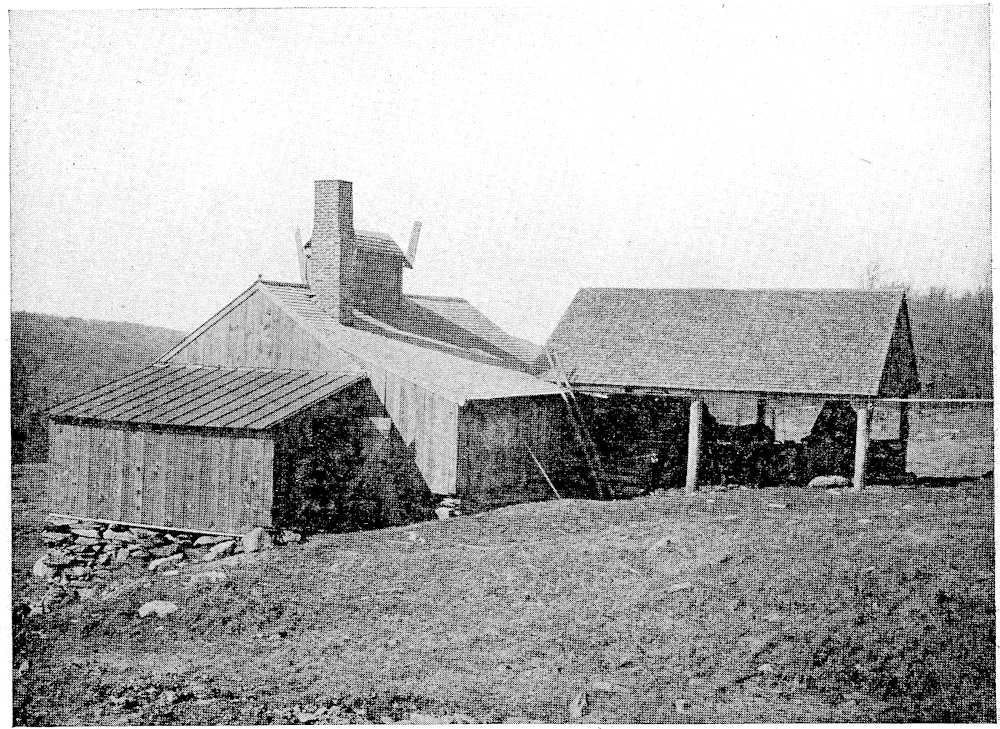
MAPLE SUGAR CAMP IN ONE OF THE LARGEST GROVES IN NORTHERN VERMONT. (Continuation of this picture on opposite page.)
But there has always been a certain amount of trade in pure maple sugar and syrup. A part of the city and town population comes from the country, where they have known the genuine article, and they have generally been able to supply their wants by dealing directly with the producers. The progressive and well-to-do sugar maker has also worked in this field. Of course there are farmers and others who, having pride and capacity, do their utmost to produce the best goods and market them in the most advantageous manner. Such sugar makers are unwilling to sell their high-grade goods to the mixers at a low price, but make every effort to reach a steady market of regular customers.
In the effort to make such a market more general, several maple sugar makers’ associations have come into existence. That of Vermont is the most notable. The annual meetings of this society have done much to stimulate improved methods, as well as to build up a legitimate trade. The association has established a central market, has adopted a registered trade-mark, and guarantees absolute purity. Its trade, through advertising and other business methods, has reached good proportions. But there is only a very small part of the business, even at the present time, which is not in the hands of the mixers.
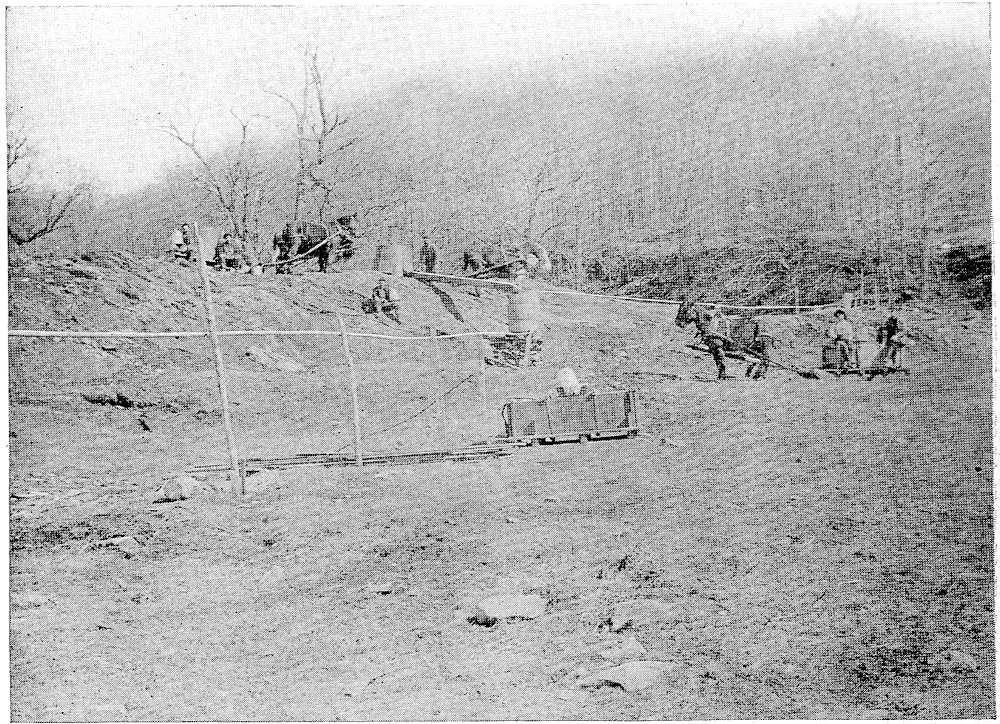
MAPLE SUGAR CAMP IN ONE OF THE LARGEST GROVES IN NORTHERN VERMONT.
The following quotations are from the testimony of Mr. Madden before the House Committee on Interstate and Foreign Commerce, Fifty-seventh Congress, pages 85 and following:
Mr. Madden. I would like to speak to you a moment in regard to maple syrup. That is a subject that will undoubtedly interest you all. We are in a very peculiar position in regard to maple syrup. We do not believe it is right that a syrup composed of maple syrup made from either the sap of the maple tree or from maple sugar and mixed with glucose should be sold as a maple syrup; but we do believe that a maple syrup made from syrup of the maple sugar and mixed with cane-sugar syrup or refined-sugar syrup, I will say—because beet and cane sugar are the same after they have been through boneblack—we do believe that should be sold for maple syrup, and I will tell you why. In the first place, the amount of sap of maple syrup—that is, syrup that is made from boiling the sap of the maple tree without converting it into sugar—is so limited that it would not, in my judgment, supply more than 5 percent of the demand for maple syrup in the United States.
Now, when maple sap is boiled into sugar—and I want to say before I go further that the reason that the amount of sap syrup is so limited is because it is hard to keep it from fermentation, and the season is so short in which the sap runs that it is difficult to manufacture, to boil enough in the camps to supply the demand; consequently a large proportion of the sap in the States where maple sugar is made is boiled into maple sugar. Now, we have found by experience—not by chemical analysis, but by experience—that the maple sugar made from the sap of the maple tree in Ohio is not so strong as the maple sugar made from the sap of the maple tree in Vermont, and that the maple sugar made from the sap of the maple tree in Vermont is not so strong in flavor as that which is made in Canada, in Quebec Province, because it seems the colder the climate, the stronger in flavor the maple sap is.
Now, we buy these various sugars and reduce them to a liquor to make maple syrup, and I will give you my word, gentlemen, if we take a Canadian sugar, which is the highest priced maple sugar we have, it being worth at the present time twelve cents a pound, while Vermont is worth only eight cents a pound—I give you my word that if we make a liquor by melting that Canadian maple sugar, without the addition of sugar to reduce the strength of the flavor, it is so strong you could not use it.
Mr. Coombs. What do you mean by strong?
Mr. Madden. Strong in flavor.
Mr. Coombs. You mean it is positive?
Mr. Madden. The flavor is so positive; yes, sir.
Mr. Coombs. And it is sweet?
Mr. Madden. Sweet, yes; but if you put it on a hot cake you would say right away, “Take it away; I won’t have such stuff,” and you would ordinarily say that it was glucose. You would be wrong, but that is what you would say.
Now the Vermont sugar is not so strong, and it does not require so much cane sugar to reduce that to a flavor comparing with the natural maple syrup obtained from the sap itself; and I tell you that we can take maple sugar and reduce it, blending it with cane sugar—and by that I mean take ordinary cut-loaf sugar, for instance, and melt it—and we can take this syrup that is made by melting the maple sugar and blend it with the white syrup, and we can produce a maple syrup that is in flavor strong enough and yet delicate enough to satisfy the appetite, and that, in my judgment, is better than the sap syrup made from the maple tree for a great majority of the people.
As an illustration, although we get $11.50 per dozen gallons for a sap maple syrup that is boiled from the sap of the maple tree and the character of the maple syrup that I have just described, about 95 percent of our business is on the syrup that is made from the maple sugar and the cane sugar rather than on the syrup made from the sap itself. Now, if we have to take this maple syrup and brand it as cane sugar, or have any such restrictions, we can not sell it. Now, what are we going to do? We do not believe in frauds any more than you do. We think just as much of our reputation as you do of yours; but we do not want to be held responsible for conditions that we have not built up.
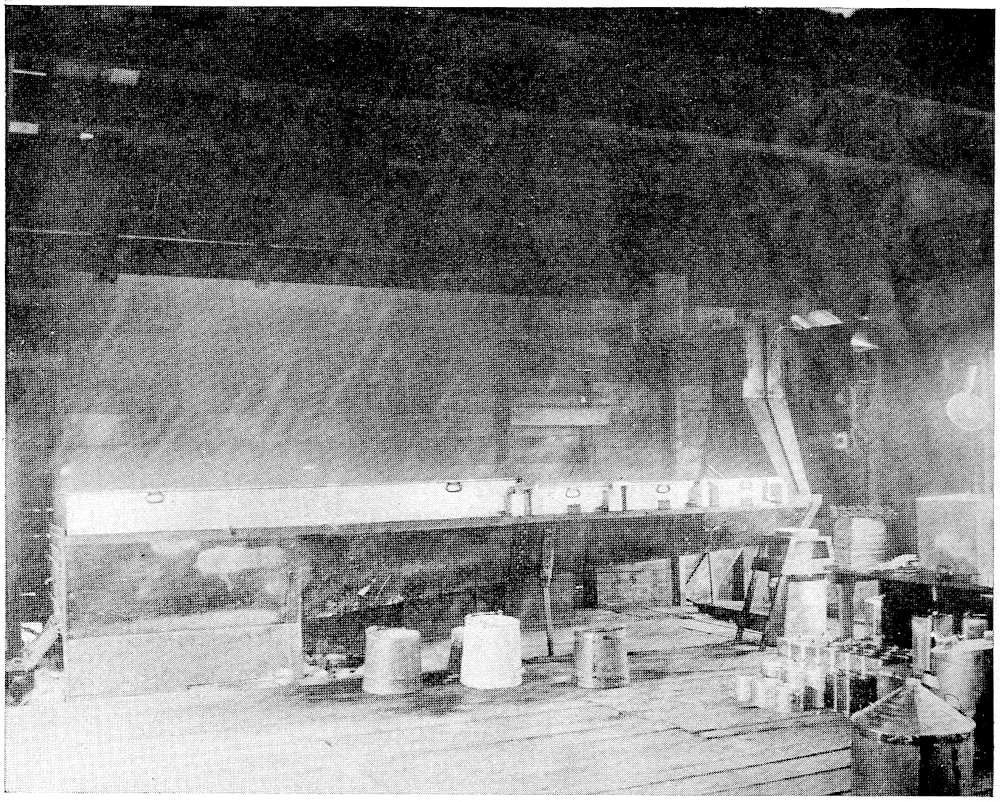
INTERIOR OF MODERN EQUIPPED MAPLE SUGAR CAMP.
Mr. Coombs. It seems to me your whole argument has illustrated that everybody who buys these things knows he is not buying the pure article.
Mr. Richardson. It is either that or you are deceiving them, one or the other.
Mr. Madden. Well, I will answer another phase of that question.
Now, it is commonly assumed, I think, that these blends, mixtures, substitutes, and what some of our theoretical gentlemen call commercial frauds, are done for the purpose of palming off on the people something that is cheap or inferior at a high price. Right there is where the mistake is made. The profits on that class of goods are less to us than on the higher class and more expensive goods, because competition forces these lower-class commodities down to such an extent that they pay us less profit than any other.
We could not take a maple sugar and mix it with cane sugar and obtain the price for pure maple-sugar syrup unless it had the quality, unless it cost so much. In other words, in speaking of maple syrup—and here is the part of this I forgot to speak of—if you take maple sugar and reduce it to the liquor, as we call it, and had to sell it without the addition of any reducing sugar or white syrup—not glucose, but pure cane or beet sugar—if you have to sell it without doing that, it would be so expensive as to be prohibitory, because with Canadian maple sugar worth twelve cents a pound today, it taking eight pounds of it to make a gallon of syrup, you would have a price of nearly a dollar a gallon for your liquor as a first cost, without the cost of package. * * *
The above quotations will illustrate sufficiently well the processes of manufacturers and dealers in adulterating maple syrup. It is evident from this testimony that if the pure article be obtained when purchased at random it is by accident rather than by intention. Whatever may be the condition of the products when they leave the manufacturers in Vermont, New York, Ohio, or Canada, it is evident that all that part which goes into general commerce is subject to extensive adulterations. Only that part which enters domestic commerce, that is sold directly by the manufacturer to the consumer, can be considered above suspicion.
It is evident from the above résumé of the subject that the adulteration of maple syrup is practiced to an enormous extent. As stated by one of the witnesses, it is doubtful if more than 5 percent of the amount sold in this country is the genuine article. It is evident that the makers of the genuine article are forced into competition with these extensive adulterations, thus lowering the legitimate price. Every grove of maple trees in the United States would be worth a great deal more to its owner if the state and national laws should be so framed as to eradicate this great evil. Such laws would permit the sale of these mixed goods under their proper names, and thus protect both the manufacturer and consumer.
Necessity for Sugar Makers’ Organizations.
With a steadily growing demand for maple syrup, which today is almost entirely supplied by the mixer, the producers of pure syrup can hope to control the trade only through organization. The difference between the pure and the adulterated product is so marked that there would be little question as to choice, with the genuine sugar known to the popular trade. A large number of the consumers hardly know pure maple syrup when they taste it, and as so great a part of that on the market is spurious, they have little chance to learn. Under such a condition the market can be gained for the pure product only by means of united action. An example of such action is the present Vermont Sugar Growers’ Association.
The situation is very similar to that which has already been successfully met, in the case of certain other farm products, by organized cooperation of producers. Sometimes, as in Germany and Canada, this has been initiated and substantially aided by government action; sometimes, as in Ireland and England, it has been carried through entirely by private enterprise. Some years ago Canadian dairy products formed but an insignificant proportion of the exports of these articles to Great Britain. Now, through the efforts of the Canadian government to foster intelligent and honest methods of production, an English market has been secured for the Canadian output. The Irish Agricultural Organization Society has gone far toward bringing about an economic regeneration of the island, and in Germany rural prosperity has been vastly increased by the same methods. In all these cases the principal purposes aimed at have been the improvement of methods of production, and furnishing a guaranty of purity to consumers.
In the case of maple sugar producers the first necessity is a market for high grade, unadulterated sugar and syrup. This they should be able to secure without much difficulty through responsible association, which can guarantee the quality of all the product bearing its name or stamp. * * *
The Amount of Sugar in Maple Sap.
Maple sap is a nearly colorless liquid composed of water, sugar and various mineral substances, such as lime, potash, magnesia, and iron; it also contains some organic matter in the form of vegetable acids. The peculiar flavor of maple sugar comes, not from the sugar, but from some one or a combination of all the other substances contained in the sap.
The amount of sugar in the sap of the average sugar maple tree varies greatly, the percentage changing in each tree as the season progresses. Careful experiments have shown that the sap contains on an average about 3 percent of sugar. The maximum is reported at 10.2 percent, which was found in a small flow of sap from a sugar maple near the end of a season, during which the tree averaged 5.01 percent.
The Manufacture of Sugar and Syrup.
The Sap Season.
The sap season throughout the maple sugar belt of the United States generally begins about the middle of March and continues until the third week in April but it varies very widely with a late or an early spring. Sugar making has begun as early as February 22 and as late as the first week in April. The season lasts on an average about four weeks. The longest run on record included forty-three days, and the shortest eight days.
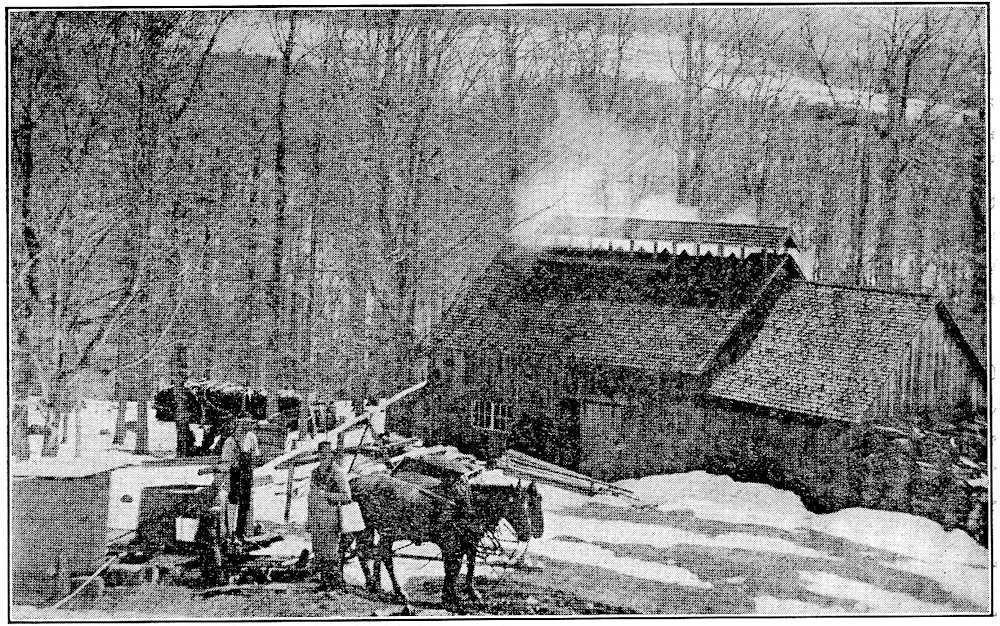
LARGE MAPLE SUGAR CAMP IN CENTRAL VERMONT.
THE VERMONT MAPLE SUGAR MAKERS’ ASSOCIATION.
Was organized at Morrisville, Vermont, January, 1893. The object of this association is to improve the quality and increase the quantity of the maple product of the state, and to protect the manufacturer and consumer from the many fraudulent preparations that are placed upon the markets of this country as pure maple sugar and syrup, and to inform the general public where the genuine article can be procured. The members of this association consist of the best manufacturers of maple sugar and syrup in the state, and their names and post-office address may be found in this work, and any dealer or consumer ordering sugar or syrup from them will be sure to get that which is pure and free from adulteration.
The association owns and issues a protected label to its members upon their agreement, filed with the secretary, that they will only use it upon packages containing pure maple sugar or syrup, of standard quality, of their own manufacture, a copy of which label will be found in this work, and a purchaser of a package covered by this label may be assured of its purity. The improper or unauthorized use of this label or any adulteration of the products covered by the same will be prosecuted to the full extent of the law by the association.
QUALITY OF MAPLE SUGAR.
While it is true that the sugar product of the state has improved greatly within the past few years, it is also true that there is considerable of the product at the present time that does not show the improvements that have been noted. It is one of the rules of the Vermont Maple Sugar Makers’ Association that no member shall use the label of the association on goods of an inferior quality, and a member who does so use it is liable to be expelled from its membership; therefore, it is well to insist upon packages bearing this label, and customers are requested to report to the secretary of the society any case of receiving poor goods bearing this label. While it is the first object of the association to improve the quality of maple products, and increase the quantity now produced, which can easily be doubled, it recognizes as of the utmost importance that it should place before the consumers the knowledge which shall enable them to secure pure goods instead of an imitation product.
The fact that there is more of the spurious than of the genuine sold at the present time shows that there is chance for abundant work in that direction, and the officers of the association will always be glad to aid customers in placing their orders when requested so to do, as far as practicable, a medium of information between producer and customer in which it is hoped that each will receive an advantage.
Maple goods as put up in Vermont, are in three general classes. 1. The syrup or maple honey is put up and sealed in air-tight tin cans or in glass, the usual form being the gallon tin can either round or oblong and the syrup in these cans should weigh eleven pounds net to the gallon or about eleven and three-fourths pounds including can. Pure syrup varies to quite an extent in color. The first run of sap usually produces syrup of a lighter color than is produced later in the season. The color also depends upon the method used in collecting the sap and boiling it and, other things being equal, the less time that is allowed between the production of the sap and its conversion into syrup or sugar the whiter will be the product. Were it possible to convert sap to sugar without any lapse of time or exposure to the air the product would be perfectly white. There has been a suspicion among people who are familiar with Vermont maple products of the last generation that the present goods were not pure because so much whiter than formerly, but the change is due entirely to the improved and more rapid methods of manufacture.
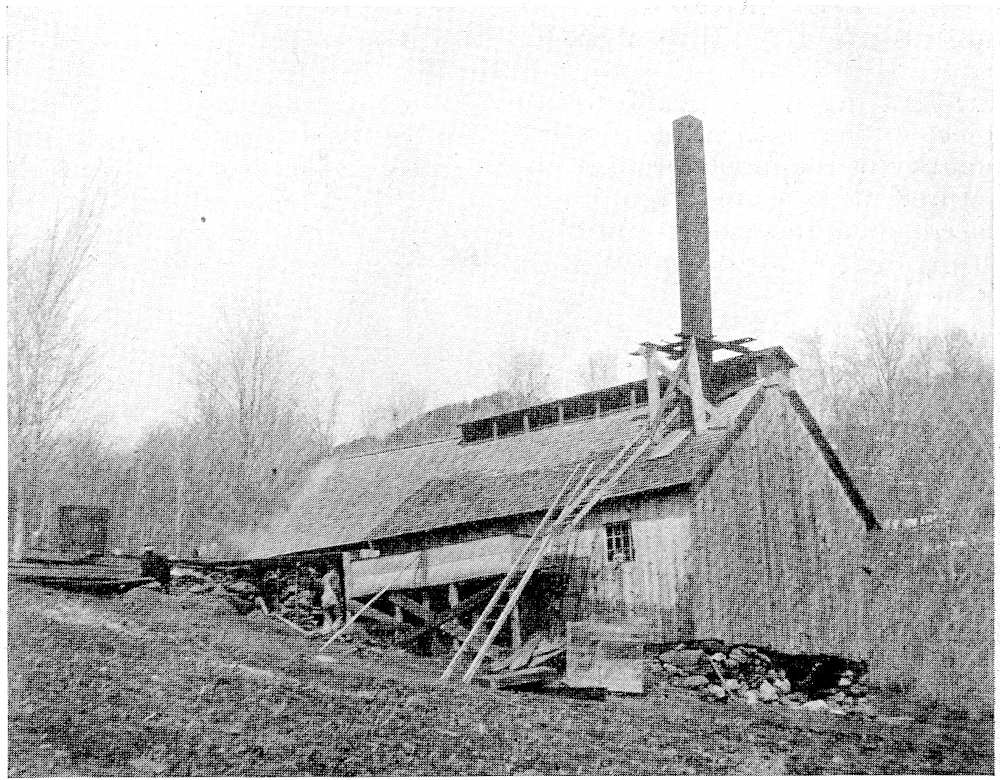
WELL LOCATED MAPLE SUGAR CAMP IN SOUTHEASTERN VERMONT.
PURE MAPLE SUGAR.
There is practically no adulteration of maple sugar in Vermont. The state has a stringent law on the subject and the maple sugar makers of the state will tolerate no infringement of its provisions, so that the customer can feel great security in ordering sugar or syrup of producers or dealers in the state, and can feel absolute security in ordering these goods of any of the members of the Vermont Maple Sugar Makers’ Association, bearing the label of the association. The name and post-office address of all the members of the association will be found in this booklet.
DIRECTIONS FOR THE CARE OF MAPLE SUGAR AND SYRUP.
Sugar. To keep maple sugar in a warm climate, store in as cool and dry a place as possible. If in tin and tightly covered it will mould and ferment on top. To prevent this the best method is to take off the covers and paste over the top of the can a piece of strong manila paper. This will also serve to keep out the ants. Tubs with covers are not as liable to ferment, but is it well to treat them in the same manner.
Syrup. Syrup should be put in air-tight packages and kept so until used. If the syrup is received packed in sawdust the best method is to leave it in the original package and store in a dark cool place, until needed for use, and if it is put up in glass be very careful to keep it from the light. If for any reason the syrup should begin to ferment, which will be known in the case of tin packages by a bulging of the head of the can called “swelled-head” it should be borne in mind that it is not necessarily spoiled as would be the case with fruit, but by heating it to a boiling temperature the fermentation can be arrested and the original flavor, to a great extent, restored. And in this connection it may be said that either syrup or sugar, which has been kept for some time, will be greatly improved in flavor by the same treatment.
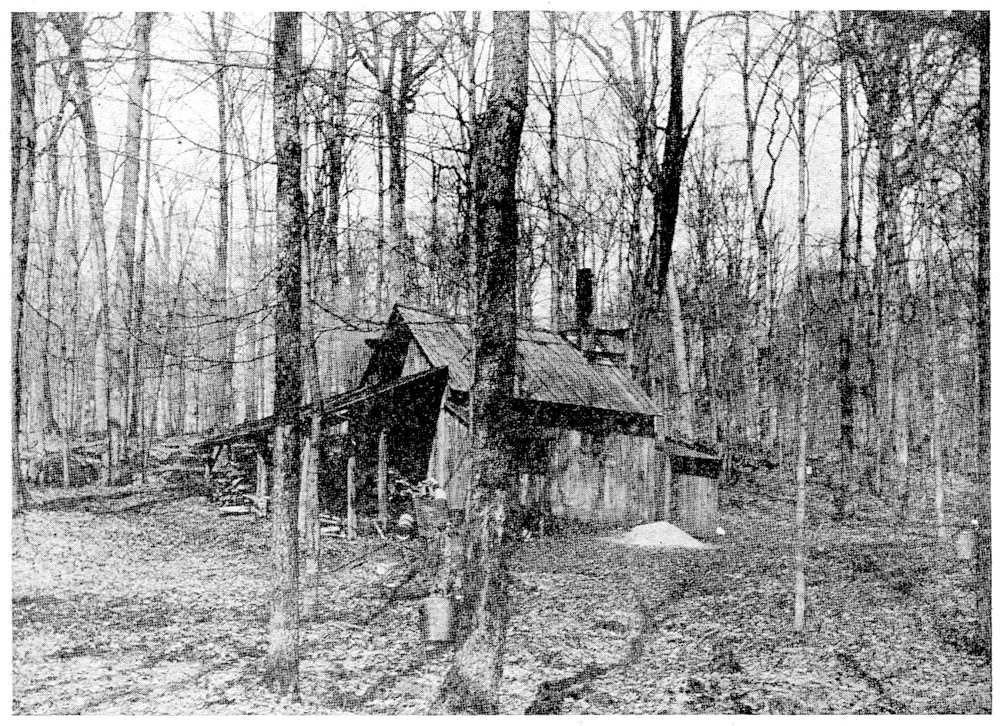
NEAR THE CLOSE OF THE MAPLE SUGAR SEASON.