Front matter (continued 2)
Reading edition
OTHING could be imagined more picturesque than a Venetian funeral in bygone days. The state gondola of the family, containing the body, and also the attendant priests and friars, was covered with black velvet, and blazed with candelabra full of lighted candles; and from the stern of the boat hung an immense train of black velvet, which was permitted to touch the water, but prevented from sinking underneath it by golden tassels, which were held by members of the family in the gondolas which followed close behind. All those persons who took part in the funeral of course carried lights in their hands. If the individual happened to belong to one of the numerous confraternities, or scuole, which existed in Venice up to the end of the last century, a grand musical mass was celebrated in the chapel belonging to the order; and on these occasions some of the finest music ever composed was heard for the first time, such, for instance, as Paesiello's Requiem, an infinitely beautiful one by Marcello, and the majestic mass for four voices, by Lotti.

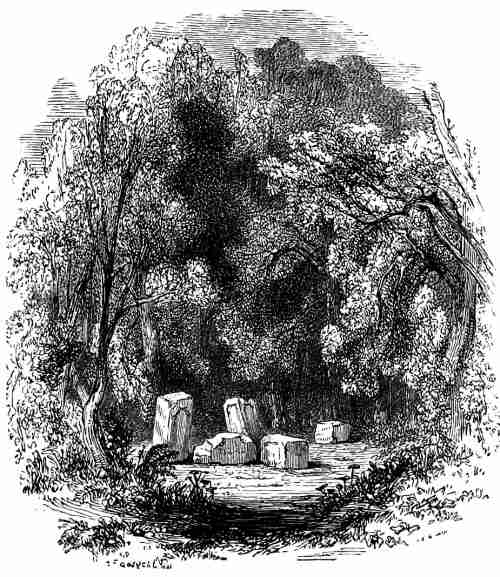
Fig. 43.—Tomb of Hamlet.
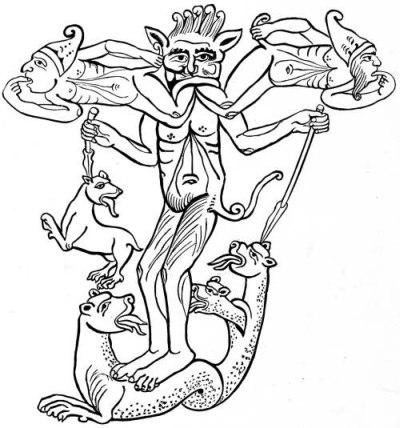
Fig. 44.—Death devouring Man and Beast. A singular, illuminated document on parchment, of the 12th Century, measuring over fifty feet by one yard wide. The figure above is intended to represent the letter T.—From the Mortuary Roll of the Abbey of Savingy, Avranches, France. The original is preserved among the French National Archives.
HE funeral of a Pope is attended by many curious ceremonies, not the least remarkable of which is, that so soon as His Holiness' death is thoroughly assured, the eldest Cardinal goes up to the body, and strikes it three times gently on the breast, saying in Latin, as he does so, "The Holy Father has passed away." The body is then lowered into the Church of St. Peter's, where it is exhibited—as was the case when Pope Pius IX. died in '78—for three days to the veneration of the faithful, after which it is conveyed in great state to the church which the Pope has selected for his burial-place. As it passed along the streets of Rome in the good old times, the members of the nobility assembled at the entrance of their houses, each carrying a lighted taper in his hand, and answering back the prayers of the friars and clergy in the procession. It will be remembered that it was this sort of spontaneous illumination which so offended a rabble of freethinkers, on the occasion of the funeral of the late Pope, that they stoned the coffin, and created a riot of a most disgraceful character. After the Pope is buried, it is usual for his successor or his family to build a stately monument over his remains, and this custom accounts for the amazing number of fine Papal monuments in the Roman basilicas and churches.
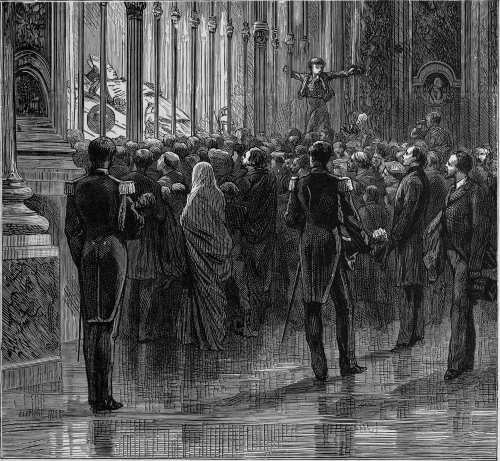
Fig. 45.—Lying-in-State of Pope Pius IX.
At a time when everybody is talking about the Stuart dynasty, owing to the great success of the recent exhibition of their relics (1888-9), the following curious account of the interment of the Old Pretender will prove of interest:—
"On the 6th of January, 1756, the body of his 'Britannic Majesty' was conveyed in great state to the said Church of the Twelve Apostles," says a correspondent from Rome of that date, "preceded by four servants carrying torches, two detachments of soldiers; and by the side of the bier walked twenty-four grooms of the stable with wax candles; the body of the deceased was dressed royally, and borne by nobles of his household, with an ivory sceptre at its side, and the Orders of SS. George and Andrew on the breast.
"On the 7th, the first funeral service took place, in the Church of the Twelve Apostles. The façade of the church was hung with black cloth, lace, and golden fringe, in the centre of which was a medallion, supported by skeletons with cypress branches in their hands, and bearing the following inscription:
'Clemens XIII. Pont. Max.
Jacobo III.
M. Britanniæ, Franciæ, et Hiberniæ Regi.
Catholicæ fidei Defensori,
Omnium urbis ordinum
Frequentia funere honestato.
Suprema pietatis officia
Solemni ritu Persolvit.'
"On entering the church, another great inscription to the same purport was to be seen; the building inside was draped in the deepest black, and on the bier, covered with cloth of gold, lay the corpse, before which was written in large letters:
'Jacobus III. Magnæ Britanniæ Rex.
Anno MDCCLXVI.'
"On either side stood four silver skeletons on pedestals, draped in black cloth, and holding large branch candlesticks, each with three lights. At either corner stood a golden perfume box, decorated with death's-heads, leaves and festoons of cypress. The steps to the bier were painted in imitation marble, and had pictures upon them representing the virtues of the deceased. Over the whole was a canopy ornamented with crowns, banners, death's-heads, gilded lilies, etc.; and behind, a great cloth of peacock colour with golden embroidery, and ermine upon it, hung down to the ground. Over each of the heavily draped arches down the nave of the church were medallions with death's-head supporters, and crowns above them, representing the various British orders and the three kingdoms of England, Ireland, and Scotland; and on the pilasters were other medallions, supported by cherubs, expressing virtues attributed to the deceased, each with an inscription, of which the following is an instance:
'Rex Jacobus III. vere dignus imperio, quia natus ad imperandum: dignus quia ipso regnante virtutes imperassent: dignissimus quia sibi imperavit.'
"On the top of the bier, in the nave, lay the body, dressed in royal garb of gold brocade, with a mantle of crimson velvet, lined and edged with ermine, a crown on his head, a sceptre in his right hand, an orb in his left. The two Orders of SS. George and Andrew were fastened to his breast.
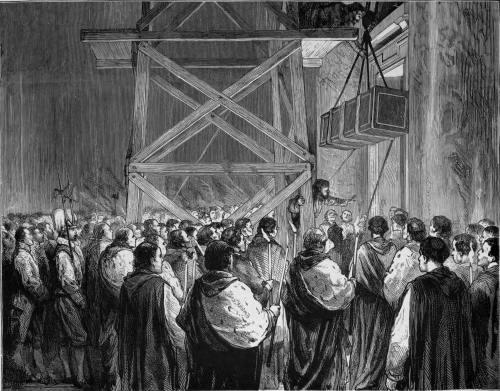
Fig. 46.—Funeral of his late Holiness Pope Pius IX., Feb. 13, 1878. The lowering of the body into St. Peter's.
"Pope Clement regretted his inability to attend the funeral, owing to the coldness of the morning, but he sent twenty-two cardinals to sing mass, besides numerous church dignitaries.
"After the celebration of the mass, Monsignor Orazio Matteo recited a funeral oration of great length, recapitulating the virtues of the deceased, and the incidents of the life of exile and privation that he had led. After which, the customary requiem for the soul of the departed was sung, and they then proceeded to convey his deceased Majesty's body to the Basilica of St. Peter.
"The procession which accompanied it was one of those gorgeous spectacles in which the popes and their cardinals loved to indulge. Every citizen came to see it, and crowds poured in to the Eternal City from the neighbouring towns and villages, as they were wont to do for the festivals at Easter, of Corpus Domini.
"All the orders and confraternities to be found in Rome went in front, carrying amongst them 500 torches. They marched in rows, four deep; and after them came the pupils of the English, Scotch, and Irish College in Rome, in their surplices, and with more torches.
"Then followed the bier, around which were the gaudy Swiss Papal Guards. The four corners of the pall were held up by four of the most distinguished members of the Stuart household.
"Then came singers, porters carrying two large umbrellas, such as the Pope would have at his coronation, and all the servants of the royal household, in deep mourning, and on foot. After them followed the papal household; and twelve mourning coaches closed the procession.
"The body was placed in the chapel of the choir of St. Peter's, and after the absolution, which Monsignor Lascaris pronounced, it was put into a cypress-wood case, in presence of the major-domo of the Vatican, who made a formal consignment of it to the Chapter of St. Peter's, in the presence of the notary of the 'Sacred Apostolic Palace,' who witnessed the consignment, whilst the notary of the Chapter of St. Peter's gave him a formal receipt.
"The second funeral was fixed for the following day, when everything was done to make the choir of St. Peter's look gorgeous. A large catafalque was raised in the midst, on the top of which, on a cushion of black velvet embroidered with gold, lay the royal crown and sceptre, under a canopy adorned with ermine; 250 candles burnt around, and the inscription over the catafalque ran as follows:
'Memoriæ æternæ Jacobi III., Magnæ Britanniæ Franciæ et Hyber, regis Parentis optimii Henricus Card. Dux Eboracensis mœrens justa persolvit.'
"Then the cardinals held service, thirteen of whom were then assembled; after which, the Chapter of St. Peter's and the Vatican clergy, with all the Court of the defunct king who had assisted at the mass, accompanied the body to the subterranean vaults beneath St. Peter's, where the bier was laid aside until such times and seasons as a fitting memorial could be placed over it."
MONG the Jews, according to Buxtorf (who published, in the 17th Century, perhaps the most valuable work upon the Jewish ceremonies which still existed in various parts of Europe in his time, many of which have been modified or have entirely disappeared since), it was the fashion when a person died, after having closed the eyes and mouth, to twist the thumb of the right hand inward, and to tie it with a string of the taled, or veil, which covered the face, and was invariably buried with the corpse. The reason for this doubling of the thumb was that, when it was thus turned inward, it represented the figure Schaddai, which is one of the names of God. Otherwise, the fingers were stretched out so as to show that the deceased had given up all the goods of this world. The body was most carefully washed, to indicate that the dead was purified by repentance. Buxtorf tells us that in Holland, with the old-fashioned Jews, it was the custom to break an egg into a glass of wine, and to wash the face therewith. The more devout persons were dressed in the same garments that they wore on the last feast of the Passover. When the body is placed in the coffin, it is the habit even now, among the Polish and Oriental Jews, for ten members of the family, or very old friends, to walk processionally round it, saying prayers for the repose of the soul. In olden times, for three days after the death, the family sat at home in a darkened room and received their friends, who were indeed Job's comforters; for they sought to afflict them in every way by recalling the virtues of the dead person, and exaggerating the misery into which they were thrown by his or her departure. Seven days afterwards, they were employed in a less rigorous form of mourning, at the end of which the family again went to the synagogue and offered up prayers, after which they followed the customs of the country in which they lived, retaining their mourning only so long as accorded with the prevailing fashion of the day.

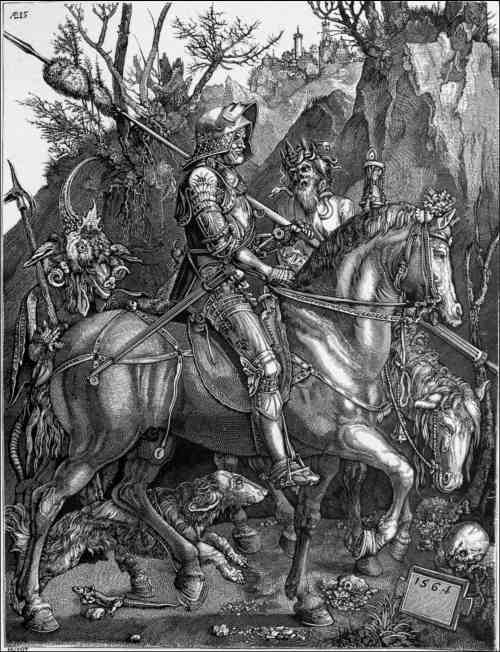
Fig. 47.—The Knight of Death on a White Horse—After Albert Durer. From a fac-simile of the original engraving, dated 1513, by one of the Wiericx (1564). This famous engraving, which so perfectly characterises the weird genius of the Middle Ages, passing into the Renaissance, represents a knight armed, going to the wars, accompanied by terrible thoughts of Death and Sin, whose incarnations follow him on his dismal journey.
NE of the saddest, and certainly the simplest of royal funerals, was that of King Charles I. After his lamentable execution, his body lay at Whitehall from January 28, 1649, to the following February 7, when it was conveyed to Windsor, placed in the vault of St. George's Chapel, near the coffins of Henry VIII. and Jane Seymour. The day had been very snowy, and the snow rested thick on the coffin and on the cloaks and hats of the mourners. The remains were deposited without any service whatever, and left inscriptionless, save for the words "Charles Rex, 1649," the letters of which were cut out of a band of lead by the gentlemen present, with their penknives, and the lead fastened round the coffin. In this state it remained until the year 1813, when George IV. caused it to be more fittingly interred. In striking contrast were the obsequies of the unfortunate King's great rival and enemy, Cromwell, "who lay in glorious state" at Somerset House, all the ceremonial being copied from that of the interment of Philip II. of Spain. The rooms were hung with black cloth, and in the principal saloon was an effigy of the Protector, with a royal crown upon his head and a sceptre in his hand, stretched upon a bed of state erected over his coffin. Crowds of people of all ranks went daily during eight weeks to see it, the place being illuminated by hundreds of candles. The wax cast of the face of Cromwell after death is still preserved in the British Museum. His body, however, was carried away secretly, and at night, and buried privately at Westminster, for fear of trouble. Later, in 1660, the remains of the great Protector, and those of his friends Ireton and Bradshaw, were sacrilegiously taken from their graves, dragged with ignominy through the streets, and hanged at Tyburn, to the apparent satisfaction of Mrs. Pepys and her friend Lady Batten, and all and sundry in London, as is recorded in the "immortal diary." By the way, Mr. Pepys himself, who died in 1703, was buried with much state and circumstance in Crutched Friars Church, but at night, the service being said by Dr. Hickes, the author of the Thesaurus.

ERHAPS the strangest funeral recorded in modern history was that of the translation of the remains of Voltaire, popularly known as his "apotheosis." The National Assembly in May, 1791, decreed that the bones of the poet should be brought from the Abbey of Scellières, and carried in state to the Pantheon. In Voltaire's lifetime it was boasted that he had buried the priests and the Christian religion, but now the priests were going to bury him, having very little of Christian religion left amongst them. The day of the procession was fixed for July 10; but the 10th was a deluging, rainy day, and the ceremony was postponed to the next day, or till the weather should be fine. The next day was as wet, and the Assembly was about to renew the postponement, when about two o'clock it cleared up. The coffin was placed on a car of the classic form, and was borne first to the spot on which the Bastille had stood, where it was placed on a platform, being covered with myrtles, roses, and wild flowers, and bearing the following inscriptions:—"If a man is born free, he ought to govern himself." "If a man has tyrants placed over him, he ought to dethrone them." Besides these, there were numerous other inscriptions in different parts of the area, including one on a huge block of stone: "Receive, O Voltaire! on this spot, where despotism once held thee in chains, the honours thy country renders thee!"

From the Bastille to the Pantheon all Paris seemed to be following the procession, which consisted of soldiers, lawyers, doctors, municipal bodies, a crowd of poets, literary men, and artists carrying a gilded chest containing the seventy volumes of Voltaire's works; men who had taken part in the demolition of the Bastille, bearing chains, fetters, and cuirasses found in the prison; a bust of Voltaire, surrounded by those of Rousseau, Mirabeau, and Montaigne, borne by the actors from the different theatres, in ancient costume; and lastly came the funeral car, now surmounted by a statue of the philosopher, which France was crowning with a wreath of immortelles. The immense procession halted at various places for the effigy to receive particular honours. At the opera houses the actors and actresses were waiting to present a laurel crown and to sing to Voltaire's glory; at the house of M. Villette—where was yet deposited the heart of the great man, previous to being sent to Fernay—four tall poplars were planted, and adorned with wreaths and festoons of flowers, and on the front of the house was written in large letters: "His genius is everywhere, and his heart is here." Near this was raised a sort of amphitheatre, on which were seated a crowd of young girls in white dresses with blue sashes, crowned with roses, and holding wreaths in honour of the poet in their hands. The names of all Voltaire's works were written on the front of the Theatre Français. The next halt was made on the site of the Comédie Française, and a statue of the poet was there crowned by actors costumed as Tragedy and Comedy. Thence the procession wended its way to the Pantheon, where the mouldering remains of Voltaire were placed beside those of Descartes and Mirabeau. All Paris that evening was one festal scene; illuminations blazing on the busts and figures of the patriot of equality.
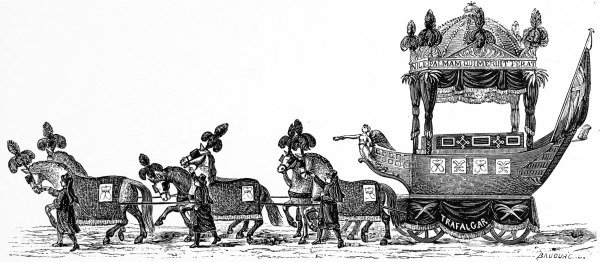
Fig. 48.—Funeral Car of Nelson.—From a contemporary engraving, reproduced expressly for this publication.
The obsequies in England of Lord Nelson, which took place on January 9, 1806, were extremely imposing. I transcribe from a contemporary and inedited private letter the following account of it:—"I have just returned from such a sight as will never be seen in London again. I managed at an inconveniently early hour to get me down into the Strand, and so down Norfolk Street to a house overlooking the river. Every post of vantage wherever the procession could be seen was swarming with living beings, all wearing mourning, the very beggars having a bit of crape on their arms. The third barge, which contained the body, was covered with black velvet and adorned with black feathers. In the centre was a viscount's coronet, and three bannerols were affixed to the outside of the barge. In the steerage were six lieutenants of the navy and six trumpets. Clarencieux, King-at-Arms, sat at the head of the coffin, bearing a viscount's coronet on a black velvet cushion. The Royal Standard was at the head of the barge, which was rowed by forty-six seamen from the 'Victory.' The other barges in the cortege were rowed by Greenwich pensioners. The fourth barge contained Admiral Sir Peter Parker, the chief mourner, and other admirals, vice-admirals, and rear-admirals; whilst the Lords of the Admiralty, the Lord Mayor of London, members of the various worshipful Companies, and other distinguished mourners occupied the remaining barges, which were seventeen in number, and were flanked by row-boats, with river fencibles, harbour marines, etc., etc. All, of course, had their colours half-mast high. On the following morning, the 9th, the land procession, which I also contrived to see, started from the Admiralty to pass through the streets of London to St. Paul's, between dense crowds all along the route. This procession was of great length, and included Greenwich pensioners, sailors of the 'Victory,' watermen, judges and other dignitaries of the law, many members of the nobility, public officers, and officers of the army and navy; whilst in it were carried conspicuously the great banner, gauntlets, helmet, sword, etc., of the deceased. The pall was supported by four admirals. Nearly 10,000 military were assembled on this occasion, and these consisted chiefly of the regiments that had fought in Egypt, and participated with the deceased in delivering that country from the power of France. The car in which the body was conveyed was peculiarly magnificent. It was decorated with a carved resemblance of the head and stern of the 'Victory,' surrounded with escutcheons of the arms of the deceased, and adorned with appropriate mottoes and emblematical devices, under an elevated canopy, in the form of the upper part of a sarcophagus, with six sable plumes, and a viscount's coronet in the centre, supported by four columns, representing palm trees, entwined with wreaths of natural laurel and cypress. As it passed, all uncovered, and many wept. I heard a great deal said among the people about 'poor Emma' (Emma, Lady Hamilton), and some wonder whether she will get a pension or not. On the whole, the processions were most imposing, and I am very glad I saw it all, although I am much fatigued at it, from standing about so much and pushing in the crowd, and faint from the difficulty of getting food, every eating-place being so full of people; and surely, though a nation must mourn, equally certain is it that it must also eat."
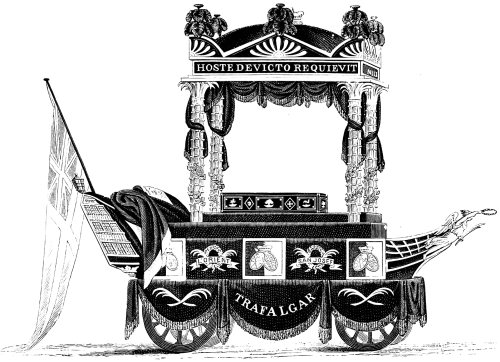
Fig. 49.—Funeral Car of Lord Nelson.—From a contemporary engraving, reproduced expressly for this publication.
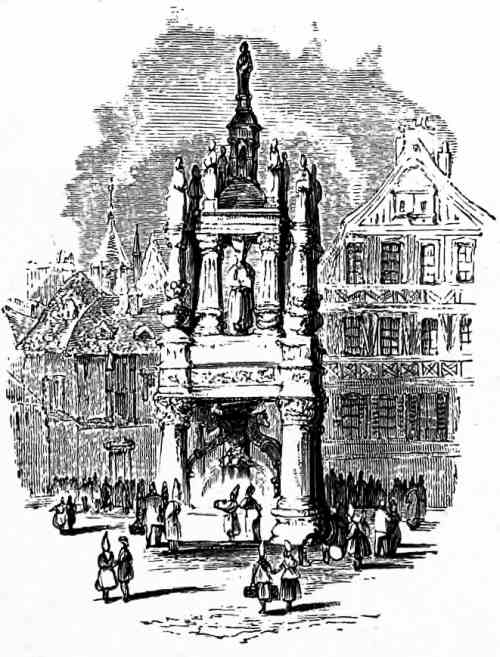
Fig. 50.—An Old Market Cross, Rouen.
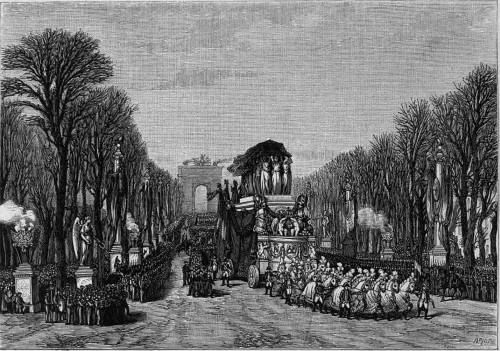
Fig. 51.—Funeral Procession of the Emperor Napoleon I., December 15, 1840. The Cortége descending the Champs Élysées.—From a contemporary engraving.
OUIS PHILLIPPE, who, by the way, had neglected no opportunity to render justice to the genius of Napoleon, obtained, in 1840, the permission of the British Government to remove his body from St. Helena; and on December 15 it was solemnly interred in the gorgeous chapel designed by Visconti, at the Invalides. The Prince de Joinville had the honour of escorting the remains of the Emperor from the lonely island in the Indian Ocean to Paris. Words cannot paint the emotion of the inhabitants of the French capital, as the superb procession descended the long avenue of the Champs Élysées, or that of the privileged company which witnessed the striking scene in the chapel itself, as the Prince de Joinville formally consigned the body to the King, his father, saying, as he did so, "Sire, I deliver over into your charge the corpse of Napoleon." To which the King replied, "I receive it in the name of France," and then taking the sword of the victor of Austerlitz, he handed it to General Bertrand, who, in his turn, laid it on the coffin. Many years later, when another Napoleon reigned in France, a Lady who had not yet reached the mezzo camin di nostra vita, stood silently, with bowed head, before the grave of the mighty enemy of the glorious empire over which she rules, and it was observed that there were tears in the eyes of Queen Victoria when she quietly left the chapel.
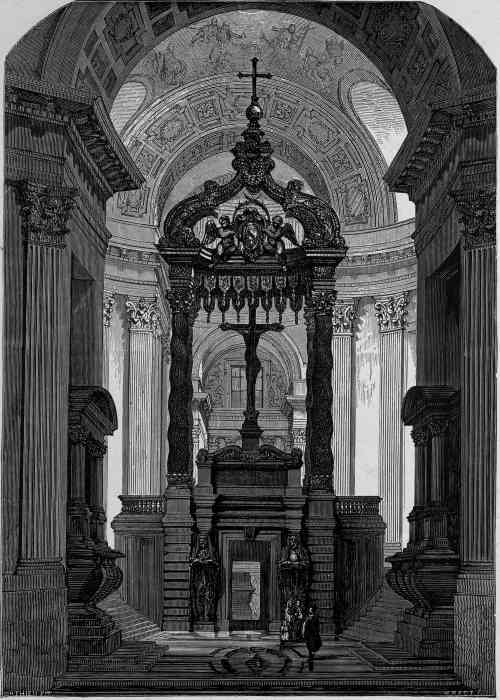
Fig. 52.—The Tomb of Napoleon I. at the Invalides, Paris.
The earliest year of the last half of this century witnessed another funeral of much magnificence, that of the great Duke of Wellington. It was determined that a public funeral should mark the sense of the people's reverence for the memory of the illustrious deceased, and of their grief for his loss. The body was enclosed in a shell, and remained for a time at Walmer Castle, where the Iron Duke died. A guard of honour, composed of men of his own rifle regiment, did duty over it, and the castle flag was hoisted daily half-mast high. On the evening of the 10th of November, 1852, the body was placed upon a hearse and conveyed, by torchlight, to the railway station, the batteries at Walmer and Deal Castles firing minute-guns, whilst Sandown Castle took up the melancholy salute as the train with its burden swept by. Arrived at London, the procession re-formed, and by torchlight marched through the silent streets, reaching Chelsea about three o'clock in the morning, when the coffin containing the body was carried into the hall of the Royal Military Hospital. Life Guardsmen, with arms reversed, lined the apartment, which was hung with black and lighted by waxen tapers. The coffin rested upon an elevated platform at the end of the hall, over which was suspended a cloud-like canopy or veil. The coffin itself was covered with red velvet; and at the foot stood a table on which all the decorations of the deceased were laid out. Thither, day by day, in a constant stream, crowds of men, women, and children repaired, all dressed in deep mourning. The first of these visitors was the Queen, accompanied by her children; but so deeply was she affected that she never got beyond the centre of the hall, where her feelings quite overcame her, and she was led, weeping bitterly, back to her carriage.
The public funeral took place on the 18th of November, and was attended by the Prince Consort and all the chief officers of State. The body was removed by torchlight, on the evening previous, to the Horse Guards, under an escort of cavalry. At dawn on the 18th the solemn ceremony began. From St. Paul's Cathedral, down Fleet Street, along the Strand, by Charing Cross and Pall Mall, to St. James's Park, troops lined both sides of the streets; while in the park itself, columns of infantry, cavalry, and artillery were formed ready to fall into their proper places in the procession, of which we publish two interesting engravings. How it was conducted—with what respectful interest watched by high and low—how solemn the notes of the bands, as one after another they took up and entoned the "Dead March in Saul"—how grand, yet how touching the scene in the interior of St. Paul's—none but those who can remember it can realise.
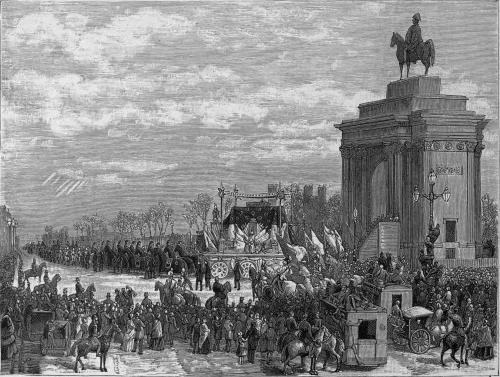
Fig. 53.—Funeral of the Duke of Wellington, November 18, 1852. The Procession passing Apsley House.—From an original sketch, reproduced expressly for this publication.
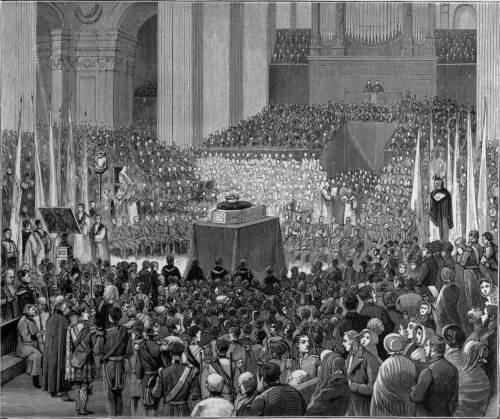
Fig. 54.—Funeral of the Duke of Wellington, November 18, 1852. Scene inside St. Paul's.—Reproduced from an original sketch, expressly for this publication.
A man of genius in France is rightly placed on a kind of throne, and considered a "king of thought;" so the obsequies of so truly illustrious a poet as Victor Hugo, which took place in Paris, June 1, 1885, assumed proportions rarely accorded even to the mightiest sovereigns. Unfortunately, it was marred by the desecration of a noted church, the Pantheon; for it pleased a political party in power to make out that Hugo had denied even the existence of God, and this notwithstanding the fact that every page of his works is a testimony to his ardent creed in the Almighty and his hope in the life to come. The lying-in-state took place under the Arch of Triumph, which was decorated with much taste by a huge black veil draped across it. Flaring torches lighted up the architectural features of the monument, and also the tremendous throng of spectators. The arch looked solemn enough, but the behaviour of the people who surrounded it was the reverse, especially at night. On Thursday, June 1, early in the day, which was intensely hot, the procession began to move from the Arc de Triomphe to the Pantheon, and presented a scene never to be forgotten. The coffin was a very simple one, in accordance with the poet's wishes to be buried like a pauper; but what proved the chief charm of this really poetical spectacle was the amazing number of huge wreaths carried by the countless deputations from all parts of France, and sent from every city of Europe and America. There were some 15,000 wreaths of foliage and flowers carried in this strange procession, many of which were of colossal dimensions, so that when one beheld the cortége from the bottom of the Champs Élysées, for instance, it looked like a huge floral snake meandering along. The bearers of the wreaths were hidden beneath them, and these exquisite trophies of early summer flowers, combined with the glittering helmets of the Guards, the bright costumes of the students, and, above all, with the veritable walls of human beings towering up on all sides, filling balconies and windows, covering roofs and every spot wherever even a glimpse of the pageant could be obtained, created a spectacle as unique as it was picturesque.
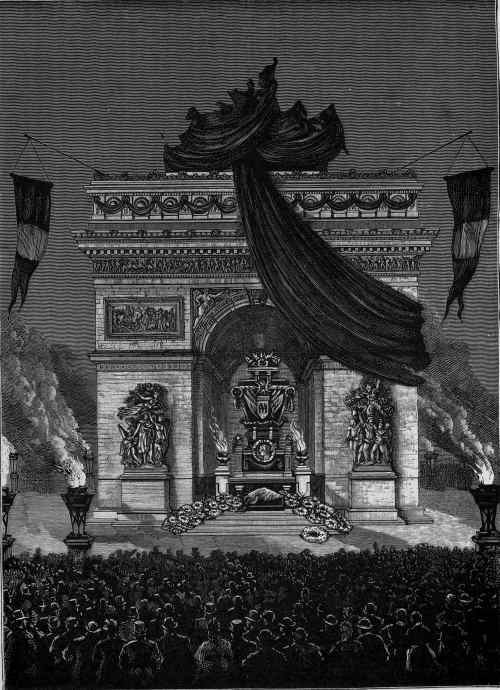
Fig. 55.—Funeral of Victor Hugo, Paris, June 1, 1885.
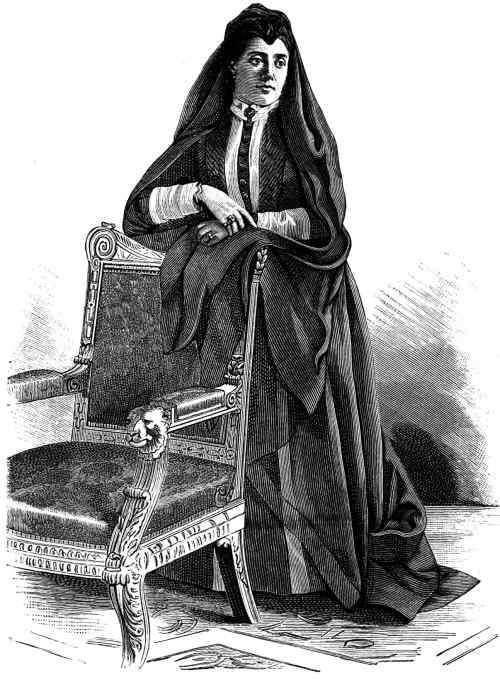
Fig. 56.—Her Imperial Majesty the Empress Frederick of Germany, Princess Royal of Great Britain.
HE solemn but exceedingly simple obsequies of that much regretted and most able man His Royal Highness the Prince Consort, took place at Windsor on the 23rd December, 1861. At his frequently expressed desire it was of a private character; but all the chief men of the state attended the obsequies in the Royal Chapel. The weather was cold and damp, the sky dull and heavy. There was a procession of state carriages to St. George's Chapel, at the door of which the Prince of Wales and the other royal mourners were assembled to receive the corpse. The grief of the poor children was very affecting, little Prince Arthur especially, sobbing as if his heart were breaking. When all was over, and the last of the long, lingering train of mourners had departed, the attendants descended into the vault with lights, and moved the bier and coffin along the narrow passage to the royal vault. The day was observed throughout the realm as one of mourning. The bells of all the churches were tolled, and in many of them special services were held. In the towns the shops were closed, and the window blinds of private residences were drawn down. No respectable people appeared abroad except in mourning, and in seaport towns the flags were hoisted half-mast high. The words of the Poet Laureate were scarcely too strong:
"The shadow of his loss moved like eclipse, Darkening the world. We have lost him; he is gone; We know him now; all narrow jealousies Are silent; and we see him as he moved, How modest, kindly, all-accomplished, wise; With what sublime repression of himself, And in what limits, and how tenderly; Not swaying to this faction or to that; Not making his high place the lawless perch Of wing'd ambitions, nor a vantage ground For pleasure; but thro' all this tract of years Wearing the white flower of a blameless life, Before a thousand peering littlenesses, In that fierce light which beats upon a throne, And blackens every blot; for where is he Who dares foreshadow for an only son A lovelier life, a more unstained than his?"
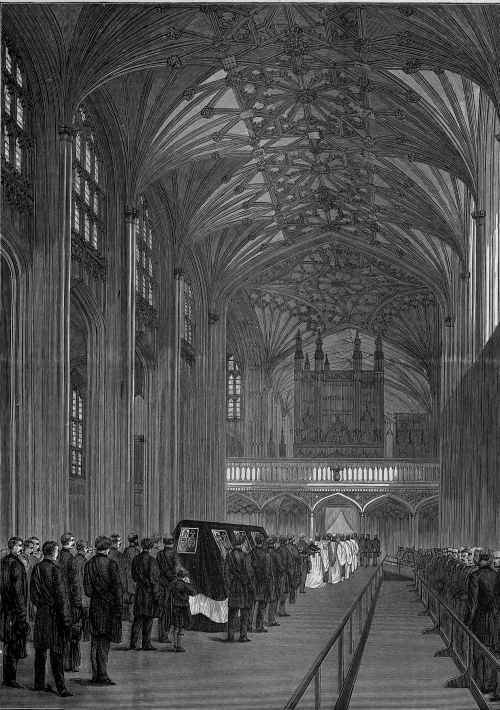
Fig. 57.—Funeral of His Royal Highness the Prince Consort, at Windsor, December 23, 1861.
When Her Majesty became a widow, she slightly modified the conventional English widow's cap, by indenting it over the forehead à la Marie Stuart, thereby imparting to it a certain picturesqueness which was quite lacking in the former head-dress. This coiffure has been not only adopted by her subjects, but also by royal widows abroad. The etiquette of the Imperial House of Germany obliges the Empress Frederick to introduce into her costume two special features during the earlier twelve months of her widowhood. The first concerns the cap, which is black, having a Marie Stuart point over the centre of the forehead, and a long veil of black crape falling like a mantle behind to the ground. The second peculiarity of this stately costume is that the orthodox white batiste collar has two narrow white bands falling straight from head to foot. This costume has been very slightly modified from what it was three centuries ago, when a Princess of the House of Hohenzollern lost her husband.

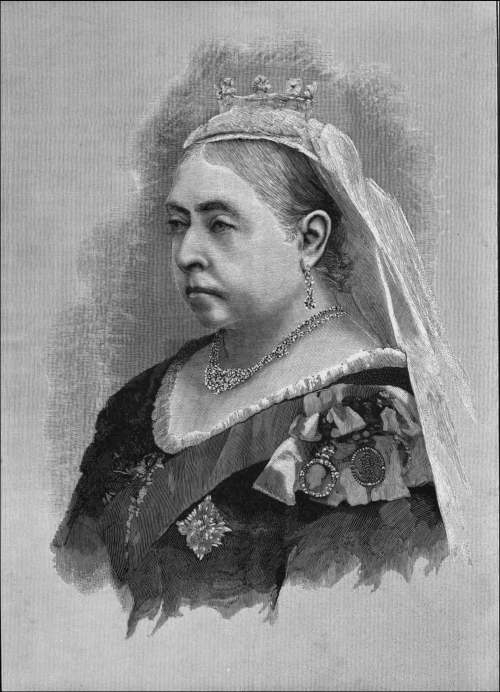
Fig. 58.—HER MOST GRACIOUS MAJESTY THE QUEEN.
From a Photograph by Messrs. W. & D. Downey.
HE first general mourning ever proclaimed in America was on the occasion of the death of Benjamin Franklin, in 1791, and the next on that of Washington, in 1799. The deep and wide-spread grief occasioned by the melancholy death of the first President, assembled a great concourse of people for the purpose of paying him the last tribute of respect, and on Wednesday, December 18, 1799, attended by military honours and the simplest but grandest ceremonies of religion, his body was deposited in the family vault at Mount Vernon. Never in the history of America did a blow fall with more terrible earnestness than the news of the assassination of President Lincoln on April 14, 1865. All party feeling was forgotten, and sorrow was universal. The obsequies were on an exceedingly elaborate scale, and a generous people paid a grateful and sincere tribute to a humane and patriotic chieftain. After an impressive service, the embalmed body was laid in state in the Capitol at Washington, guarded by officers with drawn swords, and afterwards the coffin was closed for removal to Springfield, the home of the late President, a distance of about 1,700 miles. It took twelve days to accomplish the journey. The car which conveyed the remains was completely draped in black, the mourning outside being festooned in two rows above and below the windows, while each window had a strip of mourning connecting the upper with the lower row. Six other cars, all draped in black, were attached to the train, and contained the escort, whilst the engine was covered with crape and its flags draped. At several cities en route a halt was made, in order to permit people to pay tributes of respect to the deceased, and several times the body was removed from the train, so that funeral services might be held. At last, on the 3rd of May, the train reached Springfield, and after a brief delay the procession moved with befitting ceremony to Oak Ridge Cemetery, President Lincoln's final resting-place. During the period intervening between President Lincoln's death and his interment, every city and town in the United States testified the greatest grief, and public expressions of mourning were universal. To take New York, as an instance, that city presented a singularly striking appearance. Scarce a house in it but was not draped in the deepest mourning, long festoons of black and white muslin drooped sadly everywhere, and even the gay show-cases outside the shop doors were dressed with funereal rosettes. The gloom which prevailed was intense. In many places, however, the decorations, though sombre, were exceedingly picturesque, the dark tones being relieved by the bright red and blue of the national colours, entwined with crape.
Scarcely less magnificent were the obsequies accorded by the people of America to General Grant. Funeral services were observed in towns and cities of every state and territory of the Union, amidst a display of mourning emblems unparallelled. In New York, for two weeks previous to the funeral ceremony, preparations of the most elaborate description were going on, and the best part of the city was densely draped. The route of the procession to the tomb was 9 miles long, and it is estimated that three million persons saw the cortege, in which over 50,000 people joined, including 30,000 soldiers. Some further idea of the magnitude of this solemn procession can be formed when it is stated that its head reached the grave three hours and a half before the funeral car arrived. This car was exceptionally imposing, inasmuch as it was drawn by 24 black horses, each one led by a coloured servant, and each covered with sable trappings which swept the street.
Another imposing funeral, which many who are still young can remember, was that of his Majesty Victor Emmanuel, the first King of United Italy, who died in Rome early in 1878. His obsequies were conducted with all the pomp of the Roman Catholic religion, and the catafalque, erected in the centre of the Pantheon, was supremely imposing. We give an engraving of it, which will afford an excellent idea of its great magnificence.
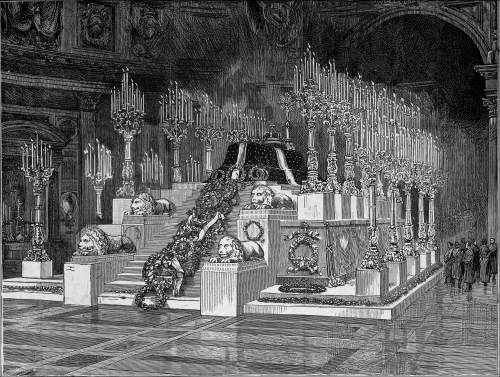
Fig. 59.—The Catafalque erected for the Funeral Service of His Majesty King Victor Emmanuel, in the Pantheon, Rome.
HE ingenious idea of the Magasin de Deuil, or establishment exclusively devoted to the sale of mourning costumes and of the paraphernalia necessary for a funeral, has long been held to be exclusively French; but our quick-witted neighbours have, to speak the truth, originated very few things; for was not the father of French cookery a German physician in attendance on Francis I., assisted by an Italian cardinal, Campeggio, who, by the way, came to England on the occasion of the negotiations in connection with the divorce of Queen Catherine of Arragon. The Magasin de Deuil is but a brilliant and elaborate adaptation of the old Mercerie de lutto which has existed for centuries, and still exists, in every Italian city, where people in the haste of grief can obtain in a few hours all that the etiquette of civilisation requires for mourning in a country whose climate renders speedy interment absolutely necessary. Continental ideas are slow to reach this country, but when they do find acceptance with us, they rarely fail to attain that vast extension so characteristic of English commerce. Such development could scarcely be exhibited in a more marked manner than in Jay's London General Mourning Warehouse, Regent Street, an establishment which dates from the year 1841, and which during that period has never ceased to increase its resources and to complete its organisation, until it has become, of its kind, a mart unique both for the quality and the nature of its attributes. Of late years the business and enterprise of this firm has enormously increased, and it includes not only all that is necessary for mourning, but also departments devoted to dresses of a more general description, although the colours are confined to such as could be worn for either full or half mourning. Black silks, however, are pre-eminently a speciality of this house, and the Continental journals frequently announce that "la maison Jay de Londres a fait de forts achats." Their system is one from which they never swerve. It is to buy the commodity direct from the manufacturers, and to supply it to their patrons at the very smallest modicum of profit compatible with the legitimate course of trade. The materials for mourning costumes must always virtually, remain unchangeable, and few additions can be made to the list of silks, crapes, paramattas, cashmeres, grenadines, and tulles as fabrics. They and their modifications must be ever in fashion so long as it continues fashionable to wear mourning at all; but fashion in design, construction, and embellishment may be said to change, not only every month, but well-nigh every week.
The fame of a great house of business like this rests more upon its integrity and the expedition with which commands are executed than anything else. To secure the very best goods, and to have them made up in the best taste and in the latest fashion, is one of the principal aims of the firm, which is not unmindful of legitimate economy. For this purpose, every season competent buyers visit the principal silk marts of Europe, such as Lyons, Genoa, and Milan, for the purpose of purchasing all that is best in quality and pattern. Immediate communication with the leading designers of fashions in Paris has not been neglected; and it may be safely said of this great house of business, that if it is modelled on a mediæval Italian principle, it has missed no opportunity to assimilate to itself every modern improvement.
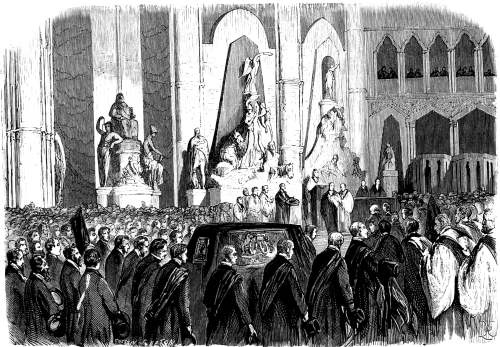
Fig. 60.—Funeral of Earl Palmerston, in Westminster Abbey, Oct. 27, 1865.
Private mourning in modern times, like everything else, has been greatly altered and modified, to suit an age of rapid transit and travel. Men no longer make a point of wearing full black for a fixed number of months after the decease of a near relation, and even content themselves with a black hat-band and dark-coloured garments. Funeral ceremonies, too, are less elaborate, although during the past few years a growing tendency to send flowers to the grave has increased in every class of the community. The ceremonial which attends our State funerals is so well known that it were needless to describe them. We, however, give, as "records," illustrations of the funerals of Lord Palmerston, Lord Beaconsfield, Mr. Darwin, and of the much-regretted Emperor Frederick of Germany, a function which was extremely imposing, as the etiquette of the German Court still retains many curious relics of bygone times.
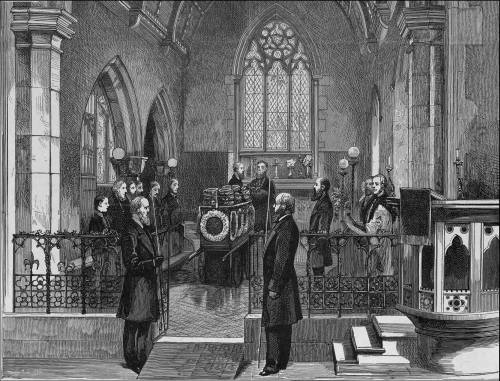
Fig. 61.—Funeral of the Right Honourable the Earl of Beaconsfield, in Hughenden Church, April 26, 1881.
ENERAL Court mourning in this country is regulated by the Duke of Norfolk, as Earl Marshal, but exclusively Court mourning for the Royal Family by the Lord Chamberlain.
The order for Court mourning to be observed for the death of a foreign sovereign is issued by the Foreign Office, and transmitted thence to the Lord Chamberlain.
Here is the form of the order for general mourning to be worn on the occasion of the death of the Prince Consort:
College of Arms, Dec. 16, 1866.
Deputy Earl Marshal's Order for a General Mourning for His late Royal Highness the Prince Consort.
In pursuance of Her Majesty's commands, this is to give public notice that, upon the melancholy occasion of the death of His Royal Highness the Prince Consort, it is expected that all persons do forthwith put themselves into decent mourning.
Edward C. F. Howard, D.E.M.
The order to the army is published from the War Office:
Horse Guards, Dec. 18, 1861.
Orders for the Mourning of the Army for His late Royal Highness the Prince Consort.
The General commanding-in-chief has received Her Majesty's commands to direct, on the present melancholy occasion of the death of H.R.H. the Prince Consort, that the officers of the army be required to wear, when in uniform, black crape over the ornamental part of the cap or hat, over the sword-knot, and on the left arm;—with black gloves, and a black crape scarf over the sash. The drums are to be covered with black, and black crape is to hang from the head of the colour-staff of the infantry, and from the standard-staff of cavalry. When officers appear at Court in uniform, they are to wear black crape over the ornamental part of the cap or hat, over the sword-knot, and on the left arm;—with black gloves and a black crape scarf.
A like order was issued by the Admiralty, addressed to the officers and men of the Royal Navy.
FIRST NOTICE.
Lord Chamberlain's Office, December 16, 1861.
Orders for the Court to go into Mourning for His late Royal Highness the Prince Consort.
The Ladies attending Court to wear black woollen Stuffs, trimmed with Crape, plain Linen, black Shoes and Gloves, and Crape Fans.
The Gentlemen attending Court to wear black Cloth, plain Linen, Crape Hatbands, and black Swords and Buckles.
The Mourning to commence from the date of this Order.
SECOND NOTICE.
Lord Chamberlain's Office, December 31, 1861.
Orders for the Court's change of Mourning, on Monday, the 27th January next, for His late Royal Highness the Prince Consort, viz.:
The Ladies to wear black Silk Dresses, trimmed with Crape, and black Shoes and Gloves, black Fans, Feathers, and Ornaments.
The Gentlemen to wear black Court Dress, with black Swords and Buckles, and plain Linen.
The Court further to change the Mourning on Monday the 17th of February next, viz.:
The Ladies to wear black Dresses, with white Gloves, black or white Shoes, Fans, and Feathers, and Pearls, Diamonds, or plain Gold or Silver Ornaments.
The Gentlemen to wear black Court Dress, with black Swords and Buckles.
And on Monday the 10th of March next, the Court to go out of Mourning.
FIRST NOTICE.
Lord Chamberlain's Office, November 7, 1817.
Orders for the Court's going into Mourning on Sunday next, the 9th instant, for Her late Royal Highness the Princess Charlotte Augusta, Daughter of His Royal Highness the Prince Regent, and Consort of His Serene Highness the Prince Leopold Saxe-Cobourg, viz.:
The Ladies to wear black Bombazines, plain Muslin, or long Lawn Crape Hoods, Shamoy Shoes and Gloves, and Crape Fans.
Undress:—Dark Norwich Crape.
The Gentlemen to wear black cloth without buttons on the Sleeves or Pockets, plain Muslin, or long Lawn Cravats and Weepers, Shamoy Shoes and Gloves, Crape Hatbands and black Swords and Buckles.
Undress:—Dark Grey Frocks.
For Ladies, black Silk, fringed or plain Linen, white Gloves, black Shoes, Fans, and Tippets, white Necklaces and Earrings.
Undress:—White or grey Lustrings, Tabbies, or Damasks.
For Gentlemen, to continue in black, full trimmed, fringed or plain Linen, black Swords and Buckles.
Undress:—Grey Coats.
For Ladies, black silk or velvet coloured Ribbons, Fans, and Tippets, or plain white, or white and gold, or white and silver Stuffs, with black Ribbons.
For Gentlemen, black Coats and black or plain white, or white and gold, or white and silver stuffed Waistcoats, coloured Waistcoats and Buckles.
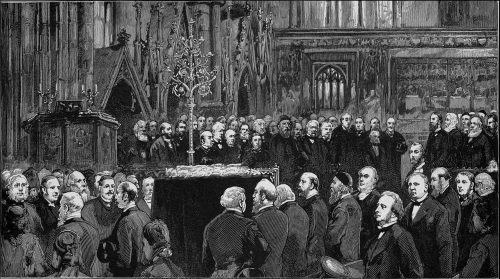
Fig. 62.—Funeral of Charles Darwin, Esq., in Westminster Abbey.
HE Register of "Notices" preserved at the Lord Chamberlain's Offices date back from 1773 to 1840. They are written in chronological order from the first folio (9th March, 1773) to folio 16 (28th Nov., 1785). After this date a number of papers are missing, and, curious to relate, the next entry is Oct. 24, 1793, and orders the Court to go into mourning for ten days for Her late Majesty Marie Antoinette, Queen of France.
On the margin of the one for mourning for Louis XVIII., is written a note to the effect that the "King this day, Sep. 18, 1824, orders three weeks' mourning for the late King of France." At about this time, too, the word "the ladies to wear bombazine gowns" disappears, and is replaced by "woolen stuffs."
Our military etiquette connected with mourning was really modelled on that in use in the army of Louis XIV., as is proved by a rather singular fact. In 1737 George II. died, and an order was issued commanding the officers and troopers in the British army to wear black crape bands and black buttons and epaulettes. Very shortly afterwards the French Government issued a decree to the effect that, as the English army had "slavishly imitated the French in the matter of wearing mourning, henceforth the officers of the French army should make no change in their uniform, and only wear a black band round the arm." Oddly enough, at the present moment both the French and the English armies wear precisely the same "badge of grief," a black band of crape on the left arm above the elbow.
The Sovereign can prolong, out of marked respect for the person to be mourned, the duration of the period for general and Court mourning.
The following are regulations for Court mourning, according to the register at the Lord Chamberlain's office:—
For the King or Queen—full mourning, eight weeks; mourning, two weeks; and half-mourning, two weeks: in all, three full months.
For the son or daughter of the Sovereign—Full mourning, four weeks; mourning, one week; and half-mourning, one week: total, six weeks.
For the brother or sister of the Sovereign—full mourning, two weeks; mourning, four days; and half-mourning, two days: total, three weeks.
Nephew or niece—full mourning, one week; half-mourning, one week: total, two weeks.
Uncle or aunt—same as above.
Cousin, ten days; second cousin, seven days.
HE following are the accepted reasons for the selection of various colours for mourning in different parts of the world:—
Black expresses the privation of light and joy, the midnight gloom of sorrow for the loss sustained. It is the prevailing colour of mourning in Europe, and it was also the colour selected in ancient Greece and in the Roman Empire.
Black and white striped expresses sorrow and hope, and is the mourning of the South Sea Islanders.
Greyish brown—the colour of the earth, to which the dead return. It is the colour of mourning in Ethiopia and Abyssinia.
Pale brown—the colour of withered leaves—is the mourning of Persia.
Sky-blue expresses the assured hope that the deceased is gone to heaven, and is the colour of mourning in Syria, Cappadocia, and Armenia.
Deep-blue in Bokhara is the colour of mourning; whilst the Romans in the days of the Republic also wore very dark blue for mourning.
Purple and violet—to express royalty, "Kings and priests of God." It is the colour of mourning of Cardinals and of the Kings of France. The colour of mourning in Turkey is violet.
White—emblem of "white-handed hope." The colour of mourning in China. The ladies of ancient Rome and Sparta sometimes wore white mourning, which was also the colour for mourning in Spain until 1498. In England it is still customary, in several of the provinces, to wear white silk hat-bands for the unmarried.
Yellow—the sear and yellow leaf. The colour of mourning in Egypt and Burmah. In Brittany widows' caps among the peasants are yellow. Anne Boleyn wore yellow mourning for Catherine of Arragon, but as a sign of joy.
Scarlet is also a mourning colour, and was occasionally worn by the French Kings, notably so by Louis XI.

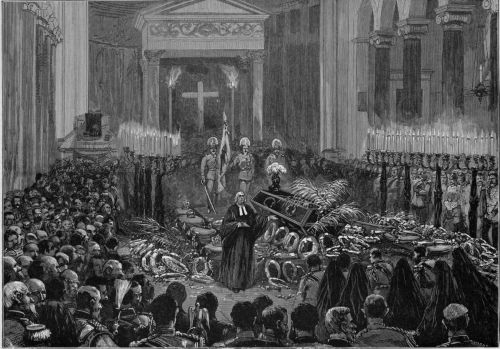
Fig. 63.—Funeral of His Imperial Majesty Frederick the Noble, Emperor of Germany. The Funeral Service in the Imperial Chapel.
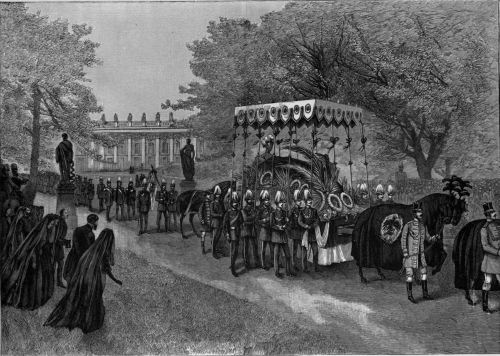
Fig. 64.—Funeral of His Majesty the Emperor of Germany. The Procession leaving the Palace.