DEMONSTRATION RESULTS
Reading edition
At the close of the first decade of negro extension under the Smith-Lever Act, it is well to make permanent record of some of the achievements of the negroes in extension work, not only as a matter of recognition and commendation, but also to set up milestones to mark progress. At the close of the next decade these figures will have even greater interest than now. In fact, they will increase in importance and value with the passing of time.
The statistics which follow are not complete because they pertain to the activities of negro agents only. Hundreds of white agents have done some work with negroes, which is not reported separately. It is probably safe to say that the numbers represented in the 1924 report might be doubled. Since a system of extension work for negroes by negroes has been evolved, the tendency has been to turn the responsibility over to negro agents. The most harmonious relations prevail between white and negro agents in all the States and white agents always stand ready to advise and help.
FARM DEMONSTRATION WORK
During the calendar year 1924, 3,659 negro farmers undertook demonstrations with cotton and 3,072 carried the work to completion and submitted reports. These demonstrations represented a total of 23,043 acres. In addition, 2,630 junior club members planted an acre or more of cotton and 1,734 of them completed the work and submitted reports. Many of these boys cleared more than $100 each on their acres and some more than $200. This is not bad for boys who attend school regularly. Making the usual allowance of about 140 work hours in a year in the production and harvesting of an acre of cotton, these club members earned an average of about $1 an hour for every hour they worked.
Corn has always been a favorite crop for demonstrations by adults and juniors in the South, because it is used so much for food and feed and because it responds so well to special attention in that section of the country. The 1924 annual reports show that 4,317 negro farmers undertook demonstrations with corn and that 3,292 finished them in good shape. The demonstrations covered 25,442 acres. Of 8,018 club members who planted an acre apiece, 4,308 completed the work with marked success. If each successful demonstration should influence only five neighbors, the totals would be impressive, and demonstrations of outstanding size, success, and continuity are even more far-reaching. From a demonstration viewpoint alone, it is estimated that a million negro farmers and home makers are being influenced effectively.
It is worth while to trace the influence of demonstration in increasing the production of cotton and corn, but it is equally significant to trace the influence of demonstrations on the growing of other crops. Additional attention during the last few years in the South has been given to work with legumes. In order to continue the production of large crops of cotton and corn there must be some soil building. (Fig. 11.) This can be done most readily with such crops as cowpeas, soy beans, vetch, velvet beans, clover, and alfalfa.
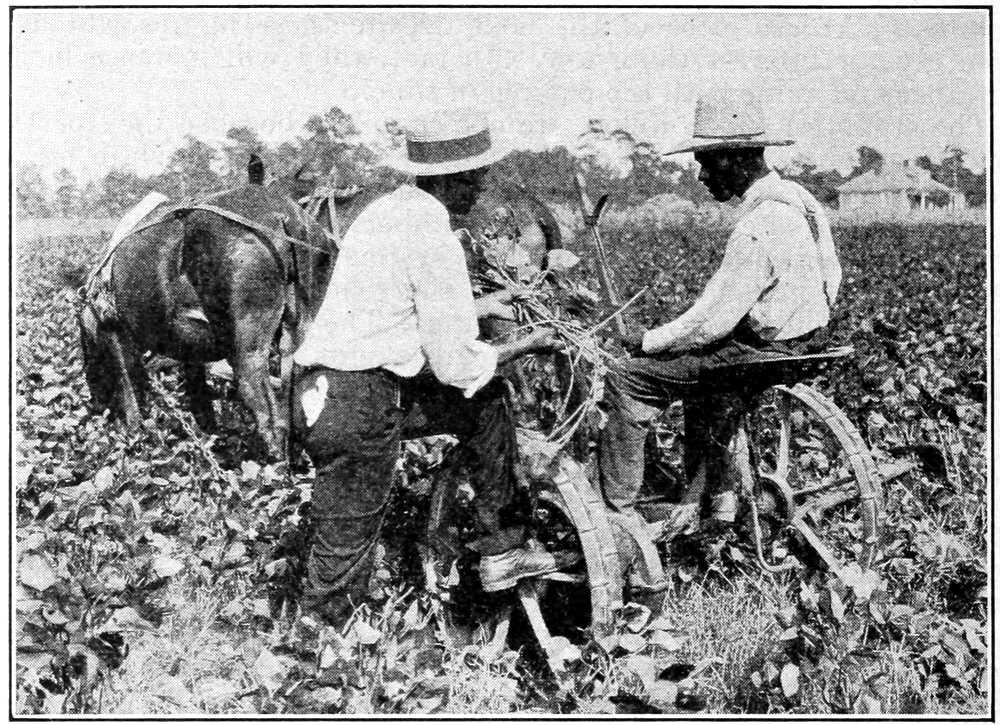
Fig. 11.—Negro agent advising a farmer regarding the value of cowpeas, soy beans, and other legumes for soil improvement. During 1924, negro farmers conducted 9,860 demonstrations with cowpeas, soy beans, and other leguminous and forage crops, of which 8,358 were completed on a total acreage of 54,366.
It is very encouraging to note that the negro farmers carried on 9,860 demonstrations with leguminous and other forage crops in 1924 and that 8,358 of these enterprises were completed on a total acreage of 54,366. In connection with these totals should be considered 2,679 club members who were enrolled to grow legumes and 1,799 who completed the work on their acres. When it is considered that most of this work was done on rented land and that most of these crops require inoculation and special care, these figures have unusual value. Of course all the legumes were not planted for soil-building purposes. Some of them were cash crops and some were grown for feed. The order of popularity of the principal crops among these demonstrators is indicated by the number of demonstrations begun in 1924, as follows: Cowpeas, 2,885; velvet beans, 1,498; peanuts, 1,313; soy beans, 1,269; lespedeza, 476; and alfalfa, 272. Vetch, which was included in a miscellaneous total of 384, is increasing in popularity faster now than any other winter legume.
The success of negro farmers with such crops as sweet potatoes, tobacco, and potatoes shows a strong tendency on their part toward diversification in cash and food crops. During 1924, 1,817 demonstrators were enrolled to grow sweet potatoes and 1,461 of them completed the demonstrations and reported their results at the close of the season. The club enrollment for this popular crop was 836, of whom 590 completed their enterprises and reported. The enrollment for potatoes was 993 adults and 619 juniors and the completions were 878 and 448, respectively. In tobacco demonstrations 229 men were enrolled and 211 finished and reported. In junior extension 482 boys grew tobacco. In field-crop activities the enrollment of negro girls has been very small, just as it has been among the whites, which clearly indicates that the boys do most of the work on the farm and the girls in the home.
As a further contribution to the effort of the South to feed itself, the activities of negro farmers with cereals other than corn are indicative. In 1924 demonstrations were undertaken with wheat, oats, rye, barley, and other cereals, and 2,580 men, 983 boys, and 5 girls were enrolled, of whom 1,871 men, 682 boys, and 5 girls completed. In these demonstrations the yields were much larger than those of near-by farmers or county averages; frequently they were twice or three times as large. When a person undertakes, as a representative of his county, State, and Nation, to make an object lesson to his neighbors, he assumes a large responsibility.
Some of the most successful demonstrations in truck farming, from a financial standpoint, have been made by negroes. Good stories of their work with melons, berries, cabbage, turnips, carrots, celery, and other similar crops come in constantly. Some of the enrollment figures in horticultural demonstrations deserve attention and favorable comment. Negro farmers undertook 1,392 demonstrations in trucking and market gardening and completed 971 with marked success. A total of 8,729 persons were enrolled to make object lessons in home gardens and 6,502 of them were carried through to completion. The enrollment in fruits was 2,045, of whom 1,403 completed. Some extraordinary service was rendered by these farmers in spraying and pruning, which made their results more satisfactory and their examples more potent. In fact, many demonstrators became teachers and leaders through the merits of their work.
Unusual significance may very properly be attached to the livestock demonstrations of negro farmers. The large number of cows, hogs, and chickens owned by them indicates increased land ownership by negroes. It throws light also on the increased production of feed crops. The annual reports for 1924 show that 9,936 adult farmers and farm women were enrolled as livestock demonstrators, of whom 7,379 completed the year’s work and submitted reports. It is safe to assume that most of the 264,432 animals used in these demonstrations were purebred. Likewise, it means progress when it is realized that negro boys and girls cared for 102,070 high-class farm animals in their club enterprises. The enrollment of negro boys and girls in livestock work is worthy of the detailed statement given in Table 2.
Table 2.—Enrollment of negro boys and girls in livestock demonstrations, 1924
Line of work Boys Girls
Hogs 3,774 682
Dairy cattle 505 2,732
Beef cattle 83 4
Poultry 2,154 7,753
Some idea of the substantial nature of the accomplishments of negro agents may be found in the record for 1924, which shows that they helped to procure better sires for the flocks and herds of 3,552 farms and that they had flocks and herds culled on 4,848 farms. They also introduced better balanced feeding for farm animals on 9,520 farms.
Negro demonstrators used 68,126 tons of fertilizer and 8,288 tons of lime in their exemplary farm enterprises in 1924, and they plowed under 13,547 acres of cover and green-manure crops in their soil-improvement operations. Terracing was done on 1,738 farms and soil erosion was thereby prevented on 43,299 acres. Drainage systems were installed on 573 farms and 18,405 acres were thereby made more productive and valuable.
The climax of negro extension work comes in the constructive features just as for the whites. Special import should therefore be attached to the fact that the agents had 463 barns, 411 hog houses, and 787 poultry houses built according to approved plans. Some rural-engineering work of a constructive nature was done on 3,967 farms under the guidance of negro extension agents. All this development means that thousands of the best negroes are learning lessons of thrift, economy, and enterprise. They are coming to realize more and more the importance of owning land and building permanent homes. Another decade will probably show even greater results along these lines.
HOME DEMONSTRATION WORK
It is certainly very gratifying to note that a large number of negro women and girls are doing excellent home demonstration work. When it is remembered that they have to help a great deal in cotton, tobacco, and other fields, there is unusual significance in the fact that they are willing and anxious to take part in the special activities which make for better living and better homes. In 1924, 21,509 women and 27,114 girls were enrolled in the various activities which pertain definitely to the improvement of the home.
It is interesting, also, to compare the figures on home gardens with those on food preservation and preparation. There seems to be a logical sequence here. During the year, 12,355 women and 14,641 girls were enrolled in home gardening; 13,911 women and 13,826 girls, in food preservation; and 14,731 women and 16,537 girls, in food preparation. As a rule, the work begins with garden demonstrations, so it would seem that the interest increases as the work progresses. It should be remembered also that women and girls did most of the work with poultry. The proportion of members completing these demonstrations and the number of method demonstrations necessary for instruction were about the same as the averages of agents in other parts of the country and in other lines of work.
Gardening work is begun with the most staple and standard crops and soon leads to winter and perennial gardens and the growing of small fruits. Wherever home ownership obtains, the garden demonstrations are followed by orchard and lawn demonstrations. Fruit trees suitable to climatic and soil conditions are planted around the homes, and such activities always approach their climax in beautified front yards and lawns.
The number of dwellings constructed and remodeled under the guidance of negro women agents and the number of club members demonstrating the beautification of home grounds indicate clearly the progress of negro home demonstration work. Such activities show that other steps have been taken before the family is ready to build. They show, also, that a great deal of interest has been aroused and that the earning power of the people must have been increased to make such improvements possible. In 1924, 569 houses were built in accordance with plans furnished by negro extension agents and 1,002 houses were remodeled in accordance with the suggestions made by them. The fact that so much work was done to make homes attractive indicates that demonstrators are anxious to make improvements. This point is still further emphasized by the number of members who were enrolled in demonstrations in the beautification of home grounds. A total of 6,433 women and 6,427 girls took up this important enterprise; in 1,336 homes the grounds were laid out according to a definite landscape plan; and 335 school and community grounds were planted according to plans.
Paint and whitewash are good indexes of improvement and prosperity. Demonstrations of this nature exert a fine influence from the standpoint of morals and civilization. In 1924, 2,259 dwellings were painted or whitewashed as the result of extension influence. Many of the dwellings which were built or remodeled installed running water and lighting and heating systems. Altogether, 151 houses installed one or more of these improvements.
Perhaps no phases of home demonstration work are more valuable among negroes than sanitation and health, which were exemplified by more than 10,000 negro homes. In 2,361 homes the doors and windows were screened and in 3,781 homes other methods of insect control and extermination were followed. In most Southern States, negro agents have definite plans with blue prints for the construction of sanitary closets. These plans were followed in 1,890 homes. A total of 9,734 women and 10,351 girls were enrolled in home-health and sanitation demonstrations. The agents gave more than 5,000 demonstrations by way of instruction along this line. The club members and the home demonstrators took much interest in home nursing, first aid, care of teeth, care of skin, good posture, prevention of colds, and similar health activities which the agents were emphasizing.
The statistics on house furnishings by negro women and girls compare favorably with their activities along other lines. (Fig. 12.) During 1924, 7,688 women and 8,656 girls were enrolled to make or buy and install certain house furnishings suggested by the agents. More than 3,000 individuals conducted demonstrations in treating woodwork, walls, and floors. As a result of demonstrations carried on in house furnishings, 4,938 improvements were made in bedrooms, 1,744 in living rooms, 2,190 in dining rooms, and 1,717 in other rooms of the house.
During the year 4,962 demonstrations in home management were conducted by women and girls, most of them pertaining to the kitchen and its equipment. Negro women and girls in their demonstration activities rearranged 2,226 kitchens according to plans outlined by negro extension agents, installed 326 fireless cookers, 312 kitchen sinks, 1,198 kitchen cabinets, and thousands of other articles of equipment and convenience in the kitchen. In equipping the home laundry 277 hand washing machines and 26 power washing machines were obtained. The women and girls also bought 623 electric and gasoline irons and 70 power vacuum cleaners. The record shows that 4,008 club members and demonstrators followed improved laundry practices for the first time.
AGENTS’ ACTIVITIES
In the conduct of demonstration work with negroes the agents made visits to 28,410 farms and 26,515 homes. It required 86,824 farm visits and 49,334 home visits to get the results heretofore reported. It therefore seems that each demonstration farm required an average of three visits and each demonstration home an average of about two visits. If the demonstrations are large and successful enough, the agents will be justified in increasing their visits and also in further magnifying them with field meetings and tours where the demonstrations will be greatly emphasized and the good influences extended.
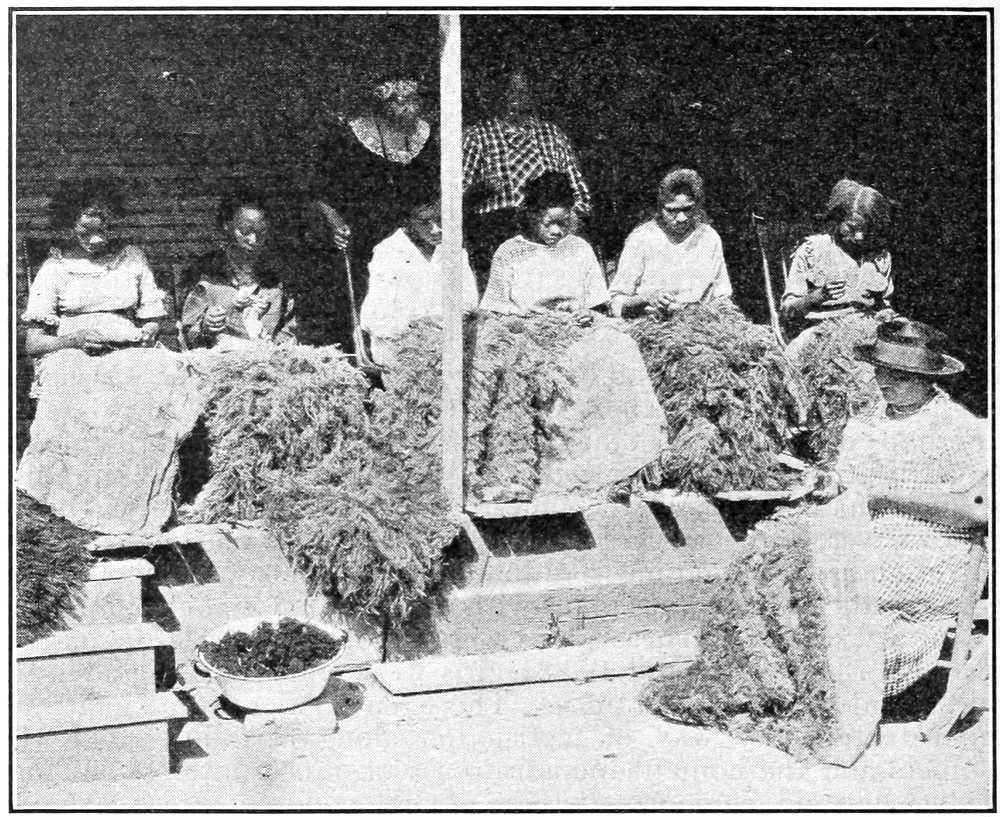
Fig. 12.—Negro home demonstration agent demonstrating the making of rugs for the home. During 1924, 7,688 women and 8,656 girls were enrolled to make or buy and install certain house furnishings suggested by the agents.
It may be noted further that the agents spent 37,418 days in the field and 15,435 days in the office. The negro agents reported 46,100 method and result demonstration meetings with a total attendance of 820,366. This was in addition to 1,863 special meetings for demonstrators and leaders, 358 short courses, and 107 camps for special training. Altogether, more than a million people attended the special and regular meetings for the promotion of extension work among negroes. To these impressive totals the number of fairs and exhibits should be added. Negroes made exhibits at 815 different community, county, and State fairs, which were seen and studied by thousands of people. Lantern slides and motion pictures were shown at more than 500 meetings.