Front matter (continued 6)
Reading edition
TAPADA. (Gray. Turton. p. 127.) A division of the genus Helix, containing Helix aperta, Auct. or the Tapada snail.
TAPES. Schum. Pullastra. Sow.?
TECTUS. Montf. A genus composed of species of the genus Trochus, having elevated, conical spires, and columella notched or truncated by a spiral fold. Fig. 359. Trochus maculatus, presents an example.
TELEBOIS. Montf. A genus of microscopic Foraminifera.
TELESCOPIUM. Montf. Cerithium Telescopium, Auct. fig. 378.
TELLINA. Linn. Fam. Nymphacea, Lam. Conchacea, Bl.—Descr. Sub-equivalve, inequilateral, compressed, rounded anteriorly, slightly beaked or angulated posteriorly, the posterior ventral margin having a flexuosity; hinge with two cardinal and generally two lateral teeth in each valve; muscular impressions, two in each valve, remote; palleal impression with a large sinus.—Obs. The fold or bending in the posterior margin distinguishes this genus from others which it nearly resembles. It is composed of some bivalves of great beauty and variety, which are found in nearly all climates. Fig. 105, T. radiata, 106, T. lingua-felis.
TELLINIDES. Lam. Fam. Nymphacea, Lam.—Descr. Sub-equivalve, inequilateral, transverse, compressed, rounded anteriorly, slightly beaked or angulated posteriorly; hinge with two cardinal teeth in each valve, and one lateral tooth in one valve, very near the cardinal teeth. Muscular impressions two, distant, palleal impression with a large sinus. Obs. This genus is distinguished from Tellina in having but one lateral tooth near the cardinal teeth. Fig. 107, T. rosea. Tropical.
TENUIPEDES. (Tenuis, slender; pedes, feet.) The second section of the order Conchifera Dimyaria, divided into the families Mactracea, Corbulacea, Lithophagidæ, Nymphacea.
TERACLITA. Schum. Conia, Auct.
TEREBELLUM. Lam. (Terebra, an augur?) Fam. Convolutæ, Lam. Angyostomata, Bl.—Descr. Smooth, slender, oblong, sub-cylindrical; spire obtuse, short, sometimes hidden; (Seraphs, Montf.) aperture long, narrow posteriorly, wider anteriorly; outer lip slightly thickened, truncated, unconnected at the base with the columella; inner lip thin, smooth, nearly straight, spread over a portion of the body-whorl, continued in a ridge above the sutures of the spire.—Obs. Montfort has separated the fossil species with hidden spires, under the name Seraphs. (T. convolutum, Lam.) Only one recent species is known, of which there are several varieties, one spotted, one marked in sub-spiral lines, another in patches. It is brought from the East Indies. Fig. 451, T. convolutum; 452, T. subulatum.
TEREBRA. (An augur, a piercer.) Fam. Purpurifera, Lam. Entomostomata, Bl.—Descr. Subulate, elongated, pointed, turrited; spire long, consisting of numerous whorls; aperture small terminating in a short, reflected canal; outer lip thin; columella tortuous; operculum horny. The recent species are mostly tropical.—Obs. Nearly all the species enumerated by Lamarck and other authors are included by De Blainville in his genus Subula; those few species which that conchologist left in the present genus, being shorter and more ventricose than the others, approximate in shape to some of the Buccina, and are distinguished by Mr. Gray under the generic name Bullia. It seems strange, that De Blainville, being convinced of the necessity of separating the two groups, and consequently applying a new generic term to one of them, should have given that term to the larger number and the more typical species of the Lamarckian genus. Fig. 427, Bullia vittata. (Terebra.) Fig. 428, Terebra maculata. (Subula.)
TEREBRALIA. Sw. A genus of "Cerithinæ," Sw. thus described: "Outer lip much dilated, generally uniting at its base to the inner lip; leaving a round perforation at the base of the pillar; channel truncate; operculum round: palustre. Mart. f. 1472." Sw. p. 315.
TEREBRATING SHELLS. (Terebro, to pierce.) Shells which reside in holes pierced in rocks, wood, &c. by means of some corrosive secretion of the animal. Ex. Pholas, Teredo, &c.
TEREBRATULA. Brug. (Terebrans, bored.) Fam. Brachiopoda, Lam.—Order. Palliobranchiata, Bl.—Descr. Inequivalve, equilateral, oval or sub-trigonal, ventricose or compressed, attached by a tendon passing through an opening in the dorsal, or upper and larger valve, the umbo of which advances beyond that of the other valve; hinge destitute of a ligament, with two teeth in the dorsal valve, locked into corresponding cavities in the ventral, or lower valve, and with two curious processes originating at the umbo of the lower valve, presenting, in some species, the appearance of fine winding tape, advancing towards the front of the valve, and again receding to the centre, where the ends unite; muscular impressions two, placed near the centre of each valve.—Obs. The Terebratulæ are included in the genus Anomia in the system of Linnæus. The recent species are not very numerous—they are found in all climates. The fossil species are more numerous than the recent ones, occurring in the secondary and tertiary formations. T. Psittacea, fig. 202.
TEREDINA. (From Teredo.) Fam. Tubicolæ, Lam. Adesmacea, Bl.—Descr. Valves equal, inequilateral, with prominent umbones, as it were soldered to the outside of the rounded end of a shelly tube, of which they form a part; aperture of the tube partly divided; a flat accessary valve placed on the umbones.—Obs. This genus, which is only known in a fossil state, is distinguished from Teredo, by the valves being fixed on the tube, and the tube being closed at one extremity. Fig. 46, 47, T. personata.
TEREDO. Auct. (A piercer.) Fam. Tubicolæ, Lam. Adesmacea, Bl.—Descr. Valves equal, inequilateral; presenting when closed, an orbicular figure, with a large angular opening in front, and a rounded opening at the back; placed at the anterior extremity of an irregular, flexuous, elongated tube, open at both ends; the anterior termination divided in a double aperture opened and closed at the will of the animal by two opercula.—Obs. This genus of Molluscous Animals, is remarkable for boring holes in wood, which are filled by their elongated tubes, and give it a honey-comb appearance. Fig. 48. T. Navalis. Fig. 49, a piece of bored wood.
TERMINAL. When the umbones of a bivalve shell are placed at or near the extremity, as in Mytilus, fig. 158, Pinna, fig. 162, they are said to be terminal. The same term is also applied to the nucleus of an operculum, when it forms an extreme point, or is close to one of the edges.
TESSELLATED. (Wrought in chequer-work). A term applied to the colouring of shells, when arranged in regular defined patches like a tessellated pavement.
TESTACELLA. (Testa, a shell.) Fam. Limacinea, Lam. and Bl.—Descr. Haliotoid, compressed; aperture wide, oblique; columella flat, oblique; spire short, flat, consisting of less than two whorls.—Obs. This shell which is extremely small compared with the animal, is placed upon its back, near the posterior extremity. The animal is found in some of our gardens, and very much resembles the common garden slug. Fig. 261, T. Haliotoidea.
TESTACEOUS. (Testa, a shell.) Shelly. Testaceous Mollusca, are soft animals having shells. A testaceous operculum is one composed of shelly matter.
TETRACERA. Bl. The first family of the order Polybranchiata, Bl. containing no genera of testaceous mollusca.
TEXTILIA. Sw. A sub-genus of Conus, consisting of Conus bullatus, &c. Sw. Malac. p. 312.
TEXTULARIA. Defr. A genus of microscopic Foraminifera.
THALAMUS. Montf. A genus described as resembling Conilites, but curved and granulated.
THALLEPUS. Sw. A genus of "Aplysianiæ," Sw. thus described: "Body more slender and fusiform;" (than Aplysia,) "the lobes of the mantle short, and incapable of being used for swimming; tentacula two, large, ear shaped; eyes not visible. T. ornatus, Sw. Sp. Nov." Sw. p. 359.
THALLICERA. Sw. A generic name under which Swainson distinguishes Ampullaria Avellana, Auct.
THECIDIUM. (Thecas, a box.) Fam. Brachiopoda, Lam. Order, Palliobranchiata, Bl.—Descr. Lower valve concave, sub-trigonal, with the umbo produced into a triangular, slightly incurved beak, and with two short, pointed processes advancing from beneath the umbones; upper valve flat, rounded square, with a short, blunt appendage, formed to fit between the tooth-like process of the other valve; its inner surface ornamented with symmetrically curved ridges.
THECOSOMATA. Bl. The first family of the order Aporobranchiata, Bl. containing the genera Hyalæa, Cleodora, Cymbulia, Pyrgo.
THELICONUS. Sw. A sub-genus of Conus. Lardn. Cyclop. Malac. p. 312.
THELIDOMUS. Sw. A generic name under which Swainson has described a division of the genus Helix, and which he has also used to designate a genus in the family of "Rotellinæ," founded upon an aggregate of loose particles collected and agglutinated in a spiral form by the larva of an insect. Sw. Malac. p. 330 and 353.
THEMEON. Montf. A genus of microscopic Foraminifera.
THEODOXUS. Montf. A division of the genus Nerita. Fig. 324, N. virginea.
THETIS. Sow. (A sea nymph.) A genus of fossil shells, described as resembling Mactra, but not having the internal ligament, and having several small, acuminated, cardinal teeth, but no lateral teeth. It resembles Tellina in some degree, but has not the posterior fold.
THIARELLA. Sw. A sub-genus of Mitra, Lardn. Cyclop. Malac. p. 319.
THRACIA. Leach. Fam. Lithophagidæ, Lam. Pyloridea, Bl. A genus described as intermediate between Anatina, and Mya, and in some degree resembling Corbula. T. corbuloides, fig. 93.
THUNDER-STONES. One of the vulgar appellations which have been applied to shells of the genus Belemnites.
THIATYRA. Leach. A genus composed of Amphidesma flexuosa, Lam. and similar species, belonging more properly to the genus Lucina.
TIARA. Sw. A genus of "Mitranæ," Sw. thus described: "Aperture narrow, linear, or of equal breadth throughout; outer lip and base of the body whorl contracted, the former generally striated; an internal canal at the upper part of the aperture; shell (typically) turrited, and equally fusiform; representing the Muricidæ and Cymbiola." Sw. Malac. p. 319. The principal difference between Tiara and Mitra appears to be that in the latter, the aperture is more linear and contracted in the centre. Mitra Episcopalis is an example.
TINOPORUS. Montf. A genus of microscopic Foraminifera.
TIRANITES. Montf. A division of the genus Baculites.
TOMELLA. Sw. A genus of "Pleurotominæ," Sw. thus described: "Fusiform, smooth; the spire of very few whorls, and not longer than the channel; inner lip with a thick callosity at the top; the slit short and wide; lineata, En. Méth. 440, f. 2, clavicularis, Ib. f. 4. filosa. En. Méth. 440, f. 6. lineolata. Ib. f. 11." Sw. p. 314.
TOMOGERUS. Montf. Anastoma, Auct. Fig. 471.
TONICHIA. Gray. Syn. B. M. p. 126. A genus composed of those species of Chiton which have the margin smooth.
TORNATELLA. Auct. Fam. Plicacea, Lam.—Descr. Oval, spirally grooved; spire short, rather obtuse, consisting of few whorls; aperture long, narrow, rounded anteriorly; outer lip simple; inner lip thin, slightly spread, columella spiral, incrassated, confluent with the outer lip. The recent species are few. Several fossil species occur in London Clay, Inferior Oolite and Calcaire-grossièr. Monoptygma, Lea, resembles this genus, but has a fold on the inner lip. Fig. 343, T. solidula.
TORTUOUS. (Tortuosus) Twisted. This adjective is sometimes applied as a specific name; as Arca tortuosa.
TRACHELIPODA. Lam. (τραχηλος, trachelos, a neck; ποδα, poda, foot.) The third order of the class Mollusca, in the system of Lamarck. The trachelipodous mollusca are described as having the posterior part of the body spirally twisted and separated from the foot; always enveloped in a shell. The foot is free, flat, attached to the base of the neck. Shell spiral, and enclosing the animal when at rest. This order contains the families, Colimacea, Lymnacea, Melaniana, Peristomiana, Neritacea, Janthinea, Macrostomata, Scalariana, Plicacea, Canalifera, Alata, Purpurifera, Columellaria, Convolutæ. The genera belonging to these families, are represented in the plates, fig. 264, to 462.
TRANSVERSE. (Crosswise.) A shell is said to be transverse, when its width is greater than its length, that is, when it is longer from one side to the other than from the umbones to the ventral margins. The term is applied by some authors to express the direction of the lines of growth in bivalve shells, and the spiral lines in spiral shells. See Concentric.
TRAPEZIUM. Meg. Cypricardia, Lam.
TRAPEZIFORM, or
TRAPEZOID. (τραπεζιον, trapezion, trapezium; ειδος, eidos, form.) Having four unequal and unparallel sides. Ex. Cucullæa, fig. 133.
TRIBULUS. Klein. Ricinula, Lam.
TRICHOTROPIS. Brod. and Sow. (Τριχος, trichos, hair; τροπις tropis, keel.) Fam. Purpurifera, Lam.—Descr. Turbinated, keeled, thin, umbilicated; aperture longer than the spire, entire; columella obliquely truncated; outer lip thin, sharp; epidermis horny, produced into long hairs at the angles of the shell; operculum horny, with the nucleus lateral.—Obs. Although the shells of this genus have something of the shape of Turbo, they are distinguished from that genus at once by the thinness of the shell. They are also known from Buccinum, by the absence of a canal. Only two or three species are known, which belong to the Northern and Arctic Oceans. T. bicarinata, fig. 429.
TRIDACNA. Auct. Fam. Tridacnacea, Lam. Chamacea, Bl.—Descr. Equivalve, regular, inequilateral, radiately ribbed, adorned on the ribs with vaulted foliations, waved at the margins, with a large, anterior hiatus close to the umbones, for the passage of a large byssus, by which the animal fixes itself to marine substances; hinge with a partly external ligament; two laminar teeth in one valve, one in the other.—Obs. The beautiful shells composing this genus are of a delicate white colour, tinged with buff. One species, the T. gigas, attains a remarkable size, measuring from two to three feet across, and weighing five hundred pounds. Tridacna is distinguished from Hippopus by the large opening in the hinge. T. elongata, fig. 157.
TRIDACNACEA. Lam. A family belonging to the first section of the order Conchifera Dimyaria, Lam. described as regular, equivalve, solid, and which are remarkable for the deeply sinuated or undulated ventral margin. This family contains the genera:
1. Hippopus. Valves closed at or near the hinge. Fig. 156.
2. Tridacna. An hiatus near the hinge. Fig. 157.
TRIDENTATE. (Tridentatus.) Having three teeth, or salient points. Ex. Hyalæa tridentata, fig. 226.
TRIGONA. Schum.? Triangular species of Cytherea, such as C. lævigata, Triplas corbicula, ventricosa, bicolor, &c. Fig. 117 b.
TRIGONACEA. Lam. A family belonging to the order Conchifera Dimyaria, containing the genera Trigonia and Castalia, the latter of which ought to be removed to the Nayades. Fig. 139, 140.
TRIGONAL. Triangular, having three sides.
TRIGONELLA. Humph. Mactra, Auct.
TRIGONIA. Brug. (τριγωνον, trigonon, triangular.) Fam. Trigonata, Lam. Camacea, Bl.—Descr. Equivalve, inequilateral, transverse, sub-trigonal, costated and granulated without, pearly and iridescent within, denticulated on the inner margin, rounded anteriorly, truncated posteriorly; hinge with four oblong, compressed, diverging teeth in one valve, receiving between their grooved sides, two similar teeth in the other; ligament external, thick; muscular impressions two in each valve.—Obs. Only one recent species of this marine genus is known, the T. pectinata, which comes from New Holland; and was formerly so rare, that a much worn odd valve has been sold for a considerable sum. It is of a brilliant pearly texture within, tinged with purple or golden brown. Fossil species occur in Lias, upper and lower Oolite, and Green-sand. T. Pectinata, fig. 139.
TRIGONOSEMUS. König. A genus composed of species of Terebratula, Auct. which have one valve produced into a beak, perforated, or as it were truncated at the apex. T. lyra, fig. 208, differing from Terebratula lyra, Lam.
TRIGONOSTOMA. A sub-genus of Helix, with a trigonal aperture. Gray's Turton, p. 139.
TRIGONOTRETA. König. A genus composed of species of Terebratula, Auct. which have the hinge of the larger valve produced into a triangular disc, divided by a triangular foramen in the centre. Spirifer, Sowerby, belongs to this genus. Fig. 214, 215.
TRILOBATE. (Τρεις three; λοβος, division, lobe.) Divided into three lobes or principal parts. Ex. Malleus, Fig. 165.
TRILOCULINA. D'Orbigny. A genus of microscopic Foraminifera.
TRIPARTITE. (Tripartitus) composed of or divided into three separate parts.
TRIPHORA, or TRISTOMA. Deshayes. A genus composed of small reversed species of Cerithium, Auct. which have the anterior canal closed at the anterior of the aperture, but opened at the extremity, and a small tubular opening on the upper part of the whorls, making three openings on the body whorl. This genus stands in the same relation to Cerithium as the Typhis to Murex. Fig. 375 in the old plates, and fig. in the new plates.
TRIPLEX. Humph. Murex, Linn.
TRIPLODON. Spix. Hyria, Auct.
TRIPTERA. Quoy et Gaimard, Cuviera, Fer. Described in the Voyage de la Coquille, and represented as a molluscous animal destitute of a shell.
TRIQUETRA. Bl. Triangular species of Venus Auct.
TRISIS. Oken. Arca tortuosa, Auct.
TRISTOMA. Described as Triphora.
TRITON. Auct. Fam. Siphonostomata, Bl. Canalifera, Lam.—Descr. Oblong or oval, thick, ribbed or tuberculated, with discontinuous varices placed at irregular distances; spire prominent, mammillated; aperture round or oval, terminating anteriorly in a generally long, slightly raised canal; columellar lip granulated or denticulated; outer lip thickened, reflected, generally denticulated within; epidermis rough; operculum horny.—Obs. However nearly allied the Tritons may appear to be to the Murices and Ranellæ there are still to be traced in the shells of each of those genera, several constant and well marked distinctions, by which they maybe at once recognized. In the Ranellæ, the varices run in two rows along the spire; in the Murices, they form three or more rows; but in the Tritons, they do not follow each other, i.e. they do not occur in the same part of each volution. The large species of Triton, are sometimes used as trumpets. The Tritons are brought from the Mediterranean, Ceylon, the East and West Indies, and South Seas. Fig. 398 to 401.
TRITONIDEA. Sw. A genus of "Buccininæ," Sw. thus described: "Shell bucciniform, but the basal half is narrowed, and the middle more or less ventricose; spire and aperture equal. Pillar at the base with two or three obtuse and very transverse plaits, not well defined; outer lip internally crenated and with a superior siphon; inner lip wanting, or rudimentary." This genus is the same as the one first distinguished by Mr. Gray under the name of Pollia. We do not regret the discovery made by Mr. Swainson of that name being previously occupied for a genus of Lepidopterous Insects. Fig. 415, represents Tritonidea articularis. (Pollia, Gray.)
TRIVIA. Gray. A genus composed of those small species of Cypræa, Auct. which are characterized by small ridges on the dorsal surface, and have the anterior of the columella internally concave and ribbed. C. Pediculus. Auct. fig. 449, 450.
TROCHATELLA. Sw. A sub-genus of Helicinæ, consisting of those species which are acute and trochiform.
TROCHIA. Sw. A genus of the family Buccininæ, thus described: "shape intermediate between Purpura and Buccinum; whorls separated by a deep groove; inner lip when young, depressed, when adult, thickened, convex and striated; basal canal very small. T. sulcatus. E. M. 422. f. 4." Sw. Malac. p. 300.
TROCHIDON. Sw. A sub-genus of "Trochinæ," Sw. Lardn. Cyclop. Malac. p. 351.
TROCHILÆA. Sw.? Pileolus, Auct.
TROCHURUS. Humph. Monodonta. Lam.
TROCHUS. Auct. (A top.) Fam. Turbinacea, Lam. Goniostomata, Bl.—Descr. Turbinated, thick, striated, tuberculated or smooth; spire elevated, conical, consisting of numerous whorls; under surface discoid; aperture more or less depressed in an oblique direction, generally angular; columella arcuated, more or less prominent at its union with the outer lip, contiguous to the axis of the shell; operculum horny, orbicular, with numerous whorls.—Obs. Lamarck distinguished this genus from Turbo by the general form, which is more conical, and the aperture, which is angulated, while that of Turbo is rounded. Monodonta or Odontis is only separated on account of the notch at the termination of the columella. But these characters glide so imperceptibly from one genus to the other, that there is no line of demarcation to be found but in the operculum. Accordingly, Sowerby (in Gen. of Sh. 37.) has stated his reasons for considering as Trochi, all the species which have horny opercula; and as Turbines, all those which have testaceous opercula. Fig. 358 to 360. The Trochi are found in all climates.
TROPÆUM. Sow. Crioceratites.
TROPHON. Montf. Murex Magellanicus, Auct. and several other species which belong more properly to Fusus than to Murex.
TRUMPET SHELL. A large species of Triton (variegatus), used by natives of South Sea Islands as a trumpet, to call warriors and herds of cattle together. It answers the purpose tolerably well, producing a very sonorous blast.
TRUNCATED. (truncus, cut short.) Terminating abruptly, as it were cut short. Ex. Solenensis, fig. 60.
TRUNCATULANA. D'Orb. A genus of microscopic Foraminifera.
TRUNCATELLA. Risso. A genus composed of several species of land shells which have been confounded by some authors with Cyclostoma. The genus is thus described: "Shell turriculated, cylindrical, decollated or truncated at the apex, no epidermis; aperture oval, short, with lips continuous, simple." Ex. Truncatella truncatulina, Lowe, Zool. Journ. t. 5. p. 80. Our plates, fig. 520, 521. It is found on the shores of Britain, the Mediterranean, and West Indies.
TUBA. Lea. A genus of small fossil shells, described as resembling Turbo, but with the aperture more like that of Melania. Lea. Contrib. Geol.
TUBERCLE. (tuberculus.) A small swelling excrescence, or knob.
TUBERCULATED. Having a number of small lumps or pimples, as Turrilites, fig. 483.
TUBICINELLA. Lam. (Tubicen, a trumpeter.) Order, Sessile Cirripedes, Lam.—Descr. A cylindrical tube, composed of six elongated valves jointed together side by side, striated longitudinally, surrounded by concentric rings; aperture circular, enclosed by an operculum of four valves, placed perpendicularly in an epiphragm.—Obs. The Tubicinellæ are found with nearly the whole shell buried in the thick skin of the whale. T. Balænarum.
TUBICOLARIA. Lam. (Tuba, a tube; cola, an inhabitant.) A family of the order Conchifera Dimyaria, Lam. consisting of bivalves soldered as it were within, or connected with, a testaceous tube. The genera contained in this family may be thus distinguished.
1. Aspergillum. Valves fixed, tube perforated and fringed. Fig. 44.
2. Teredina. Valves fixed, prominent, tube closed at one end. Fossil. Fig. 46, 47.
3. Clavagella. One valve fixed, the other free. Fig. 45.
4. Teredo. Both valves free, tube open at both ends. Fig. 48, 49.
5. Fistulana. Valves free, tube closed at one end, straight, long. Fig. 53, 54.
6. Gastrochæna. Valves free, tube closed at one end, short, bulbous. Fig. 52.
TUBIVALVES. Bl. Shells composed of two valves connected in a tube, corresponding with the family Tubicolæ of Lamarck.
TULIPARIA. Sw. A sub-genus of "Coronaxis," Sw. Lardn. Cyclop. Malac. p. 311.
TURBINACEA. Bl. The sixth family of Polythalamacea, Bl. containing the genera Cibicides and Rosallites, microscopic Foraminifera.
TURBINACEA. Lam. A family of the first section of the order Trachelipoda, Lam. containing the following genera.
1. Solarium. With umbilicus reaching to the apex; including Bifrontia and Orbis. Fig. 353 to 356.
2. Rotella. A callosity on the under side. Fig. 357.
3. Phasianella. Oval; operculum shelly. Fig. 367.
4. Planaxis. Columellar lip flat; aperture notched. Fig. 365.
5. Turbo. Top-shaped; mouth generally round; operculum shelly. Fig. 368.
6. Trochus. Top-shaped; mouth generally angulated; operculum horny, consisting of many whorls; including Elenchus. Fig. 358, 359, 361.
7. Margarita. Operculum horny, consisting of few whorls; pearly. Fig. 362.
8. Littorina. Similar, not pearly; including Assiminnea. Fig. 363, 363*.
9. Phorus. Attaching dead shells, stones, &c. Fig. 360.
10. Monodonta or Odontis. A notch and prominent point at the lower part of the aperture. Fig. 366.
11. Lacuna. With an umbilicus. Fig. 364.
12. Turritella. Elongated, screw-shaped. Fig. 369 to 371.
TURBINATED. (Turbo, a top,) Top-shaped. The term is applied generally to those shells which are large at one extremity, and narrow to a point at the other. Ex. Trochus, fig. 358; Turbinellus, fig. 382.
TURBINELLUS. Auct. (A little top.) Fam. Canalifera, Lam. Siphonostomata, Bl.—Descr. Turbinated, thick, wide near the apex, generally tuberculated; spire short, depressed, mammillated; aperture rather narrow, terminating anteriorly in an open canal; outer lip thickened within; columella having from three to five prominent, compressed, transverse folds. The species of this genus are mostly tropical.—Obs. The Turbinelli are a well marked genus of marine shells, the species of which are numerous. No fossil species are known. The genus Cancellaria makes the nearest approach to Turbinellus in some characters, but may be distinguished by the roundness of its form, the raised lines inside the outer lip, and the obliquity of the folds on the columella. Fig. 382 to 384.
TURBO. Auct. (A top.) Fam. Cricostomata, Bl. Turbinacea, Lam.—Descr. Turbinated, solid, ventricose, generally grooved or tuberculated; spire short, pointed; aperture generally rounded, sub-effuse anteriorly, entire; operculum shelly, solid, incrassated on the outer side, horny and sub-spiral on the inner side. The Turbines are mostly tropical.—Obs. The only certain means of distinguishing this extensive genus of marine shells from Trochus, is the operculum, which in the latter genus is horny, spiral, and composed of a great number of whorls. The Trochi, however, are in general more conical, and flatter at the under side of the whorls, and this constitutes Lamarck's distinction between the genera. T. setosus, fig. 368.
TURGID. (Turgidus.) Puffed up, swollen, inflated. This term is applied synonymously with Ventricose.
TURRICULA. Humph. Melania, Auct.
TURRICULACEA. Bl. The seventh family of the Order Polythalamacea, Bl. containing the genus Turrilites, fig. 483.
TURRILITES. Lam. (Turris, a tower; λιθος, a stone.) Fam. Turriculacea, Lam. Ammonacea, Bl.—Descr. Chambered, turrited, spiral; septa sinuous and lobate, perforated by a siphon; aperture rounded, with the outer lip expanded. This genus, which is distinguished from the other Ammonacea by having the spire produced, i. e. not being convolute, consists of several species, occurring only in chalk-marl. Fig. 483.
TURRIS. Montf. A genus composed of those species of Mitra, Auct. which have the whorls angulated, with the aperture lengthened and undulated.
TURRITED. The spire of an univalve shell is said to be turrited when the whorls of which it is composed are regulated so as to have the appearance of little turrets rising above each other, as in Mitra, fig. 431.
TURRITELLA. Lam. (A little tower.) Fam. Turbinacea, Lam. Cricostomata, Bl.—Descr. Turrited, elongated, generally grooved spirally; spire pointed, consisting of numerous whorls; aperture rounded or angulated; inner and outer lips thin, confluent anteriorly; operculum horny.—Obs. The shells composing this well defined genus, are commonly called screws, a name to which the spiral grooves of most of the species seems to entitle them. Fig. 370, T. imbricata.
TYMPANOSTOMA. Schum. (Timbrel mouth.) Potamis, Brongn.
TYPHIS. Montf. A genus composed of Murex tubifer, Auct. and other similar species, which have the canal closed and a perforated tube between each varix on the angulated part of the whorls. Besides the fossil species originally described, there are now five species known, which are figured in part 200, of the Conchological Illustrations by the Author. Typhis tubifer, fig. 397.
ULTIMUS. Montf. (The last.) A genus composed of Ovulum gibbosum, Auct. fig. 443, and other species in which the canals are not distinctly defined, nor elongated. This fanciful name is given to the genus on account of its being described in the last page of the book.
UMBILICATED. (Umbilicatus.) Having an umbilicus, as Nautilus umbilicatus.
UMBILICUS. (A navel.) The hollow formed in spiral shells when the inner side of the volutions do not join each other, so that the axis is hollow. The umbilicus is marked with the letter u in Helix algira, fig. 279. The term is also used to express any small, neat, rounded hollow.
UMBO. (The boss of a buckler or shield.) The point of a bivalve shell above the hinge, which constitutes the apex or nucleus of each valve, from which the longitudinal rays diverge, and the lines of growth, commencing at the minutest circle, descend in gradually enlarging concentric layers to the outer margin. The umbones will be marked with the letter u, in Cytherea, fig. 117.
UMBRELLA. (A little shade.) Fam. Semiphyllidiana, Lam. Patelloidea, Bl.—Descr. Patelliform, sub-orbicular, compressed, rather irregular; apex slightly raised, placed near the centre; margin acute; internal surface with a central, callous, coloured disc, surrounded by a continuous, irregular muscular impression.—Obs. This genus is known from Patella, by its continuous muscular impression. It is commonly called the Chinese Umbrella shell. There are but two species at present known; the U. Mediterranea, and the U. Indica, fig. 233.
UNDATED. (Unda, a wave.) Waved.
UNDULATED. (Undulatus.) Minutely waved.
UNGUICULATED. (Unguis, a nail or hoof.) An unguiculated operculum is one in which the layers are disposed laterally, and the nucleus constitutes part of the outer edge.
UNGULINA. Daud. (Ungula, a nail or claw.) Fam. Mactracea, Lam. Conchacea, Bl.—Descr. Equivalve, sub-orbicular, sub-equilateral, with margins entire, simple, closed all round; hinge with one short, sub-divided cardinal tooth in each valve, and a very minute additional tooth in one valve, an oblong ligamentary pit divided into two portions, one of which receives the cartilage, the external ligament is immediately below the umbones; muscular impressions, two in each valve, oblong; impression of the mantle entire. U. transversa, fig. 88. Coast of Africa.
UNI-AURICULATED. Having one Auricle. See Auriculated.
UNICORNUS. Montf. Monoceros, Auct.
UNIO. (A pearl.) Fam. Nayades, Lam. Submytilacea, Bl.—Descr. Inequilateral, equivalve, regular, free, pearly within, covered by a smooth epidermis without; umbones prominent, generally corroded; muscular impressions two in each valve, lateral, distant; the anterior composed of several small divisions; hinge varying in age, species, and individuals.—Obs. The above description is framed so as to include all the genera of the Lamarckian Nayades, together with Castalia, which are placed in the family Trigonacea, they are all fresh-water shells, commonly called fresh-water muscles. The distinctions of the various genera into which they have been divided, will be found in their respective places, and under the name Nayades. They are all represented in figures 140 to 152. Of these fig. 145 to 148, are more generally considered as forming the genus Unio.
UNIOPSIS. Sw. A sub-genus of Alasmodon. Sw. p. 382.
UNIVALVE. (Unus, one; valva, valve.) A shell consisting of a single piece, as distinguished from Bivalves and Multivalves, which are composed of two or more principal pieces. Spiral shells having an operculum, are called sub-bivalves by some authors.
UPPER-VALVE. The free valve in attached bivalves.
UVIGERINA. D'Orb. A genus of microscopic Foraminifera.
VAGINA. Megerle. Solen vagina, Auct.
VAGINULA. (A little sheath, the husk of corn.) Class, Pteropoda, Lam.—Descr. Pyramidal, slightly inflated in the centre, thin, fragile; aperture oblong, with the edges turned slightly outwards.—Obs. The little shells of this genus, which are only known in a fossil state, differ from Cuvieria in being pointed at the extremity. Found in the tertiary beds of Bordeaux. V. Daudinii, fig. 225.
VAGINULINA. D'Orb. A genus of microscopic Foraminifera.
VALVATA. Müll. Fam. Peristomata, Lam. Cricostomata, Bl.—Descr. Thin, turbinated; spire short, composed of from three to six rounded whorls; aperture circular; peritreme acute, entire; operculum horny, spiral.—Obs. This genus of small shells resembles Cyclostoma, from which the recent species may be known by the horny texture of the external surface, being fresh-water shells. The fossils of course belong to the fresh-water formations. V. piscinalis, fig. 322. Europe and North America.
VALVES. (Valva, a door, a folding piece.) The two pieces composing a bivalve shell, which close upon each other, turning upon a hinge consisting of a ligament, cartilage, and teeth. See Bivalve, Multivalve, and Univalve.
VALVULINA. D'Orb. A genus of microscopic Foraminifera.
VARIX. (A swelling vein.) A varix is formed on the outer surface of a spiral shell, by the thickened, reflected edge of a former aperture, after fresh deposits of testaceous matter have increased the size by adding to the growth of the shell beyond it. In this manner there are frequently many varices, or edges of former apertures, in various parts of the spire and the body whorl. They are sometimes placed at regular distances from each other, as in Harpa, fig. 419; sometimes continuous, as in Ranella, fig. 394; sometimes discontinuous, as in Triton, fig. 398; sometimes ramose, as in Murex, fig. 395; sometimes simple, as in Scalaria, fig. 351; sometimes spinose, as in Murex spinosus. The term varix has also been applied to any swelling ridge, such as that on the lower part of the columella of Ancillaria, fig. 456.
VELATES. Montf. Neritina perversa, Auct. Fig. 326.
VELLETIA. Gray? A genus described as differing from Ancylus in being dextral. Velletia lacustris, Ancylus lacustris, Auct. fig. Sowerby Gen. fig. 2.
VELUTINA. Auct. Fam. Macrostomata, Lam.—Descr. Sub-globose, covered with a velvety epidermis; spire short, composed of two rapidly enlarged ventricose whorls; aperture large, sub-ovate; peritreme thin, entire, separated from the last whorl; columella tortuous, thin.—Obs. This shell does not resemble any other genus in the family. Fig. 337. Northern Seas.
VENERICARDIA. Lam. A genus composed of the shorter species of Cardita.
VENERIRUPIS. Lam. (From Venus and rupis, a rock.) The oblong species of Venus Auct. which live in cavities of rocks and stones. This genus is united by Sowerby with some other species of Venus under the name Pullastra. V. Vulgaris, fig. 97.
VENTRAL. (Venter, the belly.) The margin of a bivalve shell opposite the hinge. The under valve in Brachiopodous bivalves is the ventral valve. The ventral surface of an univalve spiral shell is that which faces the observer when the aperture is placed towards him. The ventral part of the whorls of symmetrical convolute shells, is the inner part, that which is nearest to the spire.
VENTRAL SIPHON. In symmetrical convolute univalves, is one placed near the inner edge of the whorls.
VENTRICOSE. (Ventricosus.) Swelled, rounded out, (bombé Fr.) as Harpa ventricosa, fig. 419.
VENUS. Auct. (Goddess of Beauty.) Fam. Marine Conchacea, Lam. Conchacea, Bl.—Descr. Equivalve, inequilateral, sub-globose, sub-ovate, transverse, externally rugose, striated, ribbed, cancellated or smooth; margins entire, simple, close; hinge with three more or less distinct cardinal teeth, diverging from the umbones in each valve; muscular impressions two, lateral, distant; palleal impressions sinuated posteriorly; ligament external.—Obs. This extensive genus, including some bivalves of splendour and beauty, justifying the name given to it, may be known from Cytherea by the absence of a lateral tooth, which is found near the cardinal teeth in the latter. Artemis is distinguished not only by its beautiful form, but by the deep angular sinus in the palleal impression. Fig. 119, 119 a. Found mostly in temperate and tropical climates.
VERMETUS. Adanson. Fam. Scalariana, Lam. Cricostomata, Bl.—Descr. Spiral at the apex, irregularly twisted towards the aperture; aperture round, small.—Obs. This shell resembles the Serpulæ in general appearance, although it is regularly spiral near the apex. The animal is known to be a true mollusc, rather nearly allied to that of the genus Dentalium, which is also placed wrongly in the Lamarckian system. Vermetus Lumbricalis, fig. 345. Coast of Africa.
VERMICULAR. (Vermicularis.) Worm-shaped, tubular, serpentine. Ex. Vermilia triquetra, fig. 7.
VERMICULARIA. Lam. Vermetus, Adanson; afterwards Vermetus, Lam.
VERMILIA. Lam. A genus composed of species of Serpula, which are attached by the whole length of the shell, no part being free. Vermilia triquetra, fig. 7.
VERTEBRALINA. D'Orb. A genus of microscopic Foraminifera.
VERTEX. Apex.
VERTIGO. Müll. Fam. Colimacea, Lam.—Descr. Cylindrically fusiform, sinistral, hyaline; aperture marginated, sinuated, denticulated on the inner edge; peristome sub-reflected.—Obs. This genus of minute land shells, resembles Pupa, but is a reversed, hyaline shell. Vertigo pusilla, fig. 293. Europe.
VERRUCA. Schum. Clitia, Leach.
VESICA. Sw. A sub-genus of Bulinus, Sw. p. 360.
VEXILLA. Sw. A genus of "Nassinæ," Sw. thus described: "General shape of Purpura, the inner lip flattened and depressed; the outer, when adult, thickened, inflected and toothed; aperture wide; picta Sw. Chem. pl. 157, f. 1504-5." Sw. Malac. p. 300.
VIRGULINA. D'Orb. A genus of microscopic Foraminifera.
VITRELLA. Sw. A sub-genus of "Bullinæ," Sw. Lardn. Cyclop. Malac. p. 360.
VITRINA. Drap. (Vitreus, glassy.) Fam. Limacinea, Lam. and Bl.—Descr. Ovate, thin, glassy, fragile; spire short; last whorl large; aperture wide, transverse; peritreme simple; columella spiral, linear.—Obs. This genus of land-shells is not known in a fossil state. The recent species are found among moss and grass, in shady situations. De Ferussac has divided this genus into Helicolimax, fig. 263, and Helixarion, fig. 262.
VITULARIA. Sw. A genus of "Muricinæ," Sw. thus described: "General habit of Muricidea, but the inner lip is depressed and flattened as in the Purpurinæ; varices simple, nearly obsolete. Tuberculata, Sw. En. M. 419. fig. 1. (Murex vitulinus, Auct.)" Sw. p. 297.
VIVIPARA. A generic name given by Montfort, and retained by some authors for Paludina, Lam. on account of the animals being viviparous, i. e. the young being perfectly formed before they leave the ovaries.
VIVIPAROUS. See Vivipara.
VOLUTA. Auct. (Volvo, to revolve.) Fam. Columellaria, Lam. Angyostomata, Bl.—Descr. Sub-ovate, rather angulated, thick, generally tuberculated, smooth; spire short, conical, with a mammillated apex; aperture generally angulated, large, terminating anteriorly in a deep notch; columella smooth, with several plaits, of which the lowest is the largest; outer lip thickened within.—Obs. The genus Voluta, as left by Linnæus, is only characterized by the folds on the columella, and includes many shells which, although they agree in this respect with the genus, are yet quite opposite to each other in all other characters. Thus the Auriculæ, which are land shells, and have the aperture entire, are mixed up with others which are marine, and have a canal, as Turbinellæ, and the Fasciolariæ, and others which have merely a notch, as the true Volutes. This genus, as it is circumscribed at present, includes a great number of beautiful shells, most of which are rich in colouring. Cymba and Melo have been separated by Mr. Broderip from the genus Voluta of Lamarck, for reasons stated in their respective descriptions. Fig. 443.
VOLVARIA. Lam. (Volva, a shuttle.) Fam. Columellaria, Lam.—Descr. Cylindrical, convolute, spirally striated; spire very short, nearly hidden; aperture narrow, as long as the whole shell; columella with three oblique plaits; outer lip dentated.—Obs. The Volvaria are only known in a fossil state, and resemble some species of Bulla in general form, but are distinguished by the plaits on the columella. Fig. 439, V. concinna.
VOLUTELLA. Sw. (A little volute.) A genus composed of those species of Marginella, Auct. which have the spire concealed, and the aperture smooth within. Fig. 438, Persicula of Schumacher.
VOLUTILITHES. Sw. (Voluta, and λιθος, lithos, a stone.) A genus composed of some fossil species of Voluta, which have the plaits on the pillar generally numerous, indistinct, and sometimes wanting altogether, with a pointed spire. Fig. 436, V. spinosa.
VOLUTION. See Whorl.
VORTICIALIS. Lam. A genus of microscopic Foraminifera.
VULSELLA. Lam. (A little tongue.) Fam. Ostracea, Lau. Margaritacea, Bl.—Descr. Equivalve, irregular, longitudinal, compressed, oblong; umbones separated by a slight area in both valves; hinge with a large pit in the centre, containing the cartilage, the ligament being spread over the areas; muscular impressions, one on each valve, sub-central, oblong.—Obs. This genus differs from Ostræa in the equality of the valves, and in having a hollow pit in the hinge for the cartilage. Vulsella lingulata, fig. 185.
WATERING-POT. Aspergillum, fig. 44, commonly so called on account of the resemblance of its perforated termination to that of the spout of a watering-pot.
WENTLE TRAP. Scalaria pretiosa, commonly so called.
WHORL. A complete turn or revolution round the imaginary axis of a spiral shell. The last whorl is called the body-whorl. The whorls are described as non-contiguous, when they do not touch each other; continuous, in the opposite case. Depressed when they are flat. They are angulated, heeled, or coronated; distinct, or indistinct. They are sometimes, as in Cypræa, hidden by the last whorl.
XYLOPHAGA. Sow. (ξυλον, zylon, wood; φαγω, phago, to eat.) Fam. Tubiscolæ, Lam.—Descr. Equivalve, globose, closed at the back; with a large, angular hiatus in front; hinge with a small curved tooth advancing from beneath the umbones in each valve.—Obs. This shell, which is found in a cylindrical cavity, eaten in wood by the animal, resembles Teredo, but has not the shelly tube, nor the posterior hiatus. X. dorsalis, fig. 50, 51.
XYLOTRYA. Leach. Xylophaga, Sow.
ZONITES. Montf. A genus formed of Helix Algira, and other similar species with depressed spires and large umbilici; included in the sub-genus Helicella. Fig. 279.
ZUA. Leach. A genus described as differing from Bulinus in having a polished epidermis, and a thickened, not reflected lip. Zua lubrica, B. lubricus, Auct.
ZURAMA. Leach. A sub-genus of Helix. H. pulchella, Auct. Gray's Turton, p. 41.
EXPLANATION OF PLATES,
AND SYSTEMATIC VIEW OF THE
LAMARCKIAN ARRANGEMENT.
Class, ANNELIDES. Order, Sedentaria. Fam. Dorsalia.
FIG.
1. Siliquaria anguina. Agathirses, Montf.
Fam. Maldania.
2. Dentalium octogonum.
3. Pharetrium fragile, with the outer tube broken.
Fam. Serpulacea.
4. Serpula bicarinata.
5. Spirorbis Nautiloides, on sea-weed.
6. Galeolaria decumbens, on a Conia.
7. Vermilia triquetra.
8. Spiroglyphus, on a portion of Patella.
9. Magilus antiquus, old shell. Campulotus, Guild. (from Guerin.)
10. The same, in a young state.
11. Leptoconchus striatus.
12. Stylifer astericola.
13. The same, in a portion of Star-fish.
Class, CIRRIPEDES. Order, Sessile Cirripedes
14. Tubicinella Balænarum.
15. Coronula Testudinaria. Chelonobia, Leach, Astrolepas, Klein.
16. —— Balænaris. Cetopirus, Ranz.
17. —— diadema. Diadema, Ranz.
18. Chthalamus, Ranz. (from Blainville.)
19. Platylepas pulchra, Leach. One valve separate, showing the inside.
20. Clitia Verruca, Leach. Octhosia, Ranz. Verruca, Schum.
21. Conia porosa. Teraclita, Schum.
22. Elminius Leachii.
23. Catophragmus imbricatus, (from Sowerby's Genera.)
24. Octomeris angulosus, (from Sow. Gen.)
25. Balanus tintinnabulum.
26. —— Montagui. Acasta, Leach.
27. —— galeatus, Conoplæa, Say.
28. Creusia gregaria. b. showing the internal structure.
29. Nobia grandis.
30. Savignium crenatum.Pyrgoma, Auct. Pyrgoma cancellata. Adna Anglicum. Megatrema semicostata.

31.
32.
33.
Order, Pedunculated Cirripedes.
34. Pentelasmis lævis. Antifa, Lam. a. anterior.
35. Scalpellum vulgare.
36. Smilium Peronii.
37. Pollicipes polymeus. Ramphidoma, Schum.
37*. Pollicipes mitellus. Capitulum, Klein.
38. Brismæus Rhophodius.
39. Lithotrya dorsalis. Absia, Leach, Litholepas, Bl.
40. Ibla Cuvieriana.
41. Heptalasmis Warwickii. Octolasmis, Gray.
42. Cineras vittatus.
43. Otion Cuvieri.
Class, CONCHIFERA. Order, C. Dimyaria. Fam. Tubicolaria.
44. Aspergillum vaginiferum. Penicillus, Brug.
45. Clavagella, a fossil species.
46. Teredina personata.
47. Lignite, pierced by Teredinæ.
48. Teredo navalis; a, tube (from Sowerby's Genera.)
49. Wood bored by Teredo.
50. Xylophaga dorsalis. Xylotrya, Leach.
51. The same, in wood. (This would be more properly placed in Pholadaria.)
52. Gastrochæna Modiolina, in the tube (from Sowerby's Genera.)
53. Fistulana Clava.(From Sowerby's Genera.) Tube of the same.

54.
Fam. Pholadaria.
55. Pholas Dactylus; a, plates of the hinge.
56. —— papyracea. Pholadidæa.
57. Pholadomya Candida.
58. Galeomma Turtoni.
59. Front view of the same. (Here Xylophaga should be placed, see Tubicolaria.)
Fam. Solenacea.
60. Solen ensis. Ensis, Schum. Ensatella, Sw.
61. Solen radiatus. Solenocurtus, Bl. Leguminaria, Schum. Siliqua, Megerle.
62. Lepton squamosum. (from Turton.)
63. Novaculina gangetica.
64. Glanconome Chinensis.
65. Panopæa Australis.(From Sowerby's Genera.) Hinge of Panopæa Faujasii.
66.
67. Glycimeris Siliqua.
68. Solenimya Mediterranea.
Fam. Myaria.
69. Anatina rostrata. Auriscalpium, Megerle.
70. Anatinella Sibbaldii.
71. Mya truncata.
72. Periploma inæquivalvis. Osteodesma, Desh. a, bone of the hinge, (from Blainville.)
73. Myochama anomioides; lower valve with clavicle, and hinge of upper valve.
74. External view of the same, attached to a Trigonia.
75. Cleidothærus Chamoides, attached valve.
76. Upper valve of the same, with the clavicle.
Fam. Mactracea.
77. Lutraria papyracea. Ligula, Leach. Carinella, Adans.
78. —— Solenoides. Cutellus ——?
79. Mactra Stultorum.
80. —— plicataria. Spisula? Gray.
81. —— Spengleri. Schizodesma, Gray.
82. —— bicolor. Mulinia, Gray.
83. Gnathodon cuneatus. Clathodon, Conrad.
84. Crassatella rostrata.
85. Amphidesma reticulatum.
86. Erycina plebeja. Mesodesma, Desh.
87. Cuming mutica.
88. Ungulina transversa, (from Sowerby's genera.)
Fam. Corbulacea.
89. Corbula nucleus.
90. Pandora rostrata.
Fam. Lithophagidæ.
91. Petricola Roccellaria.
92. —— Carditoidea. Coralliophaga, Bl.
93. Thracia corbuloides.
94. Saxicava rugosa.
95. Hiatella biaperta.
96. Sphænia Binghamii.
97. Venerirupis vulgaris.
Fam. Nymphacea.
98. Sanguinolaria rosea. Lobaria, Schum.
99. —— Diphos. Soletellina, Bl.
100. Psammobia Ferroensis. Gari, Schum.
101. Corbis fimbriata. Fimbria, Megerle.
102. Grateloupia Moulinsii. (from Lea.)
103. Egeria triangulata, (from Lea.)
104. Lucina tigerina.
105. Tellina radiata.
106. —— lingua-felis; a, showing the fold in the ventral margin.
107. Tellinides rosea.
108. Donax cuneatus.
109. Capsa Braziliensis, young.
110. Astarte Danmoniensis. Crassina, Lam.
Fluviatile Conchacea.
111. Cyclas rivicola. Cornea, Megerle.
112. Pisidium amnicum. Pisum, Megerle.
113. Cyrena fuscata. Corbicula, Megerle.
114. Cyrenoides Dupontia.
115. Potamophila radiata. Galathæa, Lam. v. ventral margin.
Marine Conchacea.
116. Cyprina vulgaris. Arctica, Schum.
117. Cythera Meretrix; e. escutcheon.
117 a. C. Meroe; Gen. Meroe.
117 b. C. Tripla; Gen. Trigona.
117 c. C. maculata; Gen. Chione.
117 d. C. Castrensis; Gen. Circe.
118. Artemis lincta; s, sinus in the Palleal impression.
119. Venus cancellata. Antigona, Schum. a. anterior; p. posterior; c. cardinal teeth.
119 a. V. Verrucosa. Dosina, Schum.
120. Pullastra Textile.
Fam. Cardiacea.
121. Venericardia, recent species, resembling V. planicostata, Lam.
122. Cardium Dionæum. Cardissa, Sw. Hemicardium, Nonnull.
123. —— angulatum.
123*. —— Greenlandicum. Aphrodita, Lea, Acardo, Sw.
123**. —- hemicardium. Gen. Hemicardum.
124. Cardita calyculata.
125. Cypricardia angulata.
126. Isocardia Moltkiana.
127. Megalodon cucullatus, (from Sow. Min. Con.)
128. Hippagus Isocardioides, (from Lea.)
129. Hippopodium ponderosum, (from Sow. Min. Con.)
130. Pachymya gigas, (from Sow. Min. Con.)
Fam. Arcacea.
131. Arca antiquata.
132. Bysso-arca Noæ.
133. Cucullæa auriculifera, (from Sowerby's Genera.)
134. Pectunculus pilosus.
135. Myopara costata, (from Lea.)
136. Crenella.
137. Nucula margaritacea, three views.
138. Solenella Norrissii.
Fam. Trigonacea.
139. Trigonia pectinata.
140. Castalia ambigua. Tetraplodon pectinatus, Spix.
Fam. Nayades.
141. Alasmodon complanatus, Say. Margaritana, Schum.
142. Dipsas plicatus, Leach. Cristaria, Schum.
143. Hyria corrugata, Lam. Paxyodon, Schum. Triplodon.
144. Syrmatophora, Sow. Prisodon, Schum. Diplodon, Spix.
145. Unio littoralis, Lam. Mysca ovata, Turton.
147. —— Alatus. Symphynota, Lea.
148. —— Atratus, Lam. Naia, Sw.
149. Monocondylæa Paraguayana.
150. Iridina elongata. Pleiodon, Conrad.Platiris, Lea. Mycetopus solenoides, D'Orb. Spatha, Lea.
151.
152. Anodon Cataractus.
Fam. Chamacea.
153. Chama Lazarus. Jataronus, Adanson.
154. Diceras perversum, (from Sowerby's Genera.)
155. Etheria semilunata.
Order, MONOMYARIA. Fam. Tridacnacea.
156. Hippopus maculatus.
157. Tridacna elongata.
Fam. Mytilacea.
158. Mytilus achatinus.
159. —— polymorphus. Dreissina.
160. Modiola Tulipa.
161. Lithodomus Dactylus.
162. Pinna saccata.
Fam. Malleacea.
163. Avicula Hirundo.
164. —— margaritifera. Meleagrina, Lam.
165. Malleus Vulgaris. Himantopoda, Schum.
166. Perna Ephippium.
167. Catillus Lamarckii. Inoceramus, Sow. (from Blainville.)
168. Crenatula mytoloides.(from Sowerby's Genera.) Gervillia aviculoides. Pulvinites Adansonii.

169.
170.
Fam. Pectinides.
171. Pecten varius. Janera, Schum.
172. —— Plica. Decadopecten, Rüppell.
173. Hinnites Pusio. Pecten Pusio, Lam.
174. Lima squamosa.
175. Dianchora striata, (from Sow. Min. Con.)
176. Plagiostoma spinosum, (from Sow. Min. Con.)
177. Spondylus Americanus, hinge. (See Frontispiece.)
178. Plicatula gibbosa. Harpax, Parkinson.
179. Pedum Spondyloideum, (from Sow. Gen.)
Fam. Ostracea.
180. Ostrea edulis.
181. —— Folium. Dendostrea, Sw.
182. Gryphæa incurva.
183. Exogyra conica, (from Sow. Min. Con.)
184. Placuna placenta. Gen. Placenta, Schum.
185. Vulsella lingulata.
186. Anomia Ephippium.
187. Hinge of the same, with bony process.
188. Hinge, showing the fissure.
189. Placunanomia Cumingii.
190. Hinge of the same, showing the fissure.
191. Hinge of the unattached valve.
192. Mulleria. (from Sow. Gen.)
Fam. Rudistis.
193. Sphærulites foliacea. (Radiolites is more conical.)
194. Calceola Sandalina.
196. Birostrites inæquiloba, internal cast of Sphærulites.
197. a. Crania personata, dorsal valve; b. C. antiquata, interior. (This would be more properly placed in Brachiopoda.)
198. Hippurites Cornucopia, (from Blainville.)
199. Hipponyx Cornucopia, attached valve.
200. Upper valve of the same.
Fam. Brachiopoda.
201. Orbicula lævis.
202. Terebratula Psittacea; a. anterior margin.
203. Atrypa reticularis. Trigonotreta, König.
204. Cyrtia exporrecta.
205. Delthyris plycotes, (from Dalman.)
206. Leptæna depressa, Dalman. Producta, Sow. (from Sow. Gen.)
206*. Producta antiquata.
207. Orthis basalis, Dalman. Strophomena, Rafinesque.
208. Trigonosemus Lyra, König.
209. Magas pumilus, Sow.
210. Gypidia conchidium, (from Dalman.)
211. Interior of the large valve of the same. (from Dalman.)
212. Pentamerus Aylesfordii, (from Sow. Min. Con.)
213. —— lævis.
214. Spirifer trigonalis.Trigonotreta, König, (from Sow. Gen.) —— dorsatus.
215.
216. Thecidium recurvirostrum. (Here should come Crania, see Rudistes.)
217. Pycnodonta radiata, (from Fischer.)
218. Hinge of the same.
219. Lingula Anatina.
Class, MOLLUSCA. Order, Pteropoda.
220. Atlanta helicialis.
221. Cleodora cuspidata.
222. Creseis spinifera.
223. Cuvieria columella.
224. Spiratella limacinea, with animal; Limacella, Lam. Limacina Cuvier. (from Blainville.)
225. Vaginula Daudinii.
226. Hyalæa tridentata. Archonte, Montf.
Order, Gasteropoda. Fam. Phyllidiana.
227. Chiton spinosus.
228. Chitonellus striatus. (from Sow. Gen.)
229. Patella oculus; a. anterior.
230. Patella pellucida. Helcion, Montf. Ansates, Klein.
231. Patelloida Antillarum. Lottia, Gray.
231*. Siphonaria Sipho.
Fam. Semiphyllidiana.
232. Pleurobranchus membranaceus.
233. Umbrella indica. Gastroplax, Bl.
Fam. Calyptracea.
234. Calyptræe Equestris.
235. —— extinctorium.
236. —— auriculata.
237. —— Pileus. Infundibulum, Montf.
238. Side view of the same.
239. Crepidula Porcellana.
240. Capulus ungaricus, two views. Pileopsis, Lam.
241. Emarginula fissura.
242. Parmophorus elongatus. Scutus, Montf.
243. Rimula Blainvillii.
244. Cemoria Flemingii.
245. Fissurella oriens.
246. Ancylus fluviatilis.
Fam. Bullæana.
247. Bulla fragilis. Akera, Nonnul.
248. —— aperta. Bullæa, Lam.
249. —— aplustre. Aplustre, Schum.
250. —— Naucum. Atys, Montf.
251. —— lignaria. Scaphander, Montf.
252. —— Ampulla.
253. —— lineata.
Fam. Aplysiacea.
254. Aplysia Petersoni.
255. Dolabella Rumphii.
Fam. Limacinea.
256. Parmacella calyculata, Cryptella. Webb.
257. Parmacella Olivieri. (from De Ferussac.)
258. —— palliolum. (from De Ferussac.)
259. Limax antiquorum.
260. Plectophorus corninus.
261. Testacella Haliotoidea.
262. Helixarion, Cuv.Vitrina, Drap. Cobresia, Haubner. Helicolimax pellucida.
263.
Order, Trachelipoda. Fam. Colimacea.
Sub-genera of De Fer.
264. Helix brevipes, Drap. Helicophanta.
265. Succinea amphibia. —— patula. Amphibulima, Lam. Cochlohydra.
266.
267. Helix hæmastoma. Acarus, Montf. —— Pomatia. Streptaxis contusa, Gray. Another view of the same. Helicogena.
268.
269.
270.
271. Anastoma depressum. Another view of the same. Helix nux-denticulata. Proserpina nitida. Polygyra septemvolva. Another view of the same. Helicodonta.

272.
273.
274.
275.
276.
277. Carocolla Lamarckii. Helix pileus. Geotrochus, Sw. Helicigona.
278.
279. —— algira. Zonites, Montf. —— citrina. Naninia, Gray. Helicella.
280.
281. —— epistilum Helicostyla.
282. Bulinus rosaceus; a. apex. —— Guadaloupensis; Bulinulus, Leach. —— Lyonetianus. Gibbus, Montf. —— lubricus. Cionella, Jeffreys. Cochlostyla.
283.
284.
285.
286. Achatina virginea Liguus, Montf. Achatinella, Sw. Cochlitoma.
287.
288. Polyphemus Glans, Montf. Cochlicopa.
289. Bulinus decollatus, in a young state. Cochlicella.
290. Azeca tridens, Jeffreys. Turbo tridens, Gmelin. Cochlogena.
291. Pupa Uva. Alæa marginata; Jeffreys. Vertigo pusilla. Megaspira Ruschenbergiana. Cochlodonta.
292.
293.
294.
295. Clausilia Macascarensis; a, a break, to show the clausium. Balea fragilis. Cochlodina.
296.
297. Auricula Judæ.
298. —— coniformis. Conovulum, Lam. Melampus, Montf.
299. Pedipes Adansonii.
299*. Scarabæus imbrium.
300. Chilina Dombeyana.
301. Carychium minimum.
302. Partula Australis.
303. Cyclostoma ferrugineum.
304. —— Involvulus. Cyclophorus, Montf.
305. Nematura Deltæ.
306. Helicina major.
307. Operculum of the same.
Fam. Lymneana.
308. Limnæa stagnalis.
309. —— auricularia. Radix, Montf.
310. —— castanea. Physa, Drap.
311. Planorbis corneus.
312. Planaria niteus, (from Lea.)
Fam. Melaniana.
313. Melania subulata. Melas, Montf.
314. Melania prærosa and monodontoides. Anculosa, Say.
315. Melanopsis costata. Faunus, Montf.
316. Pirena terebralis.
317. Pasithæa striata, (from Lea.)
Fam. Peristomata.
318. Ampullaria fasciata. Amphibola; a, aperture.
319. —— Guinaica. Lanistes, Montf.
320. —— Cornu-arietis. Ceradotes, Guild.
321. Paludina Bengalensis.
322. Valvata piscinalis.
Fam. Neritacea.
323. Navicella elliptica.
324. Neritina virginea. Theodoxus, Montf.
325. —— spinosa. Clithon, Montf.
326. —— perversa. Velates, Montf. (from Sow. Gen.)
327. Natica mamilla. Polinices, Montf.
328. —— lineata.
330. Nerita peloronta. Peloronta, Oken.
331. Neritopsis granosa.
332. Pileolus plicatus.
333. Janthina fragilis.
Fam. Macrostomata.
334. Sigaretus concavus.
335. Stomatia Phymotis.
336. Stomatella imbricata.
337. Velutina lævigata. Galericulus, Nonnul.
338. Haliotis rubra, young.
339. —— tricostalis, Lam. Padollus, Montf.
340. Scissurella elatior, magnified.(from Sow. Gen.) Pleurotomaria reticulata.
341.
Fam. Plicacea.
342. Pyramidella terebellum.
343. Tornatella solidula. Acteon, Montf.
344. Monoptygma elegans. (from Lea.)
Fam. Scalariana.
345. Vermetus lumbricalis.
346. Rissoa reticulata.
347. Eulima labiosa.
348. —— marmorata. Bonellia, Desh.
349. Cirrus nodosus, Sow.
350. Euomphalus pentangulus. (from Sow. Min. Con.)
351. Scalaria Pallassii. Aciona, Leach.
352. Delphinula laciniata.
Fam. Turbinacea.
353. Solarium perspectivum.
354. —— Bifrons. Bifrontia and Omalaxis, Desh.
355. Orbis Rotella. (from Lea.)
356. Another view of the same.
357. Rotella vestiaria, Pitonellus, Montf.
358. Trochus stellaris, Lam. Calcar, Montf. Turbo, Sow.
359. —— maculatus. Tectus, Montf.
360. —— agglutinans. Phorus.
361. —— Pharaonis. Clauculus, Montf.
362. Margarita tæniata.
363. Littorina vulgaris.
363*. Assiminea Grayana.
364. Lacuna pallidula.
365. Planaxis sulcata.
366. Monodonta labeo; Odontis, Sow.
367. Phasianella variegata.
368. Turbo setosus. Marmarostoma, Sw.
369. Tuba striata. (from Lea.)
370. Turritella imbricata.
371. Monotygma, Gray.
Fam. Canalifera.
372. Cerithium Aluco, front.
374. Nerinea Goodhallii. (from Geol. Trans.)
375. Triphora plicata. (from Deshayes.)
376. End view of the same.
377. Potamis muricata. Pyrazus, Montf. Tympanostomata, Schum.
378. Cerithium Telescopium. Gen. Telescopium.
379. Pleurotoma Babylonia; a, a, extremities of the axis.
381. —— strombiformis, Clavatula, Lam.
382. Turbinella corniger. Scolymis, Sw.
383. —— polygona. Polygonum, Schum.
384. Spirillus. Gen. Pyrella, Sw. Turbinella spirillus, Auct.
385. Cancellaria reticulata.
386. Fasciolaria Trapezium.
387. Fusus Colus; a, anterior of the aperture; p, posterior.
388. Pyrula perversa. Fulgur, Montf.
389. —— papyracea. Rapanus, Schum. Bulbus, Humph. Rapella, Sw.
390. —— Ficus. Ficula, Sw.
391. Struthiolaria straminea.
393. Ranella ranina. Apollon, Montf.
394. —— neglecta. Bufo, Montf.
395. Murex inflatus. Chicoreus, Montf.
396. —— haustellum. Brontes, Montf.
397. Typhis tubifer. (from Deshayes.)
398. Triton pilearis.
399. —— cutaceus. Aquillus, Montf.
400. —— Lotorium. Lotorium, Montf.
401. —— anus. Persona, Montf.
Fam. Alatæ.
402. Rostellaria curvirostrum.
403. —— columbaria. Hippochrenes, Montf. (from Sow. Gen.)
404. —— Pes-pelicani. Aporrhais, Petiver.
405. Pteroceras aurantiacum.
406. Strombus pugilis.
Fam. Purpurifera.
407. Cassidaria echinophora. Morio, Montf.
408. Side view of the outer lip, to shew the canal.
409. Oniscia Oniscus. Cassidara.
410. Cassis tuberosa, reduced.
411. —— erinaceus. Cassidea, Sw.
412. —— testiculus. Cypræcassis, Stutchbury.
413. Ricinula horrida. Sistrum, Montf.
414. Purpura persica.
415. Tritonidea (Pollia, Gray.) articularis.
416. Phos senticosa.
417. Monoceros crassilabrum.
418. Concholepas Peruviana.
419. Harpa ventricosa.
420. Dolium maculatum.
421. Buccinum undatum; a, anterior of the aperture; p, posterior.
422. —— papillosum. Alectrion, Montf.
423. Nassa arcularia.
424. —— neritoidea. Cyclops, Montf.
425. Cyllene, Gray.
426. Eburna Zeylanica.
427. Bullia vittata.
428. Terebra maculata. Subula, Bl.
429. Trichotropis bicarinata.
Fam. Columellata.
430. Columbella mercatoria.
431. Mitra plicaria; c, termination of the columella.
432. Conohelix marmorata.
433. Voluta Vespertilio. Cymbiola, Sw.
434. Cymba porcina.
435. Melo Æthiopicus.
436. Volutilithes spinosus.
437. Marginella Glabella. Glabella, Sw. Cucumis, Klein.
438. —— persicula. Volutella, Sw. Persicula, Schum.
439. Volvaria concinna.
Fam. Convolutæ.
440. Ovulum Ovum.
441. —— verrucosum. Calpurnus, Montf.
442. —— Volva. Radius, Montf.
443. —— gibbosum. Ultimus, Montf.
444. Cypræovulum capense.
445. Cypræa arabica, back.
446. The same, front.
447. Cypræa Algoensis. Luponia, Gray, front.
449. —— Pediculus. Trivia, Gray, back.
450. The same, front.
451. Terebellum convolutum. Seraphs, Montf.
452. —— subulatum, front.
454. Erato Mangeriæ.
455. Ancillaria glabrata. Anolax, Brongn.
456. —— cinnamonea.
457. Oliva Maura.
458. —— subulata. Hiatula, Sw.
459. Conus nocturnus. Rhombus, Montf.
460. —— Nussatella. Hermes, Montf.
461. —— Textile. Cylinder, Montf.
462. —— geographus. Rollus, Montf.
Order. Cephalopoda. First Division. Polythalamous Cephalopoda. Fam. Orthocerata.
463. Amplexus coralloides. (from Sow. Min. Con.)
464. Orthoceratites annulatus.
465. Nodosaria æqualis.
466. Belemnites, with the outer coat broken to shew the alveole.
467. —— portion of the alveole separated.
468. —— hastatus. Hibolithes, Montf. (from Blainville.)
469. Conularia quadrisulcata.
470. Conilites pyramidatus, (from Blainville.)
Fam. Lituacea.
471. Spirula Peronii.
Fam. Nautilacea.
472. Nummulites buticularis, outside. Helicites, Bl. Camerina, Brookes.
473. The same inside, to shew the chambers.
474. Nautilus pompilius, young. See Frontispiece.
475. Simplegas sulcata.
476. Endosiphonites. (from Camb. Philos. Trans.)
Fam. Ammonacea.
477. Ammonoceras. (from Blainville.)
478. Ammonites; a, break in the shell, showing the sinuous septa.
479. Orbulites crassus. Globulites, Nonnul. Angulites, Montf. reduced.
479*. —— discus. Aganides, Montf.
480. Goniatites striatus.
481. Scaphites æqualis.
482. Crioceratites Duvallii.
483. Turrilites tuberculatus.
484. Baculites Faujasii. Portion near the centre.
484*. Hamites cylindricus; a, internal cast of part of the shell; b, hollow external cast of the remainder.
Second Division. Monothalamous Cephalopoda.
485. Argonauta Argo.
486. Bellerophon tenuifasciata. (from Sow. Gen.)
487. The same, shewing the dorsal keel.
Order. Heteropoda.
488. Carinaria Mediterranea.
EXPLANATION OF THE NEW PLATES.
Order. Sessile Cirripedes.
489. Pyrgoma monticularia. Sub-genus, Daracia, Gray, back and front.
490. The same, in situ.
Fam. Myaria.
491. Lyonsia Norvegica. Anatina, Nonnul. Inside view of both valves.
492. Outside, with the valves closed.
493. Næra longirostrum. Anatina longirostris, Lam. Inside of both valves.
494. Outside, with both valves closed.
495. A smaller species of Næra, shewing the inequality of the valves.
Fam. Mactracea.
496. Amphidesma tennis. Abra, Leach.
497. Ervillia nitens.
Fam. Corbulacea.
498. Potamomya, of some authors. A fresh-water shell resembling Corbula. Outside, valves closed.
499. Inside of both valves.
Fluviatile Conchacea.
500. Cyclas amnica. Pera, Leach.
Fam. Cardiacea.
501. Cardilia semisulcata. Isocardia semisulcata, Lam. Internal view.
502. External view of the same valve.
503. Cardium apertum. Papyridea, Sw.
504. The same, shewing the umbones.
505. Pleurorynchus, fossil, (from Mineral Conchology.)
Fam. Phyllidiana.
506. Chiton fascicularis. Phakellopleura, Guild.
507. —— amiculatus. Amicula, Gray.
Fam. Calyptracea.
508. Scutella, Brod. Internal view.
509. External view of the same.
510. Ancylus, a reversed species, illustrating the genus Velletia, Gray. Enlarged view.
511. The same, natural size.
512. Pedicularia. Enlarged figure, (copied from Swainson.)
513. The same, natural size, growing on coral.
Fam. Colimacea.
514. Achatina? octona. Macrospira, Guild.
515. Stenopus cruentatus, Guild. Under side.
516. —— lividus.
517. Helix, the aperture covered by the epiphragm.
518. Pupa secale, Drap. Abida, Leach.
519. —— pagoda. Gonidomus, Sw.
520. Truncatella, enlarged figure.
521. The same, natural size.
522. Auricula caprella. Gen. Caprella, Nonnul. Front view.
523. The same, dorsal view.
524. Pupina vitrea.
526. —— antiquata.
527. —— Namezii.
528. —— lubrica. Callia? Gray.
529. Cyclostoma, a pupiform species. Megalomastoma, Guild.
530. —— Planorbulum. Cyclotus, Guild.
531. —— a similar species, with the complicated notch at the posterior part of the aperture. Pterocyclos, Gray.
532. Helicina acutissima, nobis. View of the under side. Trochatella, Sw.
533. The same in profile.
534. Strophostoma, Desh. three views.
535.
536.
Fam. Peristomata.
537. Paludina impura. Bithinia, Gray?
538. Ampullaria avellana. Thallicera, Sw. Ampullarina?
539. A species of Ampullaria having a thickened ledge on which the shelly operculum rests. Pachystoma, Guild. changed to Pachylabra, Sw.
Fam. Plicacea.
540. Ringicula, Desh. A fossil species, front view.
541. Back view of the same.
Fam. Turbinacea.
542. Turbo nicobaricus. Chrysostoma, Sw.
543. Trochus Iris. Elenchus, Humph.
Fam. Purpurifera.
544. Purpura vexilla. Gen. Vexilla, Sw.
545. Priamus. Achatina priamus, Auct. The propriety of placing it in this family will depend upon the correctness of the statement made by Dr. Beck that this shell is marine, and possesses an operculum.
546. Purpura crispata. Polytropa, Sw.
547. Pseudoliva plumbea. Gastridium, Sow.
Fam. Canalifera.
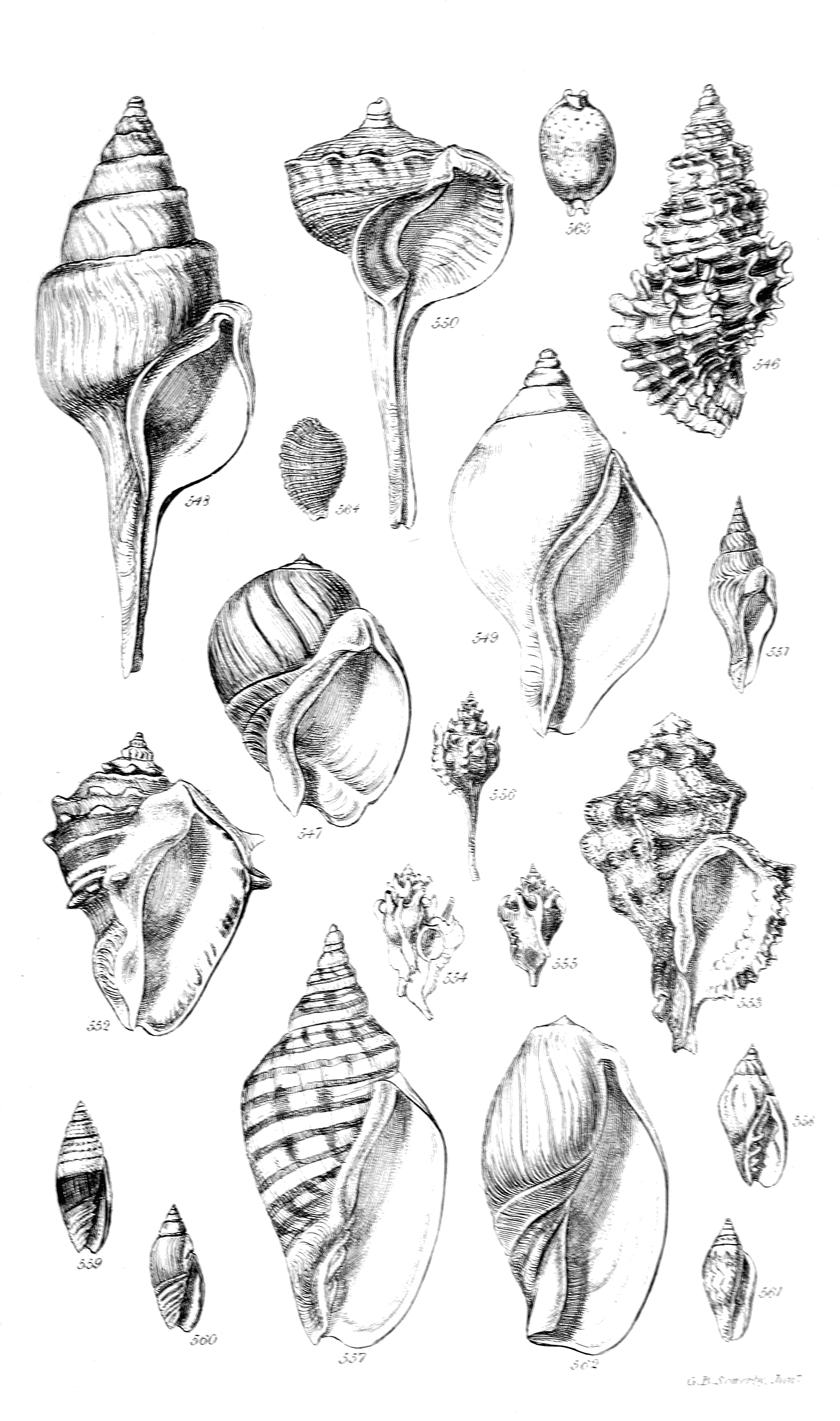
548. Fusus longevus. Clavalithes, Sw.
549. —— bulbiformis. Leiostoma, Sw.
550. Pyrella, Sw. Turbinella Spirillus, Auct.
551. Pleurotoma lineata. Tomella, Sw.
552. Pyrula melongena. Gen. Myristica, Sw.
553. Murex vitulinus. Gen. Vitulina, Sw.
554. Typhis Sowerbii.
555. A brown variety of the same.
556. Typhis Cumingii.
Fam. Columellata.
557. Voluta Vexillum. Harpula, Sw.
558. Mitra monodonta. Mitreola, Sw.
559. —— bicolor. Mitrella, Sw.
560. Columbella nitidella. Gen. Nitidella, Sw.
Fam. Convolutæ.
561. Oliva volutella. Gen. Lamprodoma, Sw.
562. —— maura.
563. Cypræa Globulus. Gen. Globularia, Sw.
564. —— pulchella, fossil. Gen. Cyprædia, Sw.
THE END.
TABLE OF LAMARCK'S CONCHOLOGICAL SYSTEM.
Classes of Invertebrated Animals. Orders. Families. Genera.
ANNELIDES. Sedentary Dorsalia Siliquaria.

Maldania Dentalium.
Serpulacea Serpula, Spirorbis, Galeolaria, Vermilia, Magilus.
CIRRIPEDES Multivalve. Sessile Tubicinella, Coronula, Balanus, Acasta.

Pyrgoma, Creusia.
Pedunculated Anatifer, Pollicipes, Cineras, Otion.
CONCHIFERA Bivalve. Dimyaria Tubicolaria Aspergillum, Clavagella, Fistulana, Septaria.


Teredo, Teredina.
Pholadaria Pholas, Gastrochæna.
Solenacea Solen, Panopæa, Glycimeris.
Myaria Mya, Anatina.
Mactracea Lutraria, Mactra, Crassatella, Erycina, Ungulina, Solemya, Amphidesma.
Corbulacea Corbula, Pandora.
Lithophagidæ Saxicava, Petricola, Venerirupis.
Nymphacea Sanguinolaria, Psammobia, Psammotæa, Tellina.
Tellinides, Corbis, Lucina, Donax, Capsa, Crassina.
Fluviatile Conchacea Cyclas, Cyrena, Galathæa.
Marine Conchacea Cyprina, Cytheræa, Venus, Venericardia.
Cardiacea Cardium, Cardita, Cypricardia, Hiatella, Isocardia.
Arcacea Cucullæa, Arca, Pectunculus, Nucula.
Trigonacea Trigonia, Castalia.
Nayades Unio, Hyria, Anodon, Iridina.
Chamacea Diceras, Chama, Etheria.
Monomyaria Tridacnacea Tridacna, Hippopus.

Mytilacea Modiola, Mytilus, Pinna.
Malleacea Crenatula, Perna, Malleus, Avicula, Meleagrina.
Pectenides Pedum, Lima, Plagiostoma, Pecten, Plicatula, Spondylus, Podopsis.
Ostracea Gryphæa, Ostræa, Vulsella, Placuna, Anomia.
Rudistes Sphærulites, Radiolites, Calceola, Birostrites, Discina, Crania.
Brachiopoda Orbicula, Terebratula, Lingula.
MOLLUSCA Univalve. Pteropoda Hyalæa, Cleodora, Limacina, Cymbulia.

Gasteropoda Phyllidiana Chiton, Chitonellus, Patella.
Semiphyllidiana Pleurobranchus, Umbrella.
Calyptracea Parmophorus, Emarginula, Siphonaria, Fissurella.
Pileopsis, Calyptræa, Crepidula, Ancylus.
Bulleana Bulla, Bullæa.
Aplysiacea Aplysia, Dolabella.
Limacinea Parmacella, Limax, Testacella, Vitrina.
Trachellipoda Colimacea Helix, Carocolla, Anastoma, Helicina, Pupa, Clausilia.
Bulinus, Achatina, Succinea, Auricula, Cyclostoma.
Lymneana Planorbis, Physa, Lymnæa.
Melaniana Melania, Melanopsis, Pirena.
Peristomata Valvata, Paludina, Ampullaria.
Neritacea Navicella, Neritina, Nerita, Natica, Janthina.
Macrostomata Stomatia, Stomatella, Haliotis.
Plicacea Tornatella, Pyramidella.
Scalariana Vermetus, Scalaria, Delphinula.
Turbinacea Solarium, Rotella, Trochus, Monodonta, Turbo, Planaxis, Phasianella, Turitella.
Canalifera Cerithium, Pleurotoma, Turbinella, Cancellaria, Fasciolaria.
Fusus, Pyrula, Ranella, Murex, Triton.
Alata Rostellaria, Strombus, Pteroceras.
Purpurifera Cassidaria, Cassis, Ricinula, Purpura, Monoceros, Concholepas.
Harpa, Dolium, Buccinum, Eburna, Terebra.
Columellata Columbella, Mitra, Voluta, Marginella, Volvaria.
Convoluta Ovulum, Cypræa, Oliva, Ancillaria, Conus.
Polythalamous Cephalopoda Orthocerata Belemnites, Orthoceras, Nodosaria, Hippurites, Conilites.

Lituacea Spirula, Spirolina, Lituola.
Cristacea Renulina, Cristellaria, Orbiculina.
Spherulacea Miliola, Gyrogona, Melonia, (Microscopic.)
Radiolacea Rotalites, Lenticulina, Placentula, (Micros.)
Nautilacea Discorbites, Siderolites, Polystomella, Vorticialis.
Nummilites, Nautilus.
Ammonacea Ammonites, Ammonoceras, Turrilites, Baculites.
Monothalamous Cephalopoda Argonauta.
Heteropoda Carinaria.
TABLE OF THE CONCHOLOGICAL SYSTEM OF DE BLAINVILLE.
Classes. Orders. Families. Genera.
TYPE MALACOZOARIA Univalves CEPHALOPHORA Cellulacea Planulacea Renulina, Peneroplis.




Sphærulacea Miliola, Pollontes, Melonia, Saracenaria, Textularia.
Nummulacea Nummulites, Orbiculina, Helicites, Placentula, Vorticialis, Siderolites.
Polyphalamacea Orthocerata Belemnites, Conularia, Conilites, Orthoceras, Baculites.

Lituacea Icthysarcolites, Lituola, Spirula, Spirolina, Hamites, Ammonoceras.
Cristacea Crepidulina, Oreas, Linthuris.
Ammonacea Discorbis, Scaphites, Ammonites, Simplegas.
Nautilacea Polystomelle, Nautilus, Lenticulina.
Turbinacea Cibicides, Rotalia.
Turriculacea Turrilites.
PARACEPHOLOPHORA DIOICA Siphonobranchiata Siphonostomata Pleurotoma, Rostellaria, Fusus, Pyrula, Fasciolaria.


Turbinella, Columbella, Triton, Struthiolaria, Ranella, Murex.
Entomostomata Cerithium, Pyrena, Melanopsis, Planaxis, Subula, Terebra.
Eburna, Buccinum, Harpa, Dolium, Cassis, Cassidaria, Ricinula.
Cancellaria, Purpura, Concholepas, Terebra, Mitra.
Angyostomata Strombus, Conus, Terebellum, Oliva, Ancillaria.
Voluta, Mitra, Marginella, Volvaria, Cypræa, Ovulum.
Asiphonibranchiata Goniostomata Solarium, Trochus.
Cricostomata Monodonta, Turbo, Pleurotomaria, Littorina, Delphinula, Cyclostoma.
Paludina, Valvata, Scalaria, Proto, Turitella, Vermetus.
Siliquaria, Magilus.
Hemicyclostomata Nerita, Neritina, Clithon, Velates, Pileolus, Navicella, Natica.
Ellipsostomata Helicina, Ampullaria, Melania, Rissoa, Phasianella, Pleurocerus.
Oxystomata Janthina.
PARACEPHOLOPHORA MONOICA Pulmobranchiata Limnacea Limnæa, Physa, Planorbis.


Auriculacea Auricula, Pedipes, Tornatella, Tomogerus, Pyramidella.
Limacinea Succinea, Bulinus, Achatina, Clausilia.
Pupa, Partula, Helix, Vitrina, Testacella, Parmacella, Limacella, Limax.
Chismobranchiata Sigaretus, Cryptostomata, Stomatella, Velutina.
Monopleurobranchiata Sub-aplysiaca Pleurobranchus.
Aplysiaca Aplysia, Dolabella.
Patelloidea Umbrella, Siphonaria.
Akera Bulla, Bellerophon, Sormetus.
Aporobranchiata Thecosomata Hyalæa, Cleodora, Cymbulia.
Nucleobranchiata Nectopoda Carinaria.
Pteropoda Atlanta, Spiratella, Argonauta.
PARACEPHOLOPHORA HERMAPHRODITA Cirrobranchiata Dentalium.

Cervicobranchiata Retifera Patella.
Branchifera Fissurella, Emarginula, Parmophorus.
Scutibranchiata Otides Haliotis, Ancylus.
Calyptracea Crepidula, Calyptræa, Capulus, Hipponyx, Notrema.
Bivalves ACEPHALOPHORA Palliobranchiata Lingula, Terebratula, Strophomena, Dianchora.

Thecidium, Plagiostoma, Podopsis, Orbicula, Crania.
Rudistes Sphærulites, Hippurites, Radiolites, Birostrites, Calceola.
Lamellibranchiata Ostracea Anomia, Placuna, Ostræa, Gryphæ.

Sub-ostracea Spondylus, Plicatula, Hinnites, Pecten, Pedum, Lima.
Margaritacea Vulsella, Malleus, Avicula, Perna, Crenatula.
Inoceramus, Catillus, Pulvinites, Gervillia.
Mytilacea Pinna, Mytilus.
Arcacea Arca, Pectunculus, Nucula.
Sub-mytilacea Anodon, Unio, Cardita.
Chamacea Chama, Diceras, Etheria, Tridacna, Hippopus, Isocardium, Trigonia.
Conchacea Cardium, Donax, Tellina, Lucina, Cyclas.
Cyprina, Mactra, Erycina, Crassatella.
Venerirupis, Venus, Coralliophaga.
Clotho, Corbula, Sphænia, Ungulina.
Pylorides Pandora, Anatina, Thracia, Mya, Lutricola.
Psammocola, Soletellina, Sanguinolaria, Solenocurtus.
Solen, Solemya, Panopæa, Glycimeris, Saxicava, Byssomya.
Rhomboides, Gastrochæna, Clavagella, Aspergillum.
Adesmacea Pholas, Teredina, Teredo, Fristulana, Septaria.
SUB-TYPE MALENTOZOARIA Multivalves NEMATOPODA Lepadicea Gymnolepas, Pentalepas, Polylepas, Litholepas.

Balanidea Balanus, Acasta, Octhosia, Conia, Creusia, Pyrgoma, Chthalamis.
Coronula, Chelnobia, Cetopirus, Diadema, Tubicinella.
POLYPLAXIPHORA Seriales Chiton, Chitonellus.
Fig. 1 to 33.
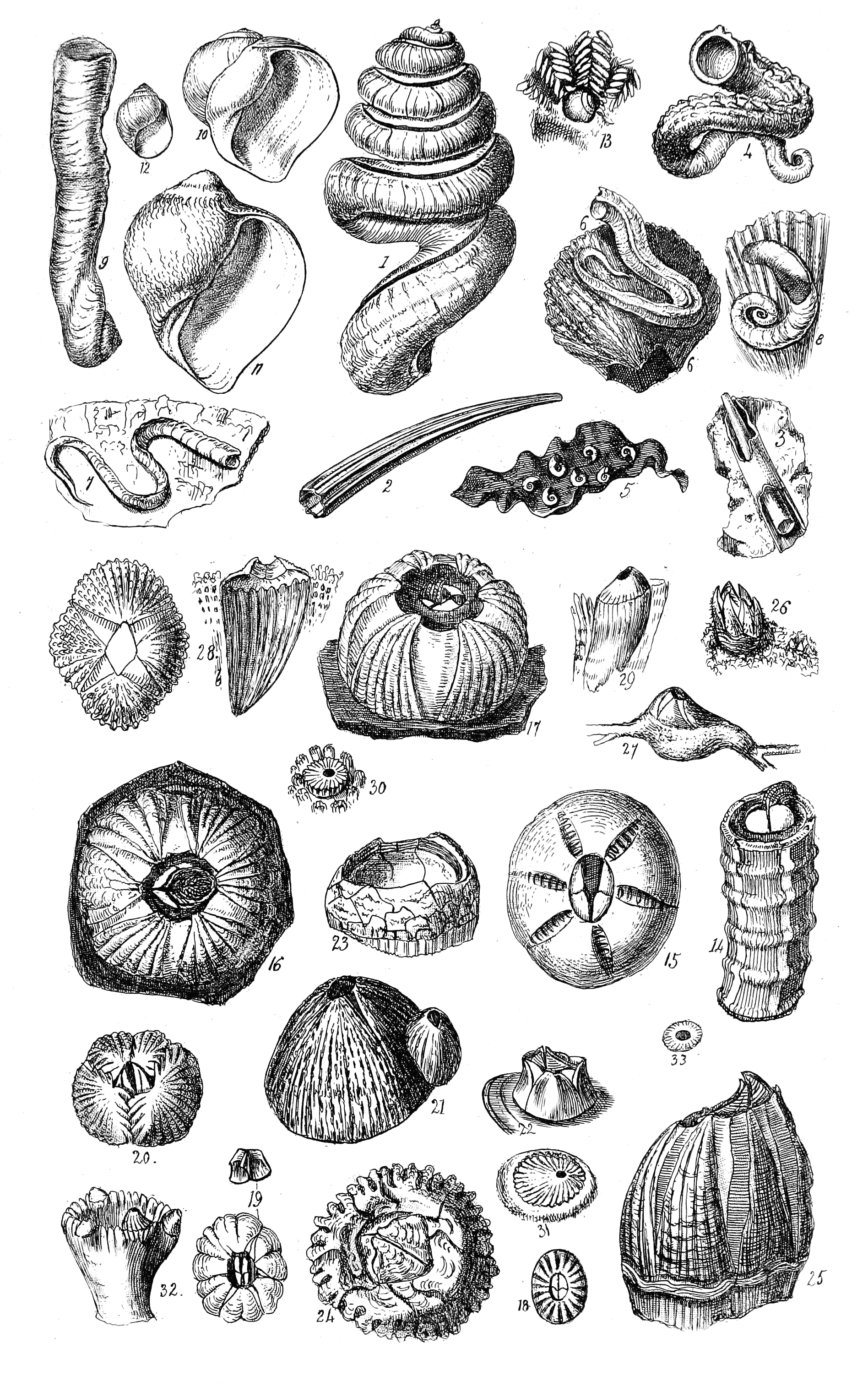
Fig. 34 to 59.
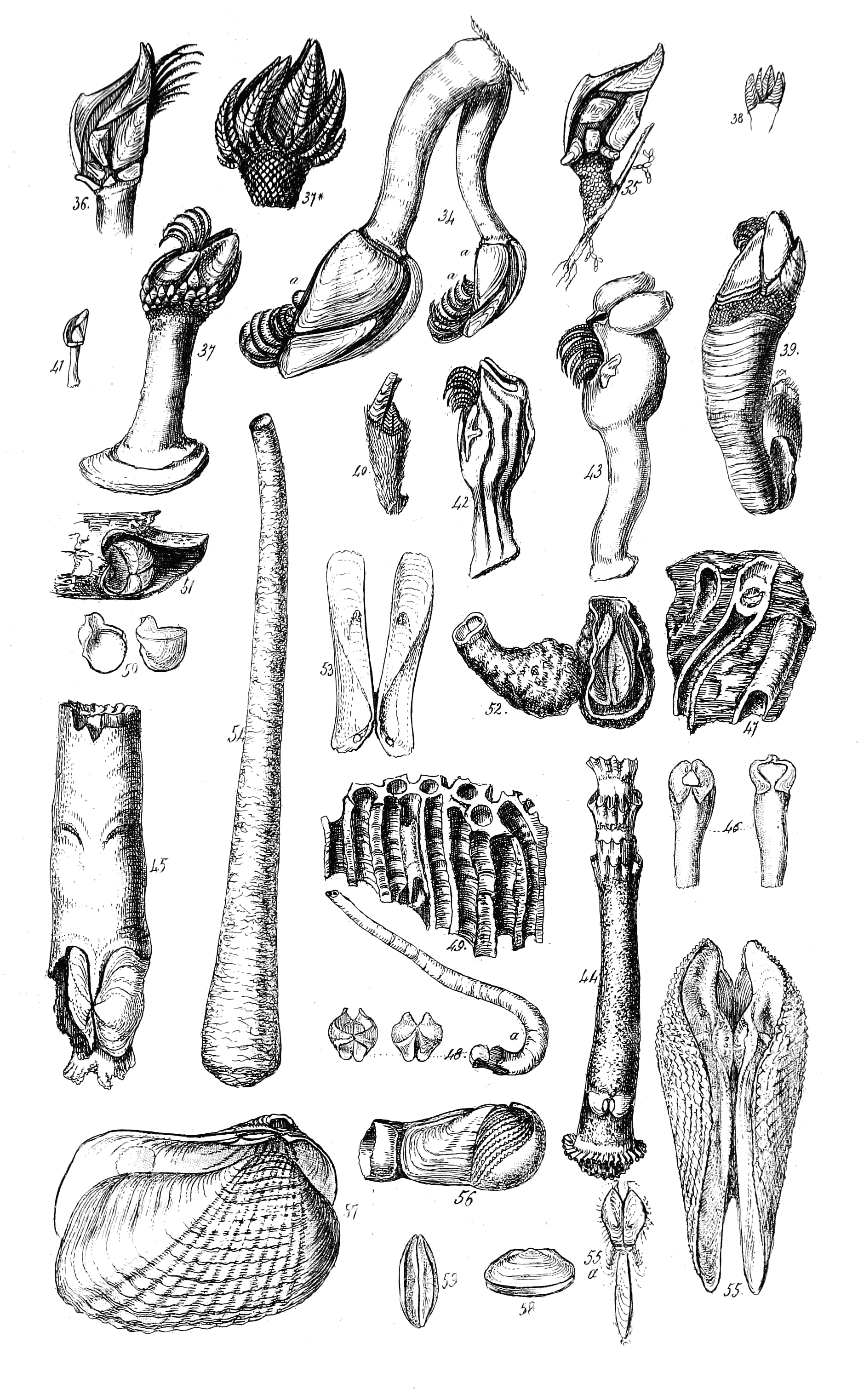
Fig. 60 to 78.
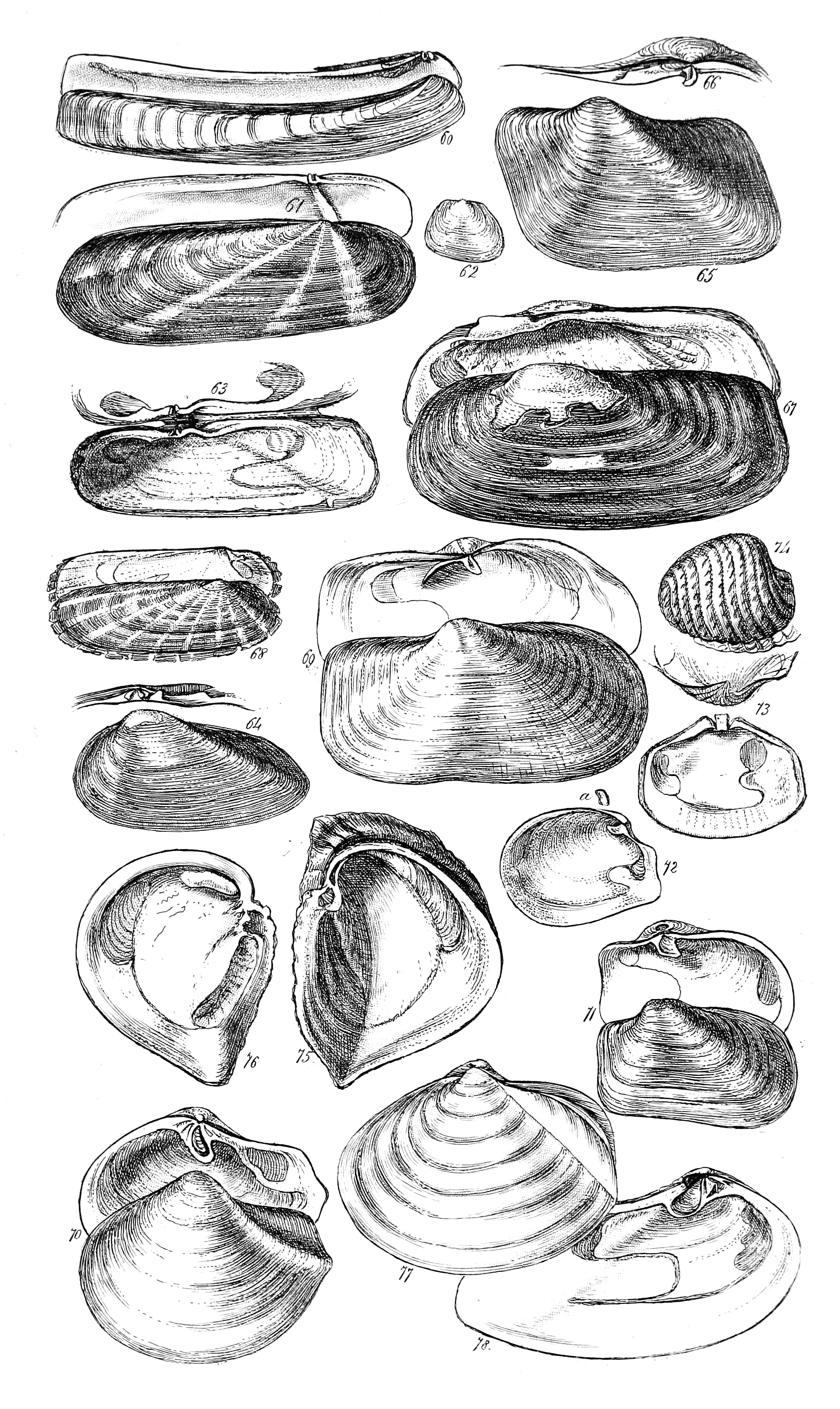
Fig. 79 to 100.
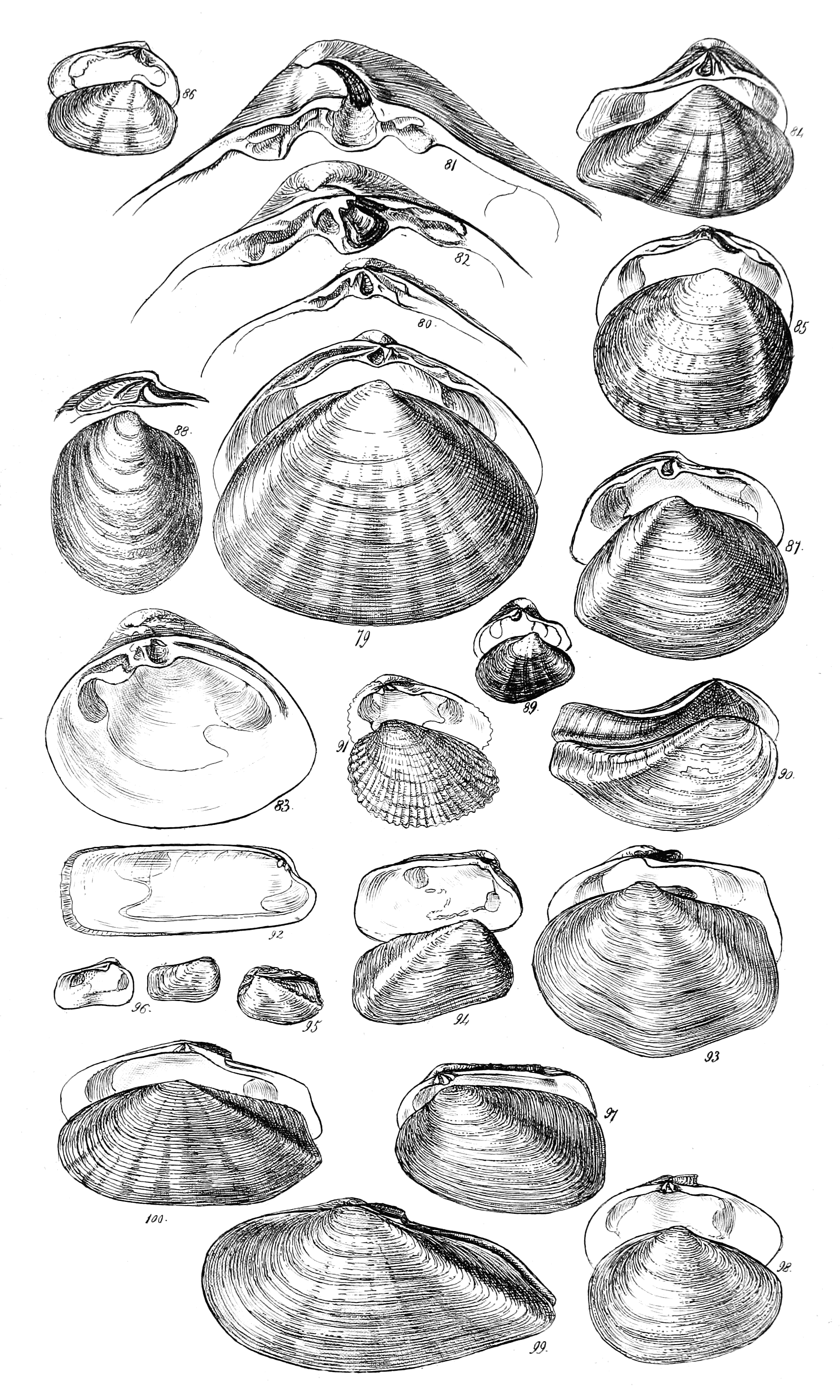
Fig. 101 to 116.
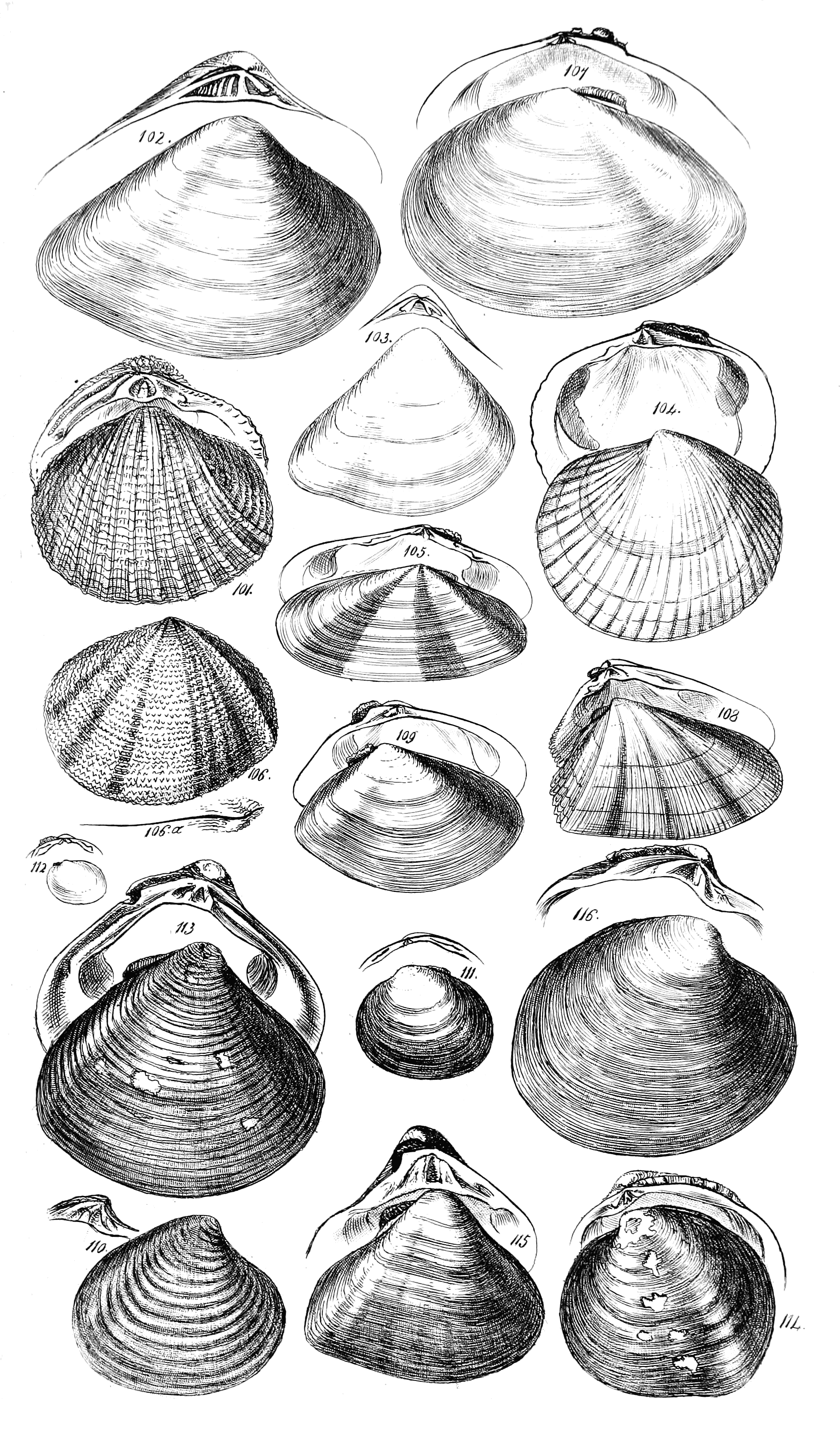
Fig. 117 to 126 and 128.
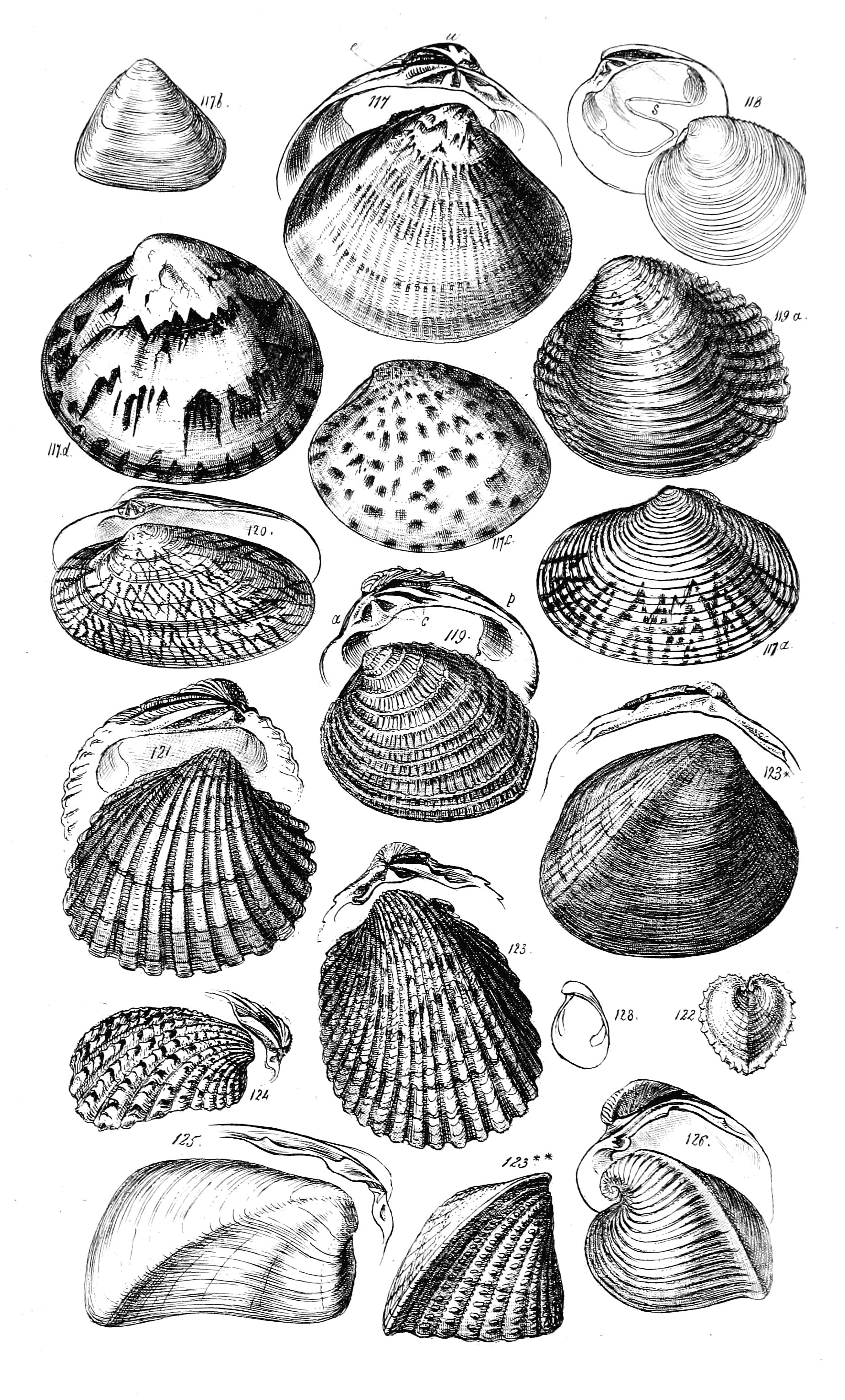
Fig. 127 and 129 to 141.
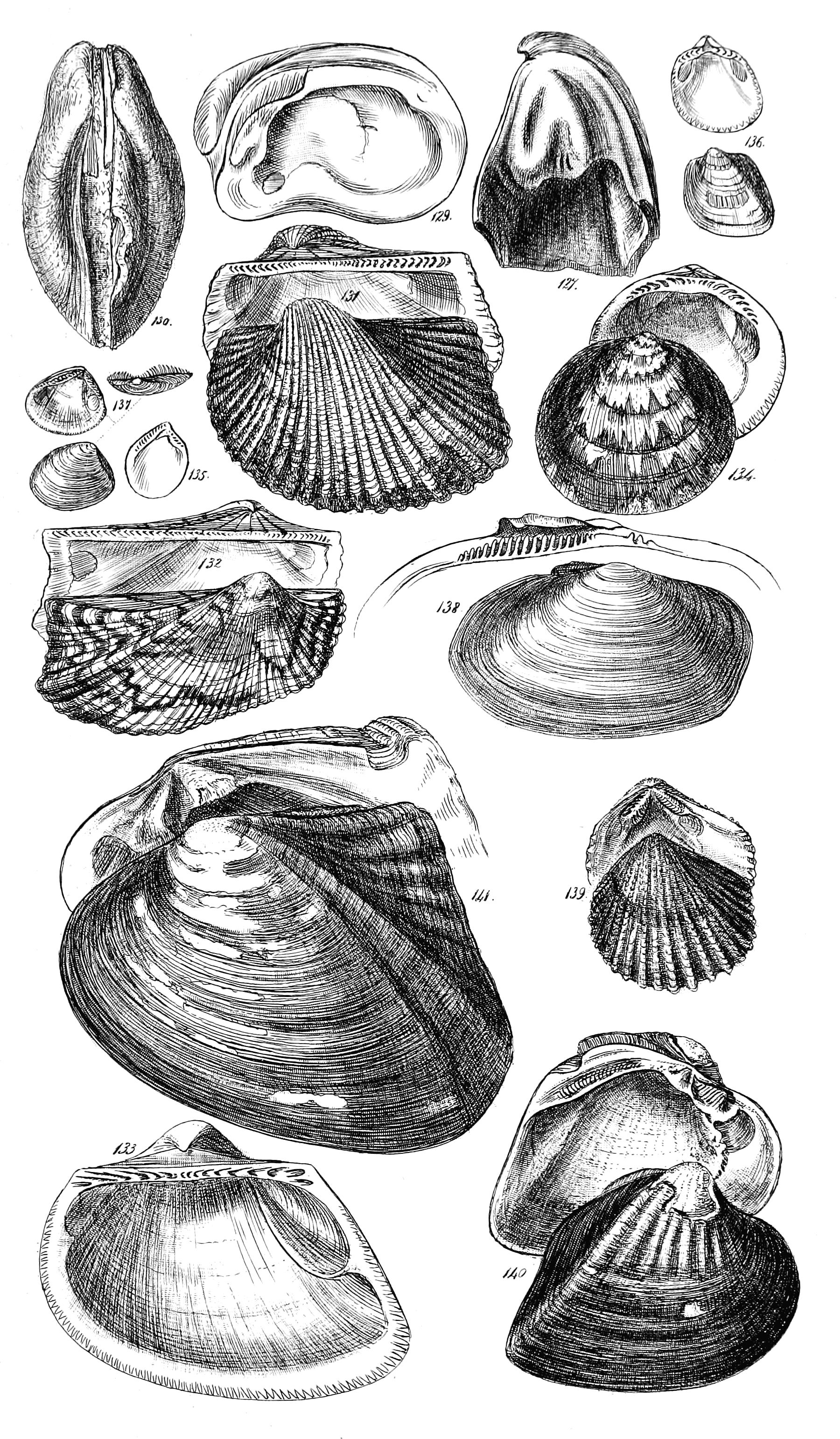
Fig. 142 to 152.
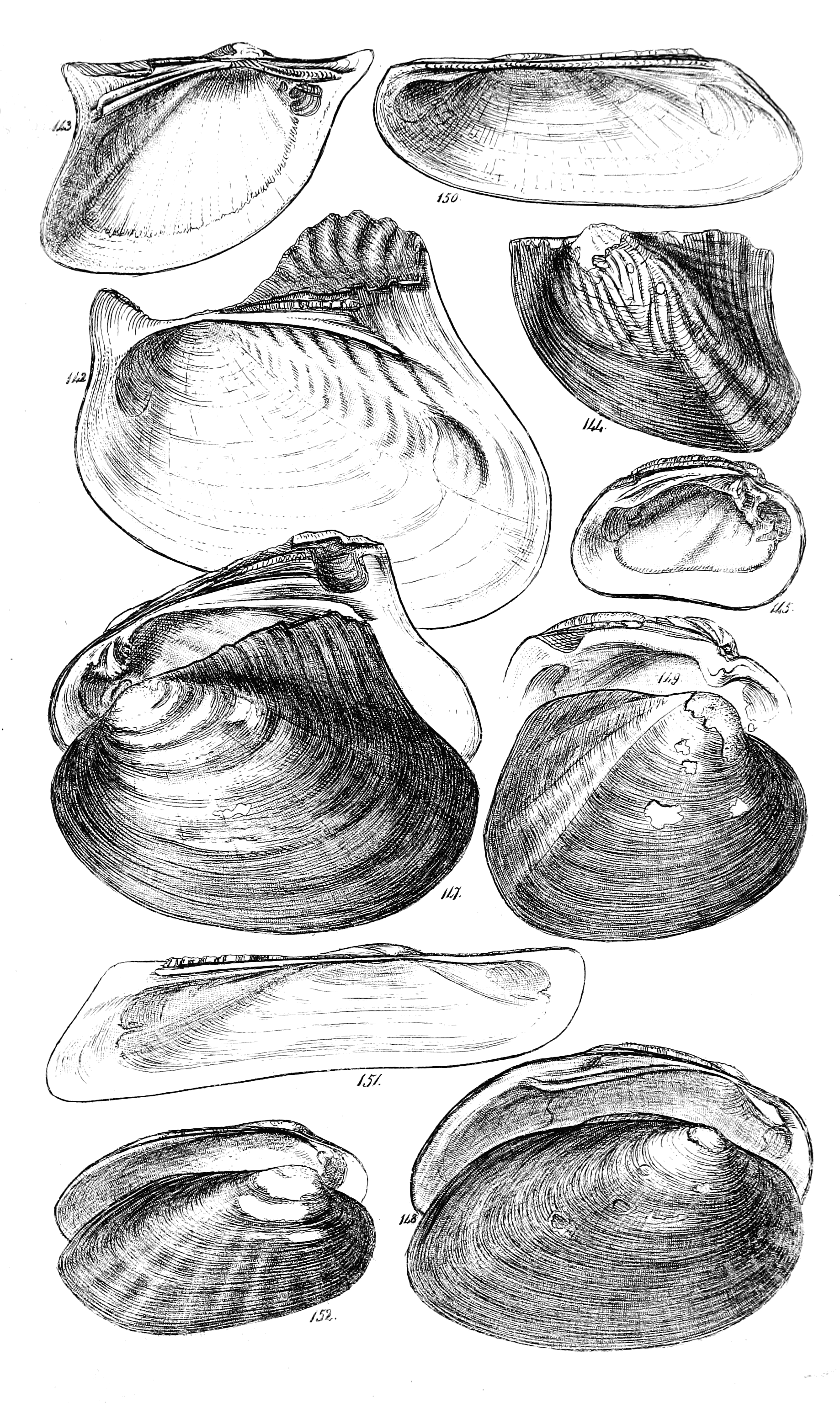
Fig. 153 to 166. 165 next plate.
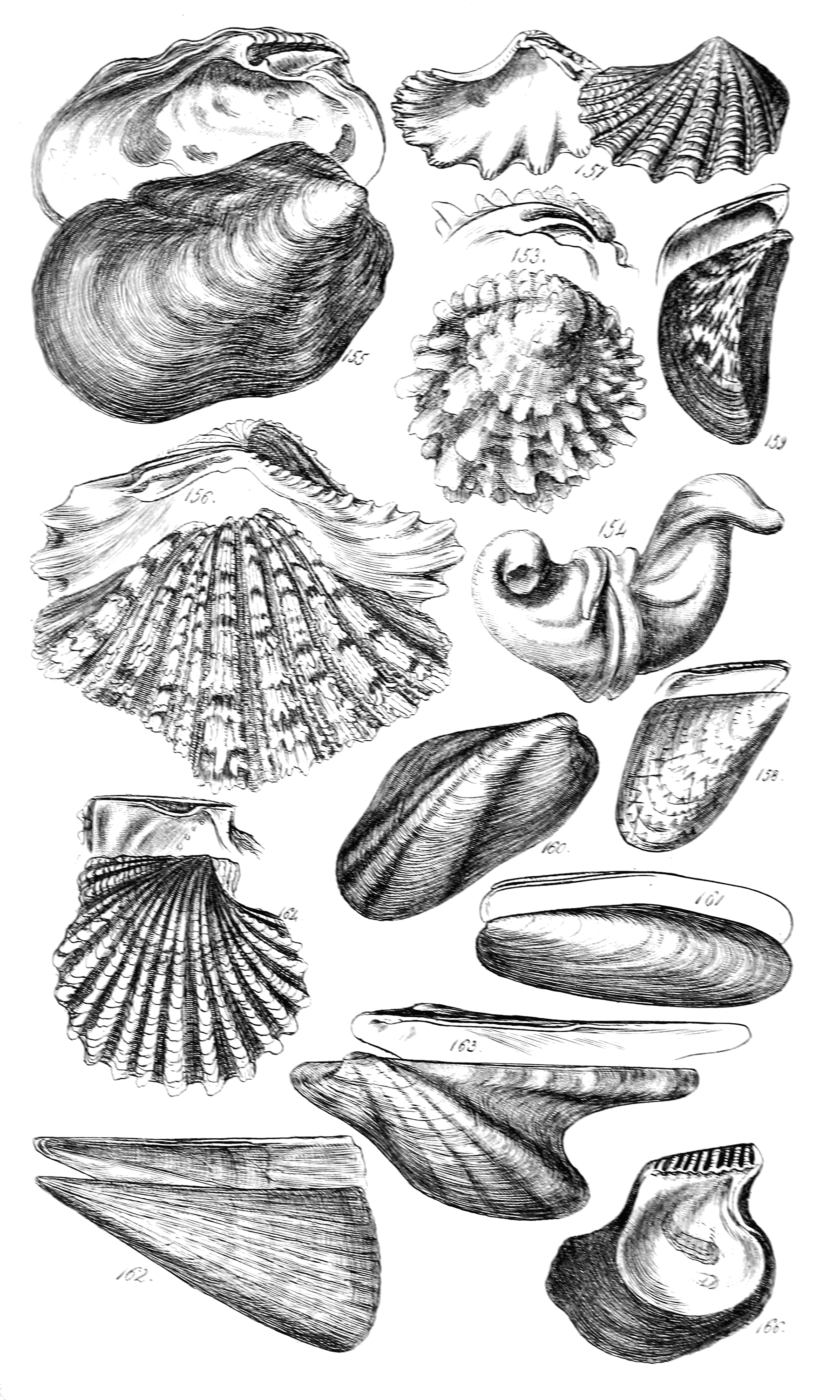
Fig. 165. 167 to 182.
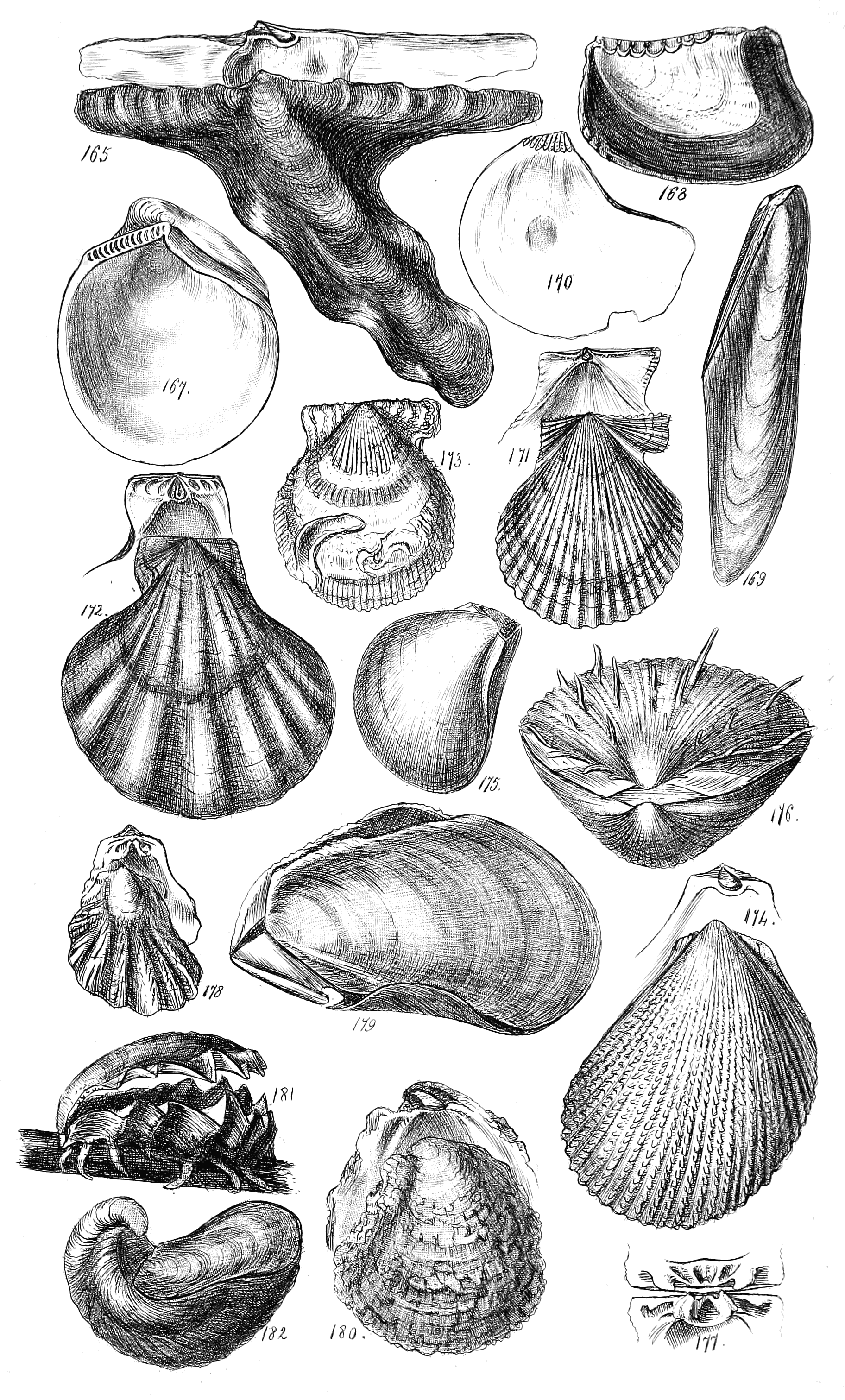
Fig. 183 to 213. 195. cancelled.
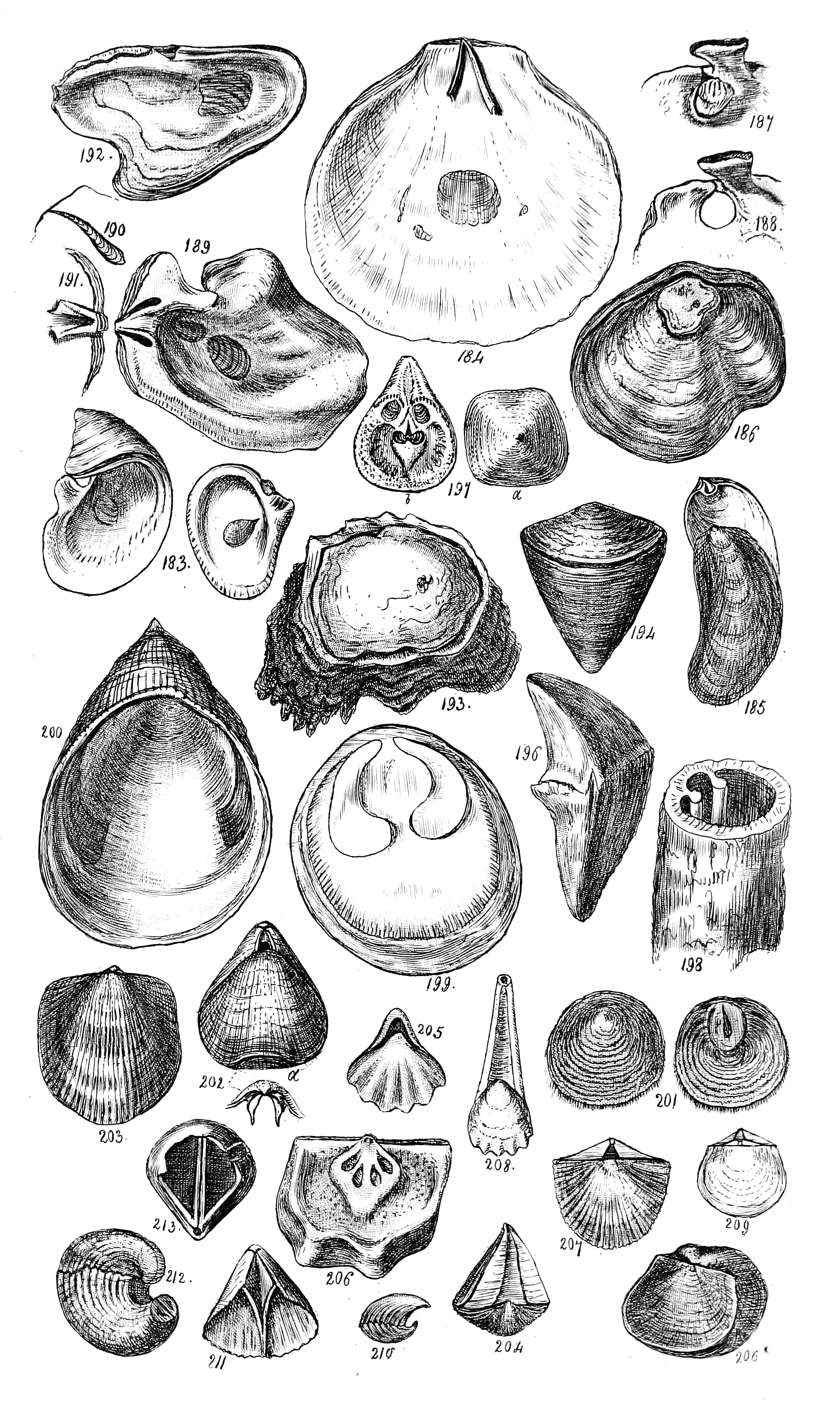
Fig. 214 to 242.
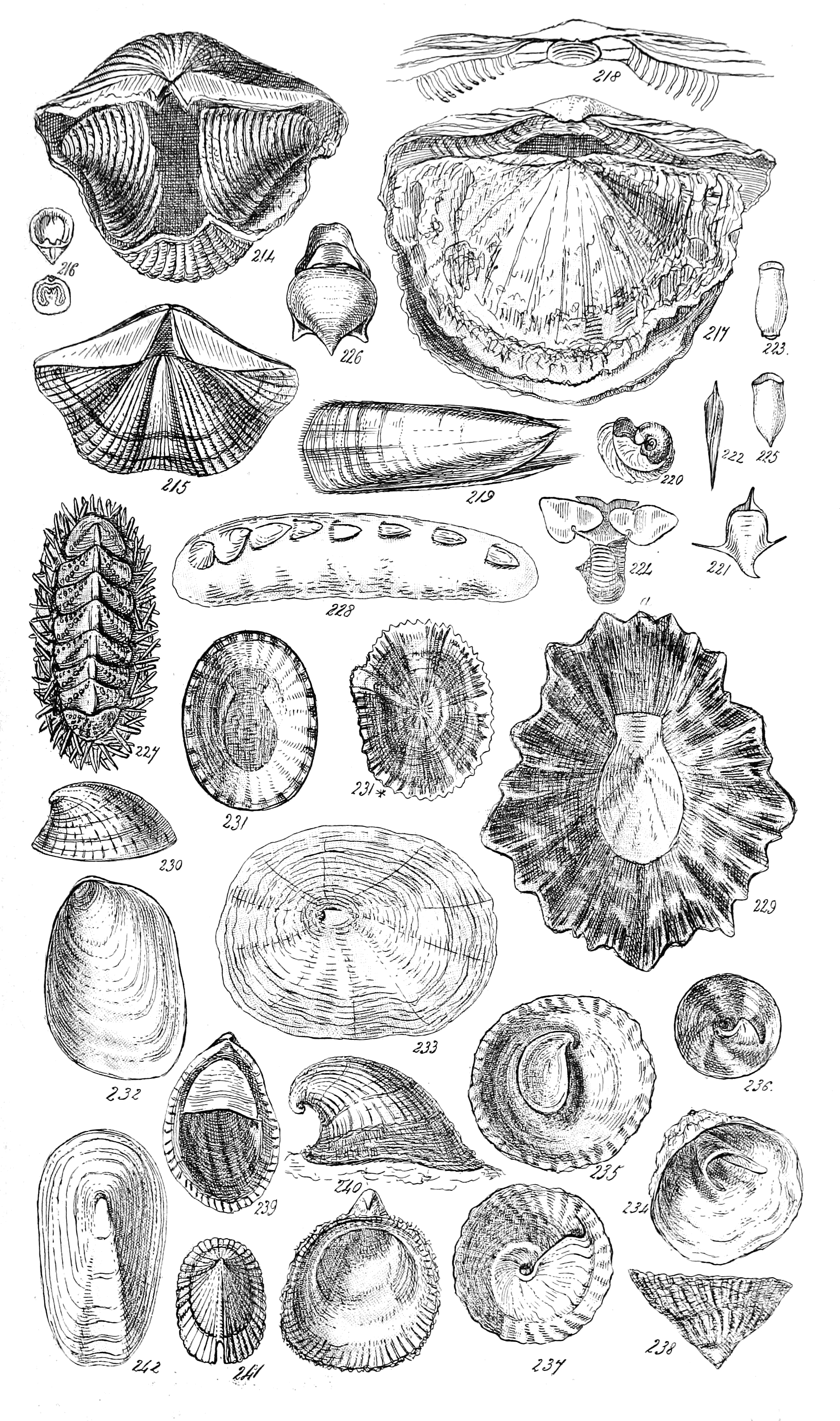
Fig. 243 to 278.
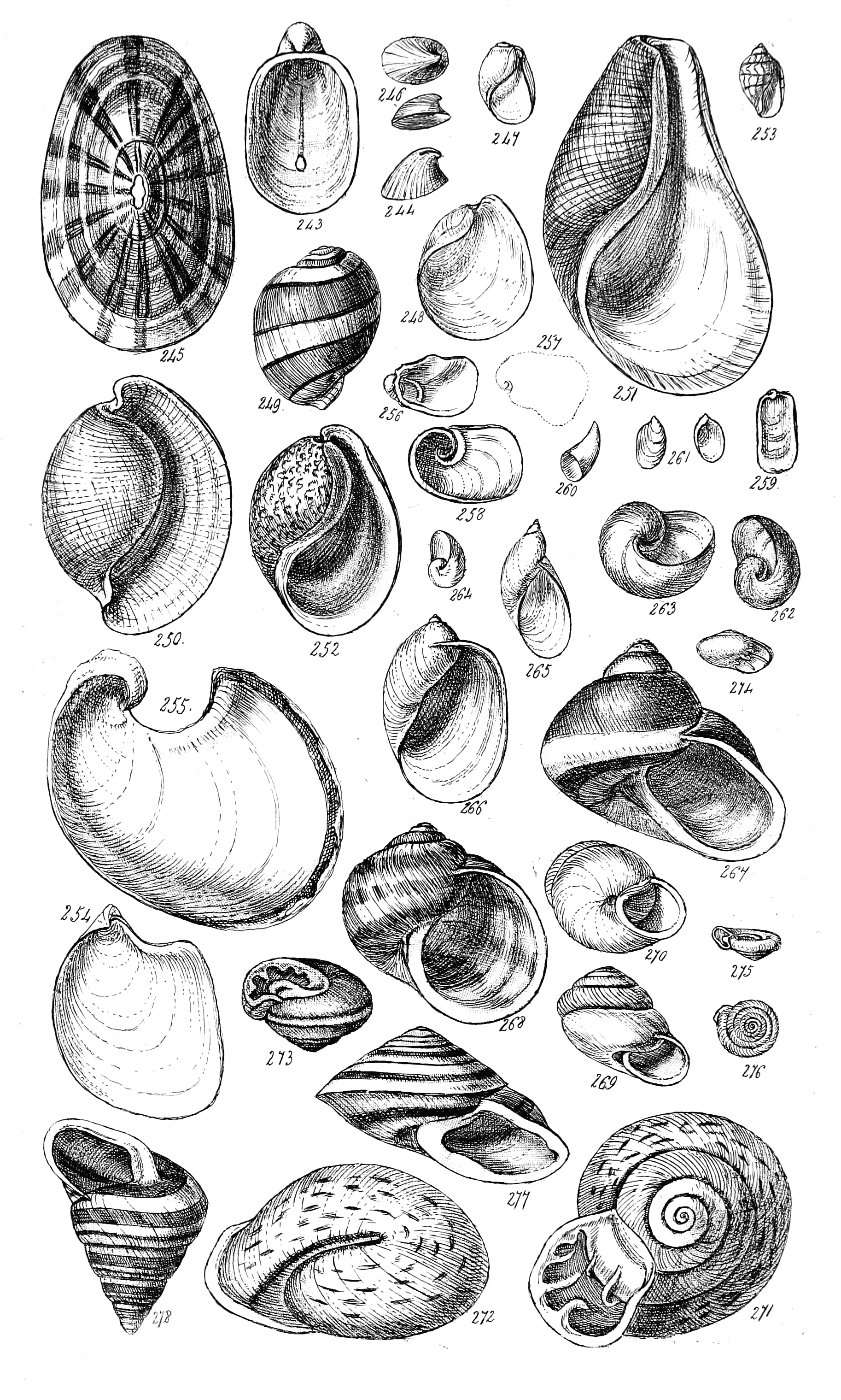
Fig. 279 to 317.
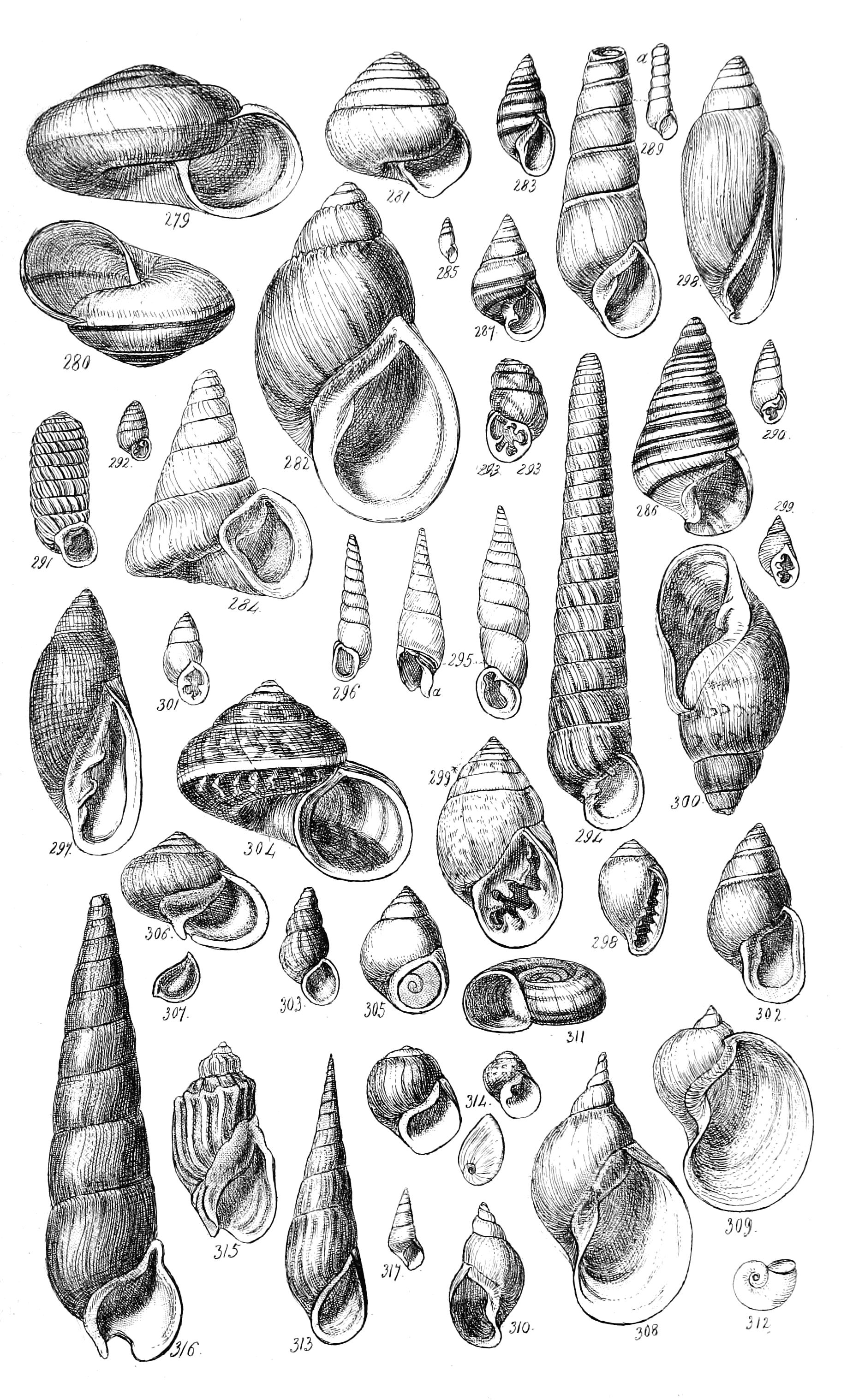
Fig. 318 to 348.
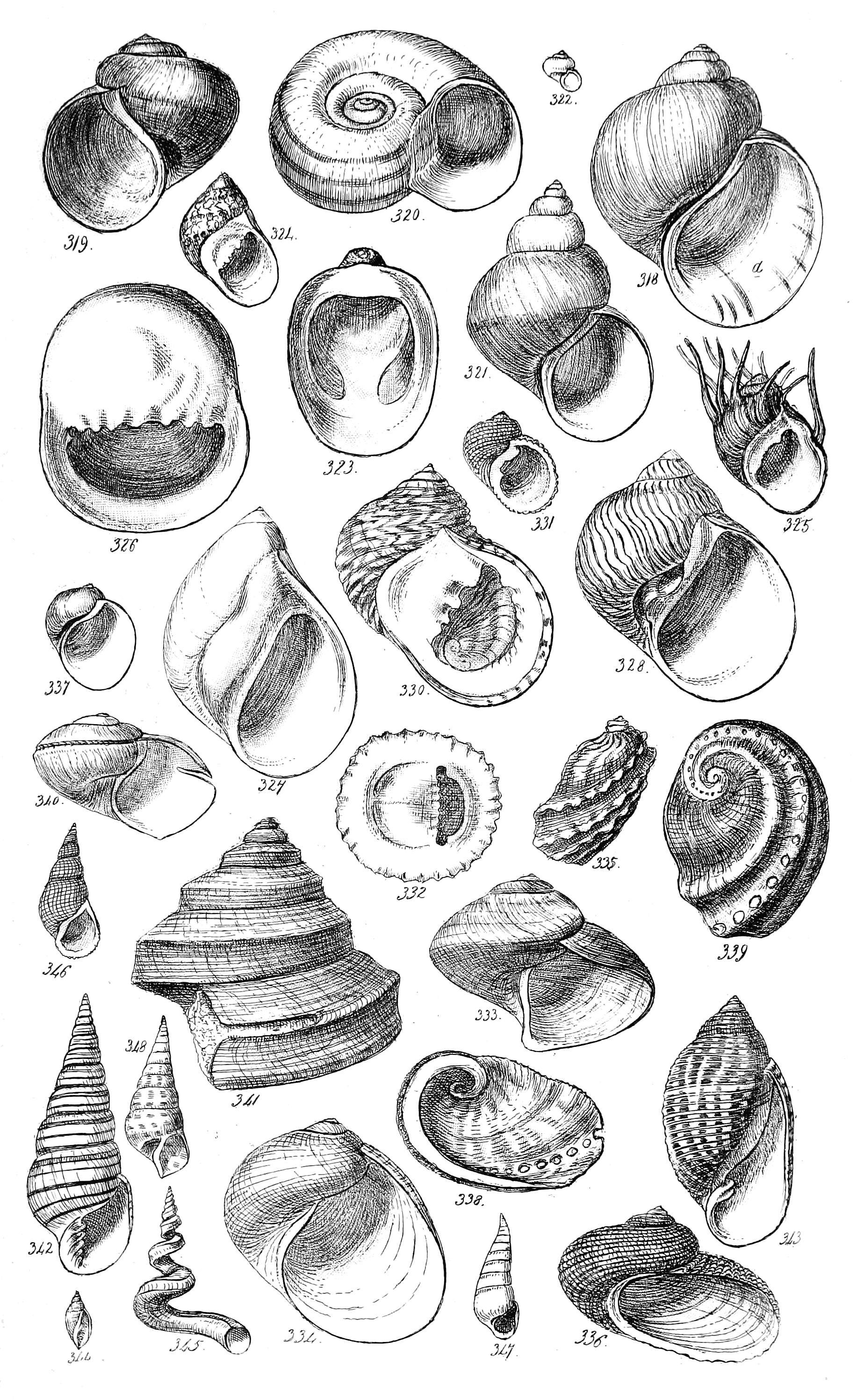
Fig. 349 to 381. 377. 378. in the next.
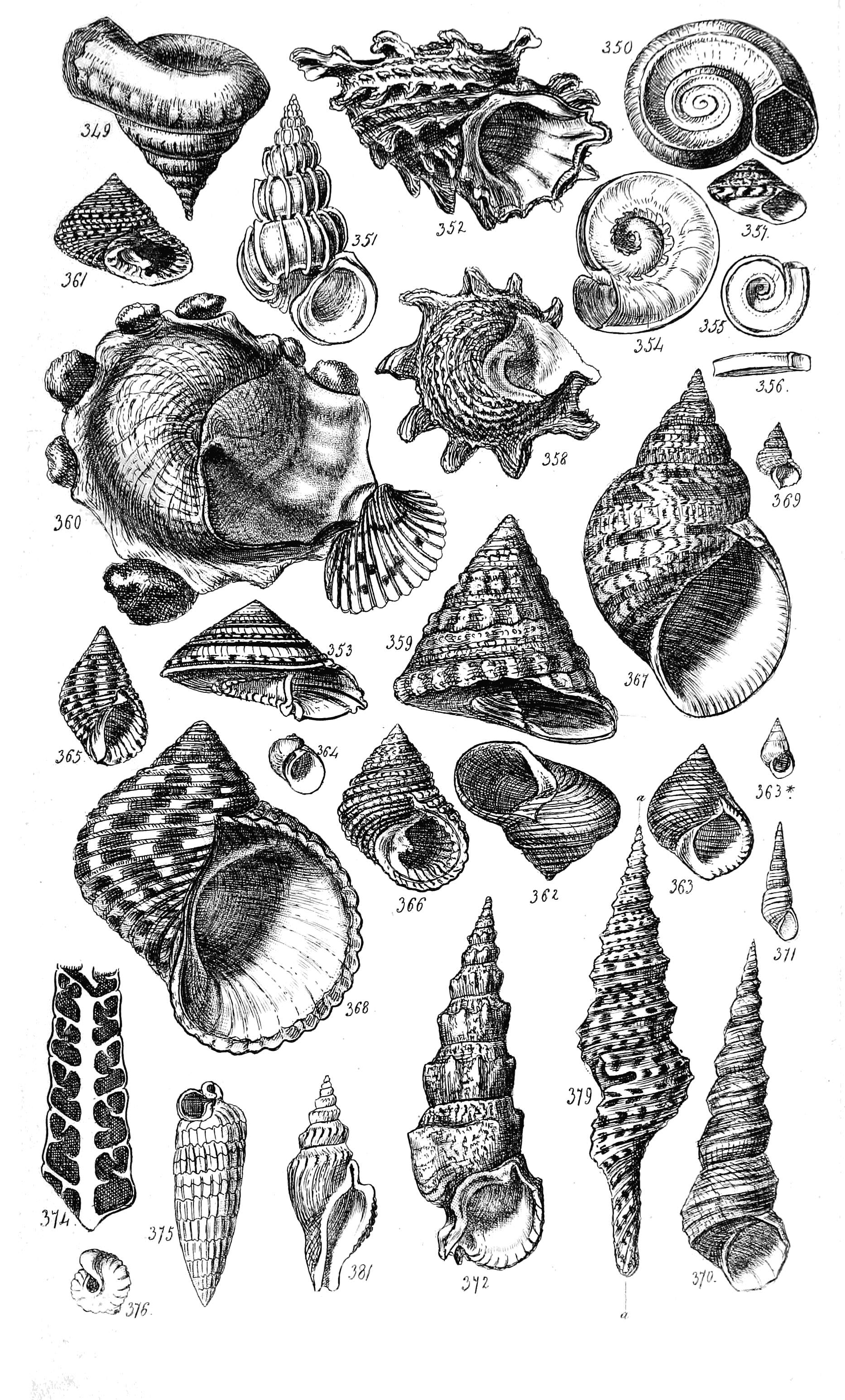
Fig. 377. 378. 382 to 397. 383 in the next.
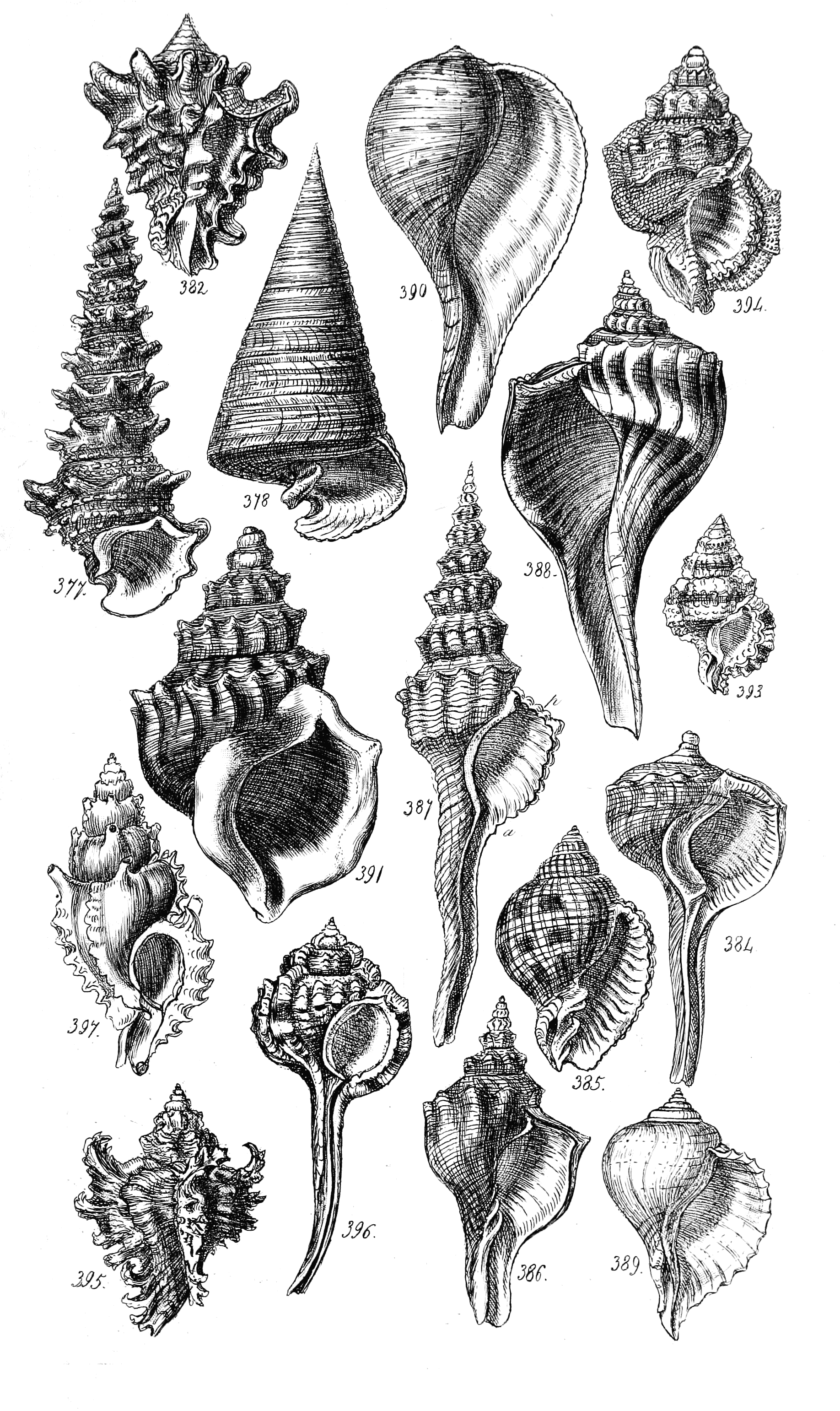
Fig. 383. 398 to 406. 409.
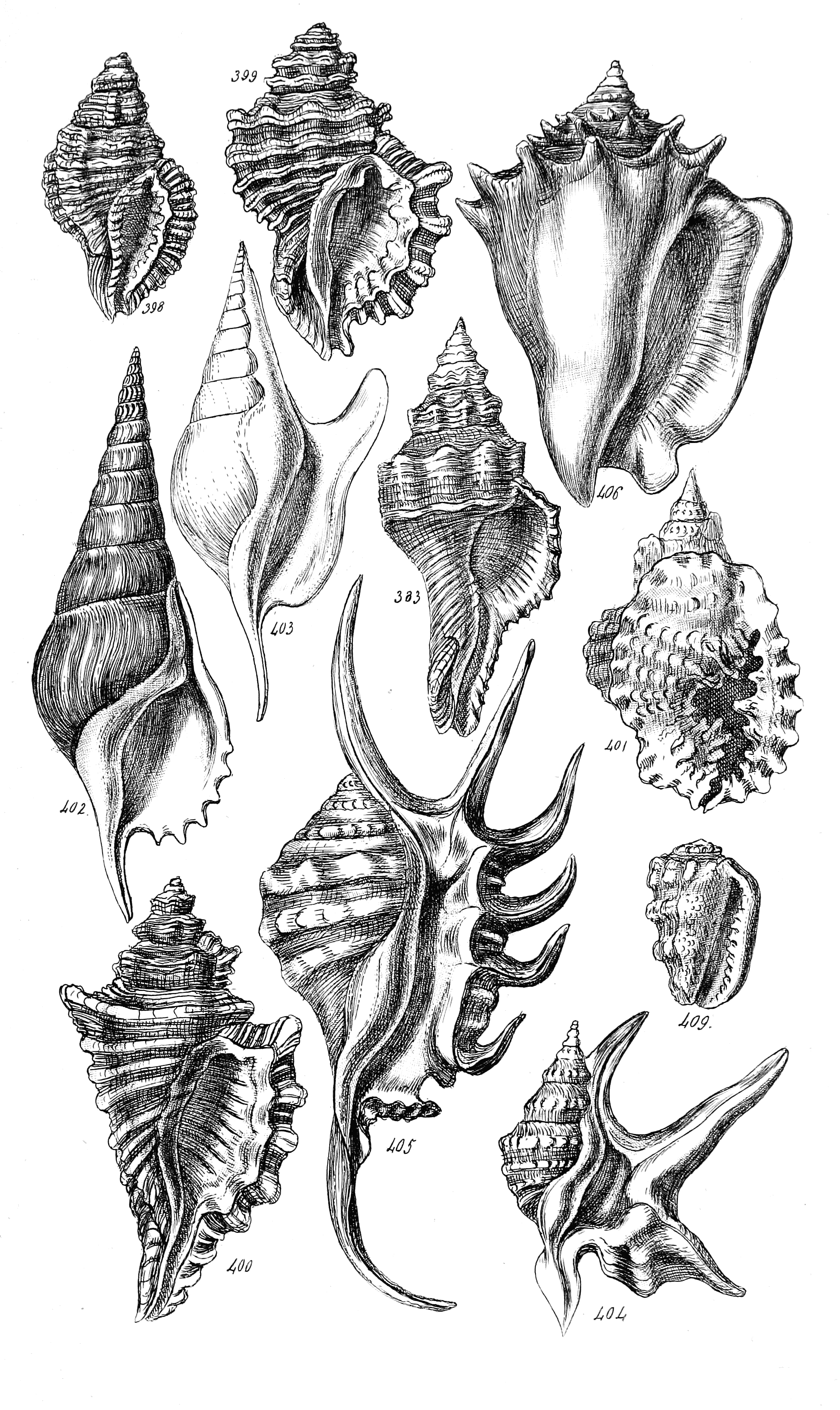
Fig. 407 to 425. 409 in the last.
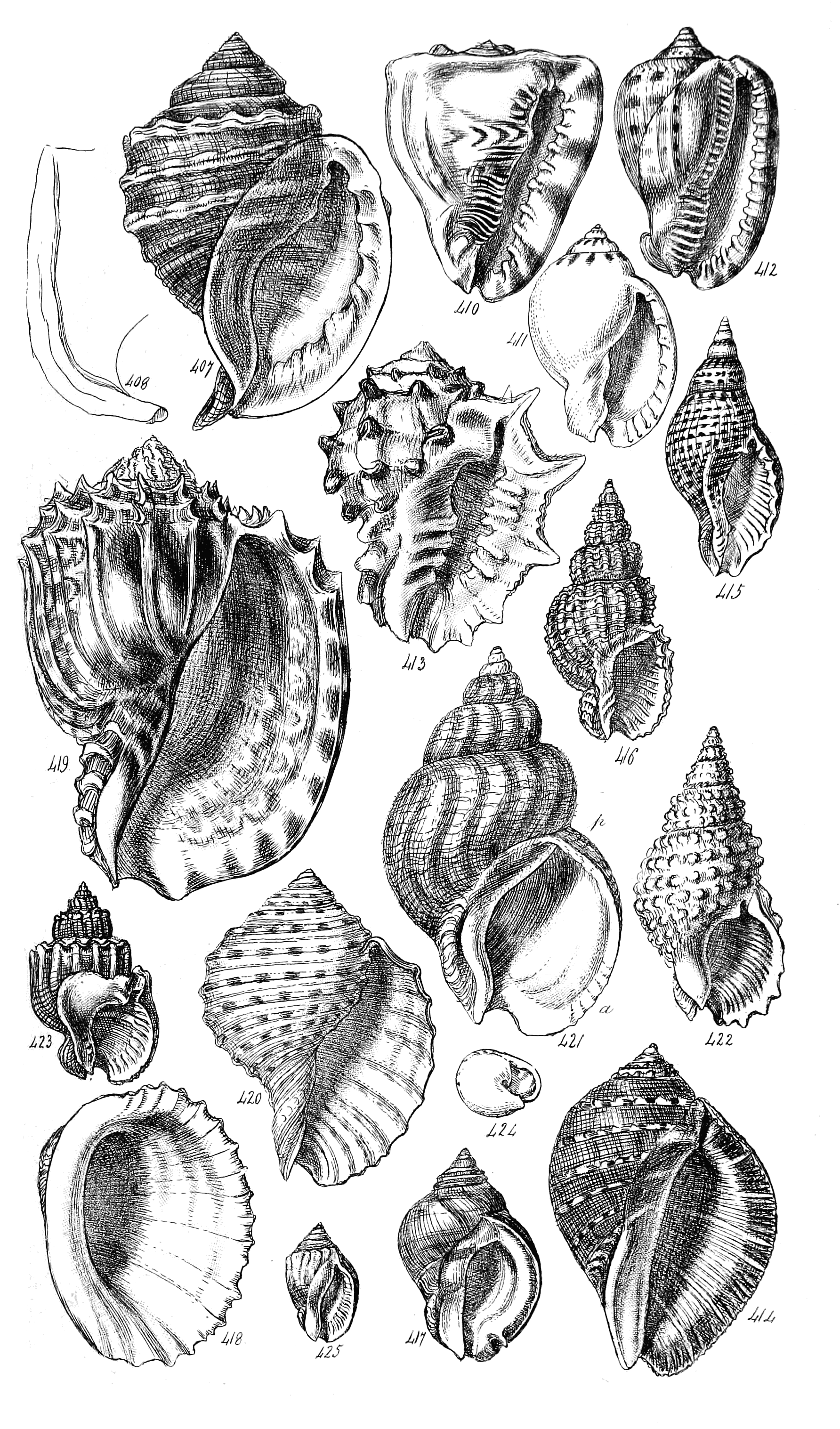
Fig. 426 to 443.
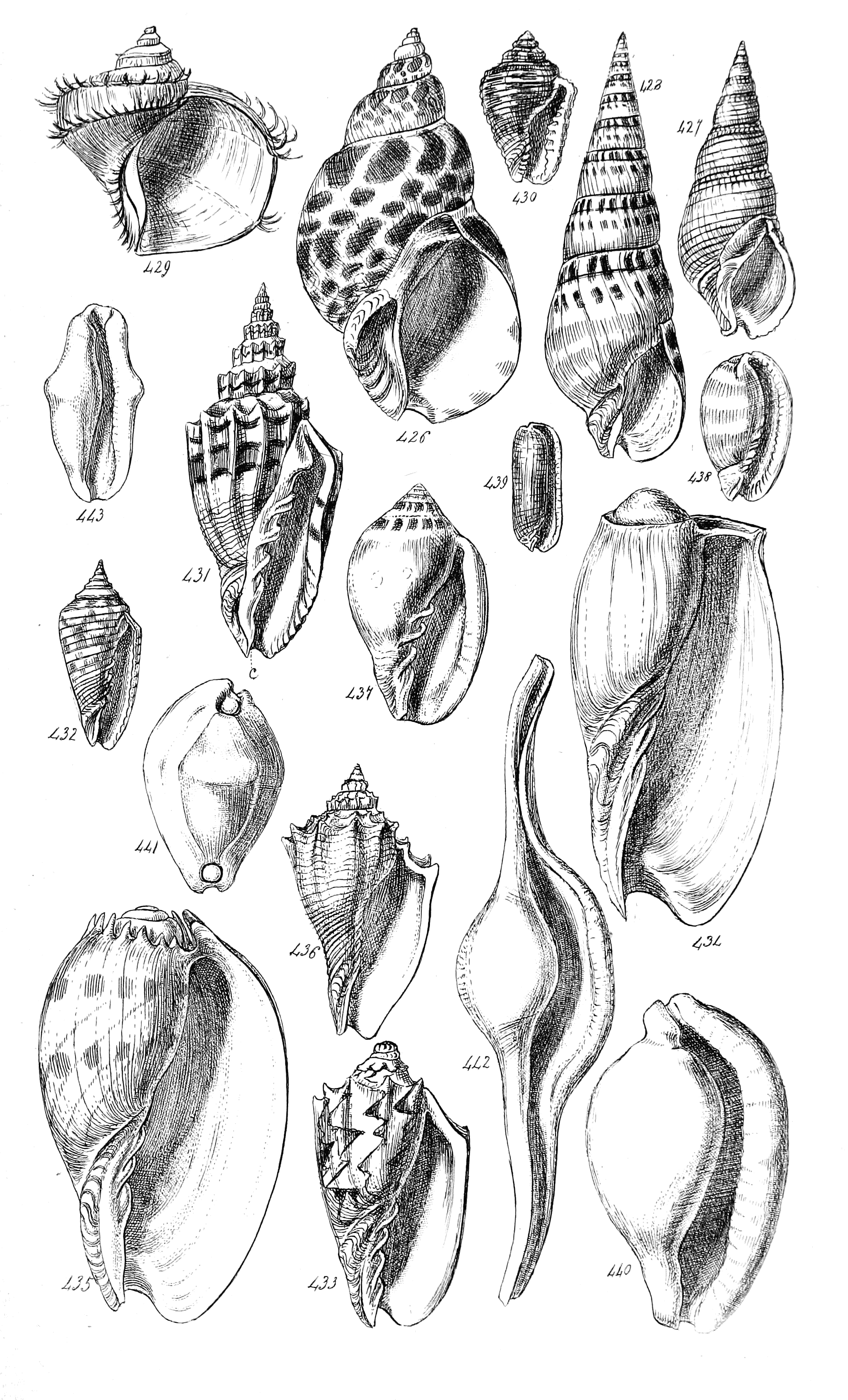
Fig. 444 to 462.
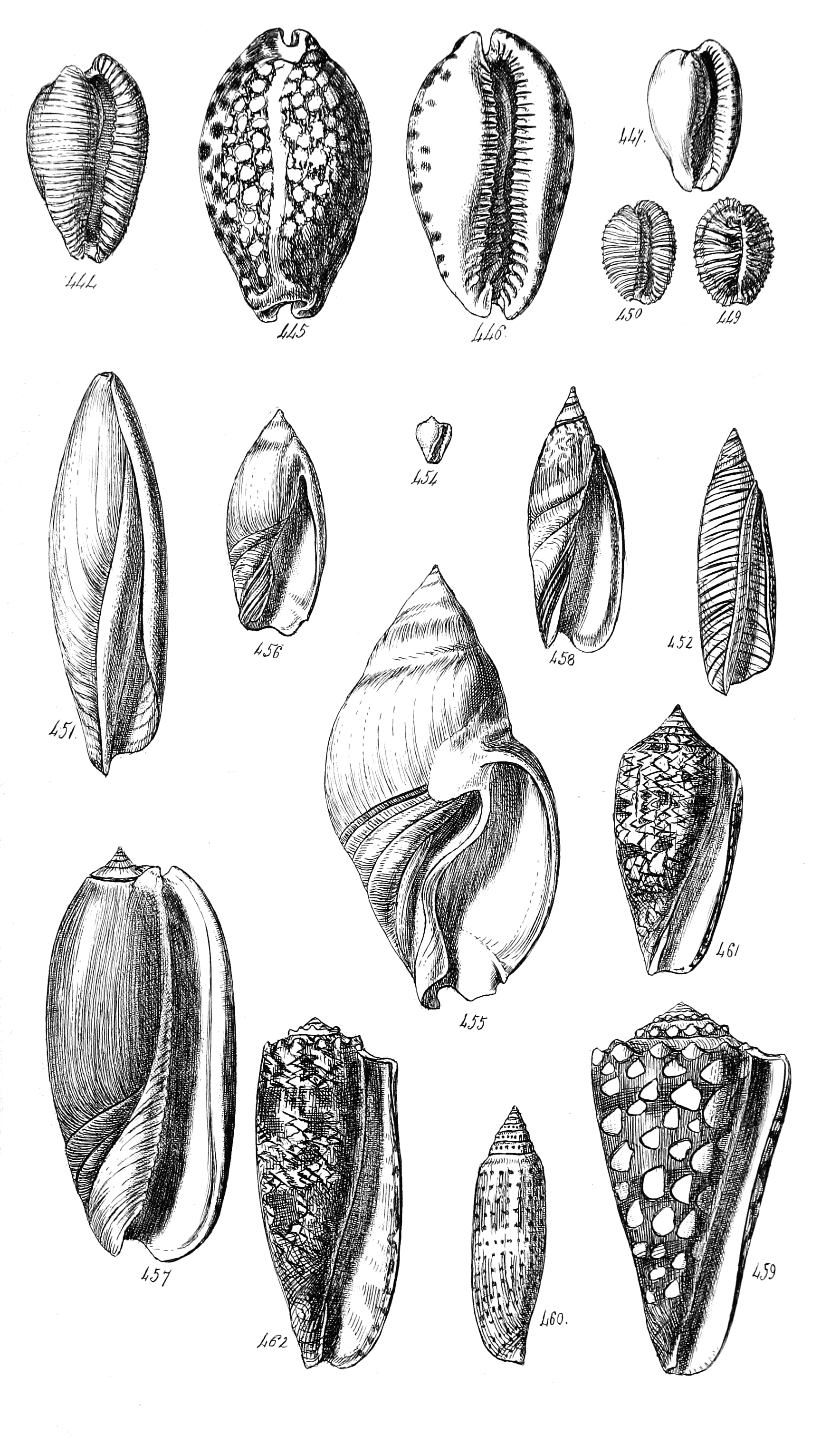
Fig. 463 to 479.
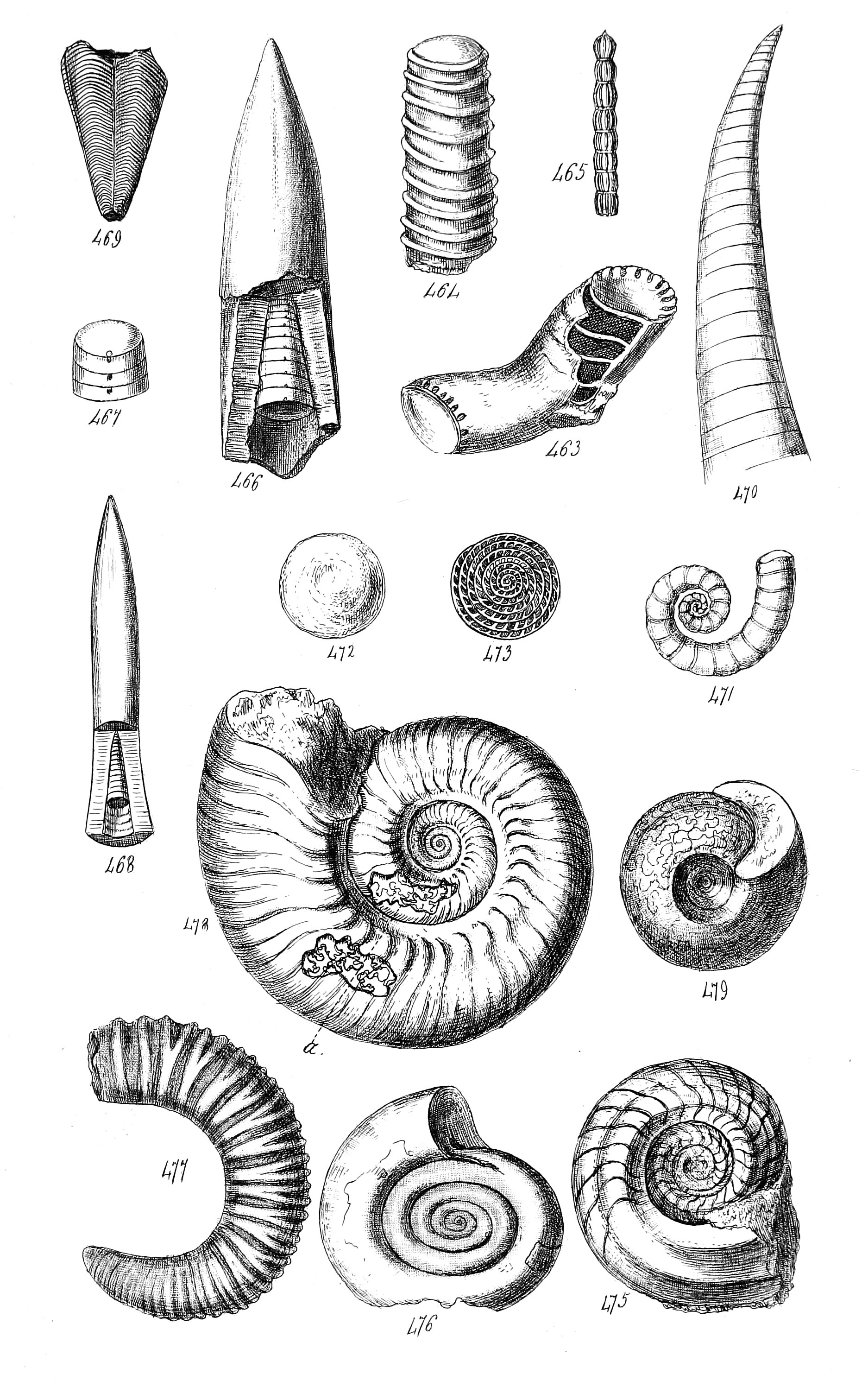
Fig. 479* to 488.
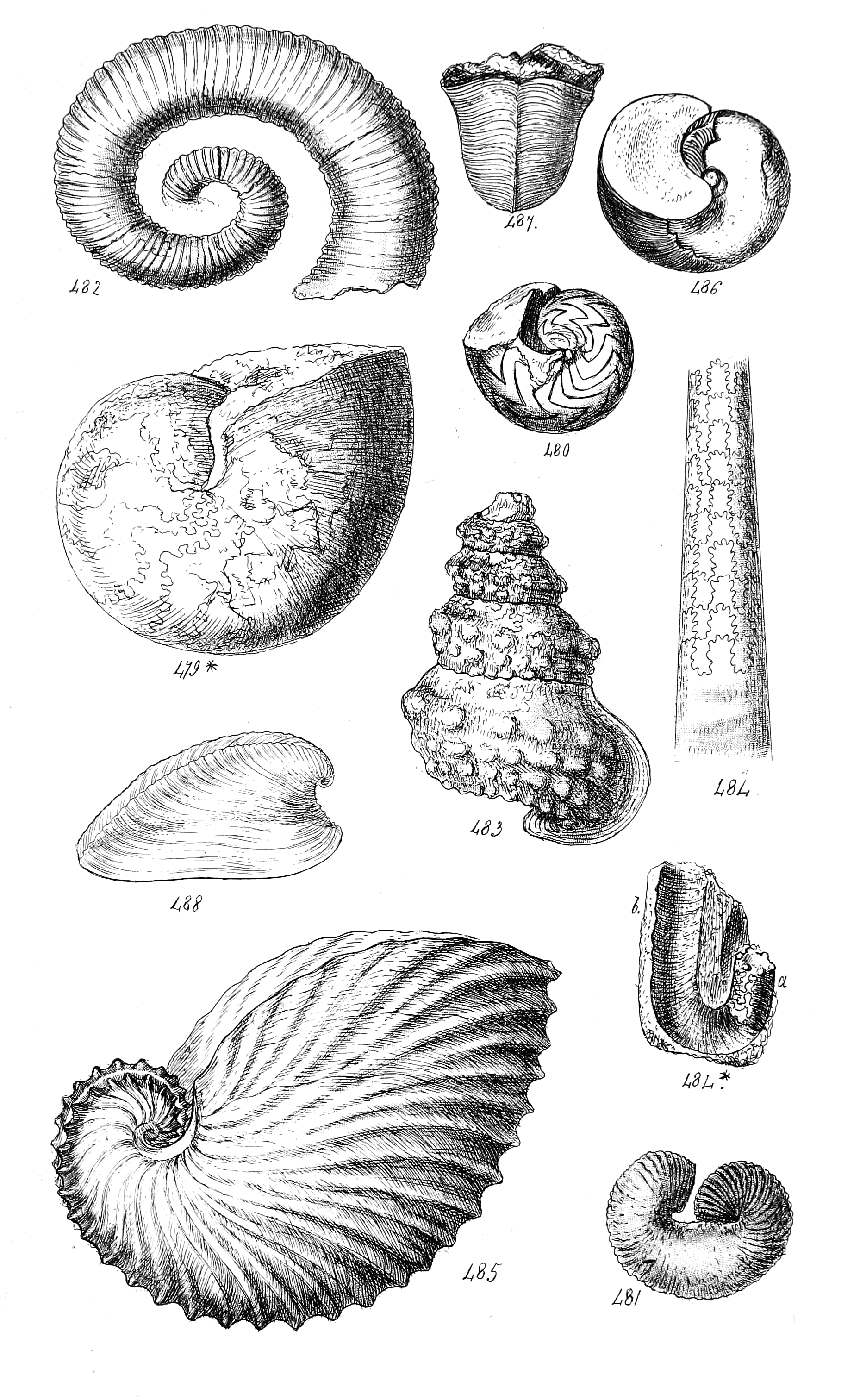
Fig. 489 to 513.
Fig. 514 to 545.
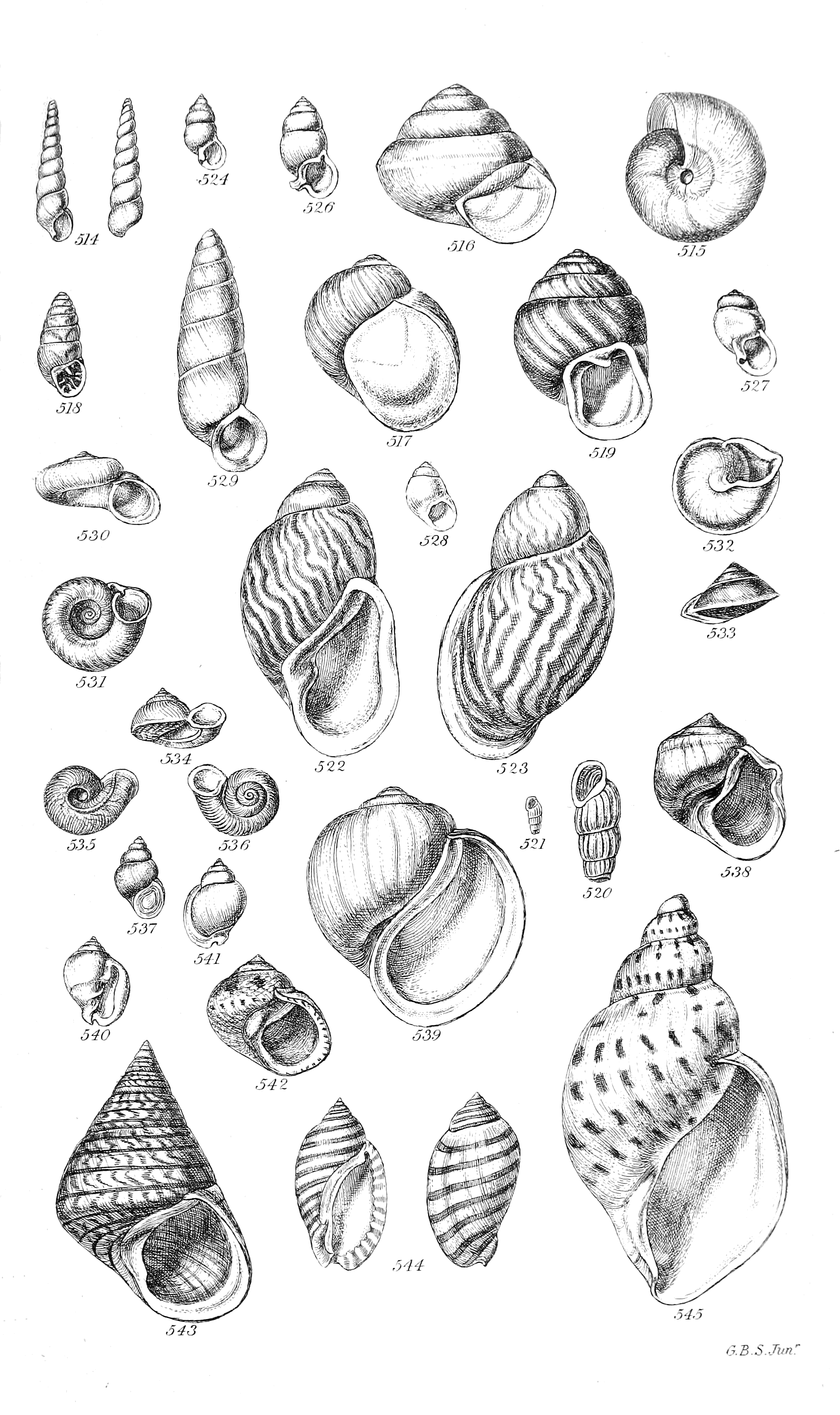
Fig. 546 to 564.
WORKS ON NATURAL HISTORY,
SOLD AT REDUCED PRICES
BY
HENRY G. BOHN,
YORK STREET, COVENT GARDEN.
ARTIS'S (E. T.) ANTEDILUVIAN PHYTOLOGY, illustrated by a Collection of the Fossil Remains of Plants, peculiar to the Coal Formations of Great Britain, selected for their Novelty and Interest, from upwards of a Thousand Specimens now in the possession of the Author, and systematically described, with the view of facilitating the Study of this important Branch of Geology: including Remarks on the Systems of Count Sternberg, Baron Schlotheim, Professor Martius, and Mons. Brongniart; also Communications from Professor Buckland, and other eminent Geologists, 4to. with 25 plates, (published at 2l 10s) cloth boards, 15s
1838
BAUER'S ILLUSTRATIONS OF THE GENERA OF FERNS, in which the characters of each Genus are displayed in the most elaborate manner, in a series of magnified dissections and figures, HIGHLY FINISHED IN COLOURS, after the beautiful Drawings of Francis Bauer, Esq. Botanical Draughtsman to Her Majesty; with descriptive letter-press by Sir William Jackson Hooker, parts 1 to 11, imperial 8vo.
1838-42
To be completed in 12 parts, price 12s each.
BEECHEY.—BOTANY OF CAPTAIN BEECHEY'S VOYAGE, comprising an Account of the Plants collected by Messrs. Lay and Collie, and other Officers of the Expedition, during the Voyage to the Pacific and Behring's Strait, performed in her Majesty's ship Blossom, under the command of Captain F. W. Beechey, by Sir William Jackson Hooker and G. A. W. Arnott, Esq. illustrated by 100 plates, beautifully engraved, complete in 10 parts, 4to. price 15s each.
1831-41
—— ZOOLOGY OF CAPTAIN BEECHEY'S VOYAGE, compiled from the Collections and Notes of Captain Beechey and the Scientific Gentlemen who accompanied the Expedition, by Dr. Richardson, N. A. Vigors, Esq., G. T. Lay, Esq., E. T. Bennett, Esq., Richard Owen, Esq., John Edward Gray, Esq., W. Sowerby, Esq. and the Rev. Dr. Buckland, 4to. illustrated by 47 finely coloured plates by Sowerby, extra cloth bds. 5l 5s
1839
BOASE'S (Dr. H. S. Sec. Roy. Geol. Soc. of Cornwall) TREATISE ON PRIMARY GEOLOGY, being an Examination, both Practical and Theoretical, of the older Formations, 8vo. cuts, (published at 12s) cloth bds. 5s
1834
"An admirable work, involving some of the most refined discussions of which Geology is susceptible."—Literary Gazette.
BURMEISTER'S MANUAL OF ENTOMOLOGY, translated from the last German edition by W. E. Shuckard, Member of the Entomological Society, &c. with considerable and important additions by the Author, (communicated expressly for this edition,) and many original Notes by the translator. Illustrated by thirty-three engravings on steel, in which are represented ABOVE FIVE HUNDRED subjects, chiefly generic distinctions, anatomical sections, organs, eggs, larvæ, &c. of Insects; together with a beautifully coloured frontispiece, 1 thick vol. 8vo. comprising above 650 closely printed pages, (published at 1l 1s in bds.) hf. bd. morocco, 15s
1836
CURTIS'S FLORA LONDINENSIS; revised and improved by George Graves, extended and continued by Sir W. Jackson Hooker; comprising the History of Plants indigenous to Great Britain, their Uses, Economy, and various interesting Particulars, with Alphabetical, Linnæan, and other Indexes; the Drawings made by Sydenham Edwards and Lindley, 5 vols. royal folio (or 109 parts), containing 647 plates, exhibiting the full natural size of each plant, with magnified dissections of the parts of fructification, &c. all beautifully coloured, (pub. at 87l 4s in parts) 26l 5s
—— the same, elegantly hf. bd. morocco, top edges gilt, 30l
This is the only extensive work on the Indigenous Botany of this country, which gives well-coloured representations of the plants in their full natural size.
CUVIER.—HISTOIRE NATURELLE DES MAMMIFERES, avec des Figures Originales Enluminées, Dessinées d'après les Animaux vivants, ouvrage publié sous l'Autorité de l'Administration du Muséum d'Histoire Naturelle, par F. Cuvier et E. Geoffroy Saint-Hilaire, 3 vols. royal folio, containing 360 exquisitely coloured plates of animals, (published at 47l 5s) very splendidly half-bd. turkey morocco, gilt edges, 24l
*** The advertiser having purchased of the Parisian publishers all the remaining copies of this magnificent work, is enabled to offer them at the above extremely reduced price.
This is the finest work on mammiferous animals ever published in any country, and has always been considered, both for the high talent displayed in the text and the extremely beautiful execution of the plates, which resemble drawings, as taking the first place in the class to which it belongs. As very few copies remain for sale, and the price is so extremely low, the book must soon become scarce, and rise in value.
"Un des ouvrages les plus exacts et les mieux exécutés que l'on ait encore donnés sur les Mammifères."—Brunet.
"It is unnecessary to dilate upon the splendid style in which this work is brought out, or on the ability and fidelity that characterise as well the figures as the descriptions contained in it, since these must be well known to all who have seen any of the numbers. It will doubtless form the standard work of reference for the Mammalia. Necessarily too expensive for general circulation, public libraries, and the collections of the rich can alone possess it; but to these it is indispensable; while the manner in which it is executed renders it worthy of a place by the side of their most costly and elegant volumes."—Zoological Journal.
DENNY'S MONOGRAPHIA PSELAPHIDARUM ET SCYDMÆNIDARUM BRITANNIÆ; or an Essay on the British Species of the Genera Pselaphus of Herbst, and Scydmænus of Latreille, in which those Genera are subdivided, and all the Species hitherto discovered in Great Britain are accurately described and arranged, with an Indication of the Situations in which they are usually found, 8vo. with 14 coloured plates, containing 40 Figures of Beetles, (pub. at 1l 1s) extra cloth bds. 12s
Norwich, 1825
This volume has for some time been considered scarce, and sold for more than the published price.
DONOVAN'S NATURAL HISTORY OF THE INSECTS OF INDIA, new edition, considerably enlarged, brought down to the present state of the Science, with alphabetical and systematic Indices, etc. by J. O. Westwood, Esq. F.L.S. 4to. with 58 plates, containing upwards of 120 exquisitely coloured figures, (published at 6l 6s) extra cloth bds. elegantly gilt, 2l 5s
1842
—— NATURAL HISTORY OF THE INSECTS OF CHINA, new edition, considerably enlarged, brought down to the present state of the Science, with alphabetical and systematic Indices, etc. by J. O. Westwood, Esq. F.L.S. 4to. with 50 plates, containing upwards of 120 exquisitely coloured figures, (published at 6l 6s) extra cloth bds. elegantly gilt, 2l 5s
1842
"Donovan's works on the Insects of India and China, are splendidly illustrated and extremely useful,"—Naturalist.
"The entomological plates of our countryman Donovan, are highly coloured, elegant, and useful, especially those contained in his quarto volumes (Insects of India and China) where a great number of species are delineated for the first time."—Swainson.
DRURY'S ILLUSTRATIONS OF FOREIGN ENTOMOLOGY, wherein are exhibited UPWARDS OF SIX HUNDRED EXOTIC INSECTS, of the East and West Indies, China, New Holland, North and South America, Germany, &c. very few of which are figured in any other work; engraved with the greatest accuracy by the celebrated Moses Harris, Author of the Aurelian, &c. all most correctly and beautifully coloured from the original specimens, NEW AND MUCH IMPROVED EDITION, with the following important additions:—the Modern Names, Generic and Specific Characters, Synonymes of later Naturalists; Accounts of the Economy, Habitations, and Food of many of the Insects; and Scientific and Alphabetic Indexes, by J. O. Westwood, Esq. F.L.S. Secretary of the Entomological Society, &c. 3 vols. 4to. 150 plates, (originally published at 15l 15s) hf. bd. morocco, uncut, 6l 16s 6d
1837
—— the same, richly bound in green morocco, gilt edges, 9l 9s
"The exquisite work of Drury displays the complete insect in a degree of perfection that leaves nothing to be desired."—Sir James E. Smith.
This new edition is exquisitely coloured, and must rank high among the luxurious publications of the age. Its literary and scientific excellence is in keeping with its attractive appearance.
"A few years ago, a new edition, with impressions from the original plates, was published under the editorial care of Mr. Westwood, by Mr. Henry Bohn the Bookseller. It is not easy to speak of this edition in terms of too high commendation. The colouring, executed from the original drawings, under the superintendence of one of the ablest entomological artists of the day, is faithful to nature, and owing to the fineness of the paper and a particular process to which it has been subjected, possesses a lustre and beauty which were unattainable at the time when the original edition appeared. The text has been in a great measure re-written; ample and accurate descriptions introduced; the modern nomenclature applied, and the intricacies of synonomy unravelled; indexes and much original matter added, and the whole work adapted to the present advanced state of the science."—Sir W. Jardine.
EDWARDS'S (GEORGE) NATURAL HISTORY OF BIRDS, NEW EDITION, 7 vols. royal 4to. WITH 362 PLATES, BEAUTIFULLY COLOURED LIKE DRAWINGS, (published at 30l) hf. bd. morocco, uncut, top edges gilt, 14l 14s
1802-6
—— the same, LARGE PAPER, WITH THE PLATES BEAUTIFULLY COLOURED LIKE DRAWINGS, 7 vols. folio, (published at 50l) hf. bd. morocco, uncut, gilt tops, rare, 21l
GREVILLE'S CRYPTOGAMIC FLORA, comprising the Principal Species found in Great Britain, inclusive of all the New Species recently discovered in Scotland, 6 vols. royal 8vo. with 360 beautifully coloured plates, (published at 16l 16s) neatly half bound morocco, 8l 8s
1823-8
This, though a complete work in itself, forms an almost indispensable Supplement to the thirty-six volumes of Sowerby's English Botany, which does not comprehend Cryptogameous Plants. It is one of the most scientific and best executed works on Indigenous Botany ever produced in this country.
"A truly admirable work, which may be honestly designated as so excellent, that nothing can be found to compete with it in the whole range of Indigenous Botany; whether we consider the importance of its critical discussions, the accuracy of the drawings, the minuteness of the analyses, or the unusual care which is evident in the publishing department. After expressing this opinion, we are sure the work will need no further recommendation with the public."
Loudon's Gardener's Magazine.
HARRIS'S AURELIAN; a Natural History of English Moths and Butterflies, together with the Plants on which they feed; also a faithful Account of their respective Changes, their usual haunts when in the winged state, and their standard Names as established by the Society of Aurelians, new and greatly improved edition, containing a complete Modern Nomenclature of all the Species figured in the work, and further Accounts of their Economy, by J. O. Westwood, Esq. F.L.S. etc., in 1 vol. sm. folio, with 44 plates, containing above 400 figures of Moths, Butterflies, Caterpillars, etc. and the Plants on which they feed, exquisitely coloured after the original drawings, hf. bd. morocco, 4l 4s
This beautiful work is the only one which contains our English Moths and Butterflies of the full natural size, in all their changes of Caterpillar, Chrysalis, &c. with the plants on which they feed.
HOOKER'S (SIR W. J.) FLORA BOREALI-AMERICANA; or the Botany of British North America; compiled principally from the Plants collected by Dr. Richardson and Mr. Drummond on the late Northern Expeditions, under the command of Captain Sir John Franklin; to which are added, by permission of the Horticultural Society, those of Mr. Douglas and other Naturalists, illustrated by 240 plates, and a large map, beautifully engraved; COMPLETE IN 12 PARTS, forming 2 handsome vols. royal 4to. each part 1l 1s
1829-40
HOOKER'S BOTANICAL MISCELLANY; containing Figures and Descriptions of Plants, which recommend themselves by their novelty, rarity, or history, or by the uses to which they are applied in the Arts, in Medicine, and in Domestic Economy, together with occasional Botanical Notices and information, including many valuable Communications from distinguished Scientific Travellers; complete in 9 parts, forming 3 thick vols. royal 8vo. with 153 plates, many finely coloured, (published at 5l 5s) gilt cloth, 2l 12s 6d
1830-33
HOOKER'S MUSCI EXOTICI; or Figures and Descriptions of new or little known Foreign Mosses, and other Cryptogamic Subjects, 2 vols. 8vo. 176 plates, (published at 4l 4s) cloth bds. 1l 11s 6d
1818-20
—— the same, with the plates beautifully coloured, (published at 8l 8s) cloth bds. 3l 3s
HOOKER'S BRITISH JUNGERMANNIÆ, being a History and Description, with coloured Figures, of each Species of the Genus, with Microscopical Analysis of the parts, new edition, nearly ready, 4to. 88 finely coloured plates
HOPE'S (REV. W.) COLEOPTERIST'S MANUAL, Part 1, containing the Lamellicorn Insects of Linneus and Fabricius, 8vo. plates, bds. 7s
1837
—— COLEOPTERIST'S MANUAL, Part 2, containing the Predaceous Land and Water Beetles of Linneus and Fabricius, 8vo. beautifully coloured plates, cloth, 10s 6d
1838
HUMBOLDT ET BONPLAND, RECUEIL D'OBSERVATIONS DE ZOOLOGIE ET D'ANATOMIE COMPAREE, faites dans l'Intérieur du Nouveau Continent, &c. 8 parts in 1 vol. imperial 4to. VELLUM PAPER, with 34 plates, of which 21 are beautifully coloured, (published at 10l 10s) cloth bds. lettered, 15s
1811
JARDINE AND SELBY. Illustrations of Ornithology, by Sir W. Jardine, and P. J. Selby, Esq., with the co-operation of J. E. Bicheno, Esq., J. G. Children, Esq., Major-General Hardwicke, Dr. Horsfield, R. Jameson, Esq., Sir T. Stamford Raffles, N. A. Vigors, Esq., and John Gould, Esq. 3 vols. royal 4to. with 150 accurately engraved figures of new and interesting, or rare species, of Birds, beautifully coloured, also a duplicate set of the same, uncoloured; in all 300 plates, (published at 15l 15s) neatly half bound, top edges gilt, 6l 6s
Edinb. 1829, &c.
"This is a very excellent and valuable work, as indeed the talent employed on it sufficiently ensures. The plates are beautifully coloured, and the letter-press accurately and well written. We strongly recommend it to our scientific readers."—Neville Wood.
LAMARCK'S CONCHOLOGY, containing a complete Translation of his Descriptions of both the recent and Fossil Genera, Illustrated by 22 highly-finished Lithographic Plates, comprising nearly 400 accurate Figures of Shells drawn by J. Mawe, edited by Edmund A. Crouch, F.L.S. royal 4to. (published at 1l 11s 6d) in extra cloth boards, 10s 6d
1827
—— the same, WITH THE PLATES BEAUTIFULLY COLOURED, (published at 3l 3s) elegantly bound in gilt cloth, 1l 11s 6d
"This work will be found admirably adapted for the purpose for which it is intended, viz. to introduce to the student the improved system of Conchology founded by the celebrated French naturalist Lamarck, which is done in a clear and concise manner, by giving a short yet adequate description of the various classes, orders, families, and genera, composing the system; accompanied with illustrations of characteristic and generally well known species, drawn from nature. We can strongly recommend it to the attention of all those who feel interested in this department of natural history. The plates, twenty-two in number, are thickly though not confusedly studded with figures—indeed, considerable taste is displayed in their arrangement; they are beautifully coloured, and have more the appearance of highly finished drawings than merely tinted engravings, and on the whole, it reflects great credit upon the artist-author."
Literary Gazette.
LATHAM'S GENERAL HISTORY OF BIRDS, being the Natural History and Description of all the Birds (above four thousand) hitherto known or described by Naturalists, with the Synonymes of preceding Writers; the second enlarged and improved edition, comprehending all the discoveries in Ornithology subsequent to the former publication, and a General Index, 11 vols. 4to. with upwards of 200 exquisitely coloured plates, elegantly hf. bd. morocco, 12l 12s
Winchester, 1821-28
The Index sold separately, price 10s 6d in boards.
This celebrated work was published at twenty-five guineas in boards, with the plates coloured in a very inferior manner. The present copies are all COLOURED LIKE HIGHLY FINISHED DRAWINGS, with studious accuracy, under the direction of several eminent Ornithologists, and most of the subjects have been compared with living or preserved specimens in the Museums and Gardens of London. Copies coloured in this manner would not have been published at less than FIFTY GUINEAS. Indeed the few copies of the old edition formerly coloured by Miss Stone, similar in execution but inferior in accuracy to the present, have been sold as high as from fifty to one hundred guineas at the sales of Col. Stanley, John Dent, Esq. and Sir Mark Sykes.
"No scientific works on Natural History ever obtained so much celebrity as those of our venerable countryman Dr. Latham. His General History of Birds, which is an enlargement of his Synopsis, is undoubtedly the MOST USEFUL AND VALUABLE WORK OF ITS CLASS, THAT HAS YET APPEARED as it contains exact scientific descriptions of every bird known at the time."
Neville Wood.
LEWIN'S (J. W.) NATURAL HISTORY OF THE BIRDS OF NEW SOUTH WALES, collected, engraved, and faithfully painted after Nature, by John William Lewin, late of Paramatta, New South Wales; third and greatly improved edition, with an Index of the Scientific Names and Synonymes to the present time (1838), contributed by Mr. Gould, Mr. Eyton, and other scientific gentlemen, folio, with 27 plates, beautifully coloured, (published at 4l 4s) neatly hf. bd. morocco, 2l 2s
1838
"Admirable figures, full of truth and nature; accompanied by valuable observations on the habits and economy of the birds."—Swainson.
"According to the first ornithologists of the day, these plates are of permanent value."—Wood.
LINDLEY'S BRITISH FRUITS; or Figures and Descriptions of the most Important Varieties of Fruit Cultivated in Great Britain, 3 vols. royal 8vo. containing 152 most beautifully coloured plates, chiefly by Mrs. Withers, Artist to the Horticultural Society, (published at 10l 10s) elegantly hf. bd. green morocco extra, gilt edges, 5l 5s
1841
This is an exquisitely beautiful work. Every plate is like a highly finished drawing, similar to those in the Horticultural Transactions.
LINDLEY'S LADIES' BOTANY; or a Familiar Introduction to the Study of the Natural System of Botany, new edition, 12mo. with numerous wood-cuts, (published at 12s) elegantly bound in cloth, with gilt back and sides, 7s
1841
—— the same, with the plates coloured, extra gilt cloth, 12s
"The want of a popular Introduction to the study of Botany on the improved natural system has been completely removed by this volume of Dr. Lindley's. It is accurate in its science, graceful in its style, and familiar in its language; it enables the student to take some common, or easily accessible plant, as the representative of each natural family, to examine its several parts, to compare them with the plates, and learn their uses from the descriptions; when he has done this with care, and understood, and remembered what he has done, he will be a Botanist; if not a learned one, at least acquainted with all the fundamental facts of the science."
Athenæum.
"We are infinitely indebted to Professor Lindley for leading us so far in the study of Botany in a plain and intelligible way. A multitude of plates, a clear text, and a most judicious and agreeable arrangement, render this introduction to perhaps the most innocent and delightful of all studies, truly acceptable."
Literary Gazette.
MANTELL'S FOSSILS OF THE SOUTH DOWNS, or ILLUSTRATIONS of the GEOLOGY of SUSSEX, royal 4to. with 42 plates, (published at 3l 3s) extra cloth bds. 2l 2s
1822
"My attention was first drawn to these remains by Mr. Mantell, who has illustrated the subject in his excellent work on the Fossils of the South Downs."
Parkinson's Organic Remains.
"For the detailed history of the Organic Remains of the Wealden formation, see Mr. Mantell's highly instructive and accurate volume on the Geology of Sussex."
Buckland's Bridgewater Treatise.
MARTIN'S (P. I.) GEOLOGICAL MEMOIR ON A PART OF WESTERN SUSSEX, with some Observations upon Chalk-Basins, the Weald-Denudation, and Outliers-by-Protrusion, 4to. large map and coloured plates, (published at 1l) cloth bds. 12s
1828
MUDIE'S (ROBT.) HISTORY OF BRITISH BIRDS, or the Feathered Tribes of the British Islands, 2 vols. 8vo. second edition, the plates beautifully coloured, (published at 1l 8s) extra cloth bds. elegantly gilt on the backs, 16s
1835
"This is, without any exception, the most truly charming work on Ornithology which has hitherto appeared, from the days of Willughby downwards. Other authors describe, Mudie paints; other authors give the husk, Mudie the kernel. We most heartily concur with the opinion expressed of this work by Leigh Hunt (a kindred spirit) in the first few numbers of his right pleasant London Journal. The descriptions of Bewick, Pennant, Lewin, Montagu, and even Wilson, will not for an instant stand comparison with the spirit-stirring emanations of Mudie's 'living pen,' as it has well been called. We are not acquainted with any author who so felicitously unites beauty of style with strength and nerve of expression—he does not specify, he paints."
Wood's Ornithological Guide.
"The 'Feathered Tribes' is indeed an EXQUISITE WORK, and unquestionably the best that has yet appeared on the habits of our native birds, in that it is scarcely second to those of Wilson and Audubon. Mudie is the most accurate observer of nature,—Selby excepted, and he treats not exclusively of habits—consequently the 'Feathered Tribes' deserves a distinguished place on the shelves of the philosophic ornithologist."—Ornithologist's Text Book.
PARKINSON'S ORGANIC REMAINS OF A FORMER WORLD, being an Examination of the Mineralized Remains of the Vegetables and Animals of the Antediluvian World, generally termed Extraneous Fossils, 3 vols. 4to. with 54 coloured plates by Sowerby, exhibiting above 700 Fossil Remains, (published at 10l 10s) extra cloth bds. 4l 4s
This distinguished work is continually referred to by Dr. Buckland in his Bridgewater Treatise.
"A work on the same subject, equally elegant, comprehensive, and impartial, does not exist in English; nor, as far as we know, in any other language. It is written in a plain, intelligible, and equal style, such as may, with pleasure, be perused by all classes of readers."—British Critic.
"'Organic Remains of a Former World,' replete with interest and instruction."—Dr. Mantell.
PARKINSON'S INTRODUCTION TO THE STUDY OF FOSSIL ORGANIC REMAINS; especially those found in the British Strata, intended to aid the Student in his Inquiries respecting the Nature of Fossils, and their Connection with the Formation of the Earth, 3rd edition, 8vo. illustrated by 220 Fossil Specimens, (published at 12s) extra cloth bds. 8s
"In this well-printed volume, which may be called a grammar of Oryctology, Mr. Parkinson has comprised an extensive and well-arranged variety of information on the subject of fossil organic remains; supplying to the learner, an easy and complete introductory manual; and to the well-informed, a text-book of convenient reference. The graphic illustrations are copious and distinct."—Eclectic Review.
PURSH'S FLORA AMERICÆ SEPTENTRIONALIS; or a Systematic Arrangement and Description of the Plants of North America; containing, besides what have been described by preceding Authors, many new and rare species, collected during twelve years travels and residence in that country, 2 vols. 8vo. with 24 plates, (published at 1l 16s) cloth, 14s
—— the same, with the plates beautifully coloured, (published at 2l 12s 6d) cloth, 1l 1s
1814
RICHARDSON'S FAUNA BOREALI-AMERICANA, or ZOOLOGY of NORTH AMERICA, containing Descriptions of the Subjects collected in the late Northern Expeditions under the command of Captain Sir John Franklin, by John Richardson, M.D., Wm. Swainson, Esq., and the Rev. Wm. Kirby, published under the Authority of the Right Hon. the Secretary of State for Colonial Affairs, with numerous beautifully coloured plates, 4 vols. 4to. (published at 9l 9s) cloth, 5l 15s 6d
The following may be had separately:
Vol. 2. Birds, by Swainson, 50 coloured plates, (published at 4l 4s) cloth, 2l 2s 3. Fishes, by Richardson, coloured plates, 1l 4s 4. Insects, by Kirby, coloured plates, 1l 4s
"We cannot speak in too high terms of admiration with regard to that splendid national production the Fauna Boreali-Americana. It is undoubtedly the best work of its kind that has ever appeared, and will, we expect, long remain so."—Neville Wood.
"Whether we consider the condensed mass of novel information, the number of species for the first time introduced to our systems, the accuracy of the scientific details, the beauty and correctness of the illustrations and the whole appearance of the book, it reflects the highest degree of credit upon the authors, the artist, and the government."—Loudon.
SELBY'S MAGNIFICENT WORK, THE FIGURES OF BRITISH BIRDS, containing an exact and faithful representation, in their full natural size, of all the known species found in Great Britain, 383 Figures in 228 beautifully coloured plates, 2 vols, elephant folio, (published at 105l) elegantly hf. bd. morocco, full gilt back and gilt edges, with glazed paper to the plates, 31l 10s
1834
—— the same, plain plates, (published at 31l 10s) hf. bd. calf, 15l 15s
The grandest work on Ornithology published in this country, the same for British Birds that Audubon's is for the birds of America. Every figure, excepting in a very few instances of extremely large birds, is of the full natural size, beautifully and accurately drawn, with all the spirit of life.
"Every individual of the Falcon and Owl Families would make a PERFECT PICTURE OF ITSELF, so beautifully and correctly are they executed: they have certainly never been equalled even by Gould and Audubon."
Ornithologist's Text Book.
"The author has been most successful, especially in the larger birds, and it would be impossible to improve on any of the Raptores, which for fidelity, boldness, and spirit, are unequalled—every feather is distinct, yet beautifully blended."—Wood's Ornithological Guide.
SELBY'S ILLUSTRATIONS OF BRITISH ORNITHOLOGY, 2 vols. 8vo. Second Edition, (published at 1l 1s) in bds. 12s
1833
This is the most complete Scientific manual of British Ornithology yet published. Every known British Bird is enumerated, with an ample description of its plumage, habits, etc., the scientific as well as familiar names given by different Naturalists, and references to all those who have figured it.
"Selby's is the most masterly work that has ever appeared on the Birds of Britain, and is quite indispensable to every Ornithologist."
Ornithologist's Text Book.
SOWERBY'S MANUAL OF CONCHOLOGY, containing a complete Introduction to the Science, illustrated by upwards of 650 FIGURES OF SHELLS, etched on Copper-plates, in which the most characteristic examples are given of all the Genera established up to the present time, arranged in Lamarckian Order, accompanied by copious explanations; observations respecting the geographical or geological distribution of each; tabular views of the Systems of Lamarck and De Blainville; a Glossary of technical terms, &c. &c. NEW EDITION, CONSIDERABLY ENLARGED AND IMPROVED, WITH NUMEROUS WOOD-CUTS IN THE TEXT, NOW FIRST ADDED, 8vo. cloth, 1l 5s
1842
—— the same, COLOURED PLATES, gilt cloth, 2l 5s
This is the only work which, in a moderate compass, gives a comprehensive view of Conchology, according to the present advanced state of the science. It will not only be found useful to all who wish to acquire an elementary acquaintance with the subject, but also to the proficient, as a book of reference.
SWAINSON'S ZOOLOGICAL ILLUSTRATIONS, or Original Figures and Descriptions of New, Rare, or interesting Animals, selected chiefly from the Classes of Ornithology, Entomology, and Conchology, and arranged on the Principles of Cuvier and other modern Zoologists, BOTH SERIES COMPLETE, 6 vols. royal 8vo. containing 318 FINELY COLOURED PLATES, (published at 16l 16s) unbound, 8l 8s
—— the same, very neatly half-bound morocco, uncut, 9l 9s
*** This fine work was published in parts at 4s 6d each. Either of the Series, in 3 vols. may be had separately, at £4. 4s each in parts, or £4. 14s 6d half-morocco; but separate Parts can only be sold at the original price.
This highly esteemed publication, by one of the most eminent Zoologists of the age, has long been considered very scarce, and from its being the sole property of the author has not hitherto been sold under the published price. In consequence, however, of his leaving England, he has thought it advisable to dispose of the whole stock to the advertiser, who now offers the complete copies, which are very few in number, at the low prices affixed.
The whole of the figures are original, having been drawn by Mr. Swainson himself, chiefly from specimens in his own collection, and coloured under his immediate inspection. They are universally allowed to be unrivalled for beauty and fidelity.
"It might, perhaps, almost be deemed presumption to offer any remarks on a work emanating from the pen and pencil of, undoubtedly, the first Ornithologist of the day, but we feel it our duty to give our readers some idea of the contents of the Zoological Illustrations. It will be sufficient, if we mention that his coloured figures of birds are almost unequalled,—they are certainly not surpassed. The figures are beyond conception lovely and delicate, and it only remains for us to remark, that every philosophic Ornithologist must possess the Zoological Illustrations, if indeed they are now to be had."—Wood's Ornithologist's Text Book.
SWAINSON'S EXOTIC CONCHOLOGY, or Figures and Descriptions of Rare, Beautiful, or Undescribed Shells, with new Letter-press Descriptions, 6 parts, royal 4to. containing 94 large and beautifully coloured figures of Shells, (published at 5l 5s) elegantly half-bound morocco, gilt edges, 2l 12s 6d
Each of the Six Parts may be had separately, at 8s per part.
"Many of the most rare and beautiful species of this singularly elegant genus (the Volutes), have been figured by Swainson in the first plates of his Exotic Conchology, with a verisimilitude that has never been equalled, and probably never will be excelled, by any artist. This talent, combined with his scientific knowledge as a naturalist, must render the above work the most eminent of its kind in this country."—Dubois.
SWAINSON'S ORNITHOLOGICAL DRAWINGS, being figures of the rarer and most interesting BIRDS OF BRAZIL. Complete in 7 parts, royal 8vo. CONTAINING SEVENTY-EIGHT BEAUTIFULLY COLOURED PLATES, (published at 3l 13s 6d) elegantly hf. bd. morocco, in one volume, 2l 5s
This exceedingly beautiful work is in very few even of the most complete ornithological libraries, as only 175 copies were printed, and Mr. Swainson refused to sell any excepting to those who had originally subscribed for them.
"Mr. Swainson's name stands so deservedly high, both as an ornithologist and an artist, that, in introducing this splendid work to the notice of our readers, we shall simply say that we consider it in every respect worthy of its author. Farther commendation we feel would be superfluous."—Loudon.
WALLICH, PLANTÆ ASIATICÆ RARIORES, 12 parts, imperial folio, coloured plates, (published at 36l) sewed, 25l
WILSON'S AMERICAN ORNITHOLOGY, or Natural History of the Birds of the United States; with a Continuation by Charles Lucien Bonaparte, Prince of Musignano, NEW AND ENLARGED EDITION, completed by the insertion of above One Hundred Birds omitted in the original Work, and illustrated by valuable Notes, with an interesting Life of the Author, by Sir William Jardine, Bart., F.R.S.E., F.L.S. 3 vols. 8vo. with a fine portrait of Wilson, and 97 plates, exhibiting 363 figures of Birds, accurately engraved, and most beautifully coloured, on glazed drawing paper, (published at 10l 10s) elegantly hf. bd. morocco, top edges gilt, 4l 4s
1832
"The valuable Notes and interesting Life of Wilson added to this new edition are from the pen of Sir William Jardine, a Naturalist of congenial mind in feeling and talent. The plates are better executed than those in the American Edition, and the greatest possible attention has been paid to accuracy of colouring. Altogether we have rarely seen a more valuable work on Natural History, and not one more entertaining."—Literary Gazette.
"The splendid work of Alexander Wilson will always be regarded as a subject of pride by his adopted country, as it certainly is by that which gave him birth (Scotland)."—Chambers.
"The History of American Birds, by Alexander Wilson, is equal in elegance to the most distinguished of our own splendid works on Ornithology."—Cuvier.
"This is by far the best edition of the American Ornithology, both on account of the beautiful plates and the interesting notes of the editor. Every ornithologist must, of course, possess the work, and he should if possible procure this edition."