PROTECTIVE RESEMBLANCES IN SPIDERS By ELIZABETH G. PECKHAM.[10]
Reading edition
PROTECTIVE RESEMBLANCES IN SPIDERS By ELIZABETH G. PECKHAM.[10]
There are, among spiders, two forms of protective modification: the first, including all cases of protective resemblance to vegetable and inorganic things—that is, all modifications of color or of color and form that tend to make them inconspicuous in their natural relations—I shall call direct protection. The second form, which I shall call indirect protection, includes two classes, the spiders which are specially protected themselves and those which mimic other creatures which are specially protected.
Spiders are specially protected when they become inedible through the acquisition of hard plates and sharp spines. The modification of form is frequently accompanied by conspicuous colors, which warn their enemies that they belong to an unpalatable class.
The second class of indirectly protected spiders—those that mimic specially protected creatures—presents some difficulties, since it is not always easy to determine whether the purpose of mimicry is protection or the capture of prey. The resemblance may, as is frequently the case in direct protection, serve both purposes.
In looking for instances of protective form and color among spiders we encounter one difficulty at the outset. The meaning of a protective peculiarity can be determined only when the animal is seen in its natural home. The number of strangely modified forms depicted in descriptive works on spiders is enormous. Bodies are twisted, elongated, inflated, flattened, truncated, covered with tubercles or spines, enclosed within chitinous plates, colored like bark, like lichens, like flowers of every imaginable hue, like bird droppings, like sand or stones, and in every one of these modifications there is doubtless an adaptation of the spider to its surroundings which, when it is studied out of its natural relations, we can only guess at.
It has been well said that in these protective resemblances those features of the portrait are most attended to by nature which produce the most effective deception when seen in nature; the faithfulness of the resemblance being much less striking when seen in the cabinet....
Direct Protection. Resemblances to Vegetable and Inorganic Things.—As a general rule the forms and colors of spiders are adapted to render them inconspicuous in their natural homes. Bright colored spiders, ... either keep hidden away or are found upon flowers whose tints harmonize with their own. This rule, while it has numerous exceptions, is borne out by the great majority of cases. A good illustration is found in the genus Uloborus, of which the members bear a deceptive resemblance to small pieces of bark, or to such bits of rubbish as commonly become entangled in old deserted webs. The only species in our neighborhood is Uloborus plumipes, which I have almost invariably found building in dead branches, where its disguise is more effective than it would be among fresh leaves. The spider is always found in the middle of the web, with its legs extended in a line with the body. There has been, in this species, a development along several lines, resulting in a disguise of considerable complexity. Its form and color make it like a scrap of bark, its body being truncated and diversified with small humps, while its first legs are very uneven, bearing heavy fringes of hair on the tibia and having the terminal joints slender. Its color is a soft wood-brown or gray, mottled with white. It has the habit of hanging motionless in the web for hours at a time, swaying in the wind like an inanimate object. The strands of its web are rough and inelastic, so that they are frequently broken; this gives it the appearance of one of those dilapidated and deserted webs in which bits of wind-blown rubbish are frequently entangled....
Out of seven examples of the species taken during one summer, five were found in dead tamarack branches, one on a dead bush, and the seventh, an interesting variety, under the eaves of a porch. My eye was caught by what seemed to be a string of eleven cocoons (it is not common to see more than four in a web). On attempting to take them down I was surprised to see one of the supposed cocoons begin to shake the web violently. Ten were what they seemed to be, but the eleventh was the mother spider, whose color and general appearance was exactly like that of the little cases that she had made for her eggs....
We come now to a large and interesting class in genus Epeira. I refer to those species, mostly nocturnal, which are protected during the day, not by hiding in crevices, nor in any way actually getting out of sight, but by the close resemblance which they bear to the bark of the trees to which they cling. This resemblance is brought about in two ways; through their color, which is like that of wood or lichens, and through their tuberculated and rugose forms, which resemble rough bark.
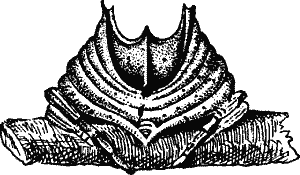
Fig. 1.—Cærostris Mitralis (from Vinson).
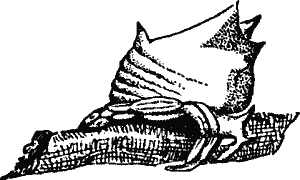
Fig. 2.—Cærostris Mitralis, in profile (from Vinson).
One of the most remarkable of these forms is C. mitralis, a Madagascar species, which, looked at in profile, probably resembles a woody knot. The abdomen is divided into two divergent cones (Fig. 1). The entire upper surface of the body is covered with conical elevations, which render it rough and uneven; the sides of the abdomen are made up of several layers, which form stages, one above another, like the ridges of bark on a woody excrescence. The legs, formed of wide, flattened plates, make the base. The color of the spider is yellowish-gray, varied with white and dark reddish-brown. It has the habit of perching on a branch and clasping it like a bird, so that the elaborate modification of form, which would be useless if the spider hung exposed in the web, is made as effective as possible.
To take an example nearer home, E. infumata is a large, round-bodied spider, with two humps on the abdomen, which Emerton describes from New England as being brown, mottled with white and black; he adds that when it draws in its feet it looks like a lump of dirt. Infumata, in Wisconsin, has always a good deal of bluish-green on the upper surface of the abdomen. This may be a variety which has been so developed as to resemble the lichens which cover the tree to which it clings. It is one of the spiders which bear a good deal of handling without uncurling its legs, or showing any sign of life. Its humpy form and its color give it a very inanimate appearance. It is rather common in our neighborhood and may be caught in the late twilight while building its web, but to search for it in the daytime, even among the trees that it most frequents, is an almost hopeless task. A more grotesque form is E. stellata, in which the abdomen has not two, but twelve or fifteen humps. These are so disposed that the edge of the abdomen, all around, is scalloped. The colors are light and dark brown, modified by gray and white hairs. This spider remains motionless during the daytime, keeping its legs drawn up to its body. It is common on grass and low bushes. It is not found in Wisconsin, but the description of it suggests a resemblance to a piece of dead leaf.
There are many other spiders in this genus that have humps and are colored in brown, gray or dull yellow, as nordmanii, angulata, solitaria, etc. It is an almost universal habit among the Epeiridæ to drop to the ground when threatened, and when a humped gray or brown spider drops to the ground and draws in its legs it is nearly indistinguishable from the lumps of earth, sticks and stones that surround it.
One of the Therididæ which has the same protection is Ulesanis americana (Fig. 3). The abdomen, which covers the cephalothorax nearly to the eyes, has a prominent hump in the middle of the back and four or five others behind. Its color is in shades of brown and yellow.
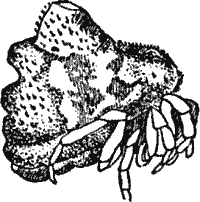
Fig. 3.—Ulesanis Americana (from Emerton).
Analogous to the humped Epeiridæ is Thomisus foka, of Madagascar, a spider which is regarded with great terror by the natives, as being so poisonous that even its breath is deadly. They say that cattle, when about to lie down, look carefully about to see if one of these spiders is in the neighborhood. This dread is, no doubt, inspired by the strange and uncanny aspect of a perfectly harmless creature. It has a rugose, tuberculated body of trapezoid form, the colors being brown and reddish, while the whole aspect is crab-like. The thick, short legs are reddish, covered with tubercules. The secret of its strange form is made clear when we learn that it resembles in color and general appearance the fruit of Hymenæa verrucosa, a tree common in the forests where this spider is found.
Among the curious forms which must have been developed through advantageous variations but which we are unable to explain, is Eriauchenus workmanni (Fig. 4).
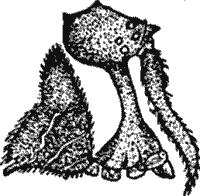
Fig. 4.—Eriauchenus Workmanni (from Cambridge).
Epeira prompta, a variety of parvula, is a common spider in the State of Wisconsin. It is most frequently seen on cedar bushes, where its color harmonizes with that of the foliage and fruit. During the day it usually rests on a branch near its web. The back of the abdomen is of a peculiar bluish-green, exactly like that of the lichens growing on tree trunks. The bluish color is broken by waving black lines which imitate the curling edges of the lichens. The one represented in the plate was found on an old cedar which was covered with lichens. It was kept for two weeks in a glass-covered box, where it spent most of the time crouching in a corner. It built no web, but spun some irregular lines to run about on. It ate gnats, flies, and once a little jumping spider, S. pulex, which we were keeping in the same box, leaping upon its prey, as noted by Hentz, like an Attus. This seems a curious habit to be acquired by an Epeirid, since spiders, as we have noticed among our captives, are usually dependent for food upon what is caught in their webs. Prompta moves awkwardly, but very rapidly.
Drapetisca socialis, while quite a different looking spider, is protected in the same way—by its resemblance to the bark upon which it lives. Emerton speaks of finding it on the bark of spruce trees, which it “closely resembles in color.” Menge says that it is common in Prussia, where it is seen in great numbers on fir trees, whose spotted bark it resembles in color, so that it is not easily seen. We have found them, most commonly, upon birch trees, and in this situation their color adaptation is perfect. Both the spider and the peeling bark of the tree are of a light silvery brown, covered with little blackish marks. On the bark these marks are, of course, irregular, while on the spider they form a pattern made up of straight and curved lines and dots, the legs being silvery, barred with blackish.
Another little Theridion that is found on birch bark has the same colors arranged a little differently. The abdomen above has a large and peculiarly irregular black patch, which shades off into mottled brown and black on the sides and below. The cephalothorax has stripes of brown and black, and the legs are barred with light and dark brown.
Spiders that live upon walls, fences, tree trunks, or on the ground harmonize in color with the surfaces upon which they are found, being usually gray, brown or yellow, mottled with black and white. This proposition is so well established as to need but few illustrations. The Therididæ furnish many examples, as T. murarium, a gray spider varied with black and white, said by Emerton to live usually “under stones and fences, where it is well concealed by its color”; and Lophocarenum rostratum, a yellowish-brown spider, found among leaves on the ground. Among the Attidæ bright sexual coloring often gains the ascendancy over the protective tints, yet this family gives us good examples in such species as M. familiaris and S. pulex.
To these may be added an as yet undescribed species which we discovered last season in a neighborhood that we had searched thoroughly for eight summers. We found the new spider in great numbers, but could only detect it by a close scrutiny of the rail fences on which it lived, its color being dark gray....
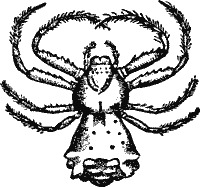
Fig. 5. Ornithoscatoïdes Decipiens (from Cambridge).
The last instance that I shall cite is a predaceous spider which is disguised from both its enemies and its prey by an elaborate combination of form, color, position, and character of web. I refer to Ornithoscatoïdes decipiens (Fig. 5), first described by Forbes and afterwards by Cambridge, the latter author giving in the same paper descriptions of three other species of the same genus, whose habits have not been noted, but whose protection is evidently of the same order as that of decipiens. I give Forbes’s interesting account of his capture of decipiens, quoting also the remarks by which Cambridge prefaces his description, since his explanation of the gradual development, through Natural Selection, of the spider’s deceptive appearance applies as well to all the cases of protective disguise which have been here enumerated.
The capture is described as follows:—
“On June 25th, 1881, in the forest near the village of Lampar, on the banks of the Moesi river in Sumatra, while my ‘boys’ were procuring for me some botanical specimens from a high tree, I was rather dreamily looking on the shrubs before me, when I became conscious of my eyes resting on a bird-excreta-marked leaf. How strange, I thought, it is that I have never got another specimen of that curious spider I found in Java which simulated a patch just like this! I plucked the leaf by the petiole while so cogitating, and looked at it half listlessly for some moments, mentally remarking how closely that other spider had copied nature, when, to my delighted surprise, I discovered that I had actually secured a second specimen, but the imitation was so exquisite that I really did not perceive how matters stood for some moments. The spider never moved while I was plucking or twirling the leaf, and it was only when I placed the tip of my little finger on it, that I observed that it was a spider, when it, without any displacement of itself, flashed its falces into my flesh.
“The first specimen I got was in W. Java, while hunting one day for Lepidoptera. I observed a specimen of one of the Hesperidæ sitting, as is often a custom of theirs, on the excreta of a bird on a leaf; I crept near it, intending to examine what they find in what one is inclined to consider incongruous food for a butterfly. I approached nearer and nearer, and at last caught it between my fingers, when I found that it had as I thought become glued by its feet to the mass; but on pulling gently the spider, to my amazement, disclosed itself by letting go its hold: only then did I discover that I was not looking on a veritable bird’s excreta.... The spider is in general color white, spotted here and there with black; on the underside its rather irregularly shaped and prominent abdomen is almost all white, of a pure chalk white; the angles of the legs are, however, shining jet-black. The spider does not make an ordinary web, but only the thinnest film on the surface of the leaf. The appearance of the excreta rather recently left by a bird on a leaf is well known. There is a pure white deposit in the centre, thinning out round the margin, while in the central mass are dark portions variously disposed; as the leaf is rarely horizontal, the more liquid portions run for some distance. Now, this spider one might almost imagine to have in its rambles ‘marked and inwardly discerned’ what it had observed, and to have set about practising the ‘wrinkles’ gained; for it first weaves a small, irregular patch of white web on some prominent leaf, then a narrow streak laid down towards its sloping margin ending in a small knob; it then takes its place on the centre of the irregular spot on its back, crosses its black-angled legs over its thorax, and waits. Its pure white abdomen represents the central mass of the bird’s excreta, the black legs the dark portions of the slime, while the web above described which it has spun represents the more watery marginal part (become dry), even to the run-off portion with the thickened knob (which was not accidental, as it occurred in both cases), like the residue which semi-fluid substances ending in a drop leave on evaporation. It keeps itself in position on its back by thrusting under the web below it the spines with which the anterior upper surfaces of the legs are furnished.” ...
Protective Habits.—Going along with these forms of protective resemblance, we find certain habits which sometimes serve independently to protect the spider, but oftener are supplemental to color and form. Many species hide in crevices or in leaves which they roll up and bind together at the edges. In the Epeiridæ some are like thaddeus, which makes a little tent of silk under a leaf near its web. The young thaddeus also makes a tent, but spins its little geometrical web on the under side of the leaf, the edges being bent downward. E. insularis has the more common habit of forming its tent by drawing the edges of two or three leaves together with strands of web; in this it sits all day, but at night descends and occupies the centre of the web during the hours of darkness. I have often found it in this position when hunting nocturnal species by lantern light. It is probable that in tropical countries the monkeys, and perhaps the birds, which devour these large Epeiridæ have learned to recognize their webs, which are very large and conspicuous, and to trace them to their hiding places close by; and thus may have arisen the curious habit noticed by Vinson as possessed by E. nocturna and E. Isabella of destroying the web each morning and rebuilding it at night; the spider in this way gaining greater security from diurnal enemies.
Atypus abbotii builds a purse-shaped tube which is found attached to the bark of trees, and which has the external surface dark and covered with sand. The trap-doors which close the nest of some of the Territelariæ are wonderful examples of protective industry. They fit with such absolute accuracy into the openings of the nests and are so covered on the upper side with moss, earth, lichens, etc., as to be indistinguishable from the surrounding surface.
The rectilinear lines which are stretched in front of the webs of many Epeirids are useful in taking and sending on to the spider the shock which tells of an approaching enemy. Some spiders, when danger threatens, shake the web so violently as to grow indistinct to the eye, and others, as Pholcus atlanticus, hang by the legs and whirl the body rapidly with the same bewildering result....
A habit common to many spiders, especially among the Epeiridæ, is that of dropping to the ground at the approach of danger and resting motionless among the dirt, sticks, leaves, etc., which they resemble in color. The holding of the body in some peculiar position, as in Uloborus, Hyptioides, and the flower-like Thomisidæ, is a necessary accompaniment to the color modification.
The cocoons of spiders are seldom left exposed and unprotected. We find them in corners and crevices, concealed in rolled up leaves or under bark. Very often the cocoon itself is covered over with a sheet of web. In some families the mother carries it about with her attached to the underside of the abdomen. In other she carries it in her falces until the young are hatched. The cocoons of others, as Uloborus, Argyrodes, etc., while hung out in the web are still concealed by deceptive form and color, or by being covered with rubbish.
Cambridge speaks of A. brunnea, whose cocoons “are covered over very soon after they are made and the eggs deposited in them, with a coating of clay, which effectually destroys all their form and beauty. This coating of clay answers probably two ends: first, the concealment of the cocoon and its protection from insect enemies; and, secondly, the protection of the eggs from the too powerful rays of the sun, dry clay being (as is well known) one of the best non-conductors of heat.”
The peculiar cocoon of C. bisaccata is described by Emerton as follows: “Only one specimen of this (bisaccata) was found on a beech tree at New Haven with two cocoons. These were dark brown, as dark as the bark of the tree and as hard. Around the middle of each was a circle of irregular points. One of the cocoons was attached by a strong stem to the bark, and the other was attached in a similar way to the first cocoon. The spider held on to one of the cocoons.” In this instance the egg has evidently the same protection as that possessed by the gray, bark-haunting spiders, with the added advantage of hardness.
The habit of distributing the eggs through a number of cocoons made at intervals of several days, is protective. In this way, although one or two of the cocoons may be pierced by the ichneumon, there is a chance that part of the brood may survive.
Indirect Protection.—The indirectly protected group includes those spiders which are rendered inedible by the possession of sharp spines and chitinous plates, and also those that mimic other specially protected creatures.
The females of the specially protected group are characterized by the following attributes:
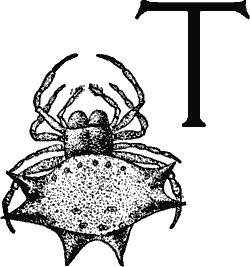
Their inedibility, which they owe to a more or less coriaceous epidermis and an armature of strong sharp spines (Fig. 6).
Their brilliant colors—glistening black and white, yellow, fiery gold, metallic silver, rose-color, blue, orange and blood-red.
Their habit of hanging always exposed in the centre of the web.
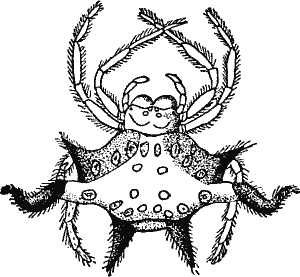
Fig. 6.—Gasteracantha Crepidophora (from Cambridge).
In an interesting discussion of the protective value of color and marking in insects, Poulton says that “the smaller convergent groups of nauseous insects often present us with ideally perfect types of warning patterns and colors—simple, crude, strongly contrasted—everything subordinated to the paramount necessity of becoming conspicuous,” the memory of enemies being thus strongly appealed to.
This proposition is well illustrated by the Gasteracanthidæ. Among larvæ the warning colors are almost invariably black and white, or black (or some very dark color), in contrast with yellow, orange and red. These are the colors that also constantly recur among the Gasteracanthidæ.
Cases that may be more justly considered exceptions to the rule that these hard, uneatable spiders are conspicuous are such species as Acrosoma rugosa (Fig. 7). One of this species was sent me by Mrs. Treat last summer. It lived for several weeks in my window, making no regular web, but hanging among a few irregular strands. It ate nothing, although provided with insects, but drank greedily of water. It might seem that its black and white coloring would make it conspicuous, but in connection with its irregular shape and its way of hanging motionless in the web it had the opposite effect.
We have no reason to suppose that the class represented in rugosa is like that touched upon by Poulton, in which very protectively colored larvæ suddenly assume a terrifying aspect on the near approach of an enemy; still they do enjoy a kind of double protection.
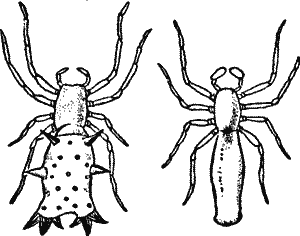
Fig. 7.—Acrosoma Rugosa. Left-hand figure female, right-hand figure male (from Emerton).
They are inconspicuous, and thus likely to escape attack, but in case they are attacked they have still the advantage of being quickly rejected. This experience cannot be as fatal to them as to the soft and thin skinned larvæ. Their hard covering and projecting spines would protect them to such an extent as to give them a fair chance of surviving.
In one respect the inconspicuous Gasteracanthidæ have a decided advantage over their bright-colored relatives. The birds, indeed, avoid the conspicuous ones, but their brilliancy serves to attract another enemy against which spines are no protection—the hunter wasp, which, as we have seen in the work of Bates, sometimes provisions its nest wholly with spiders of this family. Mr. Smith gives like testimony, saying:
“Spines on the abdomen of certain spiders would serve as a protection against vertebrate enemies, though they do not protect against the hunter wasps, which frequently provision their nests with these species.” He adds, however, that most of the spiny spiders are common, and that their colors make them conspicuous; just as butterflies that are protected by an odor are common and bright-colored....
Mimicry.—Mimicry, or the imitation of animal forms, while it is a form of indirect protection, differs in no essential respect from the imitation of vegetable and inorganic things. As Bates has said, the object of mimetic tendencies is disguise, and they will work in any direction that answers this purpose.
In nearly all respects spiders come under the three laws given by Wallace, as governing the development of mimetic resemblances in several large classes. These laws are as follows:
1. In an overwhelming majority of cases of mimicry, the animals (or the groups) which resemble each other inhabit the same country, the same district, and in most cases are to be found together on the very same spot.
2. These resemblances are not indiscriminate, but are limited to certain groups, which, in every case, are abundant in species and individuals, and can often be ascertained to have some special protection.
3. The species which resemble or “mimic” these dominant groups, are comparatively less abundant in individuals, and are often very rare.
The second and third of these laws are confirmed by what we know of mimetic resemblances among spiders. They mimic ants much oftener than other creatures, and ants are very abundant, are specially protected, and are much more numerous than the mimetic spiders. To the first law, also, they conform to a great extent, since everything tends to show that in tropical America and in Africa the ant and the spider, the one mimicked and the other mimicking, are always found together. So far as I can discover, however, the ant-like spiders of North America are not found in company with any species of ant which they resemble. This may be because they do not mimic any particular species, but only the general ant-like form; or, considering that the genera which contain their nearest relatives are much more abundant in Central and South America, it may be that these forms were originally tropical, mimicking some tropical species of ants, and that after the Glacial Epoch they migrated northward, leaving the ants behind them. However this may be, their peculiar form has served them well, since they have maintained themselves as fairly abundant species with a lower fecundity than is found in any other group of spiders.
The cases in which one species mimics another may be divided, according to the kind of benefit derived, into four classes: Class 1. As a rule, where we find one species mimicking another, the mimicked species possesses some special means of defence against the enemies of both. This defence may consist of a disagreeable taste or odor, as in the Heliconidæ, which are mimicked by other butterflies; of some special weapon of offence, as where wasps and bees are mimicked by flies and moths, or poisonous vipers by harmless caterpillars; or of a hard shell, as where the coriaceous beetles are mimicked by those that are soft-bodied.
Instances of this rule are exceedingly numerous; indeed, Wallace says that specially protected forms are always mimicked; still we have nothing mimicking our Gasteracanthidæ.
Class 2. The mimetic may prey upon the mimicked species, its disguise enabling it to gain a near approach to its victims; as the mantis, mentioned by Bates as exactly resembling the white ants upon which it feeds; and the flies which mimic bees, upon which they are parasitic, and are thus able to enter the nests of the bees and lay eggs on the larvæ.
Class 3. The mimetic species may, by its imitation, be protected from the attacks of the creature it mimics, as is the case with the crickets and grasshoppers which mimic their deadly foe, the hunter wasp.
Class 4. The mimetic species may prey upon some creature which is found commonly with, and is not eaten by, the mimicked species.
No two of these classes are mutually destructive so that in any case of mimicry a double advantage may be gained.
Let us see which of these advantages has directed the development of mimetic tendencies among spiders.
While among beetles and butterflies we most commonly find mimicry of one species by another within the same order, we have no instance of a spider mimicking another spider. This may be accounted for by the fact that the specially protected spiders depend for their safety upon the possession of hard plates and spinous processes, and although the hardened epidermis might be imitated (we know that hard-shelled beetles are mimicked by others that are soft), spines could scarcely be imitated by a soft-bodied creature with sufficient accuracy to insure disguise.
While spiders most commonly mimic ants, we hear also of their imitating beetles, snail-shells, ichneumons and horseflies. There is also a curious Madagascar species which looks exactly like a little scorpion, the resemblance being heightened by its habit of curving its flexible tail up over its back when irritated.
Those that resemble beetles comprise nearly all the species of the genera Coccorchestes and Homalattus. These are small spiders with short, convex bodies. The abdomen fits closely over the cephalothorax, and the epidermis, which has usually a metallic lustre, is sometimes coriaceous. Striking examples are found in H. coccinelloides, which bears a strong resemblance to beetles of the family Coccinelloidæ, and in C. cupreus, in which certain marks on the abdomen imitate the elytra of beetles.
The following account of a spider which mimics a snail-shell is given by Mr. G. F. Atkinson;—
“An undescribed species of Cyrtarachne mimics a snail-shell, the inhabitant of which, during the summer and fall, is very abundant on the leaves of plants in this place. In the species of Cyrtarachne the abdomen partly covers the cephalothorax, is very broad at the base, in this species broader than the length of the spider, and rounds off at the apex. When it rests upon the under side of a leaf with its legs retracted it strongly resembles one of these snail-shells by the color and shape of its abdomen. The two specimens which I collected deceived me at first, but a few threads of silk led me to make the examination. The spider seemed so confident of its protection that it would not move when I jarred the plant, striking it several hard blows. I pulled the spider forcibly from the leaf, and it did not exhibit any signs of movement until transferred to the cyanide bottle.” ...
Trimen gives an account of the imitation, by spiders, of horseflies, a case falling into Class 2, as follows:—
“Hunting spiders are in some cases very like their prey, as may everywhere be noticed in the case of the species of Salticus which catch horseflies on sunny walls and fences. The likeness is not in itself more than a general one of size, form and coloring; but its effect is greatly aided by the actions of the spider, which walks hurriedly for short distances, stopping abruptly, and rapidly moving its falces, in evident mimicry of the well-known movements so characteristic of flies.”
Instances of spiders mimicking ants are very numerous, and in many cases the resemblance is so close as to, at first sight, deceive a trained naturalist. This resemblance is brought about by the spider’s body being elongated and strongly constricted, so that it appears to be composed of three segments instead of two, by the color, by the way in which the spider moves about, zig-zagging from side to side like an ant, and by its habit of holding up one pair of its legs and moving them in such a way that they look exactly like the antennæ of an ant.
Ants may be regarded as specially protected, by their sharp, acid flavor, and in some species by the possession of stings or of horny processes.
On the ground that there are birds which do eat ants, and eat them greedily, it has been thought by some naturalists that they cannot be considered specially protected creatures, and that, as spiders can therefore derive no protection from mimicking them, all cases of such mimicry depend upon the spider’s increased ability to capture the ants as prey, but I am convinced that this is too hasty a conclusion. It is unquestionably true that some birds feed almost exclusively upon ants, but these are the exceptions. It is a common thing to find that specially protected groups, which are safe from the attacks of most creatures, have their special enemies. Thus, even the nauseous Heliconidæ are preyed upon by certain spiders and wasps; and bees, in spite of their stings, are preferred to other insects by the bee-eaters. Moreover, the ant-devouring birds are found largely among the wood-peckers, which eat the ants that run on the trunks of trees, and are therefore not a source of danger to the ant-like spiders, the American species of which, so far as I can learn, live entirely upon the ground.
In the United States comparatively small numbers of either ants or spiders are eaten by birds, but in tropical America there are enormous numbers of humming-birds feeding almost exclusively upon spiders, and there the protective advantage of looking like ants must be of great importance to the smaller species.
Belt considers that the advantages gained by ant-mimicking Central American spiders lies entirely on the side of protection. In relation to this subject he says: “Ant-like spiders have been noticed throughout tropical America and also in Africa. The use that the deceptive resemblance is to them has been explained to be the facility it affords them for approaching ants on which they prey. I am convinced that this explanation is incorrect, so far as the Central American species are concerned. Ants, and especially the stinging species are, so far as my experience goes, not preyed upon by any other insects. No disguise need be adopted to approach them, as they are so bold that they are more likely to attack a spider than a spider them. Neither have they wings to escape by flying, and generally go in large bodies easily found and approached. The use is, I doubt not, the protection the disguise affords against small insectivorous birds. I have found the crops of some humming-birds full of small, soft-bodied spiders, and many other birds feed on them. Stinging-ants, like bees and wasps, are closely resembled by a host of other insects; indeed, whenever I found any insect provided with special means of defence I looked for imitative forms, and was never disappointed in finding them.”
The ant-like species are probably protected by their appearance from the attacks of many of the larger spiders. We have kept great numbers of Attidæ in captivity, and, although they devoured flies, gnats, larvæ, and other spiders, they would never touch ants. Among spiders, however, as among birds, we find that certain groups subsist almost entirely upon ants.
The class of spiders whose mimicry protects them from their enemies, whether they are birds or other spiders, probably includes at least two of our own ant-like species, Synageles picata and Synemosyna formica, which, in confinement, are always hungry for gnats, but will not touch ants, even of small size.
The existence of a class of spiders which mimic the particular species of ants upon which they prey is not to be questioned, but it is doubtful whether the benefit to the spider is increased facility in capturing the ant, or whether it is merely protective. It may be that the spider, by virtue of its resemblance to the ant, not only gets an abundant supply of food, but also escapes being eaten itself, and thus enjoys a double advantage. Both Bates and Wallace take the ground that the advantage derived by the spider consists in greater ease in the capture of prey, but both of these writers refer to spiders only incidentally to illustrate a general proposition, without special consideration of their peculiar conditions.
Mr. Herbert Smith, who has paid a good deal of attention to this subject, is inclined to believe that the mimicry in question is entirely protective. He writes as follows:—
“In the United States there are a few rare spiders that mimic ants. Here at Taperinha we find a good score of species of these spiders aping the various kinds of ants very closely; even the odd, spiny wood-ant, cryptocerus, furnishes a pattern, and there are spiders that mimic the wingless ichneumons. We find, after a while, that the spiders prey upon ants just as our spiders catch flies; indeed, this fact has already been noted by other observers. But we go a step beyond the books when we discover not only that the spiders eat the ants, but that they eat the particular ants which they mimic. At all events, we verify this fact in a great number of cases, and we never find the spiders eating any but the mimicked species.... I do not like to hazard a theory on this case of mimicry. It is difficult to suppose that the quick-witted ants would be deceived even by so close a resemblance; and, in any case, it would seem that the spiders do not require such a disguise in order to capture slow-moving ants. Most birds will not eat ants; it seems likely, therefore, that this is simply another example of protection; the spider deceives its enemies, not its prey; it mimics the particular species that it feeds on, because it is seen in that company when it is hunting, and among a host of similar forms is likely to pass unnoticed.”
At first sight, and especially in view of the fact that such cases are not uncommon among insects, it would be naturally supposed that the object of the mimicry was to enable the spider to approach its victim without exciting suspicion; and it is difficult to account, on any other supposition, for the very close resemblance between certain species of spiders and the particular species of ants which they prey upon. It seems as though the highest point of protective benefit would have been reached long before the resemblance of the spider to the ant had become so close as it really is. On the other hand, it is difficult to believe that ants are deceived, even by those spiders which mimic them most closely, when we remember that their perceptions are so keen that they discriminate not only between ants of their own and different species, but even between ants of their own species living in two different communities.
The mimicry of ichneumon flies by spiders was noted some years ago by Mr. Herbert Smith. This case comes under Class 3, in which one species mimics another which preys upon it. Great destruction is caused by ichneumons which lay their eggs on the bodies of the live spiders, and the disguise probably protects the spider by leading the fly to mistake it for one of its own species.
We have no proof that spiders ever mimic ants as a method of escaping from them, but it is possible that this sometimes happens. We know that some ants prey upon them. The foraging ants of South America destroy spiders as well as many kinds of insects, and Wallace mentions a small, wood-boring ant which fills its nest with small spiders.
If the spiders that feed upon ants deceive them by their mimicry those which are preyed upon by ants would gain an advantage by a similar disguise. I once placed a little ant-like spider of the genus Herpyllus in a bottle with three ants no larger than itself, which I had caught with it in the sweep-net. In a very few minutes the ants had killed and begun to devour the spider. It may be that the resemblance was sufficiently close to deceive them in the open, but failed when spider and ants were confined together in close quarters.