Note 67 — Chapter II · HABITS WHEN WILD.
Reading edition
Menageries, etc. “The Elephant,” ch. i.
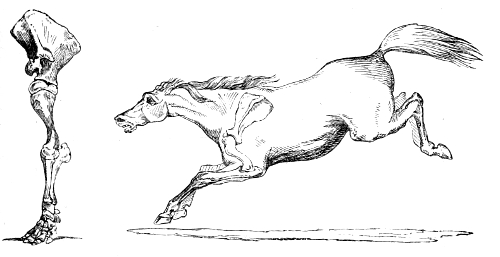
Sir Charles Bell, in his essay on The Hand and its Mechanism, which forms one of the “Bridgewater Treatises,” has exhibited the reasons deducible from organisation, which show the incapacity of the elephant to spring or leap like the horse and other animals whose structure is designed to facilitate agility and speed. In them the various bones of the shoulder and fore limbs, especially the clavicle and humerus, are set at such an angle, that the shock in descending is modified, and the joints and sockets protected from the injury occasioned by concussion. But in the elephant, where the weight of the body is immense, the bones of the leg, in order to present solidity and strength to sustain it, are built in one firm and perpendicular column; instead of being placed somewhat obliquely at their points of contact. Thus whilst the force of the weight in descending is broken and distributed by this arrangement in the case of the horse; it would be so concentrated in the elephant as to endanger every joint from the toe to the shoulder.