Note 12 — APPENDIX II
George Kamensky translation
Formerly it was supposed that, being a bivalent element, oxygen can enter into any grouping of the atoms, and there was no limit foreseen as to the extent to which it could further enter into combination. We could not explain why bivalent sulphur, which forms compounds such as
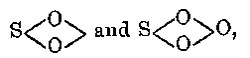
could not also form oxides such as—
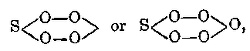
while other elements, as, for instance, chlorine, form compounds such as—
Cl—O—O—O—O—K