Editorial note — Front matter
Reading edition
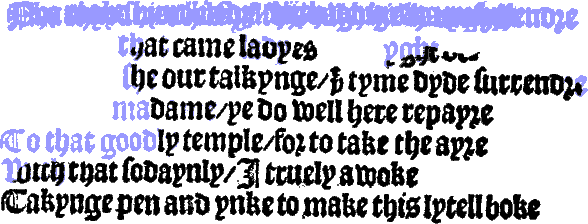
Abbreviations are shown as superscripts. The word shown as ye was printed with the e directly above the y: yͤ. Not all browsers can display this form correctly. Abbreviations in t (what, that) were similarly written; note that the second occurrence of þt uses true thorn, not the more common y. The “-us” abbreviation, similar to a small 9, is shown here as us. In verse, abbreviations were used only when a long line had to be shortened to fit the width of the page.
Damaged Words were reconstructed based on surviving parts of letters. Some reconstructions are more secure than others.
Page A.vi.
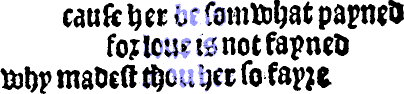
Page B.i.

Page B.i.verso The word “tens” was used in the text because it occurs elsewhere in conjunction with “future”.

Other possible pairs:

Page B.iii.

Page B.iiii.verso The words “mayes touche” are not completely satisfactory, but the text demands a word-final s.
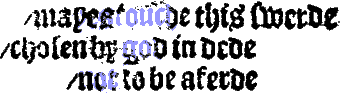
Page B.vi.

Page B.vi.verso

Page C.ii.
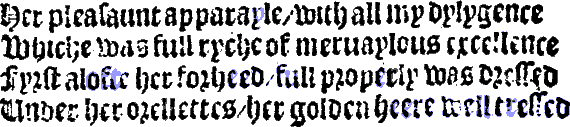
Page C.iii.
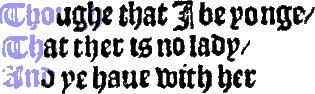
Page C.iii.verso Note the õ abbreviation, indicating that the line spanned the full width of the page.
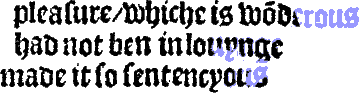
Page C.iiii.
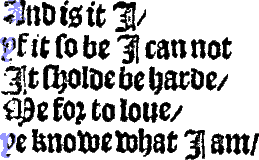
Page C.v.
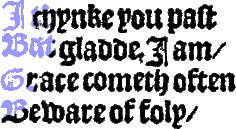
Page C.v.verso The complete line was compared against long lines from other pages to make sure the length was not excessive.

Page C.vi. Much of this is obviously conjectural. The likeliest endings for the first two lines are “tendre” and “fayre”.