Note 41 — PREFACE.
Reading edition
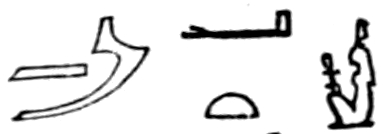
On the Egyptian Goddess of Truth, see Wiedemann, La Déesse Maā, in the Annales du Musée Guimet, x., pp. 561 et seq. With regard to the meaning of the Egyptian name and word Maāt, which is generally translated “truth, or justice,” Renouf has said: “The Egyptians recognised a divinity in those cases only where they perceived the presence of a fixed Law, either of permanence or change. The earth abides for ever, and so do the heavens. Day and night, months, seasons, and years succeed each other with unfailing regularity; the stars are not less constant in their course, some of them rising and setting at fixed intervals, and others eternally circling round the pole in an order which never is disturbed. This regularity, which is the constitutive character of the Egyptian divinity, was called Maāt. The gods were said to be nebû maāt, ‘possessors of maāt.’ or ānchiû em maāt, ‘subsisting by or through maāt.’ Maāt is in fact the Law and Order by which the universe exists. Truth and justice are but forms of Maāt as applied to human action.”—Papyrus of Ani, Introduction, p. 2.