Note 17 — THE LIFE OF ROBIN HOOD.
Reading edition
(17)
“From wealthy abbots’ chests,” &c.]
“But who,” exclaims Dr. Fuller, having cited this passage, “made him a judge? or gave him a commission to take where it might be best spared, and give where it was most wanted?” That same power, one may answer, which authorises kings to take where it can be worst spared, and give it where it is least wanted. Our hero, in this respect, was a knight-errant; and wanted no other commission than that of Justice, whose cause he militated. His power, compared with that of the king of England, was by no means either equally usurped or equally abused: the one reigned over subjects (or slaves) as a master (or tyrant), the other possessed no authority but what was delegated to him by the free suffrage of his adherents, for their general good: and as for the rest, it would be absurd to blame in Robin what we should praise in Richard.35 The latter, too, warred in remote parts of the world against nations from which neither he nor his subjects had sustained any injury; the former at home against those to whose wealth, avarice, or ambition he might fairly attribute not only his own misfortunes, but the misery of the oppressed and enslaved society he had quitted. In a word, every man who has the power has also the authority to pursue the ends of justice, to regulate the gifts of fortune, by transferring the superfluities of the rich to the necessities of the poor; by relieving the oppressed, and even, when necessary, destroying the oppressor. These are the objects of the social union, and every individual may, and to the utmost of his power should, endeavour to promote them. Had our Robin Hood been, like M’Donald of Barrisdale, a reader of Virgil, he, as well as that gallant chief, might have inscribed on his baldric— {xli}
“Hæ tibi erunt artes; pacis componere mores,
Parcere subjectis, et debellare superbos.” 36
(18) “But it is to be remembered,” &c.] The passage from Major’s work, which has been already quoted, is here given entire (except as to a single sentence introduced in another place). “Circa hæc tempora [s. Ricardi I.] ut auguror, Robertus Hudus & Parvus Joannes latrones famatissimi, in nemoribus latuerunt, solum opulentum virorum bona diripientes. Nullum nisi eos invadentem vel resistentem pro suarum rerum tuitione occiderunt. Centum sagittarios ad pugnam aptissimos Robertus latrociniis aluit quos 400 viri fortissimi invadere non audebant. Fæminam nullum opprimi permisit, nec pauperum bona surripuit, verum eos ex abbatum bonis ablatis opipare pavit. Viri rapinam improbo sed latronum omnium humanissimus & princeps erat” (Majoris Britanniæ Historia, Edin. 1740, p. 128).
Stowe, in his Annales, 1592, p. 227, gives an almost literal version of the above passage; Richard Robinson versifies it;37 and Camden slightly refers to it. {xlii}
(19) —“has had the honour to be compared to the illustrious Wallace,” &c.] In the first volume of Peck’s intended supplement to the Monasticon, consisting of collections for the history of Præmonstratensian monasteries, now in the British Museum, is a very curious riming Latin poem with the following title: “Prioris Alnwicensis de bello Scotico apud Dumbarr, tempore rigis Edwardi I. dictamen sive rithmus Latinus, quo de Willielmo Wallace Scotico illo Robin Whood, plura sed invidiose canit;” and in the margin are the following date and reference:—“22. Julii 1304. 32. E. 1. Regist. Prem. fol. 59. a.” This, it maybe observed, is the first known instance of our hero’s name being mentioned by any writer whatever; and affords a strong and respectable proof of his early popularity.
(20) “The abbot of St. Mary’s in York.”] “In the year 1088, Alan, Earl of Richmond, founded here a stately abbey for black monks to the honour of St. Olave; but it was afterwards dedicated to the Blessed Virgin by the command of king William Rufus. Its yearly revenues at the suppression amounted to £1550, 7s. 9d. Dugd., £2850, 1s. 5d. Speed” (Willis’s Mitred Abbeys, i. 214). The abbots in our hero’s time were—
Robert de Harpsham (el. 1184), ob. 1198.
Robert de Longo Campo, ob. 1239.
William Rondele, ob. 1244.
Tho. de Wharterhille, ob. 1258.
(21) —“the sheriff of Nottinghamshire.”] Ralph Murdach was sheriff of Derby and Nottinghamshires in the first year of King Richard I., and for the seven years preceding, and William Brewerre in his sixth year, between which and the first no name appears on the roll. See Fuller’s Worthies, &c.
In the year 1195, Hubert, Archbishop of Canterbury, {xliii} justiciary of all England, sent throughout the kingdom this form of oath: that all men of the realm of England would keep the peace of the lord the king to their power; and that they would neither be thieves nor robbers, nor the receivers of such, nor consent to them in anything; and that when they were able to know such-like malefactors, they would take them to the utmost of their power, and deliver them to the sheriff; who in no wise should be delivered unless by the lord the king or his chief justice; and if unable to take them, they should cause the bailiffs of the lord the king to know who they were: and, cry being raised for pursuing outlaws, robbers, thieves, or their receivers, all should fully do that suit to the utmost of their power, &c. Knights were to be assigned for these purposes, and men chosen and faithful were sent to execute them in every county, who by the oath of true men of the vicinages took many and put them in the king’s prisons; but many, being forewarned, and conscious of evil, left their houses and possessions and fled (R. de Hoveden, p. 757).
(22) —“an anecdote preserved by Fordun,” &c.] “De quo eciam quædam commendabilia recitantur, sicut patuit in hoc, quod cum ipse quondam in Barnisdale iram [f. ob iram] regis & fremitum principis, missam, ut solitus erat, devotissime audiret, nec aliqua necessitate volebat interrumpere officium, quadam die cum audiret missam, à quodam vicecomite & ministris regis, sæpius per prius ipsum infestantibus, in illo secretissimo loco nemorali, ubi missæ interfuit, exploratus, venientes ad eum qui de suis hoc perceperunt, ut omni annisu fugeret suggesserunt, qui, ob reverentiam sacramenti, quod tunc devotissime venerabatur, omnino facere recusavit. Sed ceteris suis, ob metum mortis trepidantibus, Robertus tantum confisus in eum, quem coluit reveritus, cum paucissimis, qui tunc forte ei affuerunt, inimicos congressus & eos de facili devicit, et de eorum spoliis ac redemptione ditatus, ministros ecclesiæ & missas semper in majori veneratione semper & de post habere præelegit, attendens quod wlgariter dictum est:
Hunc deus exaudit, qui missam sæpius audit.”
J. De Fordun Scotichronicon, à Hearne, Ox. 1722, p. 774. {xliv}
This passage is found in no other copy of Fordun’s Chronicle than one in the Harleian Library. Its suppression in all the rest may be fairly accounted for on the principle which is presumed to have influenced the conduct of the ancient English historians. See Note 1.
(23) —“a proclamation was published,” &c.] “The king att last,” says the Harleian MS., “sett furth a proclamation to have him apprehended,” &c. Grafton, after having told us that he “practised robberyes,” &c., adds, “The which beyng certefyed to the king, and he beyng greatly offended therewith, caused his proclamation to be made that whosoever would bryng him quicke or dead, the king would geve him a great summe of money, as by the recordes in the Exchequer is to be seene: But of this promise no man enjoyed any benefite. For the sayd Robert Hood, being afterwardes troubled with sicknesse,” &c. (p. 85.) See Note 14.
(24) “At length the infirmities of old age increasing upon him,” &c.] Thus Grafton: “The sayd Robert Hood, beyng troubled with sicknesse, came to a certain nonry in Yorkshire called Bircklies [r. Kircklies], where desiryng to be let blood, he was betrayed and bled to death.” The Sloane MS. says that “[Being] dystempered with could and age, he had great payne in his lymmes, his bloud being corrupted, therefore to be eased of his payne by letting bloud, he repayred to the priores of Kyrkesly, which some say was his aunt, a woman very skylful in physique & surgery; who, perceyving him to be Robyn Hood, & waying howe fel an enimy he was to religious persons, toke reveng of him for her owne howse and all others by letting him bleed to death. It is also sayd that one Sir Roger of Doncaster, bearing grudge to Robyn for some injury, incyted the priores, with whome he was very familiar, in such a maner to dispatch him.” See the Lytell Geste of Robyn Hode, ad finem. The Harleian MS., after mentioning the proclamation “sett furth to have him apprehended,” adds, “At which time it happened he fell sick at a nunnery in Yorkshire called Birkleys [r. Kirkleys]; & desiring there to be let blood, hee was betrayed & made bleed to death.”
Kirkleys, Kirklees, or Kirkleghes, formerly Kuthale, in the {xlv} deanery of Pontefract, and archdeaconry of the West Riding of Yorkshire, was a Cistercian, or, as some say, a Benedictine nunnery, founded, in honour of the Virgin Mary and St. James, by Reynerus Flandrensis in the reign of King Henry II. Its revenues at the dissolution were somewhat about £20, and the site was granted (36 Hen. 8.) to John Tasburgh and Henry Savill, from whom it came to one of the ancestors of Sir George Armytage, Bart., the present possessor. The remains of the building (if any) are very inconsiderable, and its register has been searched after in vain. See Tanner’s Notitia, p. 674. Thoresby’s Ducatus Leodiensis, p. 91. Hearne’s “Account of Several Antiquities in and about the University of Oxford,” at the end of Leland’s Itinerary, vol. ii. p. 128.
In 1706 was discovered, among the ruins of the nunnery, the monument of Elisabeth de Staynton, prioress; but it is not certain that this was the lady from whom our hero experienced such kind assistance. See Thoresby and Hearne ubi supra.
“One may wonder,” says Dr. Fuller, “how he escaped the hand of justice, dying in his bed, for ought is found to the contrary; but it was because he was rather a merry than a mischievous thief (complementing passengers out of their purses), never murdering any but deer, and . . . . ‘feasting’ the vicinage with his vension” (Worthies, p. 320). See the following note.
(25) “He was interred under some trees at a short distance from the house; a stone being placed over his grave with an inscription to his memory.”] “Kirkley monasterium monialium, ubi Ro: Hood nobilis ille exlex sepultus” (Leland’s Collectanea, i. 54). “Kirkleys Nunnery, in the Woods, whereof Robin Hood’s grave is, is between Halifax and Wakefield upon Calder” (Letter from Jo. Savile to W. Camden, Illus. viro epis. 1691).
“as Caldor comes along,

It chanced she in her course on ‘Kirkley’ cast her eye,
Where merry Robin Hood, that honest thief, doth lie.”
(Polyolbion, song 28.)
See also Camden’s Britannia, 1695, p. 709. {xlvi}
In the second volume of Dr. Stukeley’s Itinerarium Curiosum is an engraving of “the prospect of Kirkley’s abby, where Robin Hood dyed, from the footway leading to Heartishead church, at a quarter of a mile distance. A. The New Hall. B. The Gatehouse of the Nunnery. C. The trees among which Robin Hood was buryed. D. The way up the Hill were this was drawn. E. Bradley wood. F. Almondbury hill. G. Castle field. Drawn by Dr. Johnston among his Yorkshire Antiquitys, p. 54 of the drawings. E. Kirkall, sculp.” It makes plate 99 of the above work, but is unnoticed in the letterpress.
According to the Sloane MS., the prioress, after “letting him bleed to death, buryed him under a great stone by the hywayes syde;” which is agreeable to the account in Grafton’s Chronicle, where it is said that, after his death, “the prioresse of the same place caused him to be buried by the highway-side, where he had used to rob and spoyle those that passed that way. And vpon his grave the sayde prioresse did lay a very fayre stone, wherein the names of Robert Hood, William of Goldesborough, and others were graven. And the cause why she buryed him there was, for that the common passengers and travailers, knowyng and seeyng him there buryed, might more safely and without feare take their jorneys that way, which they durst not do in the life of the sayd outlawes. And at eyther ende of the sayde tombe was erected a crosse of stone, which is to be seene there at this present.”
“Near unto ‘Kirklees’ the noted Robin Hood lies buried under a grave-stone that yet remains near the park, but the inscription scarce legible” (Thoresby’s Ducatus Leodiensis, fo. 1715, p. 91). In the Appendix, p. 576, is the following note, with a reference to “page 91:”—
“Amongst the papers of the learned Dr. Gale, late dean of Yorke, was found this epitaph of Robin Hood:
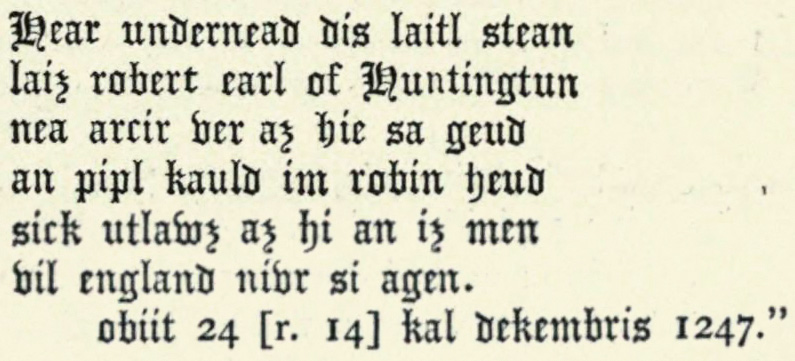
The genuineness of this epitaph has been questioned. Dr. Percy, in the first edition of his “Reliques of Ancient English Poetry” (1765), says “It must be confessed this epitaph is suspicious, because in the most ancient poems of Robin Hood there is no mention of this imaginary earldom.” This reason, however, is by no means conclusive, the most ancient poem now extant having no pretension to the antiquity claimed by the epitaph: and indeed the Doctor himself should seem to have afterward had less confidence in it, as, in both the subsequent editions, those words are omitted, and the learned critic merely observes that the epitaph appears to him suspicious. It will be admitted that the bare suspicion of this ingenious writer, whose knowledge and judgment of ancient poetry are so conspicuous and eminent, ought to have considerable weight. As for the present editor’s part, though he does not pretend to say that the language of this epitaph is that of Henry the Third’s time, nor indeed to determine of what age it is, he can perceive nothing in it from whence one should be led to pronounce it spurious, i.e. that it was never inscribed on the grave-stone of Robin Hood. That there actually was some inscription upon it in Thoresby’s time, though then scarce legible, is evident from his own words: and it should be remembered as well that the last century was not the era of imposition, as that Dr. Gale was both too good and too learned a man either to be capable of it himself or to be liable to it from others.
That industrious chronologist and topographer, as well as respectable artist and citizen, master Thomas Gent, of York, in his “List of religious houses,” annexed to “The ancient and modern state of” that famous city, 1730, 12mo, p. 234, informs us that he had been told “that his [Robin Hood’s] tombstone, having his effigy thereon, was order’d, not many years ago, by a certain knight to be placed as a harth-stone in his great hall. When it was laid overnight, the next morning it was ‘surprizingly’ removed [on or to] one side; and {xlviii} so three times it was laid, and as successively turned aside. The knight, thinking he had done wrong to have brought it thither, order’d it should be drawn back again; which was performed by a pair of oxen and four horses, when twice the number could scarce do it before. But as this,” adds the sagacious writer, “is a story only, it is left to the reader to judge at pleasure.” N.B.—This is the second instance of a miracle wrought in favour of our hero!
In Gough’s Sepulchral Monuments, p. cviii., is “the figure of the stone over the grave of Robin Hood [in Kirklees park, being a plain stone with a sort of cross fleuree thereon], now broken and much defaced, the inscription illegible. That printed in Thoresby, Ducat. Leod. 576, from Dr. Gale’s papers, was never on it.38 The late Sir Samuel Armitage owner of the premises, caused the ground under it to be dug a yard deep, and found it had never been disturbed; so that it was probably brought from some other place, and by vulgar tradition ascribed to Robin Hood” (refers to “Mr. Watson’s letter in Antiquary Society minutes”). This is probably the tomb-stone of Elizabeth de Staynton, mentioned in the preceding note.
The old epitaph is, by some anonymous hand, in a work entitled “Sepulchrorum inscriptiones; or a curious collection of 900 of the most remarkable epitaphs,” Westminster, 1727 (vol. ii. p. 73), thus not inelegantly paraphrased:
“Here, underneath this little stone,
Thro’ Death’s assaults, now lieth one,
Known by the name of Robin Hood,
Who was a thief, and archer good;
Full thirteen years, and something more,
He robb’d the rich to feed the poor: {xlix}
Therefore, his grave bedew with tears,
And offer for his soul your prayers.” 39
(26) —“various dramatic exhibitions.”] The earliest of these performances now extant is “The playe of Robyn Hode, very proper to be played in Maye games,” which is inserted in the Appendix to this work, and may probably be as old as the 15th century. That a different play, however, on the same subject has formerly existed, seems pretty certain from a somewhat curious passage in “The famous chronicle of king Edward the first, sirnamed Edward Longshankes,” &c., by George Peele, printed in 1593.
“Lluellen . . . . . weele get the next daie from Brecknocke the booke of Robin Hood, the frier he shall instruct us in his cause, and weele even here . . . wander like irregulers up and down the wildernesse, ile be maister of misrule, ile be Robin Hood that once, cousin ‘Rice,’ thou shalt be little John, and hers frier David, as fit as a die for frier Tucke. Now, my sweet Nel, if you will make up the messe with a good heart for maide Marian, and doe well with Lluellen under the green-woode trees, with as good a wil as in the good townes, why plena est curia. [Exeunt.
Enter Mortimor, solus.
Mortimor. . . . . . Maisters, have after gentle Robin Hood,
You are not so well accompanied I hope,
But if a potter come to plaie his part,
Youle give him stripes or welcome good or worse.
[Exit.
Enter Lluellen, Meredith, frier, Elinor, and their traine. They are all clad in greene, &c. sing, &c. Blyth and bonny, the song ended, Lluellen speaketh.
Luellen. Why so, I see, my mates of olde,
All were nor lies that Bedlams [beldams] told;
Of Robin Hood and little John,
Frier Tucke and maide Marian.”
Mortimer, as a potter, afterwards fights the frier with “flailes.”
2. “The downfall of Robert earle of Huntington, afterward {l} called Robin Hood of merrie Sherwodde: with his love to chaste Matilda, the lord Fitzwater’s daughter, afterwardes his faire maide Marian. Acted by the right honourable, the earle of Notingham, lord high admirall of England, his servants. ¶ Imprinted at London, for William Leake, 1601.” 4to, b. l.
3. “The death of Robert, earle of Huntington, otherwise called Robin Hood of merrie Sherwodde: with the lamentable tragedie of chaste Matilda, his faire maid Marian, poysoned at Dunmowe, by king John. Acted, &c. ¶ Imprinted &c. [as above] 1601.” 4to, b. l.
These two plays, usually called the first and second part of Robin Hood, were always, on the authority of Kirkman, falsely ascribed to Thomas Heywood, till Mr. Malone fortunately retrieved the names of the true authors, Anthony Mundy and Henry Chettle.40 As they seem partly founded on traditions long since forgotten, and refer occasionally to documents not now to be found; at any rate, as they are much older than most of the common ballads upon the subject, and contain some curious and possibly authentic particulars not elsewhere to be met with, the reader will excuse the particularity of the account and length of the extracts here given.
The first part, or downfall of Robert earle of Huntington, is supposed to be performed at the court and command of Henry VIII., the poet Skelton being the dramatist, and {li} acting the part of chorus. The introductory scene commences thus:
“Enter Sir John Eltam, and knocke at Skelton’s doore.
Sir John.
Howe, maister Skelton! what, at studie hard?
[Opens the doore.
Skel. Welcome and wisht for, honest Sir John Eltam,—
Twill trouble you after your great affairs,
[i.e. the surveying of certain maps which his majesty had employed him in;
To take the paine that I intended to intreate you to,
About rehearsall of your promis’d play.
Elt. Nay, master Skelton; for the king himselfe,
As wee were parting, bid mee take great heede
Wee faile not of our day: therefore I pray
Sende for the rest, that now we may rehearse.
Skel. O they are readie all, and drest to play.
What part play you?
Elt. Why, I play little John,
And came of purpose with this greene sute.
Skel. Holla, my masters, little John is come.
[At every doore all the players runne out: some crying where? where? others, Welcome, Sir John: among others the boyes and clowne.
Skel. Faith, little Tracy, you are somewhat forward.
What, our maid Marian leaping like a lad!
If you remember, Robin is your love,
Sir Thomas Mantle yonder, not Sir John.
Clow. But, master, Sir John is my fellowe, for I am Much the
miller’s sonne. Am I not?
Skel. I know yee are, sir:—
And, gentlemen, since you are thus prepar’d,
Goe in, and bring your dumbe scene on the stage.
And I, as prologue, purpose to expresse
The ground whereon our historie is laied.
[Exeunt, manet Skelton.
Trumpets sounde, [1] enter first King Richard with drum and auncient, giving Ely a purse and sceptre, his mother and brother John, Chester, Lester, Lacie, others at the king’s appointment, doing reverence. The king goes in: presently Ely ascends the chaire, Chester, John, and the queene part displeasantly. [2] Enter ROBERT, EARLE OF HUNTINGTON, leading Marian; followes him Warman, and after Warman, the prior; Warman ever flattering and making curtsie, taking gifts of the prior behinde and his master before. Prince John enters, offereth to take Marian; Queen Elinor enters, offering to pull Robin from her; but they infolde each other, and sit downe within the curteines. [3] Warman with the prior, Sir Hugh Lacy, Lord Sentloe, and Sir Gilbert Broghton folde hands, and drawing the curteins, all (but the prior) enter, and are kindely received by Robin Hoode.”
{lii}
During the exhibition of the second part of the dumb show, Skelton instructs the audience as follows:
“This youth that leads yon virgin by the hand
Is our earle Robert, or your Robin Hoode,
That in those daies was earle of Huntington;
The ill-fac’t miser, brib’d in either hand,
Is Warman, once the steward of his house,
Who, Judas like, betraies his liberall lord,
Into the hands of that relentlesse prior,
Calde Gilbert Hoode, uncle to Huntington.
Those two that seeke to part these lovely friends,
Are Elenor the queene, and John the prince,
She loves earle Robert, he maide Marian,
But vainely; for their deare affect is such,
As only death can sunder their true loves.
Long had they lov’d, and now it is agreed,
This day they must be troth-plight, after wed:
At Huntington’s faire house a feast is helde,
But envie turnes it to a house of teares.
For those false guestes, conspiring with the prior;
To whom earle Robert greatly is in debt,
Meane at the banquet to betray the earle,
Unto a heavie writ of outlawry:
The manner and escape you all shall see.
Looke to your entrance, get you in, Sir John.
My shift is long, for I play Frier Tucke;
Wherein, if Skelton hath but any lucke,
Heele thanke his hearers oft with many a ducke.
For many talk of Robin Hood that never shot in his bowe,
But Skelton writes of Robin Hood what he doth truly knowe.”
After some Skeltonical rimes, and a scene betwixt the prior, the sheriff, and justice Warman, concerning the outlawry, which appears to be proclaimed, and the taking of Earl Huntington at dinner, “Enter Robin Hoode, little John following him; Robin having his napkin on his shoulder, as if hee were sodainly raised from dinner.” He is in a violent rage at being outlawed, and Little John endeavours to pacify him. Marian being distressed at his apparent disorder, he dissembles with her. After she is gone, John thus addresses him:
“Now must your honour leave these mourning tunes,
And thus by my areede you shall provide; {liii}
Your plate and jewels ‘i wil’ straight packe up,
And toward Notingham convey them hence.
At Rowford, Sowtham, Wortley, Hothersfield,
Of all your cattell mony shall be made,
And I at Mansfield will attend your comming;
Where weele determine which waie’s best to take.
Rob. Well, be it so; a God’s name, let it be;
And if I can, Marian shall come with mee.
John. Else care will kill her; therefore if you please,
At th’ utmost corner of the garden wall,
Soone in the evening waite for Marian,
And as I goe ile tell her of the place.
Your horses at the Bell shall readie bee,
I meane Belsavage,41 whence, as citizens
That ‘meane’ to ride for pleasure some small way,
You shall set foorth.”
The company now enters, and Robin charges them with the conspiracy, and rates their treacherous proceedings. Little John in attempting to remove the goods is set upon by Warman and the sheriff; and during the fray “Enter Prince John, Ely and the prior, and others.” Little John tells the prince he but defends the box containing his own gettings; upon which his royal highness observes,
“You do the fellow wrong; his goods are his:
You only must extend upon the earles.
Prior. That was, my lord, but nowe is Robert Hood,
A simple yeoman as his servants were.”
Ely gives the prior his commission, with directions to make speed, lest “in his country-house all his heards be solde;” and gives Warman a patent “for the high sheriffewick of Nottingham.” After this, “Enter Robin like a citizen; and then the queen and Marian disguised for each other. Robin takes Marian, and leaves the queen to Prince John, who is {liv} so much enraged at the deception that he breaks the head of Ely’s messenger. Sir Hugh, brother to Lord Lacy, and steward to Ely, who had been deeply concerned in Huntington’s ruin, is killed in a brawl by Prince John, whom Ely orders to be arrested; but the prince, producing letters from the king revoking Ely’s appointment, “lifts up his drawne sworde,” and “Exit, cum Lester and Lacy,” in triumph. Then “Enter Robin Hoode, Matilda at one doore, little John and Much the Miller’s sonne at another doore.” After mutual congratulations, Robin asks if it be
“possible that Warman’s spite
Should stretch so farre, that he doth hunt the lives
Of bonnie Scarlet, and his brother Scathlock?
Much. O, I, sir. Warman came but yesterday to take charge of the jaile at Notingham, and this daie, he saies, he will hang the two outlawes. . . .
Rob. Now, by my honour’s hope, . . .
He is too blame: say, John, where must they die?
John. Yonder’s their mother’s house, and here the tree,
Whereon, poore men, they must forgoe their lives;
And yonder comes a lazy lozell frier,
That is appointed for their confessor,
Who, when we brought your monie to their mother’s,
Was wishing her to patience for their deaths.”
Here “Enter Frier Tucke;” some conversation passes, and the frier Skeltonizes; after which he departs, saying,
“let us goe our way,
Unto this hanging businesse; would for mee
Some rescue or repreeve might set them free.
Rob. Heardst thou not, little John, the frier’s speach?
John. He seemes like a good fellow, my good lord.
Rob. He’s a good fellowe, John, upon my word.
Lend me thy horne, and get thee in to Much,
And when I blowe this horne, come both and helpe mee.
John. Take heed, my lord: the villane Warman knows you,
And ten to one he hath a writ against you.
Rob. Fear not: below the bridge a poor blind man doth dwell,
With him I will change my habit, and disguise,
Only be readie when I call for yee,
For I will save their lives, if it may bee. . . .
{lv}
Enter Warman, Scarlet and Scathlock bounde, Frier Tuck as their confessor, officers with halberts.
War. Master frier, be briefe, delay no time.
Scarlet and Scatlock, never hope for life;
Here is the place of execution,
And you must answer lawe for what is done.
Scar. Well, if there be no remedie, we must:
Though it ill seemeth, Warman, thou shouldst bee,
So bloodie to pursue our lives thus cruellie.
Scat. Our mother sav’d thee from the gallows, Warman,
His father did preferre thee to thy lord:
One mother had wee both, and both our fathers
To thee and to thy father were kinde friends. . . .
War. Ye were first outlawes, then ye proved theeves. . . .
Both of your fathers were good honest men;
Your mother lives their widowe in good fame:42
But you are scapethrifts, unthrifts, villanes, knaves,
And as ye liv’d by shifts, shall die with shame.”
To them enters Ralph, the sheriff’s man, to acquaint him that the carnifex, or executor of the law, had fallen off his “curtall” and was “cripplefied” and rendered incapable of performing his office; so that the sheriff was to become his deputy. The sheriff insists that Ralph shall serve the turn, which he refuses. In the midst of the altercation, “Enter Robin Hoode, like an old man,” who tells the sheriff that the two outlaws had murdered his young son, and undone himself; so that for revenge-sake he desires they may be delivered to him. They denying the charge, “Robin whispers with them,” and with the sheriff’s leave, and his man’s help, unbinds them: then, sounds his horn; and “Enter little John, Much . . . Fight; the frier, making as if he helpt the sheriffe, knockes down his men crying, Keepe the king’s peace. Sheriffe [perceiving that it is “the outlawed earle of Huntington”] runnes away, and his men.” (See the ballad of “Robin Hood rescuing the widow’s sons,” part ii. num. xxiii.) {lvi}
“Fri. Farewell, earle Robert, as I am true frier,
I had rather be thy clarke then serve the prior.
Rob. A jolly fellowe! Scarlet, knowest thou him?
Scar. Hee is of Yorke, and of Saint Maries cloister;
There where your greedie uncle is lord prior. . . .
Rob. Here is no biding, masters; get yee in. . . .
John, on a sodaine thus I am resolv’d.
To keepe in Sherewoodde tille the king’s returne,
And being outlawed, leade an outlawe’s life. . . .
John. I like your honour’s purpose exceeding well.
Rob. Nay, no more honour, I pray thee, little John;
Henceforth I will be called Robin Hoode,
Matilda shall be my maid Marian.”
Then follows a scene betwixt old Fitzwater and Prince John, in the course of which the prince, as a reason to induce Fitzwater to recall his daughter Matilda, tells him that she is living in an adulterous state, for that
“—Huntington is excommunicate,
And till his debts be paid, by Rome’s decree,
It is agreed, absolv’d he cannot be;
And that can never be.—So never wife,” &c.
Fitzwater, on this, flies into a passion, and accuses the prince of being already married to “earle Chepstowe’s daughter.” They “fight; John falles.” Then enter the queen, &c., and John sentences Fitzwater to banishment: after which “Enter Scathlocke and Scarlet, winding their hornes at severall doores. To them enter Robin Hoode, Matilda, all in greene . . . Much, little John; all the men with bowes and arrowes.43
“Rob. Wind once more, jolly huntsmen, all your horns,
Whose shrill sound, with the ecchoing wods assist,
Shall ring a sad knell for the fearefull deere,
Before our feathered shafts, death’s winged darts,
Bring sodaine summons for their fatall ends. {lvii}
Scar. Its ful seaven years since we were outlawed first,
And wealthy Sherewood was our heritage:
For all those yeares we raigned uncontrolde,
From Barnsdale shrogs to Notingham’s red cliffes.
At Blithe and Tickhill were we welcome guests:
Good George a Greene at Bradford was our friend,
And wanton Wakefield’s pinner lov’d us well.44
At Barnsley dwels a potter, tough and strong,
That never brookt we brethren should have wrong.
The nunnes of Farnsfield (pretty nunnes they bee)
Gave napkins, shirts, and bands to him and mee.
Bateman of Kendall gave us Kendall greene;
And Sharpe of Leedes sharpe arrows for us made.
At Rotherham dwelt our bowyer, God him blisse,
Jackson he hight, his bowes did never misse.
This for our goode, our scathe let Scathlocke tell,
In merry Mansfield how it once befell.
Scath. In merry Mansfield, on a wrestling day,
Prizes there were, and yeomen came to play,
My brother Scarlet and myselfe were twaine;
Many resisted, but it was in vaine,
For of them all we wonne the mastery,
And the gilt wreathes were given to him and me.
There by Sir Doncaster of ‘Hothersfield,’
We were bewraied, beset, and forst to yield;
And so borne bound from thence to Notingham,
Where we lay doom’d to death till Warman came.”
Some cordial expressions pass between Robin and Matilda. He commands all the yeomen to be cheerful; and orders Little John to read the articles.
“Joh. First, no man must presume to call our master,
By name of earle, lorde, baron, knight, or squire:
But simply by the name of Robin Hoode.
That faire Matilda henceforth change her name,
‘And’ by maid Marian’s name be only cald.
Thirdly, no yeoman following Robin Hoode
In Sherewood, shall use widowe, wife, or maid,
But by true labour, lustfull thoughts expell.
Fourthly, no passenger with whom ye meete,
Shall yee let passe till hee with Robin feaste:
Except a poast, a carrier, or such folke,
As use with foode to serve the market townes.
Fiftly, you never shall the poore man wrong. {lviii}
Nor spare a priest, a usurer, or a clarke.
Lastly, you shall defend with all your power
Maids, widowes, orphants, and distressed men.
All. All these we vowe to keepe, as we are men.
Rob. Then wend ye to the greenewod merrily,
And let the light roes bootlesse from yee runne,
Marian and I, as soveraigns of your toyles,
Will wait, within our bower, your bent bowes spoiles.
[Exeunt winding their hornes.”
In the next scene, we find Frier Tucke feignedly entering into a conspiracy with the prior and Sir Doncaster to serve an execution on Robin in disguise. Jinny, the widow Scarlet’s daughter, coming in on her way to Sherwood, is persuaded by the frier to accompany him, “disguised in habit like a pedler’s mort.” Fitzwater enters like an old man:—sees Robin sleeping on a green bank, Marian strewing flowers on him; pretends to be blind and hungry, and is regaled by them. In answer to a question why the fair Matilda (Fitzwater’s daughter) had changed her name, Robin tells him it is
“Because she lives a spotlesse maiden life:
And shall, till Robin’s outlawe life have ende,
That he may lawfully take her to wife;
Which, if King Richard come, will not be long.”
“Enter Frier Tucke and Jinny like pedlers singing,” and afterward “Sir Doncaster and others weaponed.” The frier discovers the plot, and a fray ensues. The scene then changes to the court, where the prior is informed of six of his barns being destroyed by fire, and of the different execrations of all ranks upon him, as the undoer of “the good lord Robert, earle of Huntington;” that the convent of St. Mary’s had elected “Olde father Jerome” prior in his place; and lastly, a herald brings his sentence of banishment, which is confirmed by the entrance of the prior. Lester brings an account of the imprisonment of his gallant sovereign, King Richard, by the Duke of Austria, and requires his ransom to be sent. He then introduces a description of his matchless valour in the Holy Land. John not only refuses the ransom-money, but usurps the style of king; upon which Lester grows furious, {lix} and rates the whole company. The following is part of the dialogue:
“Joh. (to Lester). Darest thou attempt thus proudly in our sight?
Lest. What is’t a subject dares, that I dare not?
Sals. Dare subjects dare, their soveraigne being by?
Lest. O God, that my true soveraigne were ny!
Qu. Lester, he is.
Lest. Madame, by God, you ly.
Chest. Unmanner’d man.
Lest. A plague of reverence!”
After this, and more on the same subject, the scene returns to the forest, where Ely, being taken by Much, “like a countryman with a basket,” is examined and detected by Robin, who promises him protection and service. On their departure:
“Joh. Skelton, a worde or two beside the play.
Fri. Now, Sir John Eltam, what ist you would say?
John. Methinks I see no jeasts of Robin Hoode,
No merry morices of Frier Tuck,
No pleasant skippings up and downe the wodde,
No hunting songs, no coursing of the bucke:
Pray God this play of ours may have good lucke,
And the king’s majestie mislike it not!
Fri. And if he doe, what can we doe to that?
I promis’d him a play of Robin Hoode,
His honorable life, in merry Sherewod;
His majestie himselfe survaid the plot,
And bad me boldly write it, it was good.
For merry jeasts, they have bene showne before
As how the frier fell into the well,
For love of Jinny, that faire bonny bell:
How Greeneleafe rob’d the shrieve of Notingham,
And other mirthful matter, full of game.”
“Enter Warman banished.” He laments his fall, and applies to a cousin, on whom he had bestowed large possessions, for relief; but receives nothing, except reproaches for his treachery to his noble master. The jailor of Nottingham, who was indebted to him for his place, refuses him even a scrap of his dog’s meat, and reviles him in the severest terms. Good-wife Tomson, whose husband he had delivered from death, to his great joy, promises him a caudle, but {lx} fetches him a halter,45 in which he is about to hang himself, but is prevented by Fitzwater, and some of Robin Hood’s men, who crack a number of jokes upon him; Robin puts an end to their mockery, and proffers him comfort and favour. Then enters Frier Tucke, with an account of Sir Doncaster and the prior being stripped and wounded in their way to Bawtrey: Robin, out of love to his uncle, hastens to the place. After this “Enter Prince John, solus, in green, bowe and arrowes.
“John. Why this is somewhat like, now may I sing,
As did the Wakefield pinder in his note;
At Michaelmas commeth my covenant out,
My master gives me my fee:
Then Robin Ile weare thy Kendall greene,
And wend to the greenewodde with thee.” 46
He assumes the name of Woodnet, and is detected by Scathlocke and Frier Tucke. The prince and Scathlocke fight, Scathelocke grows weary, and the frier takes his place. Marion enters, and perceiving the frier, parts the combatants. Robin enters, and John submits to him. Much enters, running, with information of the approach of “the king and twelve and twenty score of horses.” Robin places his people in order. The trumpets sound, the king and his train enter, a general pardon ensues, and the king confirms the love of Robin and Matilda. Thus the play concludes, Skelton promising the second part, and acquainting the audience of what it should consist.
The second part, or death of Robert earle of Huntington, is a pursuit of the same story. The scene, so far as our hero is concerned, lyes in Sherwood. A few extracts may not be unacceptable. {lxi}
“Sc. iiii. Winde hornes. Enter king, queene, &c. Frier Tuck carrying a stag’s head, dauncing.” The frier has been sent for to read the following incription upon a copper ring round the stag’s neck:
“When Harold Hare-foote raigned king,
About my necke he put this ring.”
The king orders “head, ring, and all” to be sent to Nottingham Castle, to be kept for monuments. Fitzwater tells him he has heard “an olde tale,”
“That Harold, being Goodwin’s sonne of Kent,47
Hunted for pleasure once within this wood,
And singled out a faire and stately stagge,
Which, foote to foote, the king in running caught;
And sure this was the stagge.
King. It was no doubt.
Chester. But some, my lord, affirme,
That Julius Cæsar, many years before,
Tooke such a stagge, and such a poesie writ.” 48 {lxii}
Upon which his majesty very sagaciously remarks,
“It should not be in Julius Cæsar’s time:
There was no English used in this land
Untill the Saxons came, and this is writ
In Saxon characters.”
The next quotation may be of service to Dr. Percy, who {lxiii} has been pleased to question our hero’s nobility, because “the most ancient poems make no mention of this earldom,” and the old legend expressly asserts him “to have been a yeoman.” It is very true; and we shall here not only find his title established, but also discover the secret of his not being usually distinguished or designed by it.
“Enter Roben Hoode.
King. How now, earle Robert!
Fri. A forfet, a forfet, my liege lord,
My master’s lawes are on record,
The court-roll here your grace may see.
King. I pray thee, frier, read them mee.
Fri. One shall suffice, and this is hee.
No man that commeth in this wod,
To feast or dwell with Robin Hood,
Shall call him earle, lord, knight, or squire,
He no such titles doth desire,
But Robin Hood, plain Robin Hoode,
That honest yoeman, stout and good,
On paine of forfetting a marke,
That must be paid to mee his clarke.
My liege, my liege, this lawe you broke,
Almost in the last word you spoke;
That crime may not acquitted bee,
Till Frier Tuck receive his fee.”
Now, the reason that “the most ancient poems make no mention of this earldom,” and the old legend expressly asserts him “to have been a yeoman,” appears, plainly enough, to be, that as, pursuant to his own injunction, he was never called, either by his followers, or in the vicinity, by any other name than Robin Hood, so particularly the minstrels, who were always, no doubt, welcome to Sherwood,49 {lxiv} and liberally entertained by him and his yeomanry, would take special care never to offend against the above law: which puts an end to the dispute.—Q. E. D.
Our hero is, at length, poisoned by a drink which Doncaster and the prior, his uncle, had prepared for him to give to the king. His departing scene and last dying speech are beautiful and pathetic.
“Rob. Inough, inough, Fitzwater, take your child.
My dying frost, which no sunnes heat can thawe,
Closes the powers of all my outward parts;
My freezing blood runnes back into my heart,
Where it assists death, which it would resist:
Only my love a little hinders death,
For he beholds her eyes, and cannot smite.
Mat. O let mee looke for ever in thy eyes,
And lay my warme breath to thy bloodlesse lips,
If my sight can restraine death’s tyrannies,
Or keep lives breath within thy bosome lockt.”
He desires to be buried
“At Wakefield, underneath the abbey-wall;”
directs the manner of his funeral; and bids his yeomen,
“For holy dirges, sing ‘him’ wodmen’s songs.”
The king, upon the earl’s death, expresses his sorrow for the tragical event; ratifies the will; repeats the directions for the funeral; and says,
“Fall to your wod-songs, therefore, yeomen bold,
And deck his herse with flowers, that lov’d you deere.”
The whole concludes with the following solemn dirge:
“Weepe, weepe, ye wod-men waile,
Your hands with sorrow wring;
Your master Robin Hood lies deade,
Therefore sigh as you sing. {lxv}
“Here lies his primer, and his beades,
His bent bowe, and his arrowes keene,
His good sworde and his holy crosse:
Now cast on flowers fresh and greene.
“And, as they fall, shed teares and say,
Well a, well a day, well a, well a day!
Thus cast yee flowers and sing,
And on to Wakefield take your way.”
The poet then prosecutes the legend of Matilda, who is finally poisoned, by the procurement of King John, in Dunmow Priory.
The story of this lady, whom the author of these plays is supposed to have been the first that converted into the character of Maid Marian, or connected in any shape with the history of Robin Hood, is thus related by Stow, under the year 1213: “The chronicle of Dunmow sayth, this discord arose betwixt the king and his barons, because of Mawd called the faire, daughter to Robert Fitzwalter, whome the king loved, but her father would not consent; and thereupon ensued warre throughout England. . . . . . Whilst Mawd the faire remayned at Dunmow, there came a messenger unto her from King John about his suite in love, but because she would not agree, the messenger poysoned a boyled or potched egge against she was hungrie, whereof she died” (Annales, 1592). Two of Drayton’s heroical epistles pass between King John and Matilda. He has also written her legend.
4. “Robin Hood’s penn’orths, by Wm. Haughton.” 50
5. “Metropolis coronata, the triumphs of ancient drapery: or, rich cloathing of England, in a second yeeres performance. In honour of the advancement of Sir John Jolles, knight, to the high office of lord maior of London, and taking his oath for the same authoritie, on Monday being the 30. day of October, 1615. Performed in heartie affection to him, and at the bountifull charges of his worthy brethren the truely honourable society of drapers, the first that received such dignitie, in this citie. Devised and written by A. M. {lxvi} [Anthony Mundy] citizen and draper of London.” 1615, 4to.
This is one of the pageants formerly usual on Lord Mayor’s day, and of which several are extant, written as well by our author Mundy,51 as by Middleton, Dekker, Heywood, and other hackney dramatists of that period. They were thought of such consequence that the City had for some time (though probably not till after the Restoration) a professed laureat for their composition; an office which expired with Elkanah Settle in 1723–24. They consisted chiefly of machinery, allegorical or historical personages, songs and speeches.
“After all these shewes, thus ordered in their appointed places, followeth another device of huntsmen, all clad in greene, with their bowes, arrowes and bugles, and a new slaine deere, carried among them. It savoureth of earle Robert de la Hude, sometime the noble earle of Huntington, and sonne in law (by marriage) to old Fitz-Alwine,52 raised by the muses all-commanding power, to honour this triumph with his father. During the time of his out-lawed life in the forest of merry Shirwood, and elsewhere, while the cruel oppression of a most unnatural and covetous brother hung heavy upon him, Gilbert de la Hude, lord abbot of Christall [r. Kirkstall] abbey, who had all or most of his lands in mortgage: he was commonly called Robin Hood, and had a gallant company of men (out-lawed in the like manner) that followed his downecast fortunes; as little John, Scathlocke, Much the miller’s son, Right-hitting Brand, fryar Tuck, and many more. In which condition of life we make instant use of him, and part of his brave bowmen, fitted with bowes and arrowes, of the like strength and length, as good records {lxvii} deliver testimonie, were then used by them in their killing of deere. . . . .
“Afterward, [viz. after “Fitz-Alwine’s speech to the lord maior at night,”] as occasion best presenteth itselfe, when the heate of all other employments are calmly overpast, earle Robin Hood, with fryer Tuck, and his other brave huntesmen, attending (now at last) to discharge their duty to my lord, which the busie turmoile of the whole day could not before affoord: they shewe themselves to him in this order, and earle Robin himselfe thus speaketh.
The speech spoken by Earl Robert de la Hude, commonly called Robin Hood.
Since graves may not their dead containe,
Nor in their peacefull sleepes remaine,
But triumphes and great showes must use them,
And we unable to refuse them;
It joyes me that earle Robert Hood,
Fetcht from the forrest of merrie Shirwood,
With these my yeomen tight and tall,
Brave huntsmen and good archers all,
Must in this joviall day partake,
Prepared for your honour’s sake.
No sooner was i raysde from rest,
And of my former state possest
As while i liv’d, but being alone,
And of my yeomen seeing not one,
I with my bugle gave a call,
Made all the woods to ring withall.
Immediately came little John,
And Scathlock followed him anon,
With Much the honest miller’s sonne;
And ere ought else could be done,
The frollicke frier came tripping in,
His heart upon a merrie pinne.
Master (quoth he) in yonder brake,
A deere is hid for Marian’s sake,
Bid Scathlock, John, or honest Brand,
That hath the happy hitting hand,
Shoote right and have him: and see, my lord,
The deed performed with the word.
For Robin and his bow-men bold,
Religiously did ever holde,
Not emptie-handed to be seene,
Were’t but at feasting on a greene; {lxviii}
Much more then, when so high a day
Calls our attendance: all we may
Is all too little, tis your grace
To winke at weakenesse in this case:
So, fearing to be over-long,
End all with our old hunting song.
The song of Robin Hood and his huntes-men.
Now wend we together, my merry men all,
Unto the forrest side a;
And there to strike a buck or a doae,
Let our cunning all be tried a.
Then goe we merrily, merrily on,
To the green-wood to take up our stand [a],
Where we will lye in waite for our game,
With our best bowes all in our hand [a].
What life is there like to bold Robin Hood?
It is so pleasant a thing a:
In merry Shirwood he spends his dayes,
As pleasantly as a king a.
No man may compare with bold Robin Hood,
With Robin Hood, Scathlocke and John [a]:
Their like was never, nor never will be,
If in case that they were gone [a].
They will not away from merry Shirwood,
In any place else to dwell [a]:
For there is neither city nor towne,
That likes them half so well [a].
Our lives are wholly given to hunt,
And haunt the merry greene-wood [a];
Where our best service is daily spent,
For our master Robin Hood [a].”
6. “Robin Hood and his pastoral May games.” 1624.
7. “Robin Hood and his crew of soldiers.” 1627.
These two titles are inserted among the plays mentioned by Chetwood in his British Theatre (p. 67) as written by anonymous authors in the 16th century to the Restoration. But neither Langbaine, who mentions both, nor any other person, pretends to have ever seen either of them. The former, indeed, may possibly be “The playe of Robyn {lxix} Hode,” already noticed; and the other is probably a future article. Langbaine, it is to be observed, gives no date to either piece; so that it may be fairly concluded those above specified are of Chetwood’s own invention, which appears to have been abundantly fertile in every species of forgery and imposture.
8. “The sad shepherd, or a tale of Robin Hood.”
The story of our renowned archer cannot be said to have been wholly occupied by bards without a name, since, not to mention Mundy or Drayton, the celebrated Ben Jonson intended a pastoral drama on this subject, under the above title; but dying, in the year 1637, before it was finished, little more than the two first acts have descended down to us. His last editor (Mr. Whalley), while he regrets that it is but a fragment, speaks of it in raptures, and, indeed, not without evident reason, many passages being eminently poetical and judicious.
“The persons of the play,” so far as concerns our immediate purpose, are: [1] “Robin Hood, the chief woodman [i.e. forester], master of the feast. [2] Marian, his lady, the mistress. [3] Friar Tuck, the chaplain and steward. [4] Little John, bow-bearer. [5, 6] Scarlet, Scathlocke,53 two brothers, huntsmen. [7] George a Green, huisher of the bower. [8] Much, Robin Hood’s bailiff or acater.” The rest are the guests invited, the witch of Paplewick, her daughter, the swin’ard her son, Puck Hairy or Robin Goodfellow, their hind, and lastly a devout hermit. “The scene, Sherwood, consisting of a landscape of a forest, hills, valleys, cottages, a castle, a river, pastures, herds, flocks, all full of country simplicity; Robin Hood’s bower, his well, &c.” “The argument of the first act” is as follows: “Robin Hood, having invited all the shepherds and shepherdesses of the vale of Be’voir to a feast in the forest of Sherwood, and trusting to his mistress, Maid Marian, with her woodmen, to kill him venison against the day; having left the like charge with Friar Tuck, his chaplain and steward, to command the rest of his merry men to see the bower made {lxx} ready, and all things in order for the entertainment: ‘meets’ with his guests at their entrance into the wood, and conducts them to his bower: where, by the way, he receives the relation of the sad shepherd Æglamour, who is fallen into a deep melancholy for the loss of his beloved Earine, reported to have been drowned in passing over the Trent, some few days before. . . . . In the meantime Marian is come from hunting. . . . . Robin Hood inquires if she hunted the deere at force, and what sport he made? how long he stood? and what head he bore? all which is briefly answered, with a relation of breaking him up, and the raven, and her bone. The suspect had of that raven to be Maudlin the witch of Paplewick, whom one of the huntsmen met i’ the morning at the rousing of the deer, and is confirmed by her being then in Robin Hood’s kitchen, i’ the chimney corner, broiling the same bit which was thrown to the raven at the quarry or fall of the deer. Marian, being gone in to shew the deer to some of the shepherdesses, returns discontented; sends away the venison she had killed to her they call the witch; quarrels with her love Robin Hood, abuseth him, and his guests the shepherds; and so departs, leaving them all in wonder and perplexity.”
By “the argument of the second act” it appears that the witch had “taken the shape of Marian to abuse Robin Hood and perplex his guests.” However, upon an explanation of the matter with the true Marian, the trick is found out, the venison recovered, and “Robin Hood dispatches out his woodmen to hunt and take her: which ends the act.” The third act was designed to be taken up with the chase of the witch, her various schemes to elude the pursuers, and the discovery of Earine in the swineherd’s enchanted oak. Nothing more of the author’s design appearing, we have only to regret the imperfect state of a pastoral drama, which, according to the above learned and ingenious editor, would have done honour to the nation.54 {lxxi}
9. “Robin Hood and his crew of souldiers, a comedy acted at Nottingham on the day of his saCRed majesties corronation. Vivat rex. The actors names: Robin Hood, commander; Little John, William Scadlocke, souldiers; messenger from the sheriffe. London, printed for James Davis, 1661.” 4to.
This is an interlude, of a few pages and no merit, alluding to the late rebellion, and the subject of the day. The outlaws, convinced by the reasoning of the sheriff’s messenger, become loyal subjects.
10. “Robin Hood. An opera, as it is perform’d at Lee’s and Harper’s great theatrical booth in Bartholomew-fair.” 1730. 8vo.
11. “Robin Hood.” 1751. 8vo.
This was a ballad-farce, acted at Drury-lane Theatre, in which the following favourite song was originally sung by Mr. Beard, in the character of Robin Hood:
As blithe as the linnet sings in the green wood,
So blithe we’ll wake the morn;
And through the wide forest of merry Sherwood
We’ll wind the bugle horn.
The sheriff attempts to take bold Robin Hood,
Bold Robin disdains to fly;
Let him come when he will, we’ll, in merry Sherwood,
Or vanquish, boys, or die.
Our hearts they are stout, and our bows they are good,
As well their masters know;
They’re cull’d in the forest of merry Sherwood,
And never will spare a foe.
Our arrows shall drink of the fallow deer’s blood,
We’ll hunt them all o’er the plain!
And through the wide forest of merry Sherwood,
No shaft shall fly in vain.
Brave Scarlet, and John, who ne’er were subdu’d,
Give each his hand so bold;
We’ll range through the forest of merry Sherwood,
What say my hearts of gold?
12. “Robin Hood; or Sherwood forest: a comic opera. As performed at the theatre-royal in Covent-garden. By Leonard Mac Nally, esq.” 1784. 8vo. {lxxii}
This otherwise insignificant performance was embellished with some fine music by Mr. Shield. It has been since reduced to, and is still frequently acted as, an after-piece.
A drama on the subject of Robin Hood, under the title of The Foresters, has been long expected from the elegant author of The School for Scandal. The first act, said to have been written many years ago, is, by those who have seen or heard it, spoken of with admiration.55
(27) —“innumerable poems, rimes, songs and ballads.”] The original and most ancient pieces of this nature have all perished in the lapse of time, during a period of between five and six hundred years’ continuance; and all we now know of them is that such things once existed. In the Vision of Pierce Plowman, an allegorical poem, thought to have been composed soon after the year 1360, and generally ascribed to Robert Langeland, the author introduces an ignorant, idle, and drunken secular priest, the representative, no doubt, of the parochial clergy of that age, in the character of Sloth, who makes the following confession:
“I cannot parfitli mi paternoster, as the preist it singeth,
But I can ryms of Roben Hode, and ‘Randolf’ erl of Chester,
But of our lorde or our lady I lerne nothyng at all.” 56
{lxxiii}
Fordun, the Scotish historian, who wrote about 1340, speaking of Robin Hood and Little John, and their accomplices, says, “of whom the foolish vulgar in comedies and tragedies make lewd entertainment, and are delighted to hear the jesters and minstrels sing them above all other ballads;” 57 and Mair (or Major), whose history was published by himself in 1521, observes that “The exploits of this Robert are celebrated in songs throughout all Britain.” 58 So, likewise, Maister Johne Bellendene, the translator of “that noble clerk Maister Hector Boece” (Bois or Boethius), having mentioned “that waithman Robert Hode with his fallow litil Johne,” adds, “of quhom ar mony fabillis and mery sportis soung amang the vulgar pepyll.” 59 Whatever may have been the nature of the compositions alluded to by the above writers, several of the pieces printed in the present collection are {lxxiv} unquestionably of great antiquity; not less, that is, than between three and four hundred years old. The Lytell Geste, which is first inserted, is probably the oldest thing upon the subject we now possess;60 but a legend, apparently of the same species, was once extant, of, perhaps, a still earlier date, of which it is some little satisfaction to be able to give even the following fragment, from a single leaf, fortunately preserved in one of the volumes of old printed ballads in the British Museum, in a handwriting as old as Henry the Sixth’s time. It exhibits the characters of our hero and his fidus Achates in the noblest point of view.
“He sayd Robyn Hod . . . . yne the preson,
And owght off hit was gon.
The porter rose a-non certeyn,
As sone as he hard Johan call;
Lytyll Johan was redy with a sword,
And bare hym throw to the wall.
Now will I be jayler, sayd lytyll Johan,
And toke the keys in hond;
He toke the way to Robyn Hod,
And sone he hyme unbond.
He gaffe hym a good swerd in his hond,
His hed ther-with for to kepe;
And ther as the wallis wer lowest,
Anon down ther they lepe.
To Robyn . . . . . sayd:
I have done the a god torne for an . . .
Quit me when thow may;
I have done the a gode torne, sayd lytyll [Johan],
Forsothe as I the saye; {lxxv}
I have browghte the under the gren wod . . .
Farewell & have gode daye.
Nay, be my trowthe, sayd Robyn,
So schall it never bee;
I make the master, sayd Robyn,
Off all my men & me.
Nay, be my trowthe, sayd lytyll Johan,
So schall it never bee.”
This, indeed, may be part of the “story of Robin Hood and Little John,” which M. Wilhelm Bedwell found in the ancient MS. lent him by his much honoured good friend M. G. Withers, whence he extracted and published “The Turnament of Tottenham,” a poem of the same age, and which seemed to him to be done (perhaps but transcribed) by Sir Gilbert Pilkington, formerly, as some had thought, parson of that parish.61
That poems and stories on the subject of our hero and his companions were extraordinarily popular and common before and during the 16th century is evident from the testimony of divers writers. Thus, Alexander Barclay, priest, in his translation of The Shyp of Folys, printed by Pynson in 1508, and by John Cawood in 1570,62 says:
“I write no jeste ne tale of Robin Hood.”
Again:
“For goodlie scripture is not worth an hawe,
But tales are loved ground of ribaudry;
And many are so blinded with their foly,
That no scriptur thinke they so true nor gode,
As is a foolish jest of Robin Hode.”
Again:
“And of all fables and jestes of Robin Hood,
Or other trifles.”
{lxxvi}
The same Barclay, in the fourth of his Egloges, subjoined to the last edition of The Ship of Foles, but originally printed soon after 1500, has the following passage:
“Yet would I gladly heare some mery fit
Of maide Marion, or els of Robin Hood,
Or Benteleyes ale, which chafeth well the blood,
Of Perte of Norwich, or Sauce of Wilberton,
Or buckishe Joly63 well stuffed as a ton.”
Robert Braham, in his epistle to the reader, prefixed to Lydgate’s Troy-book, 1555, is of opinion that “Caxton’s recueil” [of Troy] is “worthye to be numbred amongest the trifelinge tales and barrayne luerdries of Robyn Hode and Bevys of Hampton.” (See Ames’s Typographical Antiquities, by Herbert, p. 849.)
“For one that is sand blynd,” says Sir Thomas Chaloner, “would take an asse for a moyle, or another prayse a rime of Robyn Hode for as excellent a making as Troylus of Chaucer, yet shoulde they not straight-waies be counted madde therefore?” (Erasmus’s Praise of Folye, sig. h.)
“If good lyfe,” observes Bishop Latimer, “do not insue and folowe upon our readinge to the example of other, we myghte as well spende that tyme in reading of prophane hystories, of Canterburye tales, or a fit of Roben Hode” (Sermons, sig. A. iiii.)
The following lines, from a poem in the Hyndford MS. compiled in 1568, afford an additional proof of our hero’s popularity in Scotland:
“Thair is no story that I of heir,
Of Johne nor Robene Hude,
Nor zit of Wallace wicht but weir,
That me thinkes half so gude,
As of thre palmaris,” &c.
That the subject was not forgotten in the succeeding age, can be testifyed by Drayton, who is elsewhere quoted, and in his sixth eclogue makes Gorbo thus address “old Winken de Word:” {lxxvii}
“Come, sit we down under this hawthorn-tree,
The morrow’s light shall lend us day enough,
And let us tell of Gawen, or Sir Guy,
Of Robin Hood, or of old Clem a Clough.”
Richard Johnson, who wrote “The History of Tom Thumbe,” in prose (London, 1621, 12mo, b. l.), thus prefaces his work: “My merry muse begets no tales of Guy of Warwicke, &c. nor will I trouble my penne with the pleasant glee of Robin Hood, little John, the fryer, and his Marian; nor will I call to mind the lusty Pinder of Wakefield, &c.”
In “The Calidonian Forrest,” a sort of allegorical or mystic tale, by John Hepwith, gentleman, printed in 1641, 4to, the author says,
“Let us talke of Robin Hoode,
And little John in mery Shirewoode,” &c.64
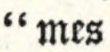
Of one very ancient, and undoubtedly once very popular, song this single line is all that is now known to exist: {lxxviii}

However, though but a line, it is of the highest authority in Westminster Hall, where, in order to the decision of a knotty point, it has been repeatedly cited, in the most solemn manner, by grave and learned judges.
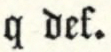
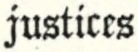
M. 6 Jac. B. R. Witham v. Barker, Yelv. 147. Trespass, for breaking plaintif’s close, &c. Plea. Liberum tenementum of Sir John Tyndall, and justification as his servant and by his command. Replication, That it is true it is his freehold, but that long before the time when &c. he leased to plaintif at will, who entered and was possessed until, &c. traversing, that defendant entered, &c. by command of Sir John. Demurrer: and adjudged against plaintif, on the ground of the replication being bad, as not setting forth any seisin or possession in Sir John, out of which a lease at will could be derived. For a title made by the plea or replication should be certain to all intents, because it is traversable. Here, therefor, he should have stated Sir John’s seisin, as well as the lease at will; which is not done here: Robin Whood in Barnwood stood, absque hoc John. Quod nota. Per Fenner, Williams et Crook Yelv.




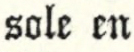
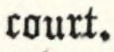

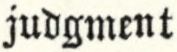

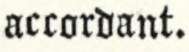
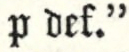
In the case of Bush v. Leake, B. R. Trin. 23 G. 3, Buller, justice, cited the case of Coulthurst v. Coulthurst, C. B. Pasch. 12 G. 3 (an action on bond), and observed, “There a case in Yelverton was alluded to, where the court said, you might as well say, by way of inducement to a traverse, Robin Hood in Barnwood stood.”
It is almost unnecessary to observe, because it will be shortly proved, that Barnwood, in the preceding quotations, ought to be Barnsdale.65 With respect to Whood, the reader {lxxix} will see, under Note 19, a remarkable proof of the antiquity of that pronunciation, which actually prevails in the metropolis at this day. See also the word “whodes” in Note 34. So, likewise, Bale, in his Actes of English Votaries, 1560, says, “the monkes had their cowles, caprones or whodes;” and in Stow’s Survey, 1598, p. 120, have “a fooles whoode.”
This celebrated and important line occurs as the first of a foolish mock-song, inserted in an old mortality, intitled “A new interlude and a mery of the nature of the iiii elementes,” supposed to have been printed by John Rastall about 1520; where it is thus introduced:
“Hu[manyte]. let us some lusty balet syng.
Yng[norance]. Nay, syr, by the hevyn kyng:
For me thynkyth it servyth for no thyng,
All suche pevysh prykeryd song.
Hu. Pes, man, pryk-song may not be dyspysyd,
For therwith God is well plesyd.
Yng. Is God well pleasyd, trowest thou, therby?
Nay, nay, for there is no reason why.
For is it not as good to say playnly
Gyf me a spade,
As gyf me a spa ve va ve va ve vade?
But yf thou wylt have a song that is good,
I have one of Robyn Hode,
The best that ever was made. {lxxx}
Hu. Then a feleshyp, let us here it.
Yng. But there is a bordon, thou must here it,
Or ellys it wyll not be.
Hu. Than begyn, and care not for . . .
Downe downe downe, &c.
Yng. Robyn Hode in Barnysdale stode,
And lent hym tyl a mapyll thystyll;
Than cam our lady & swete saynt Andrewe;
Slepyst thou, wakyst thou, Geffrey Coke?66
A c. wynter the water was depe,
I can not tell you how brode;
He toke a gose nek in his hande,
And over the water he went.
He start up to a thystell top,
And cut hym downe a holyn clobbe;
He stroke the wren betwene the hornys,
That fyre sprange out of the pygges tayle.
Jak boy is thy bow i-broke,
Or hath any man done the wryguldy wrange?
He plukkyd muskyllys out of a wyllowe,
And put them in to his sachell.
Wylkyn was an archer good,
And well coude handell a spade;
He toke his bend bowe in his hand,
And set him downe by the fyre.
He toke with hym lx. bowes and ten,
A pese of befe, another of baken.
Of all the byrdes in mery Englond,
So merely pypys the mery bottel.”
“The lives, stories, and giftes of men which are contained in the bible, they [the papists] read as thinges no more pertaining unto them than a tale of Robin Hood” (Tyndale, Prologue to the prophecy of Jonas, about 1531).
Gwalter Lynne, printer, in his dedication to Ann, Duchess of Somerset, of “The true beliefe in Christ and his sacramentes,” 1550, says, “I woulde wyshe tharfore that al men, {lxxxi} women, and chyldren, would read it. Not as they haue bene here tofore accustomed to reade the fained storyes of Robin-hode, Clem of the Cloughe, wyth such lyke to passe the tyme wythal,” &c.
In 1562, John Alde had license to print “a ballad of Robyn god,” a mistake, it is probable, for Robyn Hod.
Alexander Hume, minister of Logie, about 1599, says in one of his “Hymnes or Sacred Songs,” printed in that year, that
“much to blame are those of carnal brood,
Who loath to taste of intellectual food,
Yet surfeit on old tales of Robin Hood.”
Complaint of Scotland, Edin. 1801, Dissertation, p. 221.
“Exclude the scriptures, and bid them read the story
Of Robin Hood and Guy, which was both tall and stout,
And Bevis of Southampton, to seek the matter out.
Suffer all slander against God and his truth,
And praise the old fashion in king Arthur’s days,
Of abbays and monasteries how it is great ruth
To have them plucked down, and so the eldest says;
And how it was merry when Robin Hood’s plays
Was in every town, the morrice and the fool,
The maypole and the drum, to bring the calf from school,
With Midge, Madge and Marion, about the pole to dance,
And Stephen, that tall stripling, to lead Volans dance,
With roguing Gangweeke, a goodly remembrance,
With beads in every hand, our prayers stood by tale:
This was a merry work, talk among our meany,
And then of good eggs ye might have twenty for a penny.”
L. Ramsey’s Practice of the Divell, b. l.
All the entire poems and songs known to be extant will be found in the following collection; but many more may be traditionally preserved in different parts of the country which would have added considerably to its value.67 That {lxxxii} some of these identical pieces, or others of the like nature, were great favourites with the common people in the time of Queen Elizabeth, though not much esteemed, it would seem, by the refined critic, may, in addition to the testimonies already cited, be inferred from a passage in Webbe’s Discourse {lxxxiii} of English Poetrie, printed in 1586. “If I lette passe,” says he, “the unaccountable rabble of ryming ballet-makers and compylers of sencelesse sonets, who be most busy to stuffe every stall full of grosse devises and unlearned pamphlets, I trust I shall with the best sort be held excused. For though many such can frame an alehouse-song of five or sixe score verses, hobbling uppon some tune of a northern jygge, or Robyn Hoode, or La lubber, &c. and perhappes observe just number of sillables, eyght in one line, sixe in an other, and therewithall an A to make a jercke in the ende, yet if these might be accounted poets (as it is sayde some of them make meanes to be promoted to the lawrell), surely we shall shortly have whole swarmes of poets; and every one that can frame a booke in ryme, though, for want of matter, it be but in commendations of copper noses, or bottle ale, wyll catch at the garlande due to poets: whose potticall (poeticall, I should say) heades, I woulde wyshe, at their worshipfull comencements, might, in steede of lawrell, be gorgiously garnished with fayre greene barley, in token of their good affection to our Englishe malt.” The chief object of this satire seems to be William Elderton, the drunken {lxxxiv} ballad-maker, of whose compositions all but one or two have unfortunately perished.68
Most of the songs inserted in the second half of this volume were common broad-sheet ballads, printed in black letter, with woodcuts, between the Restoration and the Revolution; though copies of some few have been found of an earlier date. “Who was the author of the collection intitled Robin Hood’s Garland, no one,” says Sir John Hawkins, “has yet pretended to guess. As some of the songs have in them more of the spirit of poetry than others, it is probable,” he thinks, “it is the work of various hands: that it has from time to time been varied and adapted to the phrase of the times,” he says, “is certain.” None of these songs, it is believed, were collected into a garland till after the Restoration; as the earliest that has been met with, a copy of which is in the possession of Francis Douce, Esq., was printed by W. Thackeray, a noted ballad-monger, in 1670. This, however, contains no more than sixteen songs, some of which, very falsely as it seems, are said to have been “never before printed.” “The latest edition of any worth,” according to Sir John Hawkins, “is that of 1719.” None of the old editions of this garland have any sort of preface: that prefixed to the modern ones, of Bow or Aldermary churchyard, being {lxxxv} taken from the collection of old ballads, 1723, where it is placed at the head of Robin Hood’s birth and breeding. The full title of the last London edition of any note is—“Robin Hood’s Garland: being a complete history of all the notable and merry exploits performed by him and his men on many occasions: To which is added a preface [i.e. the one already mentioned] giving a more full and particular account of his birth, &c., than any hitherto published. [Cut of archers shooting at a target.]
I’ll send this arrow from my bow,
And in a wager will be bound
To hit the mark aright, although
It were for fifteen hundred pound.
Doubt not I’ll make the wager good,
Or ne’er believe bold Robin Hood.
Adorned with twenty-seven neat and curious cuts adapted to the subject of each song. London, Printed and sold by R. Marshall, in Aldermary church-yard, Bow-lane.” 12mo. On the back of the title-page is the following Grub-street address:
“To all gentlemen archers.
“This garland has been long out of repair,
Some songs being wanting, of which we give account;
For now at last, by true industrious care,
The sixteen songs to twenty-seven we mount;
Which large addition needs must please, I know,
All the ingenious ‘yeomen’ of the bow.
To read how Robin Hood and Little John,
Brave Scarlet, Stutely, valiant, bold and free,
Each of them bravely, fairly play’d the man,
While they did reign beneath the green-wood tree;
Bishops, friars, likewise many more,
Parted with their gold, for to increase their store,
But never would they rob or wrong the poor.”
The last seven lines are not by the author of the first six, but were added afterwards; perhaps when the twenty-four songs were increased to twenty-seven.69 {lxxxvi}
(28) —“has given rise to divers proverbs.”] Proverbs, in all countries, are, generally speaking, of very great antiquity; and therefore it will not be contended that those concerning our hero are the oldest we have. It is highly probable, however, that they originated in or near his own time, and of course have existed for upwards of 500 years, which is no modern date. They are here arranged, not, perhaps, according to their exact chronological order, but by the age of the authorities they are taken from.
1. “Good even, good Robin Hood.”
The allusion is to civility extorted by fear. It is preserved by Skelton, in that most biting satire against Cardinal Wolsey, “Why come ye not to court?” (Works, 1736, p. 147).
“He is set so hye,
In his hierarchy,
That in the chambre of stars
All matters there he mars;
Clapping his rod on the borde,
No man dare speake a word;
For he hath all the saying,
Without any renaying: {lxxxvii}
He rolleth in his recordes,
He saith, How say ye my lordes?
Is not my reason good?
Good even, good Robin Hood.” 70
2. “Many men talk of Robin Hood that never shot in his bow.”
“That is, many discourse (or prate rather) of matters wherein they have no skill or experience. This proverb is now extended all over England, though originally of Nottinghamshire extraction, where Robin Hood did principally reside in Sherwood forest. He was an arch-robber, and withal an excellent archer; though surely the poet71 gives a twang to the loose of his arrow, making him shoot one a cloth-yard long, at full forty score mark, for compass never higher than the breast, and within less than a foot of the mark. But herein our author hath verified the proverb, talking at large of Robin Hood, in whose bow he never shot” (Fuller’s Worthies, p. 315).
“One may justly wonder,” adds the facetious writer, “this archer did not at last hit the mark, I mean, come to the gallows for his many robberies.”
The proverb is mentioned, and given as above, by Sir Edward Coke in his 3d Institute, p. 197. See also Note 26. It is thus noticed by Jonson in “The king’s entertainment at Welbeck in Nottinghamshire, 1633:”
“This is . . . . . father Fitz-Ale, herald of Derby, &c.
He can fly o’er hills and dales,
And report you more odd tales
Of our out law Robin Hood,
That revell’d here in Sherewood,
And more stories of him show,
(Though he ne’er shot in his bow)
Than au’ men or believe, or know.”
{lxxxviii}
We likewise meet with it in Epigrams, &c., 1654:
“In Vertutem.
“Vertue we praise, but practice not her good,
(Athenian-like) we act not what we know;
So many men doe talk of Robin Hood,
Who never yet shot arrow in his bow.”
On the back of a ballad in Anthony a Wood’s collection he has written,
“There be some that prate
Of Robin Hood, and of his bow,
Which never shot therein, I trow.”
Ray gives it thus:
“Many talk of Robin Hood, that never shot in his bow,
And many talk of little John, that never did him know:”
which Kelly has varied, but without authority.
Camden’s printer has separated the lines, as distinct proverbs (Remains, 1674):
“Many speak of Robin Hood that never shot in his bow.
“Many a man talks of little John that never did him know.”
This proverb likewise occurs in The downfall of Robert earle of Huntington, 1600, and is alluded to in a scarce and curious old tract intitled “The contention betwyxte Church-yeard and Camell, upon David Dycer’s Dreame,” &c. 1560, 4to, b. l.
“Your sodain stormes and thundre claps, your boasts and braggs so loude:
Hath doone no harme thogh Robin Hood spake with you in a cloud.
Go learne againe of litell Jhon, to shute in Robyn Hods bowe,
Or Dicars dreame shall be unhit, and all his whens, I trowe.” 72
The Italians appear to have a similar saying:
Molti parlan di Orlando
Chi non viddero mai suo brando.
{lxxxix}
3. “To overshoot Robin Hood.”
“And lastly and chiefly, they cry out with open mouth as if they had overshot Robin Hood, that Plato banished them [i.e. poets] out of his commonwealth” (Sir P. Sidney’s Defence of Poesie).
4. “Tales of Robin Hood are good [enough] for fools.”
This proverb is inserted in Camden’s Remains, printed originally in 1605; but the word in brackets is supplied from Ray.
5. “To sell Robin Hood’s pennyworths.”
“It is spoken of things sold under half their value; or if you will, half sold, half given. Robin Hood came lightly by his ware, and lightly parted therewith; so that he could afford the length of his bow for a yard of velvet. Whithersoever he came, he carried a fair along with him; chapmen crowding to buy his stollen commodities. But seeing the receiver is as bad as the thief, and such buyers are as bad as receivers, the cheap pennyworths of plundered goods may in fine prove dear enough to their consciences” (Fuller’s Worthies, p. 315).
This saying is alluded to in the old North-country song of Randal a Barnaby:
“All men said, it became me well,
And Robin Hood’s pennyworths I did sell.”
6. “Come, turn about, Robin Hood.”
Implying that to challenge or defy our hero must have been the ne plus ultra of courage. It occurs in “Wit and Drollery,” 1661:
“O love, whose power and might,
No creature ere withstood,
Thou forcest me to write,
Come turn about Robin-hood.”
7. “As crook’d as Robin Hood’s bow.”
That is, we are to conceive, when bent by himself. The following stanza of a modern Irish song is the only authority for this proverb that has been met with:
“The next with whom I did engage,
It was an old woman worn with age, {xc}
Her teeth were like tobacco pegs,
Besides she had two bandy legs,
Her back more crook’d than Robin Hood’s bow,
Purblind and decrepid, unable to go;
Altho’ her years were sixty-three,
She smil’d at the humours of Soosthe Bue.”
8. “To go round by Robin Hood’s barn.”
This saying, which now first appears in print, is used to imply the going of a short distance by a circuitous method, or the farthest way about.
(29) —“to swear by him, or some of his companions, appears to have been a usual practice.”] The earliest instance of this practice occurs in a pleasant story among “Certaine merry tales of the mad-men of Gottam,” compiled in the reign of Henry VIII. by Dr. Andrew Borde, an eminent physician of that period, which here follows verbatim, as taken from an old edition in black letter, without date (in the Bodleian Library), being the first tale in the book.
“There was two men of Gottam, and the one of them was going to the market at Nottingham to buy sheepe, and the other came from the market; and both met together upon Nottingham bridge. Well met, said the one to the other. Whither be yee going? said he that came from Nottingham. Marry, said he that was going thither, I goe to the market to buy sheepe. Buy sheepe! said the other, and which way wilt thou bring them home? Marry, said the other, I will bring them over this bridge. By Robin Hood, said he that came from Nottingham, but thou shalt not. By Maid Marrion, said he that was going thitherward, but I will. Thou shalt not, said the one. I will, said the other. Ter here! said the one. Shue there! said the other. Then they beate their staves against the ground, one against the other, as there had beene an hundred sheepe betwixt them. Hold in, said the one. Beware the leaping over the bridge of my sheepe, said the other. I care not, said the other. They shall not come this way, said the one. But they shall, said the other. Then said the other, & if that thou make much to doe, I will put my finger in thy mouth. A turd thou wilt, said the other. And as they were at that contention, another man of Gottam {xci} came from the market, with a sacke of meale upon a horse, and seeing and hearing his neighbours at strife for sheepe, and none betwixt them, said, Ah fooles, will you never learn wit? Helpe me, said he that had the meale, and lay my sack upon my shoulder. They did so; and he went to the one side of the bridge, and unloosed the mouth of the sacke, and did shake out all his meale into the river. Now, neighbours, said the man, how much meale is there in my sacke now? Marry, there is none at all, said they. Now, by my faith, said he, even as much wit is in your two heads, to strive for that thing you have not. Which was the wisest of all these three persons, judge you.” 73
“By the bare scalp of Robin Hood’s fat frier,” is an oath put by Shakespeare into the mouth of one of his outlaws in the Two Gentlemen of Verona, act iv. scene 1. “Robin Hood’s fat frier” is Frier Tuck; a circumstance of which Doctor Johnson, who set about explaining that author with a very inadequate stock of information, was perfectly ignorant.
(30) —“his songs have been preferred, not only on the most solemn occasion to the psalms of David, but in fact to the New Testament.”] [“On Friday, March 9th, 1733] was executed at Northampton William Alcock for the murder of his wife. He never own’d the fact, nor was at all concern’d at his approaching death, refusing the prayers and assistance of any persons. In the morning he drank more than was sufficient, yet sent and paid for a pint of wine, which being deny’d him, he would not enter the cart before he had his money return’d. On his way to the gallows he sung part of an old song of Robin Hood, with the chorus, Derry, derry, down,74 &c., and swore, kick’d and spurn’d at every person {xcii} that laid hold of the cart; and before he was turn’d off, took off his shoes, to avoid a well-known proverb; and being told by a person in the cart with him, it was more proper for him to read, or hear some body read to him, than so vilely to swear and sing, he struck the book out of the person’s hands, and went on damning the spectators, and calling for wine. Whilst psalms and prayers were performing at the tree, he did little but talk to one or other, desiring some to remember him, others to drink to his good journey; and to the last moment declared the injustice of his case” (Gentleman’s Magazine, vol. iii. P. 154).
To this maybe added, that at Edinburgh, in 1565, “Sandy Stevin menstrall [i.e. musician] was convinced of blasphemy, alledging, That he would give no moir credit to The new testament, then to a tale of Robin Hood, except it wer confirmed be the doctours of the church” (Knox’s Historie of the Reformation in Scotland, Edin. 1732, p. 368).
William Roy, in a bitter satire against Cardinal Wolsey, intitled, “Rede me and be nott wrothe For I saye nothynge but trothe,” printed abroad, about 1525, speaking of the bishops, says:
“Their frantyke foly is so pevisshe,
That they contempne in Englisshe,
To have the new testament;
But as for tales of Robyn Hode,
With wother jestes nether honest nor goode,
They have none impediment.”
To the same effect is the following passage in another old libel upon the priests, intitled “I playne Piers which can not flatter, a plowe-man men me call,” &c. b. l. n. d. printed in the original as prose:
“No Christen booke,
Maye thou on looke,
Yf thou be an Englishe strunt, {xciii}
Thus dothe alyens us loutte,
By that ye spreade aboute,
After that old sorte and wonte.
You allowe they saye,
Legenda aurea,
Roben Hoode, Bevys, & Gower,
And all bagage be syd,
But God’s word ye may not abyde,
These lyese are your churche ‘dower.’”
See also before, p. lxxii.75
So in Laurence Ramsey’s “Practise of the Divell” (n. d. 4to, b. l.):
“Exclude the scriptures, and byd them reade the storie
Of Robin Hood, and Guye, which was both tall and stout,
And Bevis of Southampton, to seeke the matter out.”
(31) “His service to the Word of God.”] “I came once myselfe,” says Bishop Latimer (in his sixth sermon before King Edward VI.), “to a place, riding on a jorney homeward from London, and I sent worde over night into the towne that I would preach there in the morning, bicause it was a holy day, and methought it was an holydayes worke. The churche stode in my way; and I tooke my horse and my company and went thither (I thought I should have found a great companye in the churche), and when I came there, the churche dore was faste locked. I taried there half an hower and more; at last the keye was founde; and one of the parishe commes to me, and sayes, Sir, this is a busie day with us, we cannot heare you; it is Robin Hoodes daye. The parishe are gone abroad to gather for Robin Hoode, I pray you let them not. I was fayne there to geve place to Robin Hoode. I thought my rochet shoulde have bene regarded, thoughe I were not; but it woulde not serve, it was fayne to geve place to Robin Hodes men. {xciv}
“It is no laughyng matter, my frendes, it is a weepyng matter, a heavy matter, under the pretence for gatherynge for Robin Hoode, a traytour76 and a theefe, to put out a preacher, to have his office lesse esteemed, to preferre Robin Hoode before the ministration of God’s worde, and all this hath come of unpreaching prelates. Thys realme hath bene ill provided for, that it hath had suche corrupte judgementes in it, to preferre Robin Hoode to God’s worde. If the bishoppes had bene preachers, there shoulde never have bene any such thing,” &c.
(32) —“may be called the patron of archery.”] The bow and arrow makers, in particular, have always held his memory in the utmost reverence. Thus, in the old ballad of London’s Ordinary:
“The hosiers will dine at the Leg,
The drapers at the sign of the Brush,
The fletchers to Robin Hood will go,
And the spendthrift to Beggar’s-bush.” 77
The picture of our hero is yet a common sign in the country, and, before hanging-signs were abolished in London, must have been still more so in the City; there being at present no less than a dozen alleys, courts, lanes, &c., to which he or it has given a name. (See Baldwin’s New Complete Guide, 1770.) The Robin Hood Society, a club or assembly for public debate, or school for oratory, is well known. It was held at a public-house, which had once borne the sign, and still retained the name of this great man, in Butcher Row, near Temple Bar.
It is very usual in the North of England for a publican whose name fortunately happens to be John Little to have {xcv} the sign of Robin Hood and his constant attendant, with this quibbling subscription:
“You gentlemen, and yeomen good,
Come in and drink with Robin Hood;
If Robin Hood be not at home,
Come in and drink with Little John.” 78
An honest countryman, admiring the conceit, adopted the lines, with a slight, but, as he thought, necessary alteration, viz.:
“If Robin Hood be not at home,
Come in and drink with—Simon Webster.”
Drayton, describing the various ensigns or devices of the English counties at the battle of Agincourt, gives to
“Old Nottingham, an archer clad in green,
Under a tree with his drawn bow that stood,
Which in a chequer’d flag far off was seen;
It was the picture of old Robin Hood.”
(33) —“the supernatural powers he is, in some parts, supposed to have possessed.”] “In the parish of Halifax is an immense stone or rock, supposed to be a Druidical monument, there called Robin Hood’s pennystone, which he is said to have used to pitch with at a mark for his amusement. There is likewise another of these stones, of several tons weight, which the country-people will tell you he threw off an adjoining hill with a spade as he was digging. Every thing of the marvellous kind being here attributed to Robin Hood, as it is in Cornwall to King Arthur” (Watson’s History of Halifax, p. 27).
At Birchover, six miles south of Bakewell, and four from Haddon, in Derbyshire, among several singular groups of rocks, are some stones called Robin Hood’s stride, being two {xcvi} of the highest and most remarkable. The people say Robin Hood lived here.
(34) —“having a festival allotted to him, and solemn games instituted in honour of his memory,” &c.] These games, which were of great antiquity and different kinds, appear to have been solemnised on the first and succeeding days of May, and to owe their original establishment to the cultivation and improvement of the manly exercise of archery, which was not, in former times, practised merely for the sake of amusement.
“I find,” says Stow, “that in the moneth of May, the citizens of London, of all estates, lightlie in every parish, or sometimes two or three parishes joyning together, had their severall mayinges, and did fetch in Maypoles, with divers warlike shewes, with good archers, morrice-dancers, and other devices for pastime all the day long: and towards the evening they had stage-playes and bonefires in the streetes. . . . . These greate Mayinges and Maygames, made by the governors and masters of this citie, with the triumphant setting up of the greate shafte (a principall Maypole in Cornhill, before the parish church of S. Andrew, therefore called Undershafte) by meane of an insurrection of youthes against alianes on Mayday 1517, the ninth of Henry the Eight, have not beene so freely used as afore” (Survey of London, 1598, p. 72).
The disuse of these ancient pastimes, and the consequent “neglect of archerie,” are thus pathetically lamented by Richard Niccolls, in his London’s Artillery, 1616:
“How is it that our London hath laid downe
This worthy practise, which was once the crowne
Of all her pastime, when her Robin Hood
Had wont each yeare, when May did clad the wood,
With lustie greene, to lead his yong men out,
Whose brave demeanour, oft when they did shoot,
Invited royall princes from their courts,
Into the wilde woods to behold their sports!
A description of one drawing a bow.
Who thought it then a manly sight and trim,
To see a youth of cleane compacted lim,
Who, with a comely grace, in his left hand
Holding his bow, did take his stedfast stand,
Setting his left leg somewhat foorth before,
His arrow with his right hand nocking sure, {xcvii}
Not stooping, nor yet standing streight upright,
Then, with his left hand little ’bove his sight,
Stretching his arm out, with an easie strength,
To draw an arrow of a yard in length.” 79
The lines,
“Invited royall princes from their courts
Into the wild woods to behold their sports,”
may be reasonably supposed to allude to Henry VIII., who appears to have been particularly attached, as well to the exercise of archery as to the observance of May. Some short time after his coronation, says Hall, he “came to Westminster with the quene, and all their traine: and on a tyme being there, his grace therles of Essex, Wilshire, and other noble menne, to the numbre of twelve, came sodainly in a mornyng into the quenes chambre, all appareled in short cotes of Kentish Kendal, with hodes on their heddes, and hosen of the same, every one of them his bowe and arrowes, and a sworde and a bucklar, like outlawes, or ‘Robyn’ Hodes men; whereof the quene, the ladies, and al other there were abashed, aswell for the straunge sight, as also for their sodain commyng: and after certayn daunces and pastime made thei departed” (Hen. VIII. fo. 6, b). The same author gives the following curious account of “A maiynge” in the 7th year of this monarch (1516): “The kyng & the quene, accompanied with many lordes & ladies, roade to the high grounde on Shoters hil to take the open ayre, and as they passed by the way they espied a company of tall yomen, clothed all in grene, with grene whodes & bowes and arrowes, to the number of ii. C. Then one of them whiche called hymselfe Robyn Hood, came to the kyng, desyring hym to se his men shote, & the kyng was content. Then he whisteled, and all the ii. C. archers shot & losed at once; and then he whisteled again, and they likewyse shot agayne; their arrowes whisteled by craft of the {xcviii} head, so that the noyes was straunge and great, and muche pleased the kyng, the quene, and all the company. All these archers were of the kynges garde, and had thus appareled themselves to make solace to the kynge. Then Robyn Hood desyred the kyng and quene to come into the grene wood, and to se how the outlawes lyve. The kyng demaunded of the quene and her ladyes, if they durst adventure to go into the wood with so many outlawes. Then the quene said, if it pleased hym, she was content. Then the hornes blewe tyll they came to the wood under Shoters-hill, and there was an arber made of bowes, with a hal, and a great chamber, and an inner chamber, very well made and covered with floures and swete herbes, which the kyng muche praised. Then sayd Robyn Hood, Sir, outlawes brekefastes is venyson, and therefore you must be content with such fare as we use. Then the kyng and quene sate doune, and were served with venyson and vyne by Robyn Hood and his men, to their great contentacion. Then the kyng departed and his company, and Robyn Hood and his men them conduicted: and as they were returnyng, there met with them two ladyes in a ryche chariot drawen with v. horses, and every horse had his name on his head, and on every horse sat a lady with her name written . . . . and in the chayre sate the lady May, accompanied with lady Flora, richely appareled; and they saluted the kyng with diverse goodly songes, and so brought hym to Grenewyche. At this maiyng was a greate number of people to beholde, to their great solace and confort” (fo. lvi. b).
That this sort of May-games was not peculiar to London appears from a passage in Richard Robinson’s “Third assertion Englishe historicall, frendly in favour and furtherance of English archery:” 80 {xcix}
“And, heare because of archery I do by penne explane,
The use, the proffet, and the praise, to England by the same,
(1553)
Myselfe remembreth of a childe in contreye native mine,
(7. E. 6.)
A May-game was of Robyn Hood, and of his traine that time,
To traine up young men, stripplings, and eche other younger childe,
In shooting, yearely this with solempne feast was by the guylde
Or brotherhood of townsmen don, with sport, with joy, and love,
To proffet which in present tyme, and afterward did prove.”
The games of Robin Hood seem to have been occasionally of a dramatic cast. Sir John Paston, in the time of King Edward IV., complaining of the ingratitude of his servants, mentions one who had promised never to desert him, “and ther uppon,” says he, “I have kepyd hym thys iii yer to pleye seynt Jorge, and Robyn Hod and the sheryf off Notyngham,81 and now when I wolde have good horse he is goon into Bernysdale, and I withowt a keeper.”
In some old accounts of the churchwardens of St. Helen’s at Abingdon, Berks, for the year 1556, there is an entry For setting up Robin Hoodes Bower; I suppose, says {c} Warton, for a parish interlude. (See History of English Poetry, ii. 175.)82 {ci}
In some places, at least, these games were nothing more, in effect, than a morris-dance, in which Robin Hood, Little John, Maid Marian, and Frier Tuck were the principal personages; the others being a clown or fool, the hobby-horse (which appears, for some reason or other, to have been frequently forgot83), the taborer, and the dancers, who were more or less numerous. Thus Warner:
“At Paske began our morrise, and ere penticost our May,
Tho Roben Hood, liell John, frier Tuck, and Marian deftly play,
And lard and ladie gang till kirke with lads and lasses gay.” 84
Perhaps the clearest idea of these last-mentioned games, about the beginning of the 16th century, will be derived from some curious extracts given by Mr. Lysons in his valuable work intitled “The Environs of London” (vol. i. 1792, p. 226), from the contemporary accounts of the “churchwardens of the parish of Kingston upon Thames.”