Note 579 — Chapter XIV · ON LEAF-ARRANGEMENT, OR PHYLLOTAXIS
Reading edition
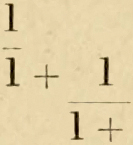
This celebrated series, which appears in the continued fraction etc. and is closely connected with the Sectio aurea or Golden Mean, is commonly called the Fibonacci series, after a very learned twelfth century arithmetician (known also as Leonardo of Pisa), who has some claims to be considered the introducer of Arabic numerals into christian Europe. It is called Lami’s series by some, after Father Bernard Lami, a contemporary of Newton’s, and one of the co-discoverers of the parallelogram of forces. It was well-known to Kepler, who, in his paper De nive sexangula (cf. supra, p. 480), discussed it in connection with the form of the dodecahedron and icosahedron, and with the ternary or quinary symmetry of the flower. (Cf. Ludwig, F., Kepler über das Vorkommen der Fibonaccireihe im Pflanzenreich, Bot. Centralbl. LXVIII, p. 7, 1896). Professor William Allman, Professor of Botany in Dublin (father of the historian of Greek geometry), speculating on the same facts, put forward the curious suggestion that the cellular tissue of the dicotyledons, or exogens, would be found to consist of dodecahedra. and that of the monocotyledons or endogens of icosahedra (On the mathematical connexion between the parts of Vegetables: abstract of a Memoir read before the Royal Society in the year 1811 (privately printed, n.d.). Cf. De Candolle, Organogénie végétale, I, p. 534).