Note III-4 — Chapter III · DISCOVERY OF DARIEN.
Reading edition
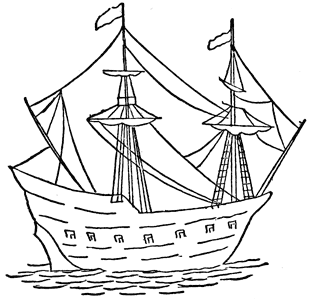
Caravel.
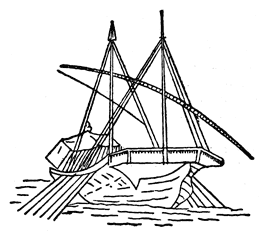
Galley.
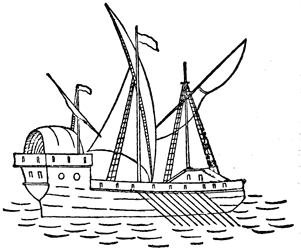
Galeaza.
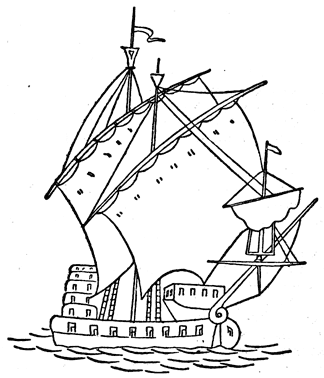
Galleon.
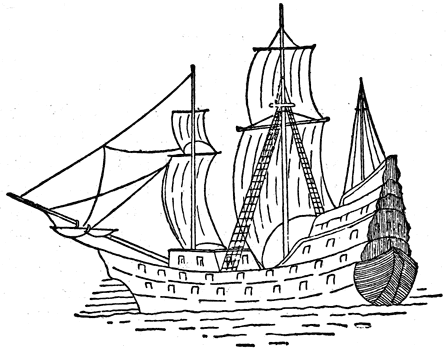
Navio.
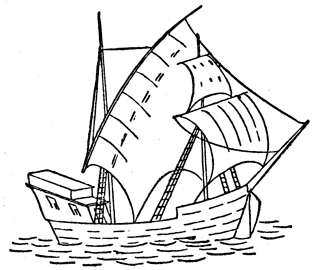
Brigantine.
It is often remarked with wonder in what small and apparently insecure vessels the early navigators traversed perilous seas and explored unknown coasts. That shipwreck so often attended their ventures is less surprising than that so many escaped destruction. Two of the three vessels employed by Columbus were open boats, according to March y Labores, Historia de la Marina Real Española, i. 98, of forty tons each, and the decked Santa María, only sixty tons. The term caravel was originally given to ships navigated wholly by sails as distinguished from the galley propelled by oars. It has been applied to a great variety of vessels of different size and construction. The caravels of the New World discoverers may be generally described as long, narrow boats of from twenty to one hundred tons burden, with three or four masts of about equal height carrying sometimes square and sometimes lateen sails, the fourth mast set at the heel of the bowsprit carrying square sails. They were usually half-decked, and adorned with the lofty forecastle and loftier poop of the day. The latter constituted over that part of the vessel a double or treble deck, which was pierced for cannon. A class of vessels like the Santa María, beside a double stern deck, had a forward deck armed with small pieces for throwing stones and grape. In the archives of Mallorca is a picture of a caravel drawn in 1397, and a very fair representation of those in use a century later may be found on Juan de la Cosa's map. The large decked ships of from 100 to 1200 tons had two, three, or four masts, and square sails, with high poop and sometimes high prow. In naval engagements and in discovery the smaller vessels seemed to be preferred, being more easily handled. Columbus, at Paria, complained of his vessel of 100 tons as being too large. In his ordenanzas de poblaciones of 1563 Philip II. required every discoverer to take at least two vessels of not over sixty tons each, in order to enter inlets, cross the bars of rivers, and pass over shoals. The larger ships, if any were of the expedition, must remain in a safe port until another safe port was found by the small craft. Thirty men and no more were to go in every ship, and the pilots must write down what they encountered for the benefit of other pilots. Recop. de Indias, ii. 5-6. The galera was a vessel of low bulwarks, navigated by sails and oars, usually twenty or thirty oars on either side, four or five oarsmen to a bench. It frequently carried a large cannon, called cruxia, two of medium size, and two small guns. The galeaza was the largest class of galera, or craft propelled wholly or in part by oars. It had three masts; it commonly carried twenty cannon, and the poop accommodated a small army of fusileers and sharpshooters. A galeota was a small galera, having only sixteen or twenty oarsmen on a side, and two masts. The galeon was a large armed merchant vessel with high bulwarks, three or four decks, with two or three masts, square-rigged spreading courses and top-sails, and sometimes top-gallant sails. One fleet of twelve galleons, from 1000 to 1200 tons burden, was named after the twelve apostles. Those which plied between Acapulco and Manila were from 1200 to 2000 tons burden. A galeoncillo was a small galeon. The carac was a large carrying vessel, the one intended for Columbus' second voyage being 1250 toneles, or 1500 tons. A nao, or navío, was a large ship with high bulwarks and three masts. A nave was a vessel with deck and sails; the former distinguishing it from the barca, and the absence of oars from a galera. The bergantin, or brig, had low bulwarks; the bergantin-goleta was a hermaphrodite brig, or brigantine, built for fast sailing. The name brigantine was applied in America also to an open flat-bottomed boat which usually carried one sail and from eight to sixteen men, with a capacity for about 100 persons.